AI in India: Only 4% Jobs at Risk as Investment Triples to $4.1 Billion, Says World Bank


5 Sources
[1]
AI job disruption in India: Only 4% of Indian jobs at risk from AI disruption, far below developed markets: World Bank Group ED
Speaking to on the sidelines of the IndiaAI Mission and World Bank Group's India launch of the World Development Report 2026, Mishra said the report views AI primarily as a technology that can support workers rather than replace them. Slightly over 4 per cent of jobs in India are at risk of
[2]
India AI benefits: India can unlock AI gains by opening up enterprise data, says World Bank's Neelkanth Mishra
Neelkanth Mishra from the World Bank Group highlighted the issue of enterprise data accessibility in India. He stated that 99 percent of corporate data remains untapped by AI due to reluctance in sharing information. Mishra emphasized the importance of India's Data Empowerment and Protection
[3]
India among top 10 emerging markets in AI readiness; private AI investment triples: World Bank
India is among the top 10 leading emerging-market performers in artificial intelligence (AI) readiness and is well positioned to harness the technology, helped by its large technical workforce, globally integrated IT sector and digital public infrastructure, the World Bank said on Tuesday. In its
[4]
Only 23% Indian firms use AI despite rising investment: World Bank
* Access the World Bank report here According to the World Bank's October 2026 India Development Update, only 23% of surveyed formal firms in India use artificial intelligence, despite significant private investment in the technology. This is one third of the US level, notes the World Bank
[5]
India's Growing Role in the Global AI Economy
India's role in the global AI economy rests on scale, public investment and a clear wish to build for its own people. The country has the talent, the computing capacity and the diplomatic standing to influence how AI develops worldwide. Whether the projected gains arrive will depend on how widely
Share
Copy Link
World Bank's latest report reveals India faces minimal AI job disruption at just 4% compared to mid-teens in developed economies. Despite tripling private AI investment to $4.1 billion in 2025, only 23% of Indian firms currently use AI, highlighting a significant adoption gap that needs addressing.
India Faces Lower AI Job Disruption Than Developed Markets
Only slightly over 4 per cent of jobs in India are at risk of disruption from artificial intelligence, significantly lower than the mid-teens share seen in most developed economies, according to World Bank Group Executive Director Neelkanth Mishra
1
. Speaking at the IndiaAI Mission and World Bank Group's India launch of the World Development Report 2026, Mishra emphasized that the report views AI in India primarily as a technology that can support workers rather than replace them. This finding positions developing economies at a lower risk of AI job disruption while maintaining comparable potential benefits from AI adoption as advanced economies.Private AI Investment Triples Despite Low Corporate Adoption
Private AI investment in India more than tripled to $4.1 billion in 2025 from $1.2 billion in 2024, representing a 242% increase
3
. However, only 23% of surveyed formal firms in India use artificial intelligence, which is one third of the US level4
. The number of professionals employed by Global Capability Centres rose to 2.36 million in 2025 from 1.9 million a year ago. Despite these encouraging investment figures, the World Bank noted that the long-term economic and labour market impact of AI remains uncertain, requiring careful monitoring and strategic policy interventions.Enterprise Data Accessibility Remains Critical Challenge
Neelkanth Mishra highlighted that 99 per cent of data held by corporations remains untouched by AI, making access to enterprise data a key challenge that India needs to address as AI adoption expands
2
. Companies are reluctant to share their data with AI models because once shared, control is lost. Mishra described this as a complete market failure in the data market. India's Data Empowerment and Protection Architecture could help address this problem by enabling controlled data sharing where the owner of the data still retains control even as it makes it available for certain usage. This framework could unlock significant economic benefits from AI while ensuring data owners maintain oversight.India Ranks Among Top 10 Emerging Markets in AI Readiness
India is among the top 10 leading emerging-market performers in AI readiness and is well positioned to harness the technology, helped by its large technical workforce, globally integrated IT sector and digital public infrastructure, the World Bank said
3
. India ranks third in AI competitiveness and is the second-largest contributor to GitHub AI projects, reflecting strong developer and innovation capacity5
. The IndiaAI Mission has onboarded 38,000+ GPUs at a subsidized rate of Rs. 65 per hour, with 20,000 more announced in February 2026 for broader national AI access. AIKosh now hosts more than 9,500 datasets and 273 models, while twelve teams have been selected to develop indigenous foundational AI models.Related Stories

Focus on Small AI and Local Adaptation Recommended
The World Bank Group is investing through AgriConnect in small AI targeted and locally adapted tools aimed at ensuring that the benefits of AI reach a wider section of the population while supporting workers through the transition
3
. For most of South Asia, the biggest gains from AI are likely to come from adopting and adapting the technology to local conditions, including through small AI applications suited to low-resource settings. The World Development Report 2026 calls on developing countries to focus on adapting existing AI tools to local needs rather than spending heavily on building advanced systems from scratch. The report highlighted applications such as AI-supported weather forecasts reaching more than 30 million farmers in India.Infrastructure and Skills Gaps Need Urgent Attention
Mishra stressed that wider AI adoption would require access to energy and complementary skills, stating that making sure there are complementary skills is important for someone to be able to use AI, including basic arithmetic or language skills
1
. The report recommended strengthening workforce skills, creating a more business-enabling environment and improving physical as well as digital infrastructure. Complementary measures would also be needed to reduce barriers to AI adoption by small firms, promote local AI innovation and establish a clear regulatory framework that reduces uncertainty while safeguarding data security and privacy. Mishra cautioned that regulations should be carefully designed to avoid slowing technological innovation, with the government expected to seek industry feedback through a consultation paper.References
Summarized by

Navi
[3]
[5]
Related Stories
World Bank Says AI Throws Developing Economies a Lifeline, With 4.5% Jobs at Risk vs 14.2% in Rich Nations
04 Aug 2026•Policy and Regulation

India could become world's AI skill capital if AI literacy doubles to 60% by 2030, says IBM
13 May 2026•Business and Economy
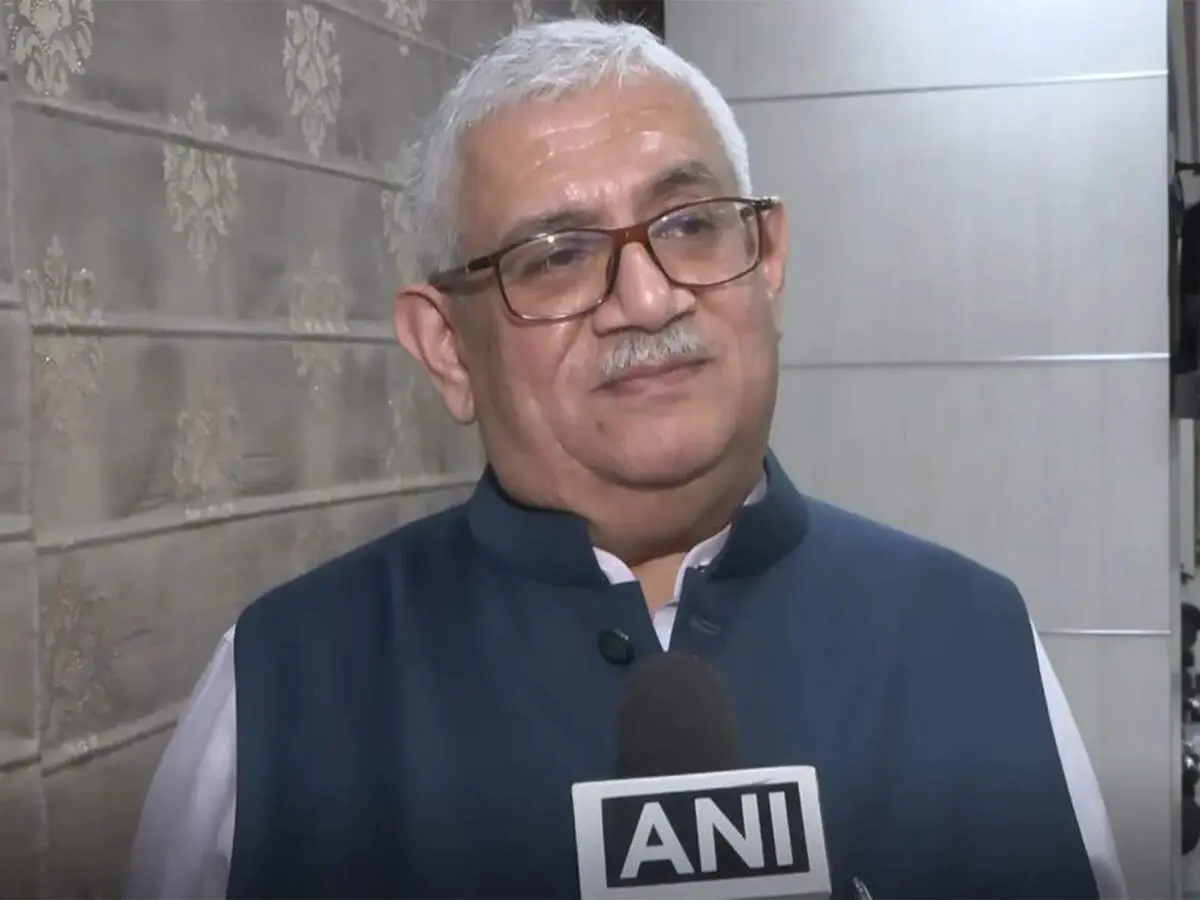
India AI push at Davos 2026: Infrastructure, sovereignty and real-world use cases take center stage
21 Jan 2026•Policy and Regulation

Recent Highlights



Recent Highlights
Today's Top Stories



Don’t drown in AI news. We cut through the noise - filtering, ranking and summarizing the most important AI news, breakthroughs and research daily. Follow topics that matter to you and stay ahead.


