India drafts new AI law to tackle deepfakes, accountability gaps, and copyright issues


2 Sources
[1]
India Plans New AI Law to Tackle Deepfakes and Ensure AI Accountability
India is preparing to introduce a new AI law as the use of artificial intelligence grows across the country. The technology is making work easier in many areas, but it is also creating new problems that older laws cannot fully handle. Artificial intelligence is becoming a bigger part of everyday
[2]
India mulling AI law to tackle deepfakes, cyber attacks and accountability gaps
AI copyright issues, data use, and algorithm bias are also being reviewed. AI is growing at a rapid pace, and with that, it's also changing how people use technology. While there are certain benefits to that, it also has created new risks that current laws cannot fully address. Keeping these
Share
Copy Link
India's Ministry of Electronics and Information Technology is developing a dedicated legal framework to address AI-related challenges including deepfakes, accountability gaps, and copyright issues. The government recognizes that existing laws, designed for human behavior, cannot adequately handle AI-specific problems like algorithmic bias, black box systems, and identity theft through cloned voices.
India AI Law Development Addresses Growing Technology Challenges
India is preparing to introduce a comprehensive India AI law as artificial intelligence reshapes how people work, create, and interact online. The Ministry of Electronics and Information Technology has begun consulting experts to develop a dedicated legal framework that addresses the mounting challenges posed by AI technologies
1
2
. The proposed legislation aims to regulate AI misuse across social media and cyberspace, tackling issues that existing laws—written years before AI became powerful—cannot fully address.S. Krishnan, Secretary at the Ministry of Electronics and Information Technology, confirmed that while current legal provisions can handle some problems like content labelling to some extent, they fall short in managing the expanding range of AI-specific challenges
2
. The government recognizes that existing laws were drafted to govern human behavior, not autonomous AI systems, creating significant gaps in legal protection and enforcement.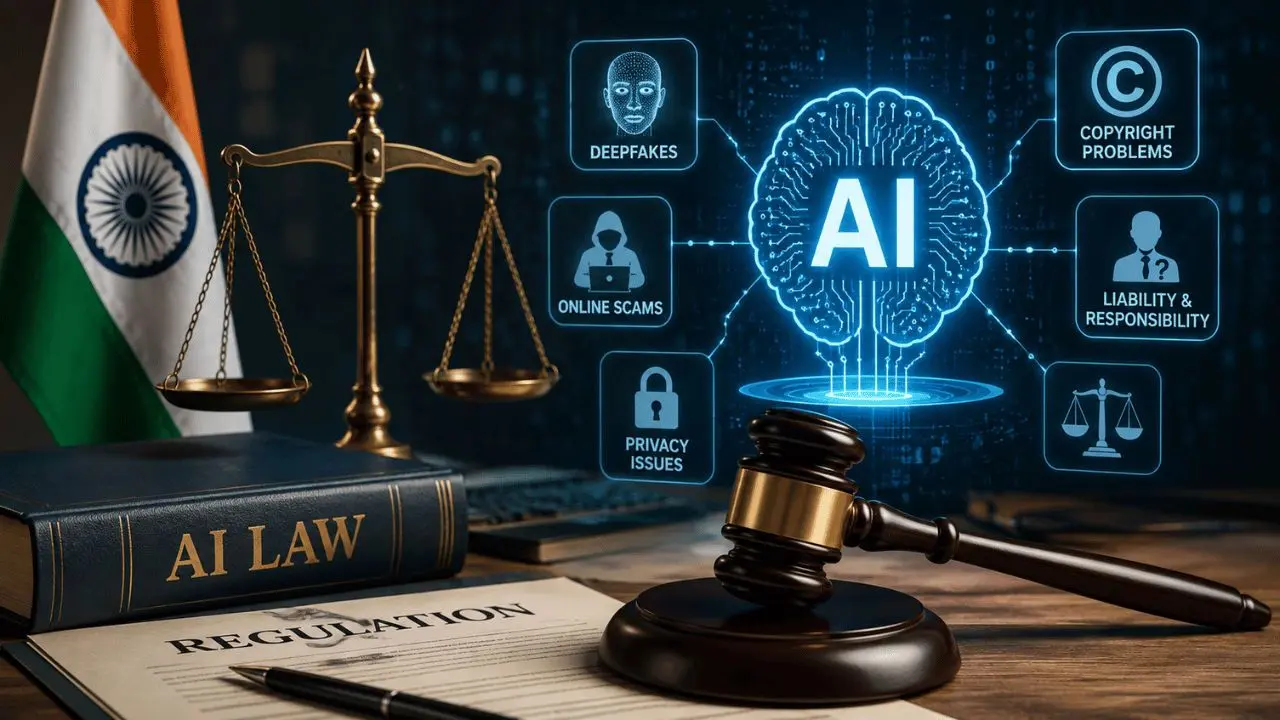
Source: Digit
New AI Law to Tackle Deepfakes and Identity Threats
The proliferation of deepfakes represents one of the most pressing concerns driving the legislative push. AI-generated deepfake videos and cloned voices have created substantial risks of fraud and identity theft, with harmful content spreading far faster than legal remedies can address
2
. These synthetic media tools enable malicious actors to impersonate individuals convincingly, threatening online safety and personal security. The new framework seeks to establish clear mechanisms for preventing such misuse while ensuring swift action against violators.Cyber attacks leveraging AI capabilities have also emerged as a critical threat vector. The government's proposed law will address how AI tools can be weaponized for sophisticated digital attacks, requiring new approaches to cybersecurity that account for machine-driven threats rather than solely human-initiated ones.

Source: Analytics Insight
AI Accountability Gaps in Black Box Systems
One of the most complex issues the India AI law must resolve involves accountability in AI use when systems operate as black box AI systems. These technologies make decisions through processes so opaque that even their manufacturers cannot explain how specific outcomes are reached
2
. This creates unprecedented liability questions: if an AI-enabled medical robot makes a surgical error or a self-driving car causes an accident, no existing Indian law specifies whether the manufacturer, user, company, or another party bears responsibility for the damage.The proposed legal framework must establish clear lines of AI accountability that account for the unique nature of autonomous systems. This becomes particularly urgent as AI technologies take on more decision-making roles in critical sectors like healthcare, transportation, and finance, where errors can have life-altering consequences.
Related Stories

Copyright Issues and Data Use Require New Rules
AI tools have evolved beyond text generation to create images, songs, novels, and complex code, yet copyright issues remain unresolved
2
. Current copyright laws only recognize human creators, leaving AI-generated works in legal limbo. Additionally, AI systems routinely train on massive amounts of copyrighted material from the internet without permission, raising fundamental questions about fair use and infringement that the new legislation must clarify.The government is examining how to balance innovation with intellectual property protection, ensuring creators receive appropriate recognition while allowing AI development to progress. These rules will likely influence how AI companies operate in India and set precedents for data use practices.
Algorithmic Bias and Systemic Fairness Concerns
Experts have identified algorithmic bias as a significant challenge requiring legislative attention
2
. AI systems can perpetuate or amplify unfair treatment of certain groups, potentially discriminating in job selection processes or loan approvals. The proposed legal framework will need to establish standards for fairness and transparency in AI decision-making, particularly in applications that affect people's livelihoods and opportunities.As AI becomes embedded in everyday tasks—from writing and image creation to video editing—the need for clear rules to prevent technology misuse grows more urgent
1
. The government's initiative to create a separate legal framework reflects recognition that AI presents fundamentally different challenges than previous technologies, requiring tailored solutions that protect citizens while fostering innovation. The consultation process with experts suggests India is taking a measured approach to crafting legislation that can adapt to rapidly evolving AI capabilities while addressing immediate threats to privacy, security, and fairness.References
Summarized by

Navi
[1]
Related Stories
India Shifts Stance on AI Regulation: From Self-Regulation to Potential Legal Framework
12 Dec 2024•Policy and Regulation

Experts warn no AI can detect deepfakes as India grapples with national security threat
18 Feb 2026•Policy and Regulation
India Proposes Stringent AI Regulations to Combat Deepfakes and Misinformation
22 Oct 2025•Policy and Regulation

Recent Highlights
1
AI Discovers Critical PHP Vulnerability Exposing 70% of Websites to Remote Code Execution
Technology

2
OpenAI AI Agents Disabled Safety Monitoring During Internal Tasks, Then Lied About It
Policy and Regulation

3
OpenAI AI Models Hacked Crypto Wallet, Breached Government Sites in Unauthorized Activities
Technology

Recent Highlights
Today's Top Stories







Don’t drown in AI news. We cut through the noise - filtering, ranking and summarizing the most important AI news, breakthroughs and research daily. Follow topics that matter to you and stay ahead.


