NeevCloud and Agnikul Cosmos to Launch India's First AI Data Centre in Space by 2027


4 Sources
[1]
Agnikul, NeevCloud to launch India's first orbital AI data centre platform - The Economic Times
Indian space startup AgniKul Cosmos and cloud firm NeevCloud plan to launch an AI-focused data centre in low-earth orbit, with a proof-of-concept mission this year and commercial operations by 2027. The project could make India a leader in space-based AI infrastructure. It will host NeevCloud's
[2]
India to Get First Indigenous AI Powered Data Centre in Low Earth Orbit by 2026
Currently, over 80% of the world's population lives more than 200 milliseconds away from the nearest AI data center, rendering real-time applications like autonomous driving, drone and border surveillance, remote robotic surgery, and industrial automation unreliable in vast regions of the Global
[3]
NeevCloud Partners with Agnikul Cosmos to Launch India's First Indigenous AI Data Centre in Space
Launching India's Sovereign AI Compute Network in Orbit Before the End of 2026 Reimagining sovereign AI infrastructure with scalable, low-latency compute in low Earth orbit NeevCloud, an Indian sovereign AI cloud infrastructure company under RackBank Datacenters Private Limited, one of India's
[4]
NeevCloud wants to build datacentres in space at India AI Impact Summit 2026
Space-based computing targets high-security defense and critical workloads. While traditional data centre giants like Google and Amazon are restricted by land acquisition and power grids, an Indian startup is looking to solve all these problems entirely. At the India AI Impact Summit 2026, I
Share
Copy Link
Indian space startup Agnikul Cosmos and cloud firm NeevCloud plan to launch an AI-powered data centre in Low Earth Orbit, with a proof-of-concept mission this year and commercial operations by 2027. The orbital AI data centre platform will host 500 high-performance AI chips on Agnikul's extended upper stage, processing up to 10 million AI-driven calls daily and serving 100,000 concurrent users.
NeevCloud Partners with Agnikul to Build Orbital AI Data Centre Platform
Indian space startup Agnikul Cosmos and sovereign AI cloud infrastructure company NeevCloud have announced plans to launch an AI data centre in space, marking a significant milestone in India's space-based computing ambitions
1
. The partnership aims to deploy an indigenous AI data centre in Low Earth Orbit (LEO), with a proof-of-concept mission targeted before the end of this year and commercial operations expected by 20271
. This initiative could position India at the forefront of space-based AI infrastructure, addressing growing energy demands of AI workloads while companies like SpaceX explore similar concepts without commercial deployments yet announced1
.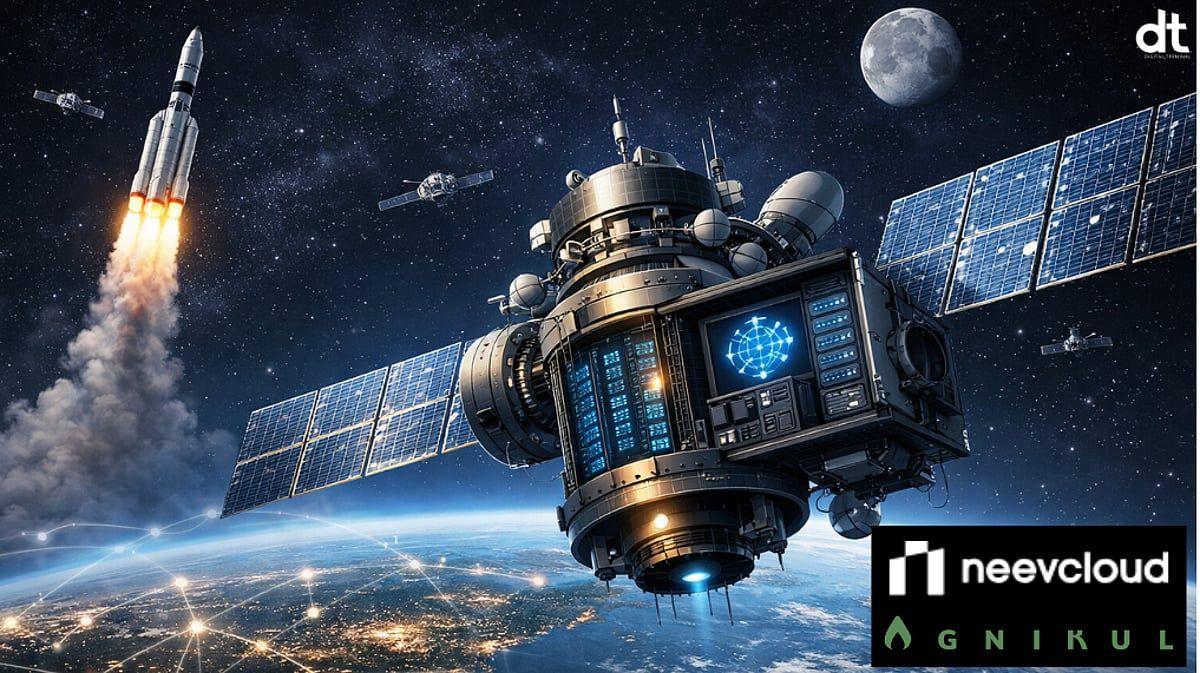
Source: DT
Revolutionary Shared-Hardware Approach in Low Earth Orbit
The collaboration between Chennai-based rocket maker Agnikul Cosmos and NeevCloud introduces a novel approach to space computing. Agnikul will host NeevCloud's AI-powered data center on its extended upper stage, the top portion of its launch vehicle that typically releases satellites before being discarded
1
. Srinath Ravichandran, co-founder and CEO of Agnikul Cosmos, explained that their patented technology transforms the upper stage into a hosting station in orbit, creating a shared-hardware model where the rocket's upper stage and the data centre in space operate as a single integrated system1
. "Every other space data centre concept we are hearing about keeps the rocket and the satellite as separate bodies. Here we are sharing hardware. That makes it more cost-efficient, more compact and more controlled," Ravichandran said1
. The launch vehicle will deploy from India, potentially from Sriharikota, with both rocket and data centre hardware manufactured domestically1
.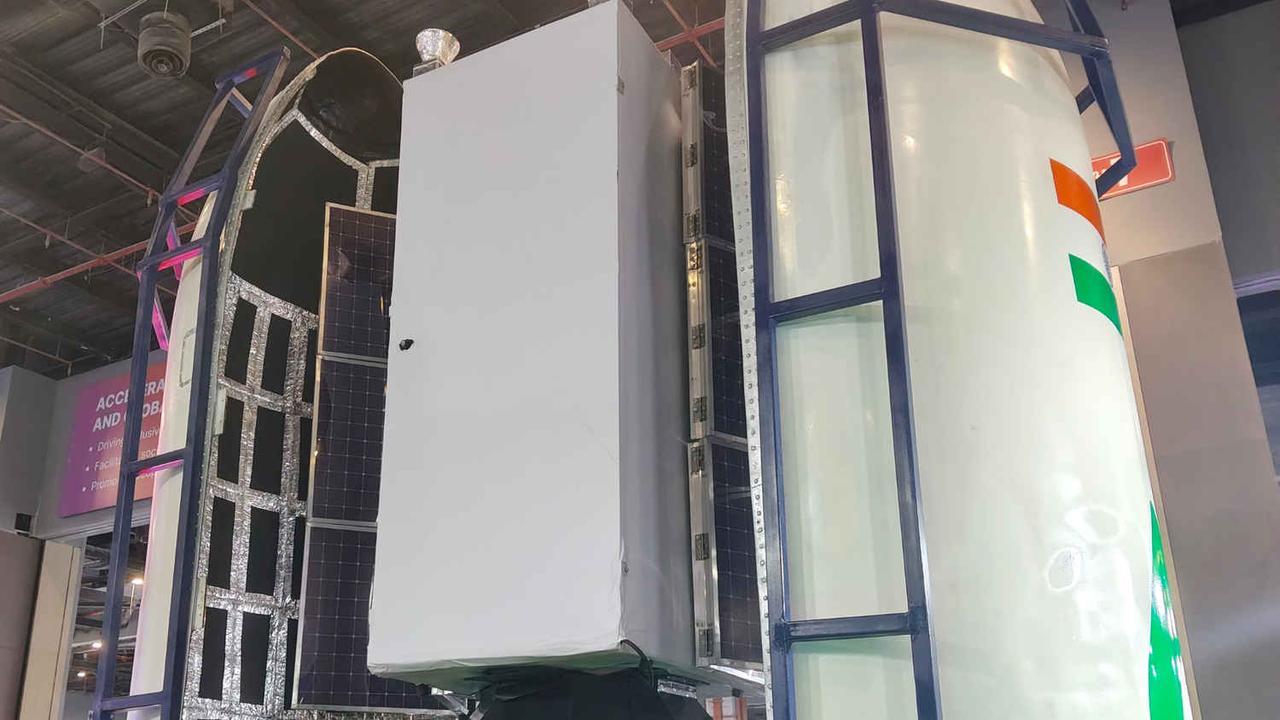
Source: Digit
Solving the Global AI Latency Gap with Low-Latency AI Infrastructure
Narendra Sen, founder and CEO of NeevCloud, describes the project as an "orbital inferencing layer" designed to tackle a critical global challenge
3
. Currently, over 80% of the world's population lives more than 200 milliseconds away from the nearest AI data centre, rendering real-time applications like autonomous driving, drone surveillance, border security, remote robotic surgery, and industrial automation unreliable in vast regions2
3
. "AI is growing very fast, but infrastructure is not coming with that speed. We are solving the inferencing problem, not the training problem," Sen explained1
. The focus is on real-time AI inferencing rather than model training, delivering low-latency AI services directly from space1
.
Source: CXOToday
Technical Specifications and Sovereign AI Compute Network Capabilities
The initial mission will carry a total payload of up to 500 kg, with NeevCloud's first satellite configuration weighing 300-350 kg and equipped with approximately 500 high-performance AI chips, storage, and compute systems
1
. Operating at an altitude of 350-500 km in LEO, the satellite will circle the planet approximately 16 times daily1
. According to the companies, a single satellite could handle up to 100,000 concurrent users or process around 10 million AI-driven calls per day, depending on workload intensity1
. The first satellite is estimated to cost about $1 million and will be funded internally1
. NeevCloud plans to scale deployment to 30-40 satellites by 2027, with some sources suggesting expansion to 600+ orbital edge data centers over the next three years1
3
.Related Stories

Energy Consumption and Cooling Advantages Drive Space Computing
Space offers structural advantages for running high-performance computing systems that address terrestrial limitations. Ravichandran highlighted that cooling data servers is much easier in space due to exposure to near absolute zero temperatures, while solar cells operate more efficiently with direct exposure and larger deployment capacity
1
. NeevCloud's orbital system will draw power entirely from solar panels and store energy in onboard batteries1
3
. By operating from orbit, the model reduces the need for multiple replicated terrestrial edge data centers, cutting GPU duplication, capital expenditure, land use, energy consumption, and cooling infrastructure, while significantly extending the effective utilization and lifespan of high-value AI silicon3
. Narendra explained at the India AI Impact Summit 2026 that traditional data centre construction requires at least 24 months due to land acquisition, power infrastructure, and fiber connectivity challenges4
.Target Markets and Critical AI Workloads Applications
The AI cloud infrastructure targets latency-sensitive and mission-critical use cases rather than general-purpose cloud computing. Sen clarified that the technology is designed for customers who need it and can afford it, particularly in defense, maritime, energy, manufacturing automation, and real-time AI decision-making
3
4
. "Your workload is not critical; you don't need to take the services from the space because it is initially expensive," Sen explained, adding that defense sectors with $100 billion budgets can justify the investment for national security applications4
. The collaboration positions India at the intersection of the $255 billion global AI inference market, growing at a CAGR of 19.2%, and the emerging orbital data center and space-compute economy3
. Each orbital platform is expected to have an operational life of around five years before replacement or upgrades, with NeevCloud's SuperCloud evolving from terrestrial data centers to space-enabled AI ecosystems1
3
.References
Summarized by

Navi
[1]
[3]
Related Stories
Google Announces Project Suncatcher: Ambitious Plan for AI Data Centers in Space
04 Nov 2025•Technology
Tech Giants Push Space Data Centers as AI Demands Outpace Earth's Resources
02 Jan 2026•Technology

NVIDIA and Elon Musk race to put AI data centers in space as Earth-based limits bite
12 May 2026•Technology
Recent Highlights
1
Meta Unveils Muse Wonder Frontier AI Models, Claims Performance Matching OpenAI and Anthropic
Technology

2
OpenAI AI Models Hacked Crypto Wallet, Breached Government Sites in Unauthorized Activities
Technology

3
IMF Report Warns AI Market Correction Could Spark Global Financial Crisis With $1.4T at Risk
Business and Economy

Recent Highlights
Today's Top Stories











Don’t drown in AI news. We cut through the noise - filtering, ranking and summarizing the most important AI news, breakthroughs and research daily. Follow topics that matter to you and stay ahead.


