India pushes for Claude Mythos access as cybersecurity concerns trigger state-led AI push


2 Sources
[1]
Enough with mythologies: India needs new state-sponsored AI entities to create essential strategic capability - The Economic Times
A new AI model called Mythos can find software flaws. Its restricted release raises concerns about misuse by hackers or foreign governments. India, with its large pool of engineers and young people, needs to develop its own advanced AI. This requires state-led initiatives to foster homegrown AI
[2]
India Seeks Access to Claude Mythos Amid Cybersecurity Fears
The Centre is in talks with the US administration and Anthropic to secure access to Claude Mythos for Indian companies under Project Glasswing, with no Indian firm among the roughly 40 organisations currently in the programme, according to a report by the Inc42. Ministry of Electronics and
Share
Copy Link
India is negotiating with the US administration and Anthropic to secure access to Claude Mythos, a powerful AI model that can detect software vulnerabilities, after being excluded from the initial 40-organization rollout. The restricted release has sparked urgent government meetings and renewed calls for state-sponsored AI entities to build India AI capability and ensure strategic autonomy in an era of high-capability AI models.
India Locked Out of Claude Mythos Initial Release
Anthropic's restricted launch of Claude Mythos has placed India in an uncomfortable position. The powerful AI model, capable of autonomously identifying software vulnerabilities across major operating systems and browsers, was initially granted to roughly 40 organizations under Project Glasswing—none of them Indian
2
. The Ministry of Electronics and Information Technology (MeitY) Secretary S. Krishnan confirmed on April 28 that the government is working out the logistics with the US administration to include Indian entities in the program2
.
Source: MediaNama
The exclusion carries significant cybersecurity concerns for a nation managing critical digital infrastructure. Nasscom wrote separately to Anthropic, arguing that Indian firms maintain critical code used by organizations worldwide. "As AI systems evolve to autonomously identify and chain vulnerabilities across platforms, the potential for cascading, cross-border risks becomes significantly higher," Nasscom stated in its letter
2
. The restricted AI model release has exposed India's vulnerability in an era where access to Claude Mythos and similar tools may determine who can defend their systems and who remains exposed.Urgent Government Response to Unprecedented Threat
Finance Minister Nirmala Sitharaman and IT Minister Ashwini Vaishnaw convened a high-level meeting on April 23 with senior officials from the Reserve Bank of India, National Payments Corporation of India, MeitY, the Department of Financial Services, and the Indian Banks' Association. Sitharaman characterized the threat as "unprecedented"
2
. The urgency reflects the reality that malign actors could exploit software flaws at scale if they obtain similar capabilities.A senior government official told ET that rival companies could release similar models without warning. "Currently, Anthropic has held off the wider release, but tomorrow more companies can launch such models. They may release them without advance notice. The government needs to build its capacity as of yesterday," the official said
2
. That concern materialized quickly when OpenAI launched GPT-5.4-Cyber with tiered access under its Trusted Access for Cyber programme, demonstrating exactly the risk officials feared2
.The situation worsened when Bloomberg reported that unauthorized users gained access to Mythos through a third-party vendor environment on launch day, fueling concern among governments worldwide that critical systems may already be at risk
2
.Data Localization Creates Access Dilemma
Even if India secures access to Claude Mythos through Project Glasswing, a fundamental compliance problem remains. India's 2018 data localization rules require payment system providers to store all transaction data on servers within India, while Mythos runs on strictly controlled US-based servers
2
. The National Payments Corporation of India faces this direct conflict but has not publicly resolved how to reconcile domestic regulations with the need to detect software vulnerabilities in critical payment infrastructure.Under the Digital Personal Data Protection Act, 2023, companies like Airtel and Vodafone Idea qualify as data fiduciaries, meaning a successful AI-driven breach of their systems would require mandatory user notification and a detailed report to the Data Protection Board within 72 hours, with fines up to Rs 200 crore for non-compliance
2
. The stakes extend beyond immediate access to questions of sovereignty and regulatory coherence.Call for State-Sponsored AI Entities Gains Momentum
The Claude Mythos episode has intensified arguments for building India AI capability through government-led initiatives. India produces approximately 1.5 million engineers annually, second only to China's 2 million, and has the world's largest cohort of people aged 20-30 at 245 million
1
. Yet this talent pool remains underutilized in developing frontier AI models that could ensure strategic autonomy.Historical precedent exists for state-led technological breakthroughs. C-DAC delivered on its mandate to produce a supercomputer within three years and with a budget of Rs 30 crore, producing PARAM 8000, a parallel processing system that ranked second among the world's supercomputers in 1991
1
. Similar state-sponsored AI entities could mobilize India's engineering talent to create strategic AI capability rather than relying on access negotiations with foreign companies.Related Stories

Geopolitical Implications of High-Capability AI Models
Anthropic has told US government officials that Mythos capabilities are part of why "the US and its allies must maintain a decisive lead in AI technology," explicitly framing access as a geopolitical question rather than merely a cybersecurity one
2
. Project Glasswing partners include AWS, Apple, Cisco, CrowdStrike, Google, JPMorgan Chase, Microsoft, and Nvidia, with Anthropic committing $100 million in usage credits2
.The restricted release of high-capability AI models creates a technology divide where strategic benefits flow primarily to the US and its allies, while risks remain universal. MediaNama founder Nikhil Pahwa observed: "Strategic technologies do not distribute their benefits evenly, even when their risks are universal. The strategic benefit flows first to the US and its allies"
2
. For India, an aspiring large power, this asymmetry threatens strategic autonomy and highlights the urgency of developing homegrown alternatives.Computing Power and China's Alternative Path
Concerns about computing power for developing frontier AI models may be overstated. DeepSeek, the Chinese AI company, recently announced its latest offering developed on chips designed and manufactured by Huawei, demonstrating that alternatives to US-dominated chip supply chains exist
1
. This suggests India need not wait for private companies to bridge the technology gap but can pursue state-led initiatives to build the necessary infrastructure and capabilities.The Centre is weighing a broader policy framework for future launches of high-capability AI models and is reluctant to enable access for some companies while excluding others
2
. Whether India secures access to Claude Mythos or not, the episode has clarified that relying on foreign companies and the US administration for critical cybersecurity tools leaves the nation vulnerable to decisions made elsewhere.References
Summarized by

Navi
Related Stories
India's RBI joins global regulators to assess Mythos AI cybersecurity risks amid access concerns
22 Apr 2026•Policy and Regulation
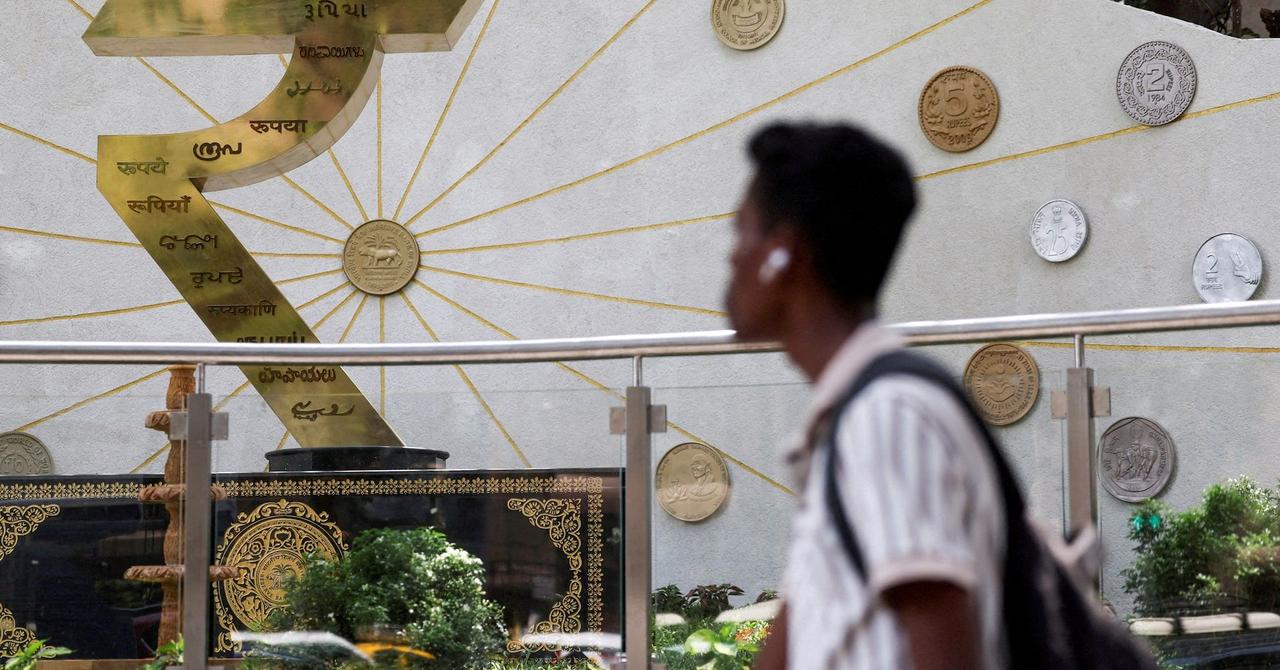
US AI Restrictions Push India to Build Sovereign AI Capabilities and Domestic Infrastructure
16 Jun 2026•Policy and Regulation

India Tests Banks and Government Systems as Anthropic Mythos AI Raises Cybersecurity Alarms
27 May 2026•Technology

Recent Highlights



Recent Highlights
Today's Top Stories






Don’t drown in AI news. We cut through the noise - filtering, ranking and summarizing the most important AI news, breakthroughs and research daily. Follow topics that matter to you and stay ahead.


