3 Sources
[1]
Banks, telcos take test to check cybersecurity score
Mumbai: Essential services providers such as banks, telecom operators and power utilities have started stress-testing their codebases to prepare for a potentially broader launch of Anthropic's Mythos model in the next six-seven months. Their concern is over the unprecedented ability attributed to the currently access-restricted artificial intelligence model to discover serious software vulnerabilities, which could enable cyberattacks at scale and potentially cripple critical services. Companies are testing their public-facing assets using existing AI models such as Opus 4.7 and GPT 5.5 and have also asked their suppliers to identify possible gaps, executives and consultants told ET. The Data Security Council of India (DSCI), an industry think-tank under software industry body Nasscom, is helping organisations prepare for the challenge. DSCI launched a sandbox environment that they could use for evaluating generative artificial intelligence models against potential security vulnerabilities and data privacy risks. "Organisations are actively strengthening their cyber hygiene to prepare for AI-driven threats by reducing attack surfaces, adopting micro-segmentation, improving identity and authentication systems," DSCI chief executive Vinayak Godse told ET. Anthropic has stated that it will release the model soon. Experts, who expect it to be available in around six months, say cybercriminals might exploit the vulnerabilities faster than organisations can fix them. They also point to a severe shortage of cybersecurity talent needed to address the fast-evolving threat. Anthropic's latest update on Mythos unveiled last week has alarmed chief information security officers (CISOs) because of the unprecedented speed at which the system is able to identify software vulnerabilities. Mythos has identified 23,019 vulnerabilities in just one month. Only 97 of these have been patched as it takes 14 days on an average for human cybersecurity professionals to fix each bug. "The global cybersecurity landscape is evolving at an unprecedented pace, introducing new and elevated risks," said Srikanth Velamakanni, chief executive at AI services firm Fractal Analytics and chairperson of Nasscom. "Systems like Mythos demonstrate that releasing highly capable models without stringent safety frameworks can pose serious national security threats. However, attempting to simply contain AI development is not a viable long-term solution; we need proactive, collaborative governance," he said. According to researchers, Mythos-capability models from DeepSeek or OpenAI are also expected to hit the market in three to six months. This could overwhelm conventional cybersecurity infrastructure and expose critical national systems across sectors such as banking, telecom, healthcare, cloud infrastructure and energy networks, experts warn. While the risk is growing at a quick pace, a talent gap, especially in markets like India, is causing a major concern for organisations to ensure cyber preparedness. "The scale and velocity at which systems like Mythos can detect vulnerabilities fundamentally change the threat landscape for banks," said the CISO at a large private sector bank. "Earlier, cyberattackers needed weeks or months to identify exploitable weaknesses, now AI models can compress that window into hours." He added that the concern is not discovering vulnerabilities, but the widening gap between detection and remediation. "Banks still rely heavily on manual patch management cycles, legacy infrastructure dependencies and fragmented vendor ecosystems," he said. "If offensive-grade AI capabilities become commoditised over the next few months, the sector could face a situation where attackers are able to weaponise vulnerabilities faster than institutions can fix them." Another CISO with a state-run lender said Indian banks are already operating in an environment with a significant cybersecurity talent shortage. "Security teams were never designed to handle tens of thousands of vulnerability alerts at machine speed. The real risk is alert fatigue and prioritisation failure, where critical vulnerabilities in internet banking, telecom integrations, or third-party fintech systems remain unpatched because security teams are overwhelmed," he said. However, discovering software vulnerabilities does not necessarily mean offenders could cripple the world's digital infrastructure.
[2]
Indian government, tech firms running tests for Anthropic's Mythos threat
India is rigorously testing its critical financial and government software for vulnerabilities to Anthropic's powerful Mythos AI. Tech giants Infosys and TCS are involved, while CERT-In examines national infrastructure like Aadhaar. This proactive measure stems from global concerns about Mythos' dual potential for cybersecurity defense and attack. India is undertaking tests of some of its most sensitive public-facing financial and government application software to better understand their vulnerabilities to Anthropic PBC's next-generation Mythos AI model, according to Indian officials familiar with the matter. Indian technology giants Infosys Ltd. and Tata Consultancy Services Ltd. are among companies carrying out the tests of their software for vulnerabilities in a secure environment to Mythos, the officials said, asking not to be identified because the discussions are private. Infosys in particular is looking to devise patches to its widely used Finacle banking software, they said. Separately, India's state-run cybersecurity agency CERT-In is undergoing tests of key digital infrastructure including the Aadhaar national ID program and government login systems, said the officials. The companies, which don't currently have access to Mythos, are using Anthropic's Claude Opus 4.7 AI software to patch vulnerabilities, they said. Infosys and TCS didn't respond to requests for comment. India's Ministry of Electronics and Information Technology didn't respond to a request for comment. Global worries India's risk assessments are the latest sign of unease among governments and corporate boardrooms around the world over Mythos, the powerful AI software developed by Anthropic to root out cybersecurity vulnerabilities, but which has raised global alarm over its own extraordinary ability to power potential cyberattacks. So far, Anthropic has limited access to Mythos to a select few companies including Apple Inc. and JPMorgan Chase & Co., allowing them to use the technology to test their own cyberdefenses under an initiative called Project Glasswing. Governments and other companies around the world have petitioned the US for access to Mythos to help sniff out their own vulnerabilities. India is home to some of the world's biggest software companies that provide numerous back-office functions to banks and tech firms globally, adding urgency to the need to identify cyber-vulnerabilities. At the same time, India under Prime Minister Narendra Modi has undertaken a vast expansion of its digital infrastructure, including working to onboard its 1.4 billion citizens onto its Aadhaar national ID program. Many provide services for both the Indian government and private firms, with Infosys running the country's service-tax system and TCS running its passport system. Infosys's Finacle provides software to financial firms globally. India's central bank has already held multiple rounds of meetings with Indian banks to apprise them of the potential threats from Mythos, said the officials. Last month, India's Finance Minister Nirmala Sitharaman said India was closely monitoring the potential threats posed by Mythos and asked banks to step up vigilance to secure IT systems, safeguard customer data, and protect financial resources. US ocoperation Also last month, Infosys CEO Salil Parekh told analysts that Mythos was "exposing more vulnerabilities than one thought possible previously." He also said it could lead to new opportunities for the company to help clients address vulnerabilities. "We are looking at it both ways," he said. Anthropic has told Indian authorities that it's for the US government to decide if they would like to share the advance Mythos with any company or country, and if so when, according to the Indian officials familiar with the matter. India is seeking access to Mythos in a secure setup preferably based within the country, according to one of the people, with those talks being led by the Ministry of External Affairs engaging with US government officials. New Delhi has identified a facility to test the model with sensitive data and shortlisted sectors and experts to assess its capabilities, the official said. India sees closer cooperation with the US as key to protecting sensitive infrastructure and government networks, while also reducing reliance on rivals such as China, another official said. In an interview last week with Bloomberg News, US Ambassador to India Sergio Gor said Washington was reviewing some of India's requests but declined to provide specifics. "They have requested access to various things, and as a trusted partner, those are some things that we are definitely looking at," he said in a phone interview.
[3]
Anthropic Mythos AI prompts India to review security of banks and government systems
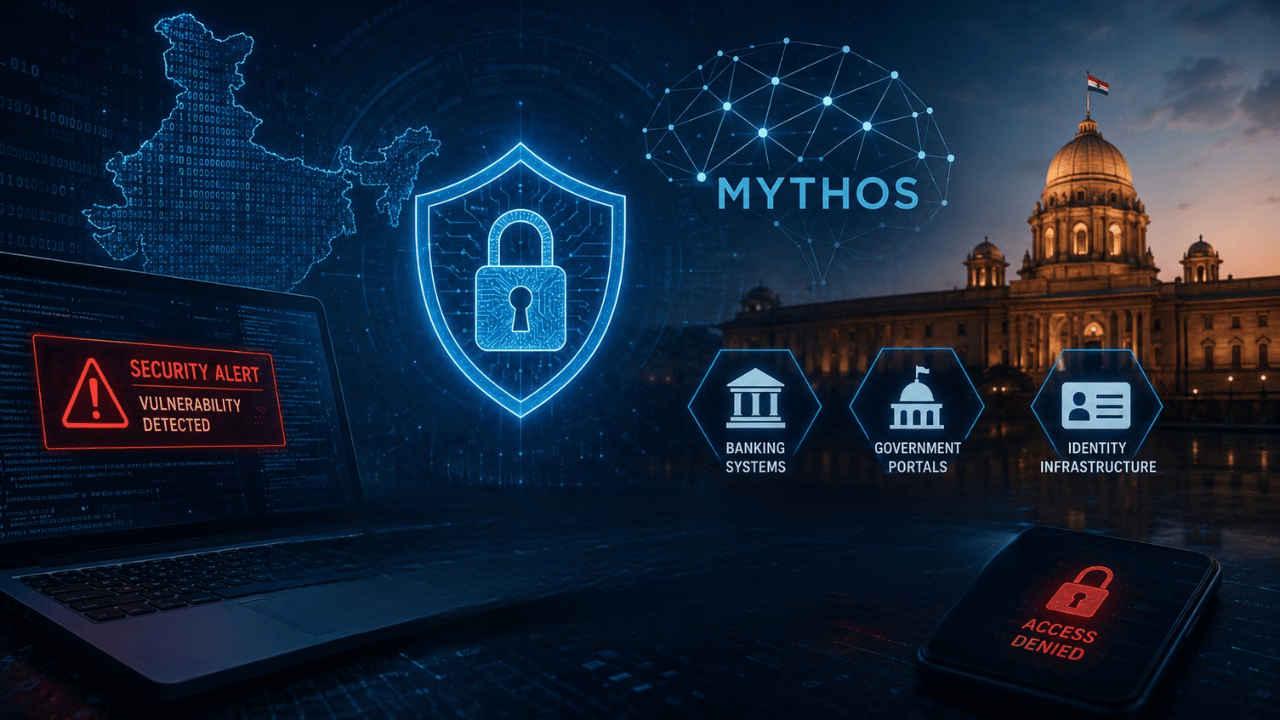
Banks, government, and tech firms are checking for vulnerabilities. India has quietly begun reviewing some of its most important digital systems as concerns grow around the possible impact of more advanced AI tools. The exercise includes testing public-facing software and digital platforms for hidden security gaps before next-generation AI systems become more widely available. Banking networks, government portals, and identity-linked infrastructure are among the areas receiving closer attention. The concern is not only about what future AI models like Anthropic's Mythos may be capable of doing, but whether they could identify and exploit software weaknesses faster than organizations can respond. The move reflects a broader global shift toward preparing digital infrastructure for a new phase of cybersecurity challenges. According to Bloomberg, India's largest banks, government departments, and technology companies have started carrying out internal security reviews to identify possible weaknesses in their key software systems. Government agencies have initiated the investigation ahead of the launch of Mythos, Anthropic's upcoming AI model. Officials familiar with the matter reportedly told Bloomberg that the effort includes testing applications connected to financial services, identity systems, and public platforms. Major Indian IT companies are also said to be involved in these exercises through controlled environments. Infosys is reportedly paying special attention to securing its Finacle banking software platform, which supports financial institutions across several markets. The report claims that government agencies are simultaneously examining whether existing digital systems can withstand more advanced forms of AI-assisted cyber activity. Also read: 1.5 ton vs 2 ton split AC: Which one makes more sense for your home The scrutiny is not limited to the financial sector; India's cybersecurity agency, CERT-In, is also reportedly reviewing its critical digital infrastructure. This includes parts of the core identity ecosystem and government login systems. However, one thing to note is that Anthropic's Mythos itself is not yet available to these organisations. Officials have said that companies are currently using Anthropic's Claude Opus 4.7 model to test, detect, and fix potential security gaps. The Reserve Bank of India has reportedly held meetings with various banks to discuss the possible risks linked to advanced AI systems. In tandem, Finance Minister Nirmala Sitharaman recently asked banks to strengthen cybersecurity readiness and improve the protection of customer data. The report also highlighted that the Indian government is in talks with the US government to seek controlled access to Mythos, with a strong preference for hosting the secure testing infrastructure locally within India. Also read: Govt can ban real money online gaming apps even if it involves skills, orders SC Anthropic designed Mythos to help identify cybersecurity weaknesses in critical software systems, including major operating systems, web browsers, and foundational open-source codebases. However, governments and experts fear the same technology could be misused to expose vulnerabilities or drastically speed up cyberattacks. At the time of writing, access to Mythos remains tightly controlled; only a limited group of organizations, including Apple and JPMorgan Chase, are believed to be testing the technology under Anthropic's Project Glasswing initiative. However, many governments and companies are now seeking controlled access so they can evaluate their own preparedness.
Share
Copy Link
India has launched comprehensive security reviews of critical digital infrastructure ahead of Anthropic's Mythos AI model release. Banks, telecom operators, and government agencies are stress-testing systems for vulnerabilities that the powerful AI could potentially exploit. With Mythos having identified 23,019 vulnerabilities in just one month during limited testing, organizations face a race against time to patch weaknesses before broader release.
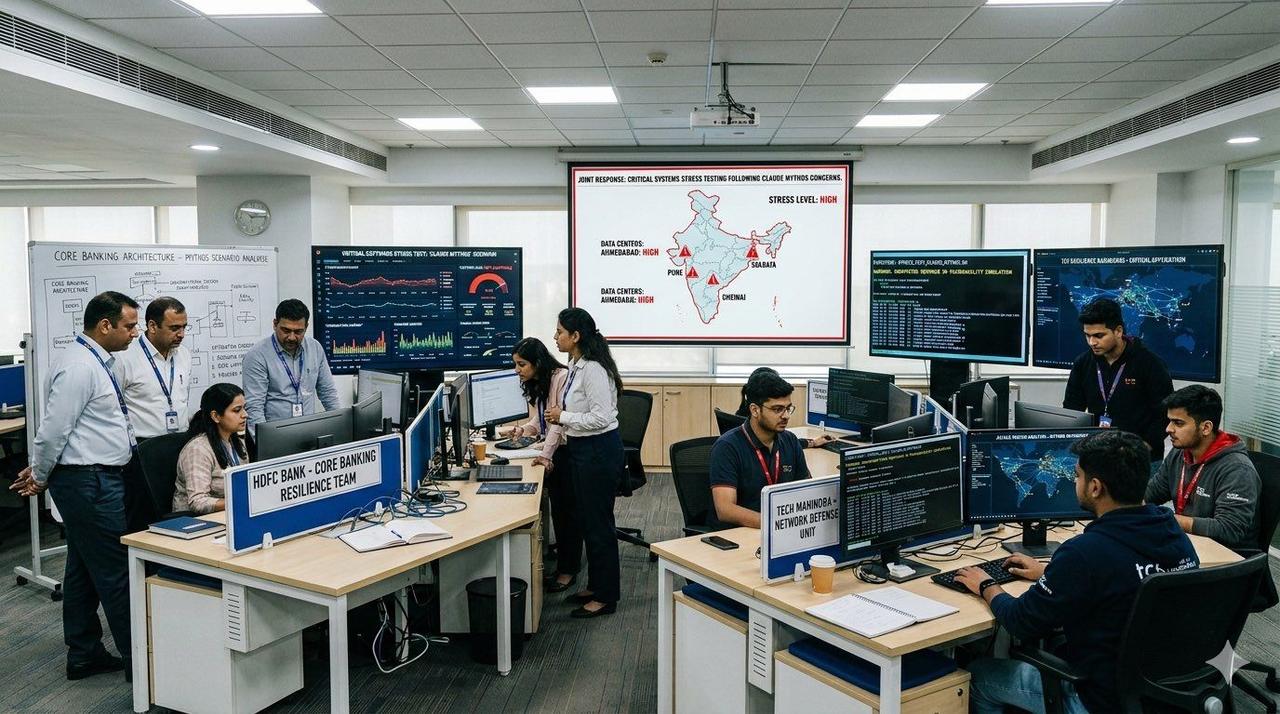
India has initiated extensive testing of its most sensitive financial and government systems in response to growing concerns about Anthropic Mythos, a powerful AI model designed to identify software vulnerabilities at unprecedented speed. Essential services providers including banks, telecom operators, and power utilities are stress-testing their codebases to prepare for a potentially broader launch expected in the next six to seven months
1
. The urgency stems from Anthropic Mythos's extraordinary capability to discover serious weaknesses that could enable cyberattacks at scale and potentially cripple critical national systems.
Source: Digit
Major Indian technology giants Infosys and TCS are conducting vulnerability assessments in secure environments, with Infosys particularly focused on devising patches for its widely used Finacle banking software that supports financial institutions globally
2
. Since companies don't currently have access to Mythos itself, they're using advanced AI models such as Claude Opus 4.7 and GPT 5.5 to identify possible gaps in their public-facing assets1
.India's state-run cybersecurity agency CERT-In is examining key digital infrastructure including the Aadhaar national ID program and government login systems for potential weaknesses
2
. This comprehensive review extends across the security of banks and government systems that serve India's 1.4 billion citizens. The Reserve Bank of India has held multiple rounds of meetings with banks to apprise them of potential threats, while Finance Minister Nirmala Sitharaman asked institutions to step up vigilance to secure IT systems, safeguard customer data, and protect financial resources2
.The Data Security Council of India, an industry think-tank under Nasscom, launched a sandbox environment for evaluating generative AI models against potential security vulnerabilities and data privacy risks. "Organisations are actively strengthening their cyber hygiene to prepare for AI-driven threats by reducing attack surfaces, adopting micro-segmentation, improving identity and authentication systems," DSCI chief executive Vinayak Godse explained
1
.The scale of the challenge becomes clear when examining Mythos's capabilities. The AI system identified 23,019 vulnerabilities in just one month during limited testing. Only 97 of these have been patched, as it takes an average of 14 days for human cybersecurity professionals to fix each bug
1
. This creates a widening gap between detection and remediation that deeply concerns chief information security officers.
Source: ET
"The scale and velocity at which systems like Mythos can detect vulnerabilities fundamentally change the threat landscape for banks," said a CISO at a large private sector bank. "Earlier, cyberattackers needed weeks or months to identify exploitable weaknesses, now AI models can compress that window into hours"
1
. Experts warn that cybercriminals might exploit these software vulnerabilities faster than organizations can fix them, especially given the severe shortage of cybersecurity talent needed to address fast-evolving threats.Related Stories
Anthropic has limited access to Mythos to select companies including Apple and JPMorgan Chase under an initiative called Project Glasswing
2
. India is seeking controlled access to the model in a secure setup preferably based within the country, with talks being led by the Ministry of External Affairs engaging with US government officials2
. New Delhi has identified a facility to test the model with sensitive data and shortlisted sectors and experts to assess its capabilities.
Source: ET
Anthropic has told Indian authorities that it's for the US government to decide whether to share Mythos with any company or country
2
. US Ambassador to India Sergio Gor confirmed that Washington is reviewing some of India's requests, stating: "They have requested access to various things, and as a trusted partner, those are some things that we are definitely looking at" .Researchers expect Mythos-capability models from DeepSeek or OpenAI to hit the market in three to six months, which could overwhelm conventional cybersecurity infrastructure and expose critical systems across banking, telecom, healthcare, cloud infrastructure, and energy networks
1
. Srikanth Velamakanni, chief executive at Fractal Analytics and chairperson of Nasscom, emphasized that "systems like Mythos demonstrate that releasing highly capable models without stringent safety frameworks can pose serious national security threats"1
.The cybersecurity talent shortage in India compounds these challenges. A CISO with a state-run lender noted that "security teams were never designed to handle tens of thousands of vulnerability alerts at machine speed. The real risk is alert fatigue and prioritisation failure, where critical vulnerabilities in internet banking, telecom integrations, or third-party fintech systems remain unpatched because security teams are overwhelmed"
1
. Infosys CEO Salil Parekh acknowledged that Mythos was "exposing more vulnerabilities than one thought possible previously," while also noting it could create opportunities to help clients address these weaknesses2
.Summarized by
Navi
22 Apr 2026•Policy and Regulation

06 May 2026•Policy and Regulation

13 May 2026•Technology

1
Policy and Regulation

2
Science and Research

3
Technology