India's RBI joins global regulators to assess Mythos AI cybersecurity risks amid access concerns


20 Sources
[1]
India's central bank in talks with global regulators, banks to review Mythos risks, sources say
MUMBAI, April 22 (Reuters) - India's central bank is in talks with global regulators, Indian lenders and government officials to understand the potential risks posed by Anthropic's new artificial intelligence model Mythos, three sources said. The Reserve Bank of India's preliminary assessment -
[2]
Australia and New Zealand central banks monitoring Anthropic's Mythos release
SYDNEY, April 22 (Reuters) - The central banks of Australia and New Zealand said on Wednesday they were monitoring the release of Anthropic's advanced Mythos artificial intelligence model, joining authorities around the world in expressing concerns about the new cybersecurity risks it
[3]
RBI Said to Evaluate Cybersecurity Risks Linked to Anthropic's Mythos
Any deployment needs to comply with RBI's data localisation requirements The Reserve Bank of India (RBI) is said to be holding talks with global regulators, domestic lenders, and government officials to assess potential risks linked to Anthropic's new artificial intelligence (AI) model, Mythos.
[4]
India seeks fair access to Anthropic's Mythos for critical infrastructure security
India is actively pursuing access to Anthropic's powerful Mythos AI model. Discussions with the US administration aim to ensure equitable access for Indian companies. The government is prioritizing the protection of critical infrastructure like power grids and banking systems. This move is crucial
[5]
Reserve Bank of Australia monitoring Anthropic's Mythos AI over cyberattack fears
The Reserve Bank of Australia is closely monitoring developments around Anthropic PBC's new Mythos AI model, which the company says is powerful enough to enable sophisticated cyberattacks. The central bank is "engaging with peer regulators, government and regulated entities," it said in a
[6]
Anthropic Mythos: Firms with access to model say speed of response, not uncovering flaws, is key
A new AI model, Mythos, drastically shrinks the time between discovering and exploiting software vulnerabilities, creating a critical "kill zone" for companies. Indian firms, with slow patching cycles, face significant risk as AI-driven attacks become faster and more accessible, necessitating a
[7]

Nirmala Sitharaman Calls High Alert Meeting on Bank Security Threat from Anthropic Mythos AI
This dual use nature has made Mythos one of the most closely watched AI systems in cybersecurity circles. The Finance Minister instructed banks to engage top cybersecurity professionals and specialised agencies to continuously enhance defensive and monitoring capabilities. Institutions were also
[8]

India Closely Watching Claude Mythos Issue Amidst Reports of Rogue Group Breaking In
A wire agency reported that some Discord users gained access to a preview version of Mythos but with no criminal intent Just as the United States was cozying up to Anthropic for testing loopholes in their legacy codes to tighten cybersecurity, a new report suggests that the much-hyped Claude
[9]
CERT-In flags 'high-severity risks' from AI-driven cyber threats amid Mythos concerns - The Economic Times
Cyber security agency CERT-In has issued a high-severity warning on the rise of artificial intelligence (AI)-driven cyber threats. It said new AI tools are making attacks faster, cheaper and easier to execute. In its latest advisory titled 'Defending Against Frontier AI Driven Cyber Risks',
[10]

Mythos causes CERT-In, telcos & banks to assess cyber risks
Bharti Airtel and Vodafone Idea are reviewing the security practices of their network software vendors after Claude Mythos Preview, an artificial intelligence (AI) model released by US-based Anthropic on April 7, autonomously found and exploited software vulnerabilities that had survived decades of
[11]
Are RBI and NCPI Seeking Access to Claude Mythos?
For now, the report is highly speculative and only tells us that RBI is aware of how the Mythos story is playing out in the US Driven by the surround sound that has steadily grown around Anthropic's latest foundation model Claude Mythos and its possible impact in the hands of cybercriminals,
[12]
Threat from Anthropic's Mythos 'as big as war': Nirmala Sitharaman
Union Finance Minister Nirmala Sitharaman has warned of a new cyber threat from Anthropic's AI model Mythos, comparing its potential impact to that of war. Authorities are increasing engagement with Anthropic and the US administration to understand and counter these evolving digital risks, while
[13]
Digital defence in the age of Mythos, why Indian banks are on high alert
India is poised to become a global AI execution hub. Powerful AI models like Anthropic's Mythos present both opportunities and security risks for the banking sector. India's vast trained workforce and cost-effective infrastructure offer a significant advantage. The nation can harness these
[14]

India's central bank in talks with global regulators, banks to review Mythos risks, sources say
MUMBAI, April 22 (Reuters) - India's central bank is in talks with global regulators, Indian lenders and government officials to understand the potential risks posed by Anthropic's new artificial intelligence model Mythos, three sources said. The Reserve Bank of India's preliminary assessment -
[15]
RBA Says It Is Vigilant Against Growing AI Threats
SYDNEY--The Reserve Bank of Australia has signaled its growing concerns about the risks posed by the rapid advancement of artificial intelligence and the potential for cyber attacks on the financial system, saying that it is monitoring developments associated with Anthropic and its developing
[16]
Govt forms panel under SBI chief C S Setty to assess Mythos-related risks
Union Finance Minister Nirmala Sitharaman on Friday said the government has formed a panel under SBI Chairman C S Setty, who also leads the industry grouping IBA, to assess risks emanating from AI platform Mythos and come up with mitigating measures. There will be a lot of interaction among banks
[17]
FM Sitharaman, IT minister Vaishnaw meet bankers over looming Claude Mythos; push for faster intel sharing
India is building a strong system for banks and agencies to share threat information instantly. This aims to quickly identify new dangers from artificial intelligence. Finance Minister Nirmala Sitharaman met with banks and IT officials to discuss these risks. The focus is on vigilance and better
[18]
India finance ministry to meet bank CEOs on Anthropic 'Mythos' cyber risk
Indian bank leaders will meet the finance minister today. They will discuss protecting the nation's payment system. The focus is on cyber threats from a new AI model called Mythos. Banks are seen as vulnerable due to their interconnected IT platforms. This meeting follows reports of unauthorized
[19]
RBI in talks with global regulators, banks to review Mythos risks, sources say
MUMBAI: India's central bank is in talks with global regulators, Indian lenders and government officials to understand the potential risks posed by Anthropic's new artificial intelligence model Mythos, three sources said. The Reserve Bank of India's preliminary assessment - just like that of
[20]

India warns banks after powerful AI model like Claude Mythos raises cybersecurity concerns
Banks have been advised to upgrade monitoring systems and report cyber threats quickly to authorities. Anthropic Mythos AI model has become the talk of the town for its capabilities. After a reported data breach, the entire world is preparing for all the possible outcomes. In the latest update,
Share
Copy Link
India's Reserve Bank is in talks with global regulators and the US administration to understand risks posed by Anthropic's Mythos AI model. The advanced artificial intelligence model can identify thousands of software vulnerabilities, sparking concerns about exploitation of vulnerabilities in banking systems and critical infrastructure. India seeks equitable access through Project Glasswing as regulators worldwide scramble to protect financial systems.
RBI Initiates Central Bank Discussions on Mythos Threats
The Reserve Bank of India (RBI) has launched consultations with global regulators, domestic lenders, and government officials to evaluate potential cybersecurity risks posed by Anthropic's latest advanced artificial intelligence model, Mythos
1
. Over the past fortnight, RBI officials held discussions with peer regulators including the U.S. Federal Reserve and the Bank of England to understand emerging threats and necessary safeguards1
. The central bank's preliminary assessment suggests Mythos could accelerate the discovery and exploitation of vulnerabilities in software systems, mirroring concerns raised by regulators across Asia, Europe, and the United States1
.
Source: MediaNama
Designed for defensive cybersecurity tasks, Mythos has demonstrated capabilities that have alarmed the global financial community. Anthropic reported that a preview of the model uncovered thousands of major software vulnerabilities in every major operating system and web browser
2
. Companies that tested Mythos found it could identify tens of thousands of vulnerabilities, compared with roughly 500 found by Anthropic's previous model, Opus 4.6—a 20-fold jump in one generation4
.India Seeks Controlled Access Through Project Glasswing
The Centre is actively working on mechanisms and logistics to ensure Indian companies gain equitable access to Mythos through bilateral talks with the US administration
4
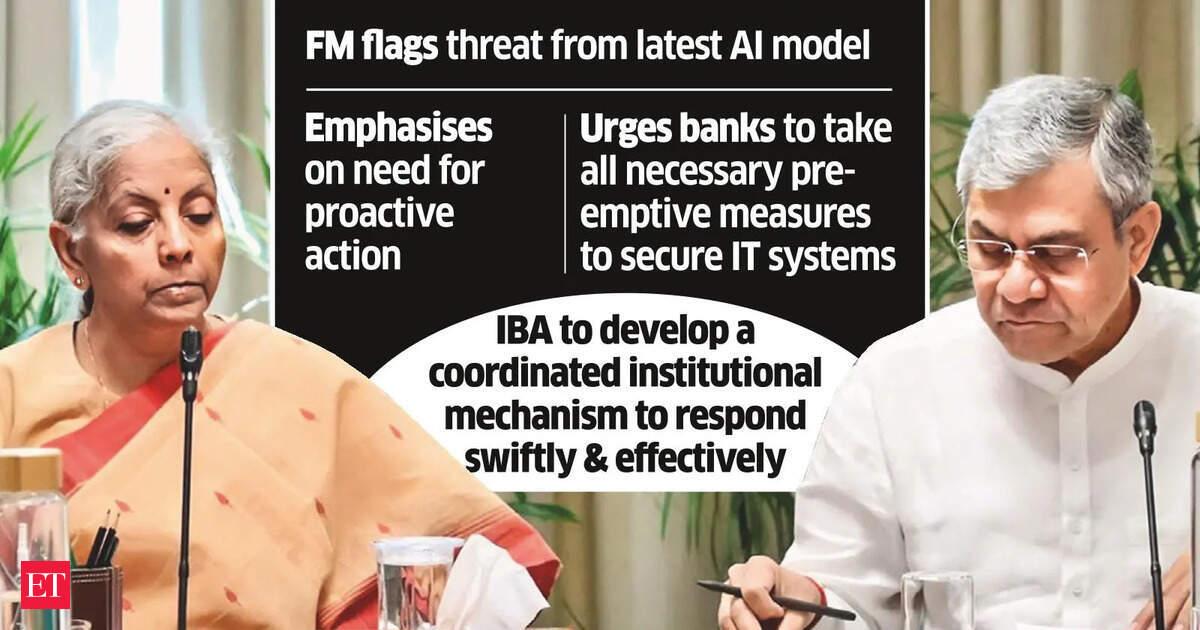
. Finance Minister Nirmala Sitharaman confirmed that the ministry of electronics is engaging with the US administration, Anthropic, and vendors who have been granted testing access, calling the cyber challenge posed by Mythos "a big one"4
.
Source: ET
The National Payments Corporation of India (NPCI) is attempting to secure early access to Mythos alongside a small number of banks to identify day-zero cyber risks ahead of broader rollout
1
. However, such controlled access may prove challenging as Mythos systems are hosted on strictly-controlled servers in the U.S., and running tests on local data in foreign jurisdictions presents regulatory hurdles1
.Anthropic introduced Claude Mythos Preview through Project Glasswing, granting access to major technology companies including Amazon, Microsoft, Nvidia, and Apple, plus more than 40 additional organisations that build or maintain critical infrastructure
2
. No Indian company was included in this initial list4
.Critical Infrastructure Security Becomes Priority Focus
The government has directed the Indian Computer Emergency Response Team (CERT-In), the National Critical Information Infrastructure Protection Centre (NCIIPC), and the financial sector to move rapidly to protect critical infrastructure such as power grids, telecom networks, and banking systems
4
. Experts warn that Mythos' advanced coding and autonomous capabilities could significantly accelerate sophisticated cyberattacks, especially in banking systems where complex, interconnected, and often decades-old systems remain common2
.The RBI may seek direct engagement with Anthropic and is preparing broader guidelines for banks entering enterprise partnerships with advanced AI models, including Mythos and Anthropic's Claude family
1
. Any deployment involving Indian customer data must comply with RBI's data localization requirements, which mandate that all payment system providers store end-to-end transaction data exclusively on servers located within India1
.Related Stories

Global Regulators Scramble to Address Vulnerability Discovery Threats
The Reserve Bank of Australia (RBA) stated it is closely monitoring developments and engaging with peer regulators, government, and regulated entities to ensure financial system resilience
5
. The Reserve Bank of New Zealand is also in contact with regulators domestically and in Australia over what it termed the "developing risk" from Mythos2
. Bundesbank President Joachim Nagel called the model a double-edged sword, warning it could be used not only to improve digital security systems but also to leverage their vulnerabilities for malicious purposes2
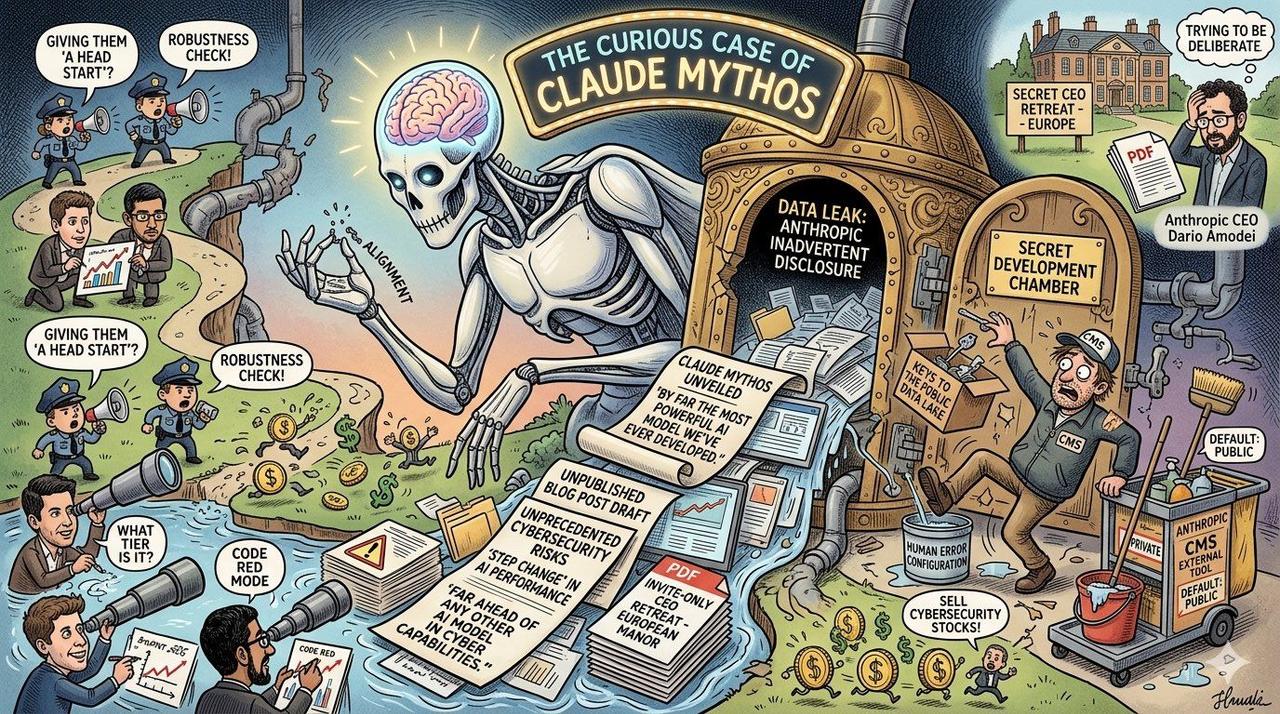
.Concerns intensified following reports that unauthorized personnel gained access to Mythos through a private Discord group on the same day Anthropic announced limited testing
3
. While the group reportedly did not use the model for malicious purposes, the incident raised serious questions about potential misuse3
. Anthropic confirmed it is investigating the unauthorized access through one of its third-party vendor environments3
.
Source: CXOToday
The government is also considering a broader policy response to address future releases of similar AI models, recognizing that other companies may launch such models without advance notice
4
. China has reportedly already developed its own version of Mythos, adding urgency to India's efforts to build capacity and secure its digital infrastructure4
.References
Summarized by

Navi
[1]
Related Stories
India Tests Banks and Government Systems as Anthropic Mythos AI Raises Cybersecurity Alarms
27 May 2026•Technology

India pushes for Claude Mythos access as cybersecurity concerns trigger state-led AI push
30 Apr 2026•Policy and Regulation
Anthropic's Mythos AI faces unauthorized access as security breach exposes controlled rollout flaws
22 Apr 2026•Technology

Recent Highlights



Recent Highlights
Today's Top Stories






Don’t drown in AI news. We cut through the noise - filtering, ranking and summarizing the most important AI news, breakthroughs and research daily. Follow topics that matter to you and stay ahead.


