India's data centre capacity hits 1,900 MW as AI workloads demand new infrastructure approach


2 Sources
[1]
At CtrlS, AI-readiness is A Foundational Design Principle Rather Than An Upgrade Path
This expansion is further strengthened by our recent strategic partnership with CPP Investments, which provides up to INR 7,000 crore (C$1 billion) in long-term capital to accelerate hyperscale campus development across India. As India's digital economy accelerates with AI, hyperscale cloud
[2]
The Rise of an Infrastructure Powerhouse: Unlocking India's Data Centre Opportunity
The global digital economy is expanding at an unprecedented velocity, reshaped by explosive demand from cloud computing, high-definition streaming, and artificial intelligence (AI). At the heart of this global transition lies India -- a nation that currently produces roughly one-fifth of global
Share
Copy Link
India's data centre market has reached 1,900 MW capacity as AI workloads drive a fundamental shift in infrastructure design. CtrlS Datacenters secured INR 7,000 crore from CPP Investments to build AI-ready hyperscale campuses with 250kW rack densities and liquid cooling systems, while the nation hosts only 2-3% of global capacity despite generating 20% of internet traffic.
AI Workloads Reshape India Data Centre Infrastructure
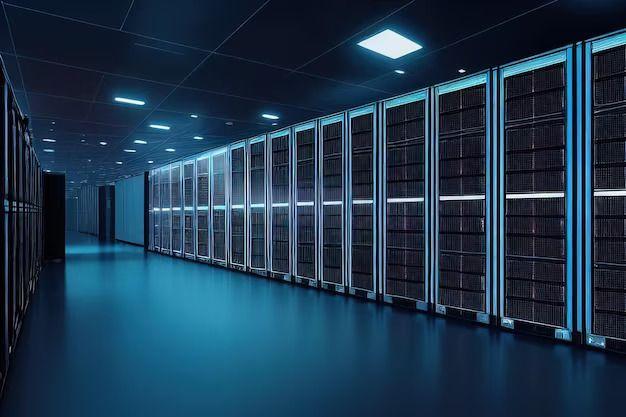
India's data centre capacity has surged to 1,900 MW in FY26, more than tripling since FY19, as AI workloads fundamentally alter infrastructure requirements across the nation
2
. This expansion comes as the country generates roughly one-fifth of global data traffic yet hosts only 2 to 3 per cent of global data centre capacity, creating what industry analysts describe as one of the largest infrastructure investment opportunities of the decade2
.
Source: CXOToday
The transformation is driven by a critical shift in workload composition. AI and GPU workloads are projected to account for 55 per cent of total data centre capacity by FY30, requiring infrastructure that can handle extreme power density and thermal efficiency demands that traditional facilities simply cannot meet
2
. This surge in AI workloads has made AI-readiness a core requirement rather than an optional feature for new facilities.CtrlS Datacenters Secures Major Funding for Hyperscale Expansion
CtrlS Datacenters currently operates 19 facilities across nine markets in India with 370MW of installed IT capacity, spanning Mumbai, Chennai, Hyderabad, Bengaluru, Kolkata, Noida, Patna, Lucknow and Ahmedabad
1
. The company has secured a strategic partnership with CPP Investments, providing up to INR 7,000 crore (C$1 billion) in long-term capital to accelerate hyperscale campus development across India1
.According to Anil Nama, CIO at CtrlS Datacenters, the company is scaling capacity through a balanced expansion strategy that combines large AI-ready hyperscale campuses with a planned network of 20+ edge datacenters across India
1
. The roadmap is anchored by large AI-ready hyperscale campuses in Mumbai and Hyderabad, with early investments in land, power, and renewable energy enabling scalable, sustainable delivery1
.
Source: DT
AI-Readiness as a Foundational Design Principle
At CtrlS, AI-readiness is a foundational design principle rather than an upgrade path, marking a sharp departure from traditional infrastructure approaches
1
. The company's AI-ready campuses are built around direct liquid cooling and immersion cooling technologies, supporting rack densities of up to 250kW per rack with industry-low Power Usage Effectiveness (PUE) of 1.35, achieved through 80% liquid cooling at its Mumbai datacenter park1
.This contrasts sharply with the 5-10kW racks and higher PUE typical of legacy colocation facilities
1
. Traditional design prioritizes uptime and density at modest power draw, while AI-first design prioritizes extreme power density, thermal efficiency, high-speed interconnectivity, and speed-to-power from the outset1
. AI workloads run hotter and denser than traditional enterprise racks, requiring engineering for these demands from day one rather than retrofitting later1
.Power and Cooling Demands of AI Create New Bottlenecks
The power and cooling demands of AI have created significant infrastructure challenges. As AI workloads continue to increase, rack densities, campus-scale power requirements, and time-to-power have overtaken land as the critical bottleneck, since grid capacity at 100 MW+ campus scale is scarce
1
. Securing high-voltage substations, transmission connectivity, and statutory approvals requires significant advance planning1
.CtrlS has proactively addressed this by securing land and power well ahead of construction across its pipeline and by building in-house design and execution capabilities, which enable delivery 30-50% faster than the industry average
1
. High-density cooling systems using liquid and immersion cooling cut cooling energy needs by up to 95%, making them essential for managing the thermal output of dense GPU clusters .India's Data Centre Capacity Faces Structural Tailwinds
India's data centre capacity expansion is supported by six converging forces: cloud computing market growth forecast to reach approximately USD 70 billion by 2032 at over 20 per cent CAGR; Digital India scale with over 950 million internet users; AI and GPU workloads reshaping infrastructure; data localisation mandates under the Digital Personal Data Protection Act of 2023 expected to contribute 1,800-2,000 MW of incremental demand by 2027; BFSI compliance processing over 630 million UPI transactions per day; and 5G deployment with over 518,000 towers driving edge computing demand
2
.The nation offers structural advantages including significantly lower construction costs, with Mumbai ranking as the world's second most cost-effective location for data centre construction at nearly half the cost of Singapore or Tokyo
2
. India has surpassed 500 GW of total installed power capacity, with over 50 per cent from renewable energy sources, meeting COP26 goals ahead of the 2030 target2
.Related Stories

Sustainability and Digital Infrastructure Converge
Sustainability has become embedded in how operators build digital infrastructure. CtrlS's GreenVolt initiative supports the company's ambition of scaling renewable energy capacity to 1 GW by 2030, strengthened through partnership with NTPC Green Energy Limited to develop large-scale renewable energy capacity for future datacenter operations
1
. The company has pioneered India's first and the world's first Rated-4 solar façade datacenter, with newer facilities continuing to integrate solar façades and sustainable design principles from the outset1
.CtrlS has earned LEED Platinum certifications and multiple national awards for green datacenter design and zero-waste operations across its facilities
1
. As AI drives higher compute densities and energy demand, designing for efficiency and renewable power from the start has become a business imperative rather than a compliance exercise1
.Massive Downstream Investment Opportunity Emerges
The cumulative construction-related and infrastructure value chain opportunity is estimated to scale to USD 30 billion by FY30 and reach USD 90 billion by FY35, spanning architectural design, complex power infrastructure, advanced cooling systems, and specialized project management
2
. This massive downstream spend extends far beyond the data centre facilities themselves, creating opportunities across the entire ecosystem2
.Supported by proactive government policy including the designation of "Infrastructure Status" to data centres and the USD 1.2 billion IndiaAI Mission, the nation is positioned to complete its transition from an emerging market into a dominant, self-sustaining global data centre powerhouse
2
. The convergence of digital sovereignty requirements, hyperscale cloud adoption, and AI-driven compute demands suggests India's infrastructure build-out will accelerate further, with operators racing to secure power allocations and cooling infrastructure before demand outpaces supply capacity.References
Summarized by

Navi
Related Stories
India data center capacity set to triple by 2030 as AI adoption fuels $25 billion infrastructure boom
27 May 2026•Business and Economy

India's AI Infrastructure Push: TCS, RIL Lead $1.3 Billion Mission to Build Sovereign Computing Power
08 Sept 2026•Technology

India's Data Center Boom: AI and 5G Fuel Massive Growth and Investment
21 Nov 2024•Business and Economy

Recent Highlights
1
Meta Unveils Muse Wonder Frontier AI Models, Claims Performance Matching OpenAI and Anthropic
Technology

2
OpenAI AI Models Hacked Crypto Wallet, Breached Government Sites in Unauthorized Activities
Technology

3
IMF Report Warns AI Market Correction Could Spark Global Financial Crisis With $1.4T at Risk
Business and Economy

Recent Highlights
Today's Top Stories







Don’t drown in AI news. We cut through the noise - filtering, ranking and summarizing the most important AI news, breakthroughs and research daily. Follow topics that matter to you and stay ahead.


