2 Sources
[1]
Inevitable AI Group closes $6M pre-seed round led by Aleph to bring SaaS to the AI age
Inevitable AI Group (IAIG), founded by Simplex co-founders who sold their company to Nuvei for $250M, has closed a $6M pre-seed led by Aleph. The AI venture studio has already launched five independent ventures since January, with plans for dozens more. IAIG bets that lean AI-native teams can build enterprise-grade software in weeks and undercut legacy SaaS on price, speed, and efficiency. Inevitable AI Group (IAIG), an AI-native venture studio established by technology entrepreneurs, today announced the successful closure of a $6 million pre-seed financing round led by venture capital firm Aleph, a company behind several unicorns such as Melio, HoneyBook and Lemonade. The company runs a venture studio that builds and launches dozens of AI-first software businesses, designed to operate far more efficiently and quickly than traditional slow moving SaaS companies with big teams. IAIG was founded by Nimrod Lehavi and Ofer Bar-Or, previously co-founders at Simplex, a global on-ramp infrastructure company that was sold to Nuvei for $250 Million dollars. IAIG is established on the premise that developments in artificial intelligence allow lean teams to develop, launch, and scale commercial software platforms faster and more efficiently than traditional models allow. Nimrod Lehavi, a veteran technology entrepreneur, foresaw how the artificial intelligence era would transform early-stage software development. "Today, you don't need massive R&D or marketing teams to penetrate a market or build a strong product," Lehavi said. "A lean team with strong AI capabilities and technical know-how can produce remarkable results in a fraction of the time. In this new era, forward-thinking companies will know how to utilize AI resources to build teams more effectively, roll out products rapidly, and capture market share, and that is exactly what we are here to do." Rather than channeling resources into a single corporate entity, IAIG functions as an institutional venture studio. The studio collaborates with prospective entrepreneurs to bring AI-native platforms to market in weeks, targeting validated software verticals and supplying complete operational, technical, and scaling infrastructure. Systematic Venture Creation Framework The studio's methodology encompasses market identification, product engineering, targeted go-to-market execution, and institutional growth management. By integrating AI automation across every stage of the enterprise incubation pipeline, IAIG achieves complete functional parity with established software tools in weeks while maintaining reduced structural overhead. Since initiating operations in January, IAIG has created and deployed five independent ventures, with plans to launch dozens of additional platforms before the end of the year. The studio concentrates on software sectors with demonstrated commercial demand, prioritizing categories where AI integration significantly upgrades operational efficiency, functional accessibility, and pricing models. The AI-Native Advantage and Long-Term Market Positioning Traditional software platforms and big tech companies struggle to adapt to AI because they are weighed down by legacy technology and slow processes. In contrast, purpose-built AI-native platforms automate heavy development and maintenance work, allowing small teams to scale rapidly and support massive user bases. IAIG anticipates that the next paradigm of the software sector will be shaped by hyper-efficient organizations capable of building enterprise-grade tools at lower price points and accelerated deployment schedules. The company also projects an increase in strategic acquisitions, corporate integration partnerships, and platform consolidations between emerging AI-native startups and legacy software providers adjusting to AI-driven workflows. Looking forward, IAIG intends to expand its global founder network, enter broader enterprise software verticals, and continually refine its venture-building infrastructure built specifically for the AI ecosystem.
[2]
Inevitable AI Group raises $6M to derail SaaS incumbents with more agile, AI-native software startups
Aleph, one of Israel's top funds, is backing a new artificial intelligence-native venture studio with $6 million in pre-seed funding so it can build and launch dozens of new software startups by the end of the year. The studio is called Inevitable AI Group, and its co-founders Nimrod Lehavi (pictured, left) and Ofer Bar-Or (right) say there's no better time than the present to take advantage of the rapidly-evolving economics of software development. IAIG's goal is to identify aspiring founders and entrepreneurs with good ideas and help them to launch AI-native applications and services within a matter of weeks, leveraging the incredible advances in autonomous software development. Lehavi's and Bar-Or's theory is that because AI systems like Claude Code can quickly generate the code for almost any kind of application, smaller teams should be able to design, build, launch and then scale new software businesses much faster than was previously possible. The co-founders say they have developed a very stringent and meticulous process when it comes to selecting which entrepreneurs they're willing to back. It targets those building AI-native products in established software markets with proven demand, where clear opportunities exist for AI to increase efficiency, enhance accessibility or lower costs. Once it identifies a promising startup, it provides them with all of the tools and support they need to quickly build their products and design and execute a go-to-market strategy so they can scale in the fastest-possible time. Because IAIG uses AI tools extensively throughout the entire company-building process, it says its startups can achieve feature parity with more established software vendors within weeks of them launching. By leaning so heavily on automation, its startups can get up to speed with dramatically lower operating costs than their competitors. Lehavi told SiliconANGLE that AI is transforming how software businesses are built and how they market themselves, and can help them grow much more rapidly than before. "Many of today's software companies were designed for a different technological era," he stated. "We see an opportunity to build a new generation of companies that can move faster, operate more efficiently and deliver greater value to their customers." The secret is that IAIG's startups are AI-native from the get-go, which allows them to sidestep the numerous challenges faced by legacy software companies when it comes to adopting AI. For an established firm that's encumbered with a complex architecture and an outdated operating model, it's incredibly difficult to integrate AI agents that can automate different business processes. In contrast, AI-native startups can design their entire business development and operational strategy around automation. They can therefore get by with much smaller teams, Lehavi said. IAIG's modus operandi is not theoretical - it has already helped to launch nine startups since it launched itself in January, and has plans to help dozens more get off the ground before the end of the year. For instance, Corebee Chat Ltd. is an AI-native customer support software company that's taking on incumbents such as Zendesk Inc., Freshdesk Inc. and ServiceNow Inc. in a market that generates a staggering $25 billion in annual revenue. The company exemplifies IAIG's strategy. Zendesk's entire architecture, including its data model, workflow engine and pricing, assumes that humans are always in the loop, and adding AI to that requires an extensive redesign. On the other hand, Corebee's founders built the platform knowing that humans aren't needed anymore, designing it so that AI does everything. Instead of routing tickets to a human agent, Corebee's AI agents read them, retrieve the information and respond in seconds. It means a better customer experience, and because there are no humans, its pricing is much more affordable. It delivers an enterprise-grade product at much lower cost, and that is a simple recipe for success that's mirrored by every company IAIG backs. Other startups in its portfolio include Spiceform Inc., which creates AI-powered forms that adapt dynamically to each user; VScout Ltd., creator of an AI-native recruitment platform; Keply Ltd., developer of an automated customer success platform; Rumore Ltd., which sells AI-enabled reputation management software; and Mahakala, an AI-based smart scheduling application. Aleph Partner Eden Shochat said these startups all thumb their nose up at the idea of a "SaaSpocalypse." He said AI isn't killing SaaS, but it is reinventing it. "AI gives customers the ability to create tools tailored to their needs on demand," he explained. "We backed IAIG because the team understands that the winners of this transition will be those building entirely new categories of software." Holger Mueller of Constellation Research said AI is having a big impact in many parts of the enterprise, but has proven to be especially useful in code creation and business process automation. "This is what IAIG is trying to leverage as it bids to kickstart new challengers in the SaaS industry," the analyst said. "This is good for enterprises, because established SaaS vendors can definitely do with a bit more competition that will likely prompt them to improve their own offerings. But if IAIG is dreaming of supplanting those legacy players, it won't find it easy at all. It can automate the code creation side no problem, but the maintenance and support side of their business is going to be much tougher to automate. We'll see how it gets on." That said, Lehavi and Bar-Or both plenty of experience in building successful software companies, and so they should be aware of these challenges. Lehavi previously helped to found and grow a financial technology firm called SimplexCC Ltd. that was acquired by Nuvei Corp. for around $300 million in 2021. Meanwhile, Bar-Or has enjoyed a 30-year career in technology, spanning industries such as telecommunications, semiconductors, machine learning and internet infrastructure. According to Bar-Or, the most important thing when launching a software startup today is to figure out what the market actually needs and then deliver it. So long as you have a good idea, AI makes it much easier to execute. "AI is dramatically reducing the barrier to execution, so entrepreneurs can spend more time solving meaningful problems and less time navigating the complexity of software development," he said.
Share
Copy Link
Inevitable AI Group, founded by Simplex co-founders who sold their company to Nuvei for $250M, closed a $6M pre-seed round led by Aleph. The AI venture studio has launched nine independent ventures since January, building enterprise-grade software in weeks to undercut legacy SaaS on price, speed, and efficiency.
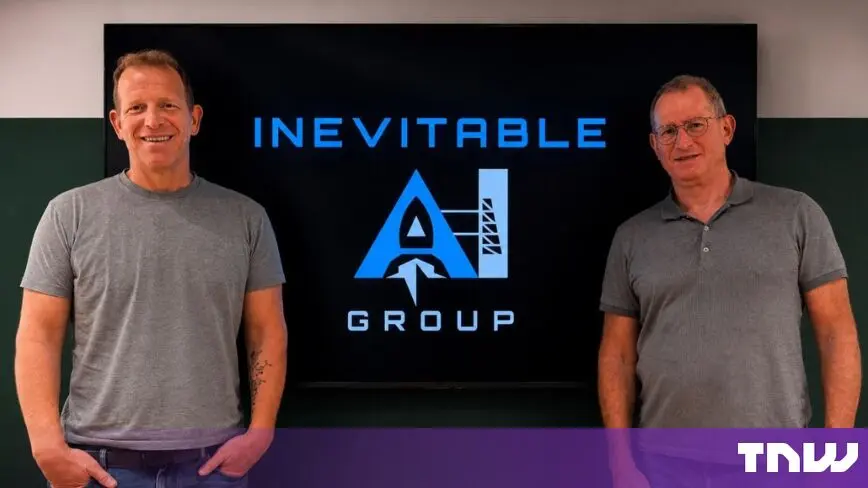
Inevitable AI Group (IAIG) has closed a $6 million pre-seed financing round led by Aleph, one of Israel's top venture capital firms behind unicorns like Melio, HoneyBook, and Lemonade
1
2
. The AI-native venture studio was founded by Nimrod Lehavi and Ofer Bar-Or, previously co-founders at Simplex, a global on-ramp infrastructure company sold to Nuvei for $250 million1
. IAIG operates on the premise that artificial intelligence developments allow lean teams to develop, launch, and scale commercial software platforms faster and more efficiently than traditional models.The venture studio has already launched nine independent ventures since initiating operations in January, with plans to deploy dozens of additional platforms before year-end
2
. IAIG's methodology encompasses market identification, product engineering, targeted go-to-market execution, and institutional growth management1
. By integrating AI automation across every stage of the enterprise incubation pipeline, the studio achieves complete functional parity with established software tools in weeks while maintaining reduced structural overhead. Lehavi explained that AI systems like Claude Code can quickly generate code for almost any application, enabling smaller teams to design, build, launch, and scale new software businesses much faster than previously possible2
.The studio concentrates on software sectors with demonstrated commercial demand, prioritizing categories where AI integration significantly upgrades operational efficiency, functional accessibility, and pricing models
1
. IAIG follows a stringent process when selecting entrepreneurs, targeting those building AI-native products in established software markets with proven demand2
. One portfolio company, Corebee Chat Ltd., exemplifies this strategy by taking on incumbents like Zendesk Inc., Freshdesk Inc., and ServiceNow Inc. in a market generating $25 billion in annual revenue2
. While Zendesk's architecture assumes humans are always in the loop, Corebee designed its platform knowing humans aren't needed, with AI agents reading tickets, retrieving information, and responding in seconds.Other startups in IAIG's portfolio include Spiceform Inc., creating AI-powered forms that adapt dynamically to each user; VScout Ltd., an AI-native recruitment platform; Keply Ltd., an automated customer success platform; Rumore Ltd., selling AI-enabled reputation management software; and Mahakala, an AI-based smart scheduling application
2
. Each startup delivers enterprise-grade products at much lower costs by designing their entire business development and operational strategy around automation from the outset. This allows them to operate with dramatically smaller teams compared to legacy competitors.Related Stories
Traditional software platforms and big tech companies struggle to adapt to AI because they are weighed down by legacy technology and slow processes
1
. For established firms encumbered with complex architecture and outdated operating models, integrating AI agents that automate business processes proves incredibly difficult2
. Purpose-built AI-native platforms sidestep these challenges by automating heavy development and maintenance work, allowing small teams to scale rapidly and support massive user bases. Lehavi stated that many of today's software companies were designed for a different technological era, creating opportunities to build a new generation of companies that move faster, operate more efficiently, and deliver greater value.Aleph Partner Eden Shochat noted that AI isn't killing SaaS but reinventing it, giving customers the ability to create tools tailored to their needs on demand
2
. IAIG anticipates the next paradigm of the software sector will be shaped by hyper-efficient organizations capable of building enterprise-grade tools at lower price points and accelerated deployment schedules1
. The company projects an increase in strategic acquisitions, corporate integration partnerships, and platform consolidations between emerging AI-native startups and legacy software providers adjusting to AI-driven workflows. Looking forward, IAIG intends to expand its global founder network, enter broader enterprise software verticals, and continually refine its venture-building infrastructure built specifically for the AI ecosystem.Summarized by
Navi
[1]
22 Oct 2024•Technology

21 Aug 2025•Business and Economy

29 Jun 2026•Startups

1
Technology

2
Technology

3
Science and Research