Innosilicon Unveils Fantasy 3 GPU: China's Ambitious Leap into High-Performance Computing


2 Sources
[1]
China's latest Fenghua GPU debuts with 112+GB of HBM memory, claims CUDA compatibility and ray tracing support
Serving tech enthusiasts for over 25 years. TechSpot means tech analysis and advice you can trust. What we know so far: Chinese tech firm Innosilicon Technology has unveiled the Fenghua No. 3 graphics card, a homegrown GPU built entirely on a new architecture. The launch marks a major step
[2]
Chinese GPU Maker, Innosilicon, Unveils Fantasy 3 GPU With Massive 112 GB VRAM, DX12 & HW-RT Support With CUDA-Compatibility
Innosilicon, a Chinese GPU maker, has announced the Fantasy 3 GPU, which features a massive 112 GB VRAM for AI tasks while supporting DX12, HW-RT & CUDA. Innosilicon Goes All Out With Massive 112 GB Fantasy 3 GPU, Dual-Slot Design For AI Tasks While Supporting CUDA, DX12 & HW-RT Innosilicon has
Share
Copy Link
Chinese tech firm Innosilicon introduces the Fantasy 3 GPU, featuring 112+ GB of HBM memory, CUDA compatibility, and ray tracing support. This launch marks a significant step in China's efforts to reduce dependence on foreign chipmakers.
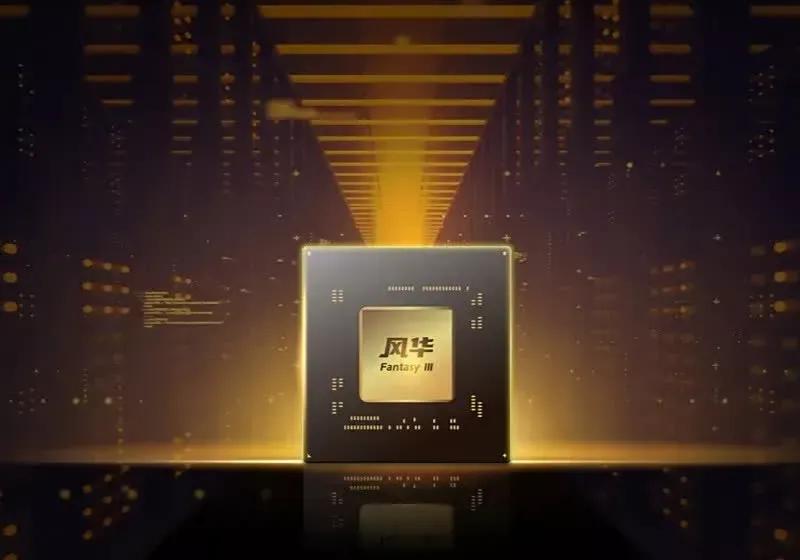
Innosilicon's Fantasy 3 GPU: A New Contender in the Global Chip Market
Chinese tech firm Innosilicon Technology has unveiled its latest graphics card, the Fantasy 3 GPU (also known as Fenghua No. 3), marking a significant milestone in China's efforts to reduce dependence on foreign chipmakers like Nvidia and AMD
1
2
. This new GPU represents a major leap forward in Chinese semiconductor technology, potentially impacting various sectors including gaming, AI development, and data center markets.Technical Specifications and Capabilities
The Fantasy 3 GPU boasts impressive specifications, most notably its massive 112+ GB of high-bandwidth memory (HBM)
1
2
. This substantial memory capacity makes it well-suited for large-scale AI workloads, with a single unit capable of supporting 32B and 72B models. When combined in an eight-card configuration, it can reportedly run models as large as 671B and 685B1
.Innosilicon claims that the Fantasy 3 is compatible with Nvidia's CUDA platform, which would significantly expand its software support
1
. However, this claim has not been independently verified. The GPU also supports DirectX 12, Vulkan 1.2, and OpenGL 4.6, making it potentially viable for gaming and professional graphics applications1
2
.Architecture and Design
Unlike its predecessors, which were based on Imagination Technologies' PowerVR IP, the Fantasy 3 is built on a new architecture
1
. It utilizes the open-source RISC-V architecture, with inputs from the OpenCore Institute's Nanhu V3 project1
. This shift in architecture is expected to enhance the card's power and efficiency.The Fantasy 3 features a vGPU design architecture with hardware virtualization, making it suitable for data center applications
1
. It's also touted as the first Chinese GPU to support hardware ray tracing and the first GPU worldwide with DICOM medical grayscale display capabilities1
.Related Stories

Potential Applications and Market Impact
Innosilicon positions the Fantasy 3 as a versatile, multi-function GPU suitable for various applications, including:
- Scientific computing and large-scale science workloads for HOPC
- 3D modeling and CAD
- Medical imaging
- Gaming and cloud computing
- AI model training and inference
1
2
The company demonstrated the GPU's gaming capabilities by running popular titles such as Tomb Raider, Delta Force, and Valorant
1
. However, no performance benchmarks were provided, leaving its real-world gaming performance unclear.Implications for China's Semiconductor Industry
The launch of the Fantasy 3 GPU represents a significant step forward in China's ambitions to develop a robust domestic semiconductor industry. As trade tensions and export restrictions continue to impact China's access to cutting-edge chip technology, the development of homegrown alternatives like the Fantasy 3 becomes increasingly important
1
2
.While the Fantasy 3 shows promise, it remains to be seen how it will compare to established products from industry leaders like Nvidia and AMD in terms of performance, efficiency, and software ecosystem support. The success of this GPU could have far-reaching implications for the global semiconductor market and China's technological self-reliance efforts.
References
Summarized by

Navi
Related Stories
China's Lisuan Tech Unveils Homegrown 6nm GPUs for Gaming and AI, Challenging Global Competitors
27 Jul 2025•Technology
Intel's Dual-GPU Arc Pro B60: A 48GB GDDR6 Powerhouse for AI Workloads
20 May 2025•Technology
Chinese Factories Push GPU Boundaries: From RTX 4090 Mods to Rumored 128GB RTX 5090
08 Sept 2025•Technology

Recent Highlights



Recent Highlights
Today's Top Stories



Don’t drown in AI news. We cut through the noise - filtering, ranking and summarizing the most important AI news, breakthroughs and research daily. Follow topics that matter to you and stay ahead.


