6 Sources
[1]
Pre-modded 22GB RTX 2080 Ti cards surface on eBay for $500 as VRAM-hungry local AI fans chase down every spare FLOP -- Hong Kong-based seller offers AI-friendly memory mod for a reasonable price
No FLOPS left behind as the AI gold rush revives eight-year-old hardware The AI boom means that no matrix math FLOPS are disposable, and that means older Nvidia GPUs with Tensor Cores are getting a new lease on life. Services are popping up that will outfit your RTX 2080 Ti with 22GB of VRAM, doubling its original memory pool and making it more useful for modern LLM and diffusion workloads. If you're hard up for compute and you don't have an RTX 2080 Ti to modify, however, eBay has just the thing. A Hong Kong-based seller will send you a pre-modded 22GB 2080 Ti in exchange for $499. The listing only promises that you'll receive a "Turbo," i.e., blower-style, RTX 2080 Ti with the 22GB mod. Don't get too picky about the particular brand of card you might receive, as the seller says: "The GPU brand could be Gigabyte, MSI, ASUS, Leadtek or others. It depends on what we have in hand." The eBay listing photos show a Gigabyte blower-style card along with a large box of presumably modified cards ready to ship and a GPU-Z screenshot confirming the availability of 22528 MB of memory from a running card. The seller only has 99.6% lifetime feedback on eBay, which is relatively low, but feedback for this specific listing shows that at least 38 happy buyers have received these cards and that they're working as described. Assuming you can count yourself as one of those happy buyers, a $500 22GB RTX 2080 Ti might be the best VRAM bang for your buck that you can find these days. That relatively large memory pool, combined with the RTX 2080 Ti's 616 GB/s of memory bandwidth and Tensor Cores, means that it's still useful for local LLM tasks, although its raw compute capacity and limited reduced-precision data type support compared to more modern products might make demanding diffusion workloads leisurely. Among Turing cards, the 24GB Titan RTX still commands about $800 on eBay at today's prices, and a Quadro RTX 6000 with the same amount of VRAM is about $900. The local AI enthusiast's favorite RTX 3090, which has 24GB of faster GDDR6X offering 936 GB/s of memory bandwidth, looks to be selling for about $1200. Ampere RTX Pro cards with even more VRAM rapidly get more expensive from there. The fact that all of these GPUs are still commanding such high prices many years after their introduction is a testament to the continuing utility and universal availability of Nvidia's Tensor Core architecture across both consumer and data center products since 2018. AMD has had matrix math accelerators in its IP arsenal since CDNA 1 in 2020, but their availability has been limited to Instinct data center products until RDNA 4 arrived early last year. Intel included XMX matrix engines in the Alchemist architecture from the start in late 2022, but Arc graphics products have faced considerable challenges beyond the presence or absence of that capability. And Apple only just introduced Neural Accelerators to its GPUs with the M5 family. All that means that if you're hard up for VRAM capacity and still need a decent amount of compute to go with it, a 22GB RTX 2080 Ti could be a compelling and relatively budget-friendly way to get there, and you get access to the entirety of the CUDA software ecosystem in the bargain. Not bad for an eight-year-old GPU that might have previously ended up in the e-waste bin by now. Follow Tom's Hardware on Google News, or add us as a preferred source, to get our latest news, analysis, & reviews in your feeds.
[2]
Modded Nvidia RTX 2080 Ti with 22GB VRAM is selling on eBay for $500
Cutting corners: As the memory crisis makes modern graphics cards less affordable each month, users, manufacturers, repair shops, and resellers are finding creative ways to squeeze every gigabyte of VRAM out of a skewed market. One method involves upgrading a nearly decade-old flagship GPU. Budget users shopping for a path toward mid-range 4K gaming or heavy AI workloads might want to investigate a Hong Kong-based reseller. The vendor recently began offering Nvidia's RTX 2080 Ti with double its original memory for less than its current average price. Originally released in 2019 with 11GB of GDDR6 VRAM, the 2080 Ti was a flagship in its day and still keeps pace with more recent mid-range cards. The GPU launched with an MSRP of $999 but can typically be found for roughly $670 these days. However, users still holding on to eight-year-old 2080 Ti cards can double the GPU's memory to 22GB by replacing its 11 1GB modules with the same number of 2GB modules. Less savvy users can pay repair shops like the UAE-based GPU Solutions to perform the operation, and Zhou's store recently began selling pre-modded units on eBay for $529. The reseller notes that the modded GPUs come from various manufacturers, including Gigabyte, MSI, Asus, and Leadtek. The upgrade gives the 2080 Ti ample headroom for handling diffusion models, large language models, and modern games at 4K with high-resolution textures and ray tracing. Modding an existing GPU is likely a good way to extend its lifespan during a time when rising memory costs have led to price hikes, with more on the way. Also Read - Absurd GPU Pricing Update: Mid-2026 Edition On the other hand, while Zhou's pre-modded cards might sound like a bargain compared to typical offers for stock models, shoppers might also want to consider more recent mid-range GPUs with similar or slightly better performance. The 2080 Ti's closest modern alternative is probably the 16GB RTX 5060 Ti, which currently goes for around $570. Its slightly better performance, more advanced ray tracing cores, and support for frame generation might make the modestly higher price worthwhile if gaming is the primary use case - and 16GB is still plenty of memory for 4K gaming. Shoppers should probably decide soon, as GPUs are expected to become even more expensive in the coming months as the RAM crisis worsens. The situation is so extreme that cards available at MSRP have become one of QuakeCon's main attractions, and experts expect conditions to last at least through 2027.
[3]
Modified GeForce RTX 4080 Cards Appear With 32GB of GDDR6X
Unofficial GeForce RTX 4080 cards with 32GB of GDDR6X memory have appeared on the Chinese second-hand market. A normal RTX 4080 provides 16GB across a 256-bit interface. The modified cards replace or repopulate the memory devices to double capacity without changing bus width or memory bandwidth. The GPU retains 9,728 CUDA cores. Additional VRAM therefore does not improve ordinary rendering throughput and will generally have little effect in games that already fit inside 16GB. The modification is aimed at local AI, rendering and data-processing workloads where model or dataset capacity matters more than gaming performance. A 32GB card can run models that would otherwise require aggressive quantization, CPU-memory offloading or a substantially more expensive professional accelerator. Listings reportedly exceed CNY 10,000, approximately $1,479. Pricing varies because these are modified used products rather than standardized retail cards. Custom firmware or drivers may be required for the GPU to recognize the altered memory configuration. Compatibility with future NVIDIA drivers is consequently uncertain. The cards do not carry an ordinary manufacturer warranty, and memory replacement requires advanced board-level rework. Poor soldering, unsuitable memory timings or inadequate cooling can cause intermittent errors that may be difficult to diagnose. Buyers should also verify actual memory capacity and stability rather than trusting a modified firmware report. Extended CUDA memory tests and sustained workloads are more useful than a screenshot from a system-information utility. Modified RTX 4080Specification CUDA cores9,728 Original memory16GB GDDR6X Modified memory32GB GDDR6X Memory interface256-bit, unchanged Primary targetLocal AI and memory-heavy compute Observed priceAbove CNY 10,000 (about $1,479) WarrantyNo normal manufacturer coverage
[4]
RTX 4080 graphics cards with 32GB VRAM spotted in China's second-hand GPU market
Modified GeForce RTX 4080 cards with double the VRAM are turning up on Goofish, China's secondhand marketplace, according to VideoCardz. These are stock RTX 4080 units that started life with 16GB of GDDR6X memory and have been upgraded to 32GB, with sellers asking more than 10,000 yuan, or roughly $1,480 for these cards. We've seen a similar trend recently with the RTX 2080 Ti cards bumped to 22GB, which sell for around $500 on eBay. Of course, the newest RTX 4080 flavor of this conversion costs almost three times that, but you are getting more GPU for that price premium as well. The RTX 4080 still runs a 256-bit memory bus and 9,728 CUDA cores, so doubling the VRAM doesn't touch bandwidth or gaming performance. The upgrade only really matters for AI inference, where fitting a larger model into local memory tends to matter more than raw throughput. It isn't just RTX 4080s that are being given the AI-ready treatment. We've tracked similar mods on the RTX 4080 SUPER, which showed up with 32GB last year for around 9,200 yuan, and on the RTX 4090, which has been pushed to 48GB and even teased at a wild 96GB. The scale here seems to be growing too. It should be noted that these RTX 4080 conversions look less like one-off repair shop projects and more like a proper segment of the secondhand GPU market at this point. The modding process reportedly involves swapping in higher-capacity memory chips and adjusting the board so the GPU actually recognizes the extra VRAM. It's the same basic trick used on the 2080 Ti and 4080 SUPER conversions, and it seems to work well enough that these GPUs now have their own dedicated market segment. For AI hobbyists or small operations that are priced out of workstation-class hardware (like the refurbished RTX 4090D cards Chinese data centers have been offloading), a modded 32GB 4080 probably looks tempting next to official options that cost several times more. Of course, the risk with these cards is that these aren't NVIDIA-sanctioned builds, so there's no factory warranty, no guarantee the memory chips are running within spec long-term, and no way to know exactly who did the soldering. Stability under sustained AI workloads is anyone's guess until more of these cards get real-world mileage. It's worth watching whether NVIDIA or its partners try to crack down on this practice, given how normalized it's become across the RTX 40 series. For now, it looks like the modding scene in China isn't slowing down.
[5]
Modders are selling RTX 2080 Ti GPUs with 22GB VRAM on eBay for AI use
A Hong Kong-based eBay seller is now selling GeForce RTX 2080 Ti cards modded with 22GB of VRAM, double the 11GB the card shipped with back in 2018. The listing costs $499 and promises a working "Turbo" blower-style card, though buyers won't get to pick the brand. The seller's description says the card could be a GIGABYTE, MSI, ASUS, Leadtek, or whatever happens to be in stock that day. Listing photos show a GIGABYTE blower card alongside a box stacked with modded units ready to ship, plus a GPU-Z screenshot confirming 22,528MB of memory on a running card. The seller's feedback score sits at 99.6 percent, and buyers on the listing itself, at least 38 of them, report the cards work as advertised. VRAM mods like this trace back to modders in China, where cards like the RTX 4090 have been effectively banned from export under US sanctions. Rather than let older or restricted hardware go to waste, some workshops there have been stripping cards down, swapping in higher capacity memory chips, and reselling them with server-friendly blower coolers built for AI racks rather than gaming rigs. The appeal for local AI users is straightforward. Running large language models or diffusion models locally is mostly a memory capacity problem before it's a raw compute problem. The 22GB gives the RTX 2080 Ti's Tensor Cores and memory bandwidth enough headroom for LLM inference, even if the card's older precision support makes heavier diffusion workloads slower. For consumers hunting for budget AI hardware, that $499 price still looks decent next to the alternatives. A 24GB Titan RTX runs about $800 on eBay right now, a 24GB Quadro RTX 6000 is close to $900, and a 24GB RTX 3090 is selling for around $1200. Modern RTX Pro cards with more VRAM cost considerably more. It's also a reminder that NVIDIA's Tensor Core architecture, present in every GeForce and workstation GPU since Turing launched in 2018, keeps finding new uses well past its original shelf life. That's good news for AI hobbyists on a budget, though it could mean less stock 2080 Ti supply left over for gamers just looking for a cheap secondhand upgrade. Given the stock on hand, this Hong Kong outlet seems to be a serious operation rather than just one modder swapping memory modules just for fun. So, if you're in need of lots of VRAM on a budget, and want to run local AI models, then these modded RTX 2080 Tis seem to be a solid option.
[6]
NVIDIA CMP 170HX 8/10 GB Prices Explode From $100 to Over $1,000 Overnight After Tool Unlocks Hidden 64/80GB VRAM
NVIDIA's CMP 170HX GPUs have allegedly received a second life with a new tool that unlocks up to 80 GB memory, making them a viable AI solution. From Mining Crypto To Mining AI Tokens, NVIDIA CMP 170HX Tool Unlocks Up To 80 GB VRAM & Full Ampere GPU Access The CMP 170HX GPU was launched all the way back in 2021. It was released at the peak of the mining craze and offered a cut-down A100 "Ampere" configuration with 8 GB and 10 GB VRAM options. The card found multiple uses after the crypto mining crash, but didn't really seem to be of much use, especially due to its lacking 3D rendering support. Now, five years later, it looks like the CMP 170HX GPUs have found a new life. A new unlock tool has popped up that reportedly unlocks the CMP 170HX chip. This tool is called "CMPUnlocker" and is available on GitHub for download. According to the description, the CMPUnlocker Tool restores the full SM compute throughput and unlocked HBM2e memory geometry that is restricted within the NVIDIA firmware/OTP. NVIDIA placed various locks on the CMP 170HX, making it a "mining only" card, but the AI era is offering a new life to this chip. There are a few catches, though: the 8 GB 170HX can be unlocked to 64 GB, while the 10 GB can be unlocked to 80 GB but not everyone is going to see the fully unlocked memory stack because CMP 170HX is based on a lower bin of the original A100 Ampere GPU, and most of these HBM2e stacks are disabled due to the use of defective or subpar memory dies. As a result, only certain chips will expose the full memory capacity, and then you aren't assured the full memory speed. Getting something like 32 GB and 40 GB will be decent enough, but the max memory will only work on chips that have better memory dies. Some cards won't even sustain full bandwidth with the unlock and will lower clock speeds depending on the quality of the HBM silicon. Bandwidth is around 700-800 GB/s per board. It is reported that the Samsung dies used on the 10 GB models unlock to 80 GB but are unstable, while the 8 GB model with Hynix is more stable when unlocked to 64 GB. Now, whether these chips are practical for AI use, well, many users are already using the tool and running various models. The chip only supports up to INT8 data formats, no FP8 or FP6/FP4 like the newer NVIDIA chips, and the performance is rated at 48 TOPS. So summing things up (via r/LocalLLaMA): * Stability at 64GB is not guaranteed -- the original research paper only got 40GB to work reliably under stress. Some users report 64GB working, others report instability. * PCIe is limited to Gen2 x4 (you need physical soldering to get x16 Gen1 and unlock Gen2). * No FP8/FP4 support** -- so it's not as fast as a 5090 despite the VRAM. * Some cards may have defective memory stacks -- NVIDIA likely disabled portions that failed testing, so your mileage varies. The more interesting part is the price. Just a few weeks ago, the NVIDIA CMP 170HX GPUs were selling for around $100-$200 US, and now, the prices have jumped beyond $1000 US as soon as this unlock tool was released. Now, the card is going off for $1200-$2000 in various eBay listings. Now, if you look at it from one side, a 64 GB or 80 GB chip in this price range is a solid deal, but you also have to consider the drawbacks stated above, which turns this into a lottery. You'll never know what sort of quality or bin you get, but these chips are selling fast now, with some buyers booking multiple 100 units. Follow Wccftech on Google to get more of our news coverage in your feeds.
Share
Copy Link
Modified GPUs are flooding second-hand markets as AI enthusiasts seek affordable VRAM capacity. A Hong Kong-based seller is offering modded RTX 2080 Ti cards with 22GB VRAM for $499 on eBay, while modified RTX 4080 graphics cards with 32GB are appearing in China's Goofish marketplace for approximately $1,479. These unofficial upgrades double original memory pools without manufacturer warranties but offer budget-friendly paths to running large language models and diffusion models locally.
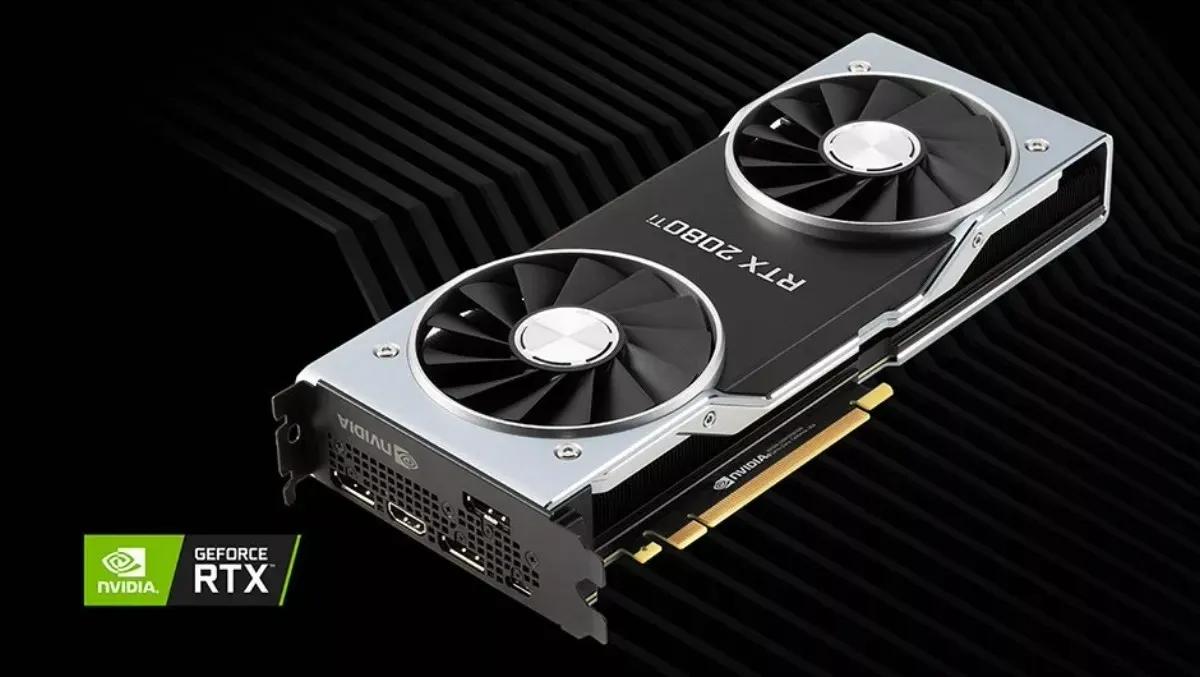
Modified GPUs with doubled VRAM are emerging as a practical workaround for AI enthusiasts priced out of professional-grade hardware. A Hong Kong-based seller on eBay is now offering pre-modded RTX 2080 Ti cards with 22GB of VRAM for $499, double the 11GB the card shipped with in 2018
1
5
. The listing promises a blower-style card from brands including Gigabyte, MSI, ASUS, or Leadtek, depending on available stock. At least 38 buyers have confirmed the cards work as advertised, despite the seller's 99.6% feedback rating1
. Listing photos show boxes stacked with modded units and GPU-Z screenshots confirming 22,528MB of memory capacity on running cards5
.
Source: TweakTown
The modifications involve replacing the original 11 1GB memory modules with 2GB modules, a process that less technically savvy users can outsource to repair shops like UAE-based GPU Solutions
2
. This upgrade gives the eight-year-old Nvidia GeForce card enough headroom for handling diffusion models, large language models, and modern games at 4K with high-resolution textures. The RTX 2080 Ti's 616 GB/s memory bandwidth and Tensor Cores remain useful for local AI tasks, though limited reduced-precision data type support compared to newer products may slow demanding workloads1
.Unofficial GeForce RTX 4080 cards with 32GB of GDDR6X memory have appeared on China's second-hand market platform Goofish, with sellers asking more than 10,000 yuan, approximately $1,479
3
4
. Standard RTX 4080 cards ship with 16GB across a 256-bit interface, but modified versions replace or repopulate memory devices to double capacity without changing bus width or memory bandwidth. The GPU retains its 9,728 CUDA cores, meaning additional VRAM doesn't improve ordinary rendering throughput and has little effect in games that already fit inside 16GB3
.
Source: Guru3D
These modifications target local AI, rendering, and data-processing workloads where memory capacity matters more than gaming performance. A 32GB card can run models that would otherwise require aggressive quantization, CPU-memory offloading, or substantially more expensive professional accelerators
3
. The trend extends beyond the RTX 4080—similar mods have appeared on the RTX 4080 SUPER with 32GB for around 9,200 yuan, and on the RTX 4090 pushed to 48GB with 96GB versions teased4
. What started as one-off repair shop projects now appears to be a proper segment of the Chinese market.Running large language models or diffusion models locally is primarily a memory capacity problem before it becomes a raw compute problem. The AI boom means no matrix math FLOPS are disposable, giving older Nvidia GPUs with Tensor Cores a new lease on life
1
. For AI hobbyists or small operations priced out of workstation-class hardware, a modded 32GB RTX 4080 looks tempting compared to official options costing several times more4
.The $499 modded RTX 2080 Ti offers compelling value compared to alternatives. A 24GB Titan RTX commands about $800 on eBay currently, a Quadro RTX 6000 with the same VRAM runs approximately $900, and the AI enthusiast favorite RTX 3090 with 24GB of faster GDDR6X offering 936 GB/s memory bandwidth sells for around $1,200
1
. That these GPUs still command such high prices many years after introduction testifies to the continuing utility of Nvidia's Tensor Core architecture across both consumer and data center products since 20181
.Related Stories
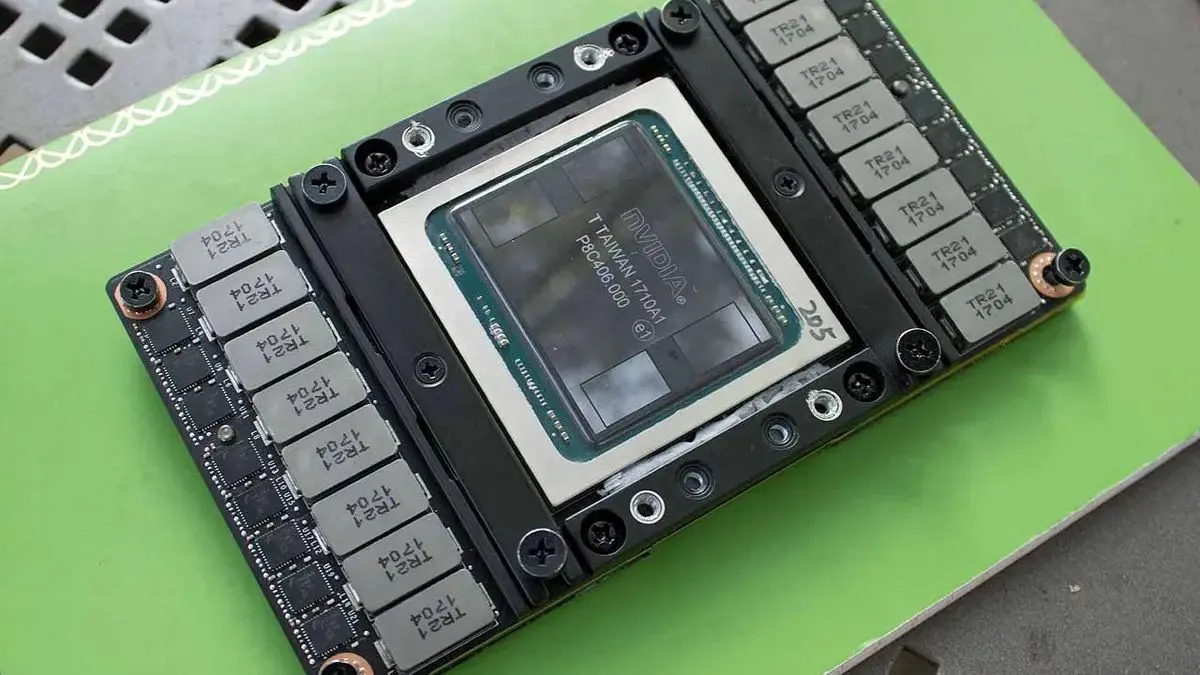
These modified GPUs carry significant risks that buyers should weigh carefully. Custom firmware or drivers may be required for the GPU to recognize altered memory configurations, making compatibility with future Nvidia drivers uncertain
3
. The cards don't carry normal manufacturer warranties, and memory replacement requires advanced board-level rework. Poor soldering, unsuitable memory timings, or inadequate cooling can cause intermittent errors difficult to diagnose3
. Buyers should verify actual memory capacity and stability through extended CUDA memory tests and sustained workloads rather than trusting modified firmware reports or screenshots from system-information utilities3
.
Source: Tom's Hardware
Stability issues under sustained AI workloads remain uncertain until more cards accumulate real-world mileage. There's no guarantee memory chips are running within spec long-term, and no way to verify exactly who performed the soldering
4
. For gaming-focused users, the 16GB RTX 5060 Ti at around $570 might prove worthwhile despite the modest price premium, offering slightly better performance, more advanced ray tracing cores, and frame generation support with 16GB still plenty for 4K gaming2
.VRAM mods trace back to modders in the Chinese market, where cards like the RTX 4090 have been effectively banned from export under US sanctions. Rather than let older or restricted hardware go to waste, workshops strip cards down, swap in higher capacity memory chips, and resell them with server-friendly blower coolers built for AI racks rather than gaming rigs
5
. The scale appears to be growing—RTX 4080 conversions look less like one-off projects and more like a dedicated market segment4
.Rising memory costs have led to GPU price hikes with more expected through at least 2027. The situation has become so extreme that cards available at MSRP have become main attractions at events like QuakeCon
2
. For budget users hard up for VRAM capacity who still need decent compute, a 22GB RTX 2080 Ti or 32GB RTX 4080 could be compelling options with access to the entire CUDA software ecosystem. What might have ended up in e-waste bins is instead finding new purpose serving AI workloads, though whether Nvidia or its partners attempt to crack down on this normalized practice across the RTX 40 series remains to be seen1
4
.Summarized by
Navi
28 Dec 2025•Technology

08 Sept 2025•Technology

05 Mar 2025•Technology

1
Technology

2
Policy and Regulation

3
Technology