Inside OpenAI: Former Engineer Reveals Culture of Secrecy, Intensity, and Rapid Growth


6 Sources
[1]
Ex-OpenAI Employee: It's a 'Very Secretive' Company -- With an X Obsession and 'No Email'
(Credit: Kevin Dietsch / Staff / Getty Images News via Getty Images) Three weeks after leaving his role at OpenAI, Calvin French-Owen has detailed his experience in a new post where he characterizes the ChatGPT-maker as high-pressure, secretive, and obsessed with "vibes" on social
[2]
Former OpenAI staffer reveals culture of secrecy, speed, and X obsession
Serving tech enthusiasts for over 25 years. TechSpot means tech analysis and advice you can trust. In brief: A former OpenAI employee has revealed some details about the company that went from near obscurity to kickstarting the generative AI revolution in a short amount of time. Not only is the
[3]
A Top Engineer Reveals OpenAI's Culture of Secrets and Chaos
Calvin French-Owen only worked at OpenAI for a year, but he saw more in twelve months than most engineers do in a lifetime. As a successful founder turned employee, he joined the world's leading artificial intelligence company in May 2024 and left in June 2025. What he walked into was not a typical
[4]
OpenAI Engineer Quits, Says Company Is Pure Chaos Inside
OpenAI CEO Sam Altman is setting a breakneck pace with his company, rolling out feature after feature to keep the multibillion-dollar gravy train steaming ahead. And that kind of drum beat, especially paired with ChatGPT's meteoric rise, is bound to cause plenty of chaos behind the scenes. In a
[5]

A former engineer reveals what it's really like inside OpenAI
Calvin French-Owen, an engineer previously engaged with a new OpenAI product, resigned three weeks ago, subsequently detailing his year-long tenure in a blog post that offers insight into the company's operational culture and the development of its Codex coding agent. French-Owen clarified his
[6]

Here's What It's Like to Work at OpenAI, According to an Employee Who Quit 3 Weeks Ago
In a blog post, French-Owen offered insight into his time at the company, including a seven-week sprint that resulted in OpenAI's Codex coding assistant. When engineer and MIT graduate Calvin French-Owen joined OpenAI in May 2024, the startup had around 1,000 employees. A year later, OpenAI's
Share
Copy Link
A former OpenAI engineer, Calvin French-Owen, shares insights into the company's internal culture, highlighting its rapid growth, intense work environment, and unique operational practices.
Rapid Growth and Chaotic Environment
Calvin French-Owen, a former OpenAI engineer who worked on the Codex project, has provided a revealing look into the company's internal culture. During his year-long tenure from May 2024 to June 2025, French-Owen witnessed OpenAI's explosive growth, with the company expanding from 1,000 to over 3,000 employees
1
2
. This rapid scaling led to significant operational challenges, as French-Owen noted, "Everything breaks when you scale that quickly: how to communicate as a company, the reporting structures, how to ship product, how to manage and organize people, the hiring processes, etc."3
The company's growth has resulted in a chaotic environment where multiple teams often duplicate efforts. French-Owen observed "half a dozen libraries for things like queue management or agent loops"
3
. Despite its size, OpenAI maintains a startup-like atmosphere, with a strong bias towards action and quick decision-making1
4
.
Source: Futurism
Intense Work Culture and Communication
OpenAI's work culture is characterized by high intensity and long hours. French-Owen described the development of Codex as "probably the hardest I've worked in nearly a decade," with most nights extending until 11 PM or midnight, and work continuing on weekends
1
. This aligns with reports from other sources, suggesting that 12-hour workdays are common, with some employees working up to 14 hours a day, six days a week1
2
.Interestingly, the company relies almost exclusively on Slack for internal communication. French-Owen stated, "There is no email. I maybe received ~10 emails in my entire time there"
1
2
. This unique approach to communication contributes to the company's ability to move quickly and change direction rapidly1
.Secrecy and Public Perception
OpenAI maintains a high level of secrecy, both internally and externally. French-Owen described it as "a very secretive place," where employees often couldn't discuss their work in detail, even with colleagues
1
. This secrecy extends to financial information, although it was clear that the company is spending significant amounts on computing power, particularly GPUs1
.Interestingly, the company pays close attention to social media, especially X (formerly Twitter). French-Owen noted, "If you tweet something related to OpenAI that goes viral, chances are good someone will read about it and consider it"
1
4
. This focus on public perception and "vibes" plays a significant role in shaping the company's direction and product development1
4
.Related Stories

AI Safety and Ethical Considerations
Contrary to some external perceptions, French-Owen emphasized that OpenAI does focus on AI safety. However, their primary concern is with immediate, practical risks such as hate speech, abuse, political manipulation, and prompt injection, rather than long-term theoretical risks like intelligence explosion
3
5
. The company acknowledges the high stakes involved, given that hundreds of millions of people are using their large language models for various applications, including medical advice and therapy5
.
Source: Gizmodo
Technical Challenges and Innovation
Despite the chaotic environment, OpenAI continues to ship groundbreaking tools like ChatGPT and Codex. The development of Codex, for example, was completed in just seven weeks by a small team
3
4
. However, the rapid pace of development has led to some technical challenges. French-Owen described the main software system, sa-server, as "a bit of a dumping ground," highlighting the difficulties in managing a rapidly growing codebase3
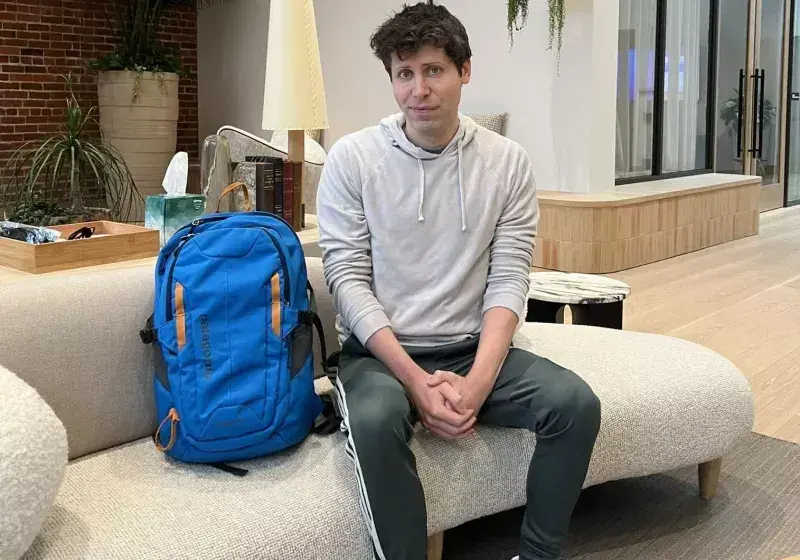
.
Source: TechSpot
In conclusion, French-Owen's account provides a unique insight into one of the most influential AI companies in the world. While the intense work culture and chaotic environment present challenges, they also contribute to OpenAI's ability to innovate rapidly in the fast-paced field of artificial intelligence.
References
Summarized by

Navi
[1]
Related Stories
OpenAI's Leadership Exodus: Key Executives Depart Amid Strategic Shift
28 Sept 2024

OpenAI Reportedly Developing Social Media Platform, Potentially Rivaling X and Meta
16 Apr 2025•Technology

OpenAI faces internal turmoil as Sam Altman pushes IPO amid executive clashes and spending crisis
06 Apr 2026•Business and Economy
Recent Highlights



Recent Highlights
Today's Top Stories






Don’t drown in AI news. We cut through the noise - filtering, ranking and summarizing the most important AI news, breakthroughs and research daily. Follow topics that matter to you and stay ahead.


