Instacart's AI Shopping Carts Track Your Location and Serve Targeted Ads in Real-Time


2 Sources
[1]
Grocery Stores Deploying "AI Shopping Carts" Stuffed With Cameras to Track Your Exact Coordinates and Bombard You With Ads
Can't-miss innovations from the bleeding edge of science and tech Whether you're dodging Flock cameras on the freeway, ever-listening smartphones in your pocket, or AI bots at the drive-thru, it's nearly impossible to avoid some type of AI-integrated device these days. Now it turns out that not
[2]
Instacart is testing camera-ready AI shopping carts that sound convenient, but equally scary
Caper Carts promise faster checkout and personalized savings, but the cameras, location tracking, and on-cart ads make grocery shopping feel a lot less private. Instacart's AI shopping carts are moving into select Weis Markets stores in Pennsylvania, with more locations planned this year. On the
Share
Copy Link
Instacart is rolling out AI shopping carts equipped with cameras and location tracking systems across Weis Markets stores in Pennsylvania. The Caper Carts promise convenience with real-time pricing and faster checkout, but they also monitor customer behavior and deliver targeted ads based on store location, sparking privacy concerns as deployments triple nationwide.
Instacart Expands AI Shopping Carts Across Grocery Stores
Instacart is accelerating the deployment of AI shopping carts across grocery stores in the United States, with Weis Markets becoming the latest retailer to adopt the technology at select Pennsylvania locations
1
. The Caper Carts represent a significant shift in how retailers monitor customer behavior and optimize sales through AI-powered shopping carts equipped with multiple sensors and surveillance capabilities2
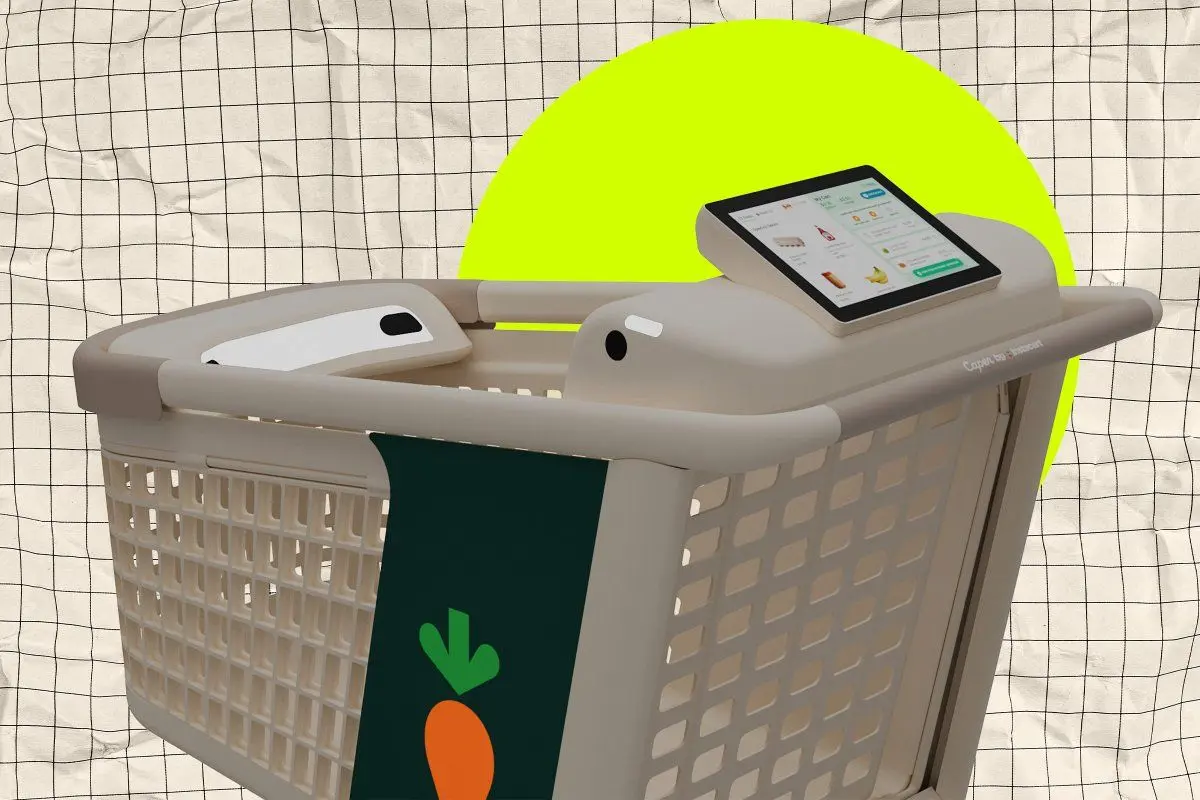
.
Source: Futurism
These camera-ready AI shopping carts come loaded with basket-facing cameras, outward-facing cameras, digital weight scales, touchscreens, payment terminals, and location tracking systems that follow shoppers throughout the store
1
. The technology uses computer vision and edge computing trained on more than 1.6 billion online grocery orders to recognize items as customers place them in the cart1
. Instacart has tripled its Caper Carts deployments year over year, with the technology now present in more than 100 cities across 15 states and more than a dozen retail banners2
.How Location Tracking Systems Enable Targeted Ads
The carts track customer coordinates in real-time and deliver targeted ads and digital coupons through the onboard screen based on which products shoppers are near
1
. Instacart's data shows that location-aware prompts have produced nearly a one percentage point average lift in basket size, demonstrating how the technology influences purchasing decisions2
. Weis Markets plans to use on-cart advertising and retail media placements tied to store location, transforming the cart into both a checkout tool and an ad panel pointed at customers in motion2
.The system also prompts shoppers to join loyalty programs and surfaces previously purchased items through a "Buy It Again" feature designed to build baskets more efficiently
1
. This integration of sensors and data policies allows retailers to register what enters the basket, follow where the cart moves, connect sessions to loyalty accounts, and surface offers while shopping is still underway2
.Privacy Concerns and Surveillance Issues Mount
The deployment raises significant privacy concerns as shoppers leave behind a detailed trail of products, movement patterns, loyalty activity, and responses to in-aisle prompts
2
. The surveillance infrastructure turns an ordinary grocery basket into a rolling sensor platform that tracks exact coordinates and purchasing behavior1
. Experts recommend that shoppers examine store terms regarding cart data, loyalty connections, ad personalization, and location-based offers before using the technology2
.Instacart isn't alone in this space. Kroger has explored its own smart-cart options with similar AI features, suggesting this technology may become standard across major grocery chains
1
. The rapid expansion mirrors concerns about other AI-integrated devices in daily life, from cameras on freeways to smartphones and drive-thru bots1
. As sales optimization becomes the primary driver for retailers, shoppers face a trade-off between convenience features like real-time pricing and faster checkout against the cost of comprehensive behavioral tracking and persistent advertising during their shopping experience.🟡 undeveloped_tool_code=🟡Instacart Expands AI Shopping Carts Across Grocery Stores
Instacart is accelerating the deployment of AI shopping carts across grocery stores in the United States, with Weis Markets becoming the latest retailer to adopt the technology at select Pennsylvania locations
1
. The Caper Carts represent a significant shift in how retailers monitor customer behavior and optimize sales through AI-powered shopping carts equipped with multiple sensors and surveillance capabilities2
.Source: Futurism
These camera-ready AI shopping carts come loaded with basket-facing cameras, outward-facing cameras, digital weight scales, touchscreens, payment terminals, and location tracking systems that follow shoppers throughout the store
1
. The technology uses computer vision and edge computing trained on more than 1.6 billion online grocery orders to recognize items as customers place them in the cart1
. Instacart has tripled its Caper Carts deployments year over year, with the technology now present in more than 100 cities across 15 states and more than a dozen retail banners2
.Related Stories

How Location Tracking Systems Enable Targeted Ads
The carts track customer coordinates in real-time and deliver targeted ads and digital coupons through the onboard screen based on which products shoppers are near
1
. Instacart's data shows that location-aware prompts have produced nearly a one percentage point average lift in basket size, demonstrating how the technology influences purchasing decisions2
. Weis Markets plans to use on-cart advertising and retail media placements tied to store location, transforming the cart into both a checkout tool and an ad panel pointed at customers in motion2
.The system also prompts shoppers to join loyalty programs and surfaces previously purchased items through a "Buy It Again" feature designed to build baskets more efficiently
1
. This integration of sensors and data policies allows retailers to register what enters the basket, follow where the cart moves, connect sessions to loyalty accounts, and surface offers while shopping is still underway2
.Privacy Concerns and Surveillance Issues Mount
The deployment raises significant privacy concerns as shoppers leave behind a detailed trail of products, movement patterns, loyalty activity, and responses to in-aisle prompts
2
. The surveillance infrastructure turns an ordinary grocery basket into a rolling sensor platform that tracks exact coordinates and purchasing behavior1
. Experts recommend that shoppers examine store terms regarding cart data, loyalty connections, ad personalization, and location-based offers before using the technology2
.Instacart isn't alone in this space. Kroger has explored its own smart-cart options with similar AI features, suggesting this technology may become standard across major grocery chains
1
. The rapid expansion mirrors concerns about other AI-integrated devices in daily life, from cameras on freeways to smartphones and drive-thru bots1
. As sales optimization becomes the primary driver for retailers, shoppers face a trade-off between convenience features like real-time pricing and faster checkout against the cost of comprehensive behavioral tracking and persistent advertising during their shopping experience.References
Summarized by

Navi
Related Stories
Instacart Unveils AI-Powered Features to Enhance Grocery Shopping Experience
28 Mar 2025•Technology

Instacart Launches AI Solutions Suite for Grocers, Debuts Cart Assistant with Sprouts and Kroger
04 Nov 2025•Technology

Instacart caught using AI pricing to charge different prices for the same groceries across stores
10 Dec 2025•Business and Economy

Recent Highlights



Recent Highlights
Today's Top Stories







Don’t drown in AI news. We cut through the noise - filtering, ranking and summarizing the most important AI news, breakthroughs and research daily. Follow topics that matter to you and stay ahead.


