6 Sources
[1]
Intel swipes Qualcomm veteran of 25 years to lead client computing -- Alex Katouzian jumps ship to oversee consumer CPUs and physical AI
Intel has announced a pair of high-profile leadership appointments as it doubles down on its AI ambitions. According to an official press release today, the company is bringing in industry veteran Alex Katouzian to lead its client computing and emerging "physical AI" efforts, while Pushkar Ranade is coming in as Chief Technology Officer to steer the company's long-term innovation strategy. The appointments clearly signal Intel's intent to more tightly align its core computing business with the rapidly evolving AI landscape, particularly at the edge and in real-world systems. Alex Katouzian is joining as executive vice president and general manager of the Client Computing and Physical AI Group, a role Intel says will align its traditional PC-focused business with emerging AI-driven systems spanning robotics, autonomous machines, and edge devices. Katouzian is bringing 25 years of industry experience from Qualcomm, spanning from when he joined as a senior engineer in 2002 to his last very senior role as executive vice president and group general manager of mobile, compute, and extended reality (XR). He is widely regarded as a key figure in scaling Qualcomm's mobile and compute platforms globally and is responsible for significant contributions to the industry, including the expansion of Snapdragon mobile platforms and Qualcomm's push into PC and XR computing. Intel believes this experience will prove invaluable as the company moves to expand beyond traditional PCs into AI-enabled, connected, and edge-based computing ecosystems. Speaking on the appointment, which officially kicks off this month, Katouzian expressed excitement about joining Intel at what he described as a pivotal moment for AI-driven transformation across computing platforms. "Intel is creating the foundation for AI-driven transformation, from leading in AI PCs, to scaling AI inference at the edge, and accelerating the future of physical AI systems," wrote Katouzian. "I'm excited to join Lip-Bu and the Intel team at this critical moment to help scale innovation and deliver the next generation of computing experiences." Katouzian announced his departure from Qualcomm on LinkedIn. The second appointment sees Pushkar Ranade transition to permanent Chief Technology Officer after serving in the role on an interim basis for several months. Ranade is not a new face at Intel and has been with the company for over 10 years. According to Intel, his role will involve leading the company's technology strategy, overseeing special technology initiatives, and driving development across emerging areas such as quantum computing, neuromorphic computing, photonics, and advanced materials. He will also serve as chief of staff to the company's CEO. Both appointments continue an existing trend as more tech companies pivot to a stronger AI focus. Microsoft, for instance, created a dedicated AI division led by DeepMind co-founder Mustafa Suleyman, alongside a series of follow-on hires to strengthen its AI leadership. Google has also brought in senior robotics leadership to push AI into physical systems. Follow Tom's Hardware on Google News, or add us as a preferred source, to get our latest news, analysis, & reviews in your feeds.
[2]
Intel appoints Qualcomm executive to lead PC and physical AI business
May 4 (Reuters) - Intel (INTC.O), opens new tab said on Monday it had appointed Alex Katouzian to lead the company's PC and physical artificial intelligence unit. The new role for Katouzian includes the company's crucial PC business, which has been one of the mainstays of Intel's revenue and profit for decades. Katouzian has worked at Qualcomm (QCOM.O), opens new tab for more than 20 years and has worked extensively in the company's mobile chip unit, which makes processors for smartphones and other gadgets. Qualcomm is attempting to challenge Intel and Advanced Micro Devices' (AMD.O), opens new tab control over the PC market with a chip based on Arm Holdings technology. Intel said Katouzian would begin his new role in May. Intel's physical AI division includes systems that power robotics, autonomous machines and other AI devices. "Alex brings deep technical expertise, strong operational discipline, and decades of experience building and scaling global compute platforms," Intel CEO Lip-Bu Tan said in a statement. "He is the right leader to help us reimagine client computing beyond the traditional PC and align this future with the next wave of growth in physical AI." Intel also named interim Chief Technology Officer Pushkar Ranade to the role permanently. Ranade will continue to serve as Lip-Bu Tan's chief of staff. Reporting by Max A. Cherney in San Francisco; Editing by Franklin Paul Our Standards: The Thomson Reuters Trust Principles., opens new tab
[3]
Intel hires Qualcomm veteran Alex Katouzian to lead a new Client Computing and Physical AI group
Alex Katouzian, a 25-year Qualcomm veteran, joins Intel to run a newly merged Client Computing and Physical AI business. It is Lip-Bu Tan's second senior Qualcomm hire of his tenure. Lip-Bu Tan's leadership of Intel has, since the early months of his tenure, run on a single recognisable pattern: hire from rivals, restructure around the new hires, and rebuild the bench. On Monday Intel announced its latest such move. Alex Katouzian, a 25-year Qualcomm veteran most recently running its mobile, compute, and extended-reality businesses, joins Intel as executive vice-president and general manager of a newly defined Client Computing and Physical AI Group. Reuters' confirmation of the appointment framed it as the second senior Qualcomm executive Tan has poached in recent months, signalling a pattern of targeted talent acquisition. Tom's Hardware described the move bluntly as Intel reaching for the operational discipline and consumer-CPU experience Qualcomm has spent two decades developing. The structural innovation is the new "Physical AI" mandate that sits alongside Client Computing in Katouzian's title. Intel's traditional client-computing business, the chips that power most of the world's PCs, is being explicitly fused with what the industry has, in 2026, started calling physical AI: chips designed for robotics, autonomous machines, edge devices, and the kinds of agentic systems that increasingly need on-device compute to function reliably. That category is not theoretical. TNW has tracked the Siemens-Nvidia humanoid-robot factory deployments, which already use a combination of edge and cloud compute, and the broader pattern of robotics, automotive, and industrial AI demanding chips that can run inference locally rather than hauling the work back to a data centre. Intel is, in effect, reorganising its client business to compete with Qualcomm and others in that emerging category. The hire fits Intel's wider repositioning. Tan's foundry strategy has been a separate but related effort, aimed at making Intel's manufacturing operations a credible alternative to TSMC. TNW reported earlier today that Apple is in early-stage discussions with both Intel and Samsung about producing some of its M-series chips. The Katouzian hire, on the design side, complements that foundry repositioning. Intel, in the new framing, will both manufacture chips for others and produce client-compute and physical-AI silicon under its own brand, with leadership now drawn from the company that has consistently led the consumer-mobile-chip market through the past decade. Yahoo Finance noted that this is the second senior Qualcomm executive Intel has hired in this AI-talent push, and that Tan's strategy is now publicly visible: rather than hiring incrementally, Intel is reorganising entire business units around external senior hires whose experience matches the categories Tan wants Intel to compete in. The success of Tan's strategy depends on whether Katouzian can take the disciplined-margin and high-volume execution model he ran at Qualcomm and apply it to a much larger, more bureaucratic, and historically less responsive Intel. The PC business is the company's largest revenue line; physical AI is the one most likely to determine its future. Combining both under a single executive with proven scale-execution credentials is, on paper, the right move. On execution, the proof points will arrive over the next 18 months: whether Intel ships a credible physical-AI chip line, whether its client business holds share against AMD and ARM-based competitors in PC, and whether the foundry side, separately, books significant Apple or Google business. None of those outcomes is guaranteed. But Tan's pattern, hire well, restructure fast, judge by output, has at least restored the appearance of strategic motion at a company that, until 18 months ago, was notable mainly for not having any.
[4]
Intel Taps Top Qualcomm Exec To Lead Client Computing, Physical AI Group
With the hiring of Alex Katouzian, who was responsible for mounting a new challenge against Intel's PC dominance with Qualcomm's Snapdragon X Series chips, the company is turning to another outsider yet again for a key position and signaling new channel opportunities. Intel said Monday that it has hired a top Qualcomm executive for a new position that will have him oversee the alignment of its long-running and critical PC business with the emerging field of physical AI, which its CEO has made a priority. With the hiring of Alex Katouzian, who was responsible for mounting a new challenge against Intel's PC dominance with Qualcomm's Snapdragon X Series chips, as executive vice president and general manager of the Client Computing Group, Intel CEO Lip-Bu Tan is turning to another outsider yet again for a key leadership position. [Related: Intel CEO Lip-Bu Tan: 'This Is A Fundamentally Different Company Today'] The company also named Pushkar Ranade, Tan's chief of staff, as Intel's CTO after he served in the role on an interim basis for the past few months. Katouzian, who will join the chipmaker this month and report directly to Tan, will "align Intel's client computing business with emerging physical AI systems that span robotics, autonomous machines and other AI devices," according to Intel. "As discussed during our [first-quarter] earnings, we are now firmly in the AI conversation, and there are many new opportunities for us at the edge and across physical AI systems, including robotics, autonomous machines and other AI devices," wrote Tan in a Monday memo about Katouzian that was seen by CRN. Christopher Cyr, CTO of North Sioux City, S.D.-based Intel systems integration partner Sterling Computers, told CRN that the hire makes sense given the chipmaker's increasing focus on reducing the power consumption of its chips, an area where Qualcomm has long been competitive. This is especially important considering Intel's belief that inference represents the bulk of AI opportunities in the future -- which include PCs and robots, not just servers. This all adds up to new channel opportunities, particularly with respect to physical AI, according to Cyr, who noted that Intel already has a footprint in the robotics space. "I think there's a lot of opportunity for channel partners just dealing with physical AI because it is a solution of solutions," said Cyr, whose company won a North America partner award from Intel and was No. 54 on CRN's 2025 Solution Provider 500. "You've got software, you've got chipsets, then you have the industry, whether it's manufacturing, whether it's logistics, so I think there's a lot of opportunity for partners," the solution provider executive added. "Physical AI" is a term popularized by Nvidia to describe the use of autonomous systems, including cameras, robots and self-driving cars, to "perceive, understand, reason and perform or orchestrate complex actions in the physical world," according to Nvidia. Tan has called physical AI a strategic focus, and the company has already unveiled offerings in this area, including the Intel Robotics AI Suite, which is meant to add new capabilities to "existing x86 robotics deployments without expensive overhauls." While an Intel spokesperson declined to provide more details about Katouzian's new organization, Tan's memo to staff said that Jim Johnson, the head of the company's long-running Client Computing Group business unit, and Mike Hurley, the head of the silicon and platform engineering group, will report to Katouzian. Johnson and Hurley were previously Tan's direct reports. Tan appointed Johnson, a 40-year Intel veteran, to lead the Client Computing Group last September. Meanwhile, the CEO had made Hurley, a longtime engineering leader, a direct report earlier last year. "One of Alex's top priorities will be to partner with these leaders and their business unit and platform and engineering teams to ensure we operate as a unified team -- leveraging our strengths to deliver for our customers and partners with greater speed and building on what we have today to grow the business for the next wave of AI growth," Tan wrote. "I want to thank Jim and Mike for their continued leadership, and I have full confidence in them and their teams as we sharpen our focus on execution and position Intel for long-term growth," the CEO added in the memo. A 24-year Qualcomm veteran, Katouzian was most recently executive vice president and group general manager of the mobile, compute and mixed reality business unit, which put him in charge of expanding the company's Snapdragon chips in several segments. This included the PC market, where Qualcomm has made a revitalized push with its Snapdragon X Series processors that debuted in 2024 as the exclusive launch chips for computers carrying Microsoft's Copilot PC+ brand. While Qualcomm made early investments in a global partner program to grow its Snapdragon PC business in the channel, those efforts faced a setback late last year when it lost two top channel leaders who were hired from Apple to build the program. The company has maintained that it remains committed to the channel and hired Jason Banta, the former head of AMD's CPU business with PC vendors, in February to lead global compute sales, including commercial channel efforts. Katouzian is joining Intel at a time when the chipmaker has been ramping up investments in the channel while simplifying its partner program amid other changes. "At a time when Intel is making significant reductions in operating expenses so that we can deliver an even greater return to our shareholders, we've continued to invest in the channel, and I think that will continue to be the case going forward as well," Intel Global Channel Chief Dave Guzzi told CRN an in February interview. With Ranade becoming Intel's permanent CTO after first taking on the role in December, his responsibilities will include the advancement of its technology strategy, the oversight of special technology projects like the Terafab initiative with Elon Musk, and the development of "critical emerging areas" such as quantum computing, neuromorphic computing, photonics and novel materials, according to Tan's memo. "He will also continue to serve as my chief of staff to accelerate the strong alignment between our technology strategy and business priorities," the CEO wrote to employees. "I want to thank Pushkar for the strategic vision he has brought to Intel and his partnership with me and the entire leadership team."
[5]
Intel appoints Qualcomm executive to lead PC and physical AI business
May 4 (Reuters) - Intel said on Monday it had appointed Alex Katouzian to lead the company's PC and physical artificial intelligence unit. The new role for Katouzian includes the company's crucial PC business, which has been one of the mainstays of Intel's revenue and profit for decades. Katouzian has worked at Qualcomm for more than 20 years and has worked extensively in the company's mobile chip unit, which makes processors for smartphones and other gadgets. Qualcomm is attempting to challenge Intel and Advanced Micro Devices' control over the PC market with a chip based on Arm Holdings technology. Intel said Katouzian would begin his new role in May. Intel's physical AI division includes systems that power robotics, autonomous machines and other AI devices. "Alex brings deep technical expertise, strong operational discipline, and decades of experience building and scaling global compute platforms," Intel CEO Lip-Bu Tan said in a statement. "He is the right leader to help us reimagine client computing beyond the traditional PC and align this future with the next wave of growth in physical AI." Intel also named interim Chief Technology Officer Pushkar Ranade to the role permanently. Ranade will continue to serve as Lip-Bu Tan's chief of staff. (Reporting by Max A. Cherney in San Francisco; Editing by Franklin Paul)
[6]
Intel Names Permanent CTO, Taps Qualcomm Executive to Lead Physical AI
Intel named Pushkar Ranade as its chief technology officer, removing an interim tag he has held since December. In the role, Ranade will advance Intel's technology strategy and drive development across emerging areas such as quantum and neuromorphic computing, photonics and novel materials, the company said Monday. Ranade will continue to serve as chief of staff to Chief Executive Lip-Bu Tan, ensuring strong alignment between technology strategy and business priorities, Intel added. The company also on Monday appointed Alex Katouzian to lead its client-computing and physical-AI group. Katouzian in the role will align Intel's client-computing business with emerging physical artificial-intelligence systems spanning robotics, autonomous machines and other AI devices, the company said. Katouzian will join Intel this month from Qualcomm Technologies, where he most-recently served as executive vice president and group general manager of mobile, compute and extended reality. "Intel is creating the foundation for AI-driven transformation, from leading in AI PCs, to scaling AI inference at the edge, and accelerating the future of physical AI systems," he said. "I'm excited to join Lip-Bu and the Intel team at this critical moment to help scale innovation and deliver the next generation of computing experiences."
Share
Copy Link
Intel has appointed Alex Katouzian, a 25-year Qualcomm executive, to lead its newly merged Client Computing and Physical AI Group. The leadership appointments signal Intel's strategy to align its traditional PC business with emerging AI-driven systems spanning robotics, autonomous machines, and edge devices under CEO Lip-Bu Tan's restructuring efforts.
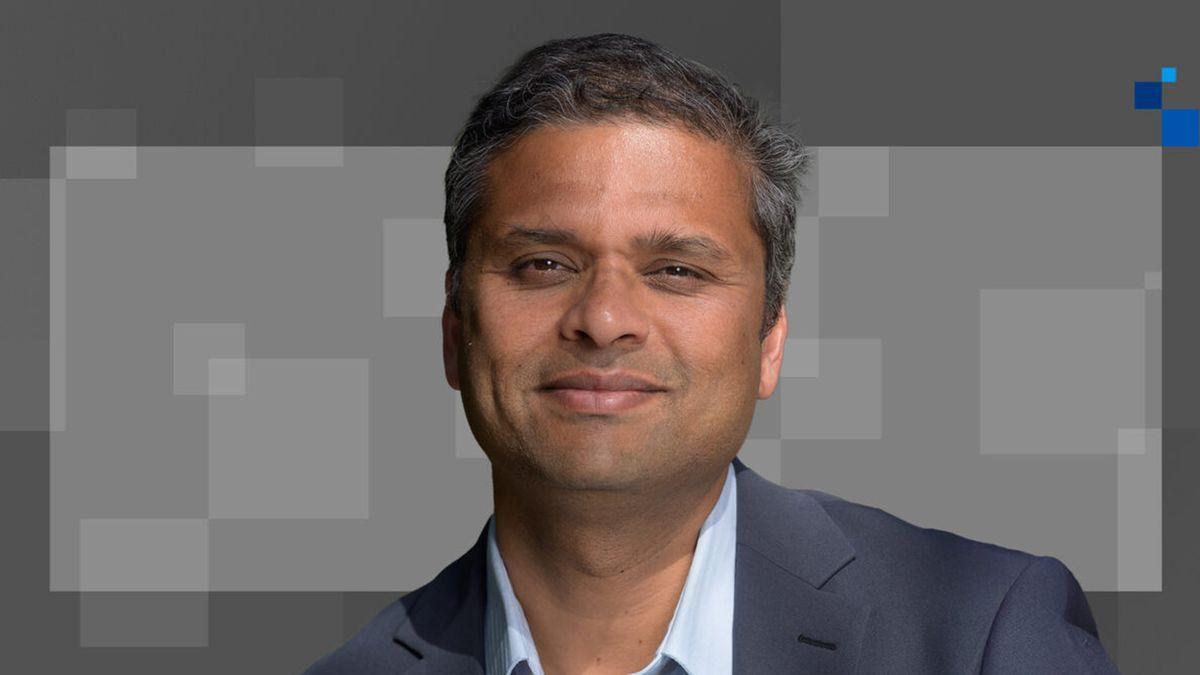
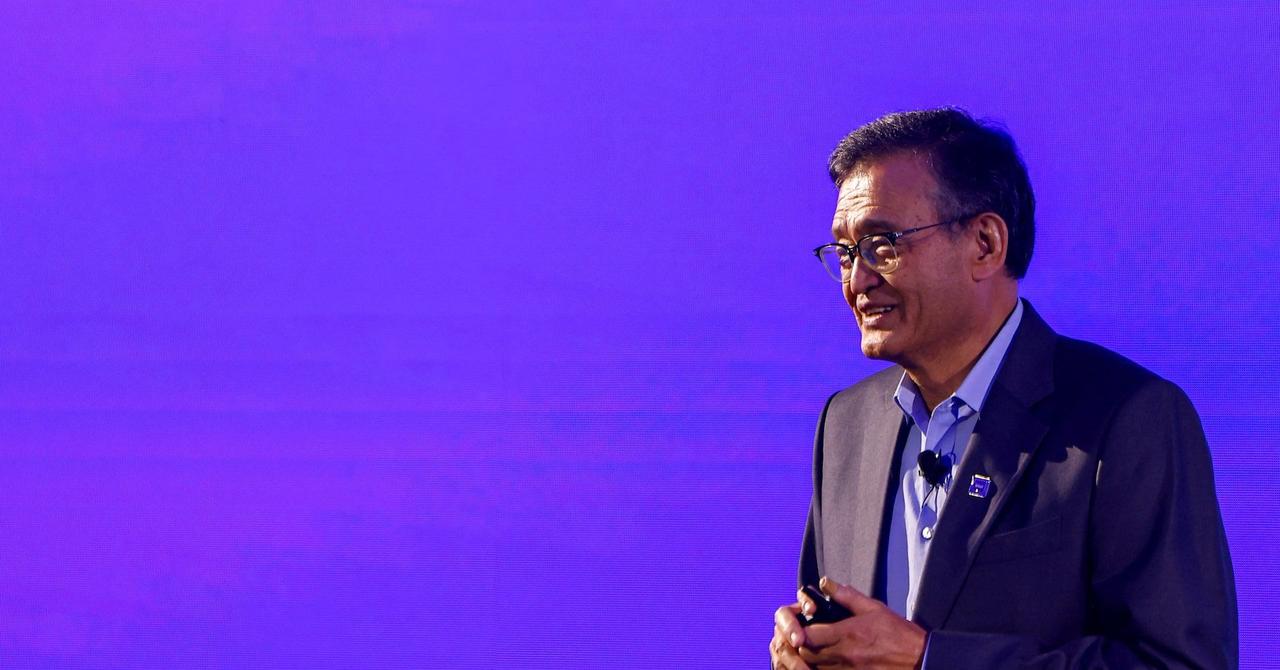
Intel announced significant leadership appointments on Monday as the chipmaker accelerates its pivot toward AI-driven computing. Alex Katouzian, a 25-year Qualcomm veteran, joins Intel as executive vice president and general manager of the newly formed Client Computing and Physical AI Group
1
. The role places him in charge of Intel's crucial PC business, which has been a mainstay of the company's revenue and profit for decades, alongside emerging physical AI systems that power robotics and autonomous machines2
. Katouzian will begin his new role this month and report directly to Intel CEO Lip-Bu Tan.

Source: CRN
The appointment represents Intel's second senior Qualcomm hire under Tan's leadership, signaling a deliberate pattern of targeted talent acquisition
3
. At Qualcomm, Katouzian served as executive vice president and group general manager of mobile, compute, and extended reality, where he was responsible for expanding Snapdragon mobile platforms and mounting a challenge against Intel's PC dominance with Qualcomm's Snapdragon X Series chips4
. Intel CEO Lip-Bu Tan said Katouzian brings "deep technical expertise, strong operational discipline, and decades of experience building and scaling global compute platforms"5
.The structural innovation behind Katouzian's appointment lies in the explicit fusion of Intel's traditional client computing business with physical AI. This emerging category encompasses chips designed for robotics, autonomous machines, edge devices, and agentic systems that require on-device inference rather than cloud-based compute
3
. Intel has already unveiled offerings in this space, including the Intel Robotics AI Suite, designed to add capabilities to existing x86 robotics deployments without expensive overhauls4
.According to Intel's first-quarter earnings discussions, the company sees significant opportunities at the edge and across physical AI systems, including autonomous systems that perceive, understand, and perform complex actions in the physical world
4
. Christopher Cyr, CTO of Intel partner Sterling Computers, noted the hire makes sense given Intel's focus on reducing power consumption of its chips, an area where Qualcomm has long been competitive, particularly as inference represents the bulk of AI opportunities in PCs, robots, and edge computing devices4
.
Source: Reuters
Intel also named Pushkar Ranade as Chief Technology Officer permanently after he served in the role on an interim basis for several months
1
. Ranade, a 10-year Intel veteran, will lead the company's technology strategy and oversee development across emerging areas including quantum computing, neuromorphic computing, photonics, and advanced materials while continuing to serve as chief of staff to Tan1
.Under the new structure, Jim Johnson, head of the Client Computing Group, and Mike Hurley, head of silicon and platform engineering, will report to Katouzian rather than directly to Tan
4
. This reorganization reflects Tan's broader strategy of hiring from rivals, restructuring around new hires, and rebuilding the leadership bench3
. The pattern mirrors moves at other tech companies pivoting to stronger AI focus, with Microsoft creating a dedicated AI division and Google bringing in senior robotics leadership1
.
Source: Tom's Hardware
Related Stories
The hire signals new channel opportunities, particularly around physical AI solutions that combine software, chipsets, and industry-specific applications across manufacturing and logistics
4
. Katouzian's experience scaling Qualcomm's mobile and compute platforms globally positions him to help Intel compete against AMD and ARM-based competitors in the PC market while simultaneously building credibility in AI PCs and edge-based computing ecosystems1
.The success of Tan's foundry strategy and design-side repositioning will depend on whether Intel ships a credible physical AI chip line and whether its client computing business holds share against competitors over the next 18 months
3
. Katouzian expressed excitement about joining Intel at what he described as a pivotal moment, stating the company is "creating the foundation for AI-driven transformation, from leading in AI PCs, to scaling AI inference at the edge, and accelerating the future of physical AI systems"1
.Summarized by
Navi
[1]
[3]
[5]
11 Nov 2025•Business and Economy

19 Jun 2025•Business and Economy

21 Apr 2025•Business and Economy

1
Health

2
Technology

3
Policy and Regulation