Intel's first D270 benchmarks claim big NVIDIA wins, on Intel's own tests


2 Sources
[1]
Intel D270 Data-Center GPU Combines 160 GB of LPDDR5X with Native FP64
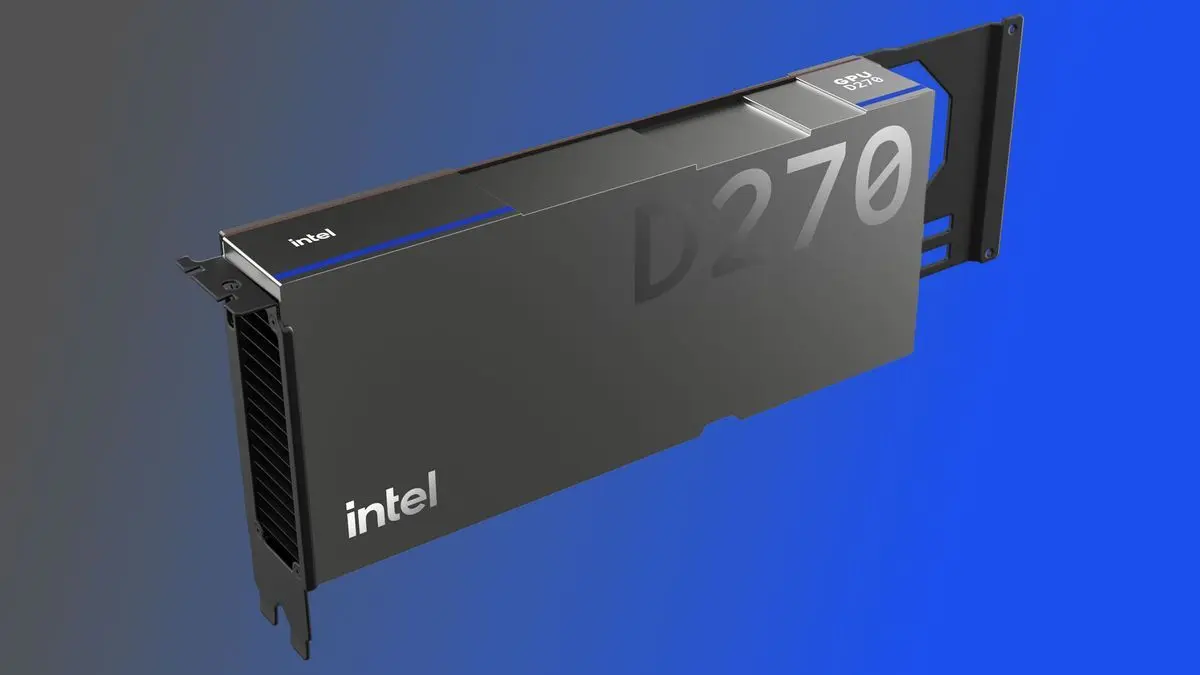
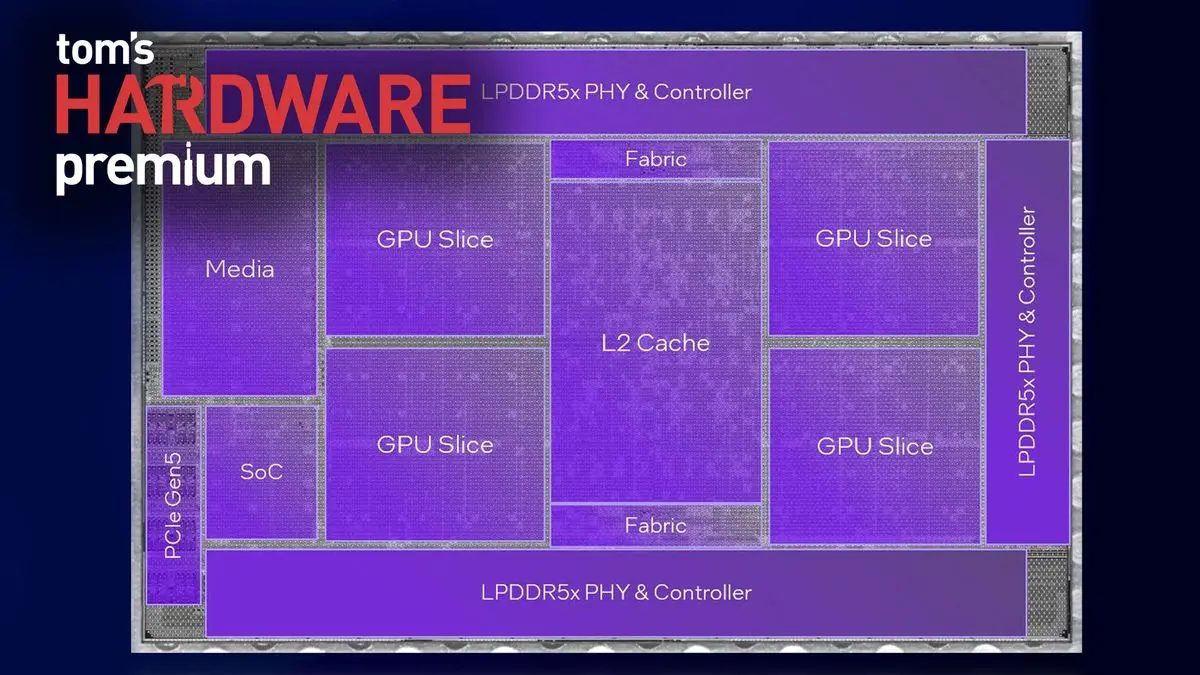
Intel has published a fuller description of its D270 data-center GPU, also known by the codename Crescent Island, positioning it for scientific computing alongside AI inference. Intel lists 32 Xe cores, 256 XMX engines, native precision from FP4 through FP64, and 160 GB of LPDDR5X memory on its
[2]
Intel Shares First Benchmarks of Its Next-Gen Crescent Island "D270" GPU, Claiming a 5.9x Throughput Over RTX PRO 6000 As Xe3P Goes Big On FP64
Intel's D270 "Crescent Island" GPUs gets its first performance benchmarks, claiming big HPC & AI uplifts with its native FP64 compute. Intel Crescent Island "D270" GPU With Xe3P Architecture Offers Up To Full-Rate FP64 "Double Precision" Compute, Primed for HPC Workloads As we approach the launch
Share
Copy Link
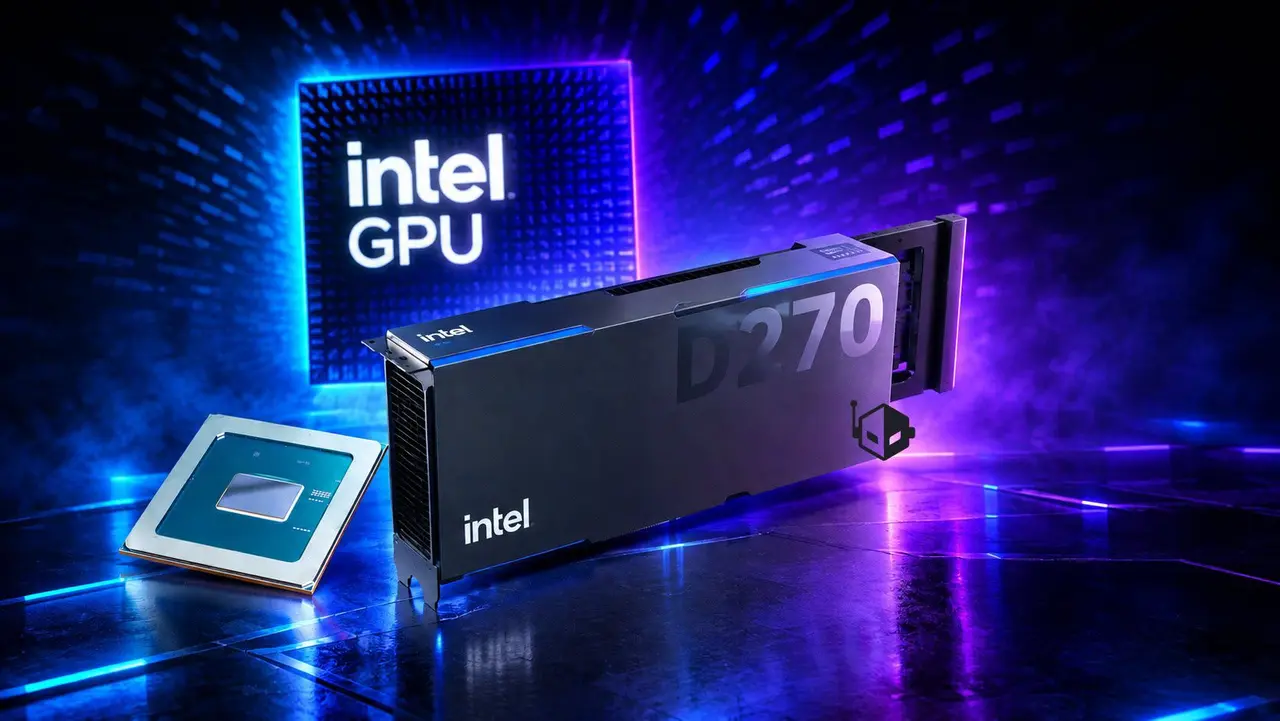
Intel's first published benchmarks for the D270 data-center GPU claim up to 5.9x NVIDIA's RTX PRO 6000 in financial workloads. The tests are Intel's own, on pre-production silicon, and the card has no price or launch date.
At the SC26 supercomputing conference, Intel published the first performance numbers for its D270 data-center GPU, codenamed Crescent Island
2
1
. Intel claims the card beats NVIDIA's RTX PRO 6000 Blackwell, the flagship it picked as the comparison baseline2
1
. The numbers are Intel's own, run on pre-production chips, and the card cannot be bought yet1
.
Source: Wccftech
Why this comparison exists
The pitch rests on double-precision math, the slower but far more exact arithmetic that scientific, engineering and financial simulations need so rounding errors do not compound over long runs
2
. The D270 does it at full rate, 64 fused multiply-add operations per Xe core, a capability Intel says the NVIDIA parts in the comparison lack2
1
. Per Intel, that gap is why it picked the RTX PRO 6000 as its baseline2
1
. Intel also positions the card for scientific computing alongside AI inference1
.The numbers, and their footing
In four financial-services workloads Intel ran itself, Intel claims throughput ranging from 1.92 times the NVIDIA card up to 5.9 times, with the top figure coming on an options-pricing workload
2
1
. On AI inference, Intel claims up to 29% lower latency on one decision-model benchmark, at 350W against 600W for the NVIDIA part in its comparison2
1
. It also claims 1.12 times the NVIDIA card's throughput on one Qwen model1
.Both results carry the same footing: the tests are vendor-run, on pre-production silicon, with differing test dates and platform configurations listed in the appendix, and Guru3D notes that one workload class cannot establish how the card compares across models, software stacks or scientific codes
1
.The reference card carries 160 GB of LPDDR5X memory at 1.5 TB/s, with partner designs scaling up to 480 GB, built on 32 Xe3P cores and 256 XMX engines
2
1
. At SC26 Intel ran a live seismic-modeling demo aimed at oil-and-gas workloads, using cache-aware optimizations to keep the simulation data on the card2
. Intel says the card supports open tools including SYCL and oneAPI1
. It has also proposed an optional split design for AI inference: the D270 handles prefill, SambaNova hardware handles the memory-bound decode, and a Xeon chip coordinates1
. Wccftech speculates the LPDDR5X memory may give Intel an edge in value, efficiency and scalability over GDDR and HBM designs2
.
Source: Guru3D
Related Stories


No price, no date
Intel says it positions the D270 for high-performance computing and AI workloads that need native double precision and a lot of memory
2
1
. As of publication there is no announced price, shipping date or consumer availability, so none of it can be checked with a purchase2
1
. Independent testing will have to wait for shipping hardware1
. Whether Intel can deliver the software support and supply at scale to compete is, per Guru3D, the open market question1
.References
Summarized by

Navi
Related Stories
Intel GPU D-Series Targets AI Inference With Record 480GB Memory in Air-Cooled Design
13 Oct 2026•Technology
Intel Crescent Island AI Accelerator Packs 480GB Memory, 32 Xe3P Cores for Inference Workloads
25 Aug 2026•Technology
Intel Unveils Crescent Island: A New AI-Focused GPU for Data Centers
14 Oct 2025•Technology
Recent Highlights


Recent Highlights
Today's Top Stories





Don’t drown in AI news. We cut through the noise - filtering, ranking and summarizing the most important AI news, breakthroughs and research daily. Follow topics that matter to you and stay ahead.


