Intel Crescent Island leaked PCB reveals massive Xe3P GPU with 160GB LPDDR5X to dodge HBM crisis


3 Sources
[1]
Intel leans on LPDDR5X to dodge global HBM crisis, leaked Crescent Island AI GPU pics reveal massive Xe3P core -- chip sidesteps HBM shortage with 160GB of cheaper memory
Intel is going with one massive GPU for its next-generation Xe3P AI GPU, and LPDDR5X memory rather than HBM. Pictures of the PCB of Intel's upcoming Crescent Island data center GPU, announced last year, have surfaced. The images, which come by way of @yuuki_ans on X, show the front and back of the
[2]
Intel Crescent Island PCB leak gives us our first look at the Xe3P GPU and its 160GB LPDDR5X memory design
Back in February 2026, Intel released an introductory video indicating that its next-generation Xe3P architecture would follow the Xe2 architecture. Later, it was reported that Xe3P would not appear in consumer Celestial gaming graphics cards, and Intel canceled the product entirely. Instead, Intel
[3]
Intel's Crescent Island PCB Leaks, Showing a Massive Xe3P GPU, 16-Pin Connector, 160GB LPDDR5X as Intel Sidesteps the HBM Shortage
Intel's next-generation Crescent Island PCIe graphics card has been pictured in the first PCB leak, giving us a look at the large Xe3P GPU & support for LPDDR5X memory. The first pictures of Intel's Crescent Island PCIe accelerator's PCB have been leaked by YuuKi_AnS. Crescent Island is the latest
Share
Copy Link
Leaked images of Intel's Crescent Island AI GPU show a massive Xe3P chip paired with 160GB of LPDDR5X memory instead of HBM. The data-center GPU targets AI inference workloads and air-cooled servers, with Intel planning customer sampling in the second half of 2026 as it pursues a cost-effective alternative amid global memory shortages.
Intel Crescent Island Takes Unconventional Memory Route
Intel Crescent Island, the company's next-generation data-center GPU, has appeared in its first leaked PCB images, revealing a bold architectural choice that sets it apart from competitors. The images, shared by @yuuki_ans on X, show the front and back of the PCB and confirm that Intel has opted for a single-GPU setup featuring the Xe3P GPU architecture paired with LPDDR5X memory rather than the high-bandwidth HBM standard used by rivals
1
3
.
Source: TweakTown
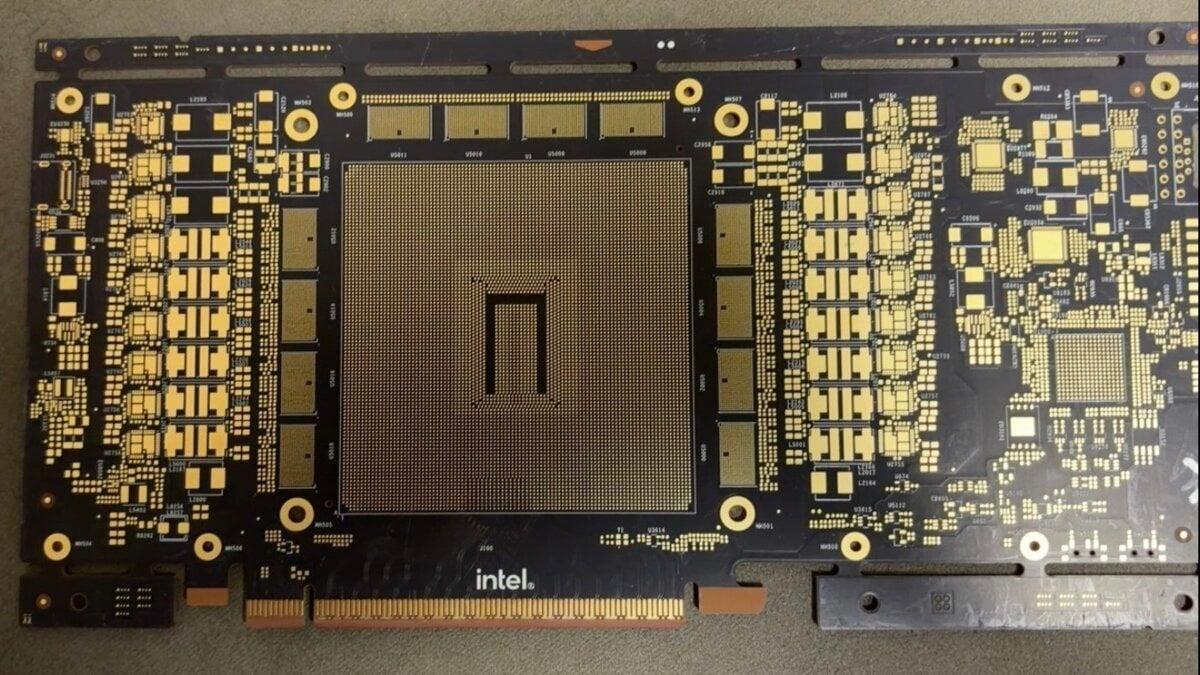
The leaked PCB reveals a massive GPU die that occupies a significant portion of the board, notably larger than Intel's current flagship Xe2-based BMG-G31. The chip takes up nearly the entire width of the PCIe x16 slot below it, signaling Intel's commitment to scaling its AI GPU capabilities
2
. This marks a departure from dual-GPU configurations and represents a focused approach to delivering AI inference performance.160GB LPDDR5X Memory Configuration Addresses HBM Shortage
The most striking feature visible in the leaked PCB is the memory configuration. Intel has positioned 20 LPDDR5X module sites across the board—12 on the front and 8 on the back—supporting a total of 160GB LPDDR5X memory using 8GB modules, the highest capacity currently available for LPDDR5X
1
2
. This makes Intel Crescent Island the world's first AI GPU to use LPDDR5X, a strategic decision driven by the ongoing HBM shortage that has plagued the industry.
Source: Wccftech
While competitors like the Nvidia H200 NVL with 141GB of HBM3 and AMD MI350P with 144GB of HBM3E offer substantially higher memory bandwidth—the H200 delivers nearly 5TB/s compared to Crescent Island's estimated sub-1TB/s with a 640-bit memory interface and 10.7Gbps memory speeds—Intel is betting on a cost-effective solution that addresses the supply constraints affecting HBM production
1
3
. HBM memory sits at the center of the ongoing memory shortage crisis, as it remains the hardest to secure for GPU manufacturers. By choosing LPDDR5X, Intel sidesteps these supply chain bottlenecks while keeping production costs down.Power Delivery and Design Details for Air-Cooled Servers
The leaked PCB also reveals a robust power delivery system designed to support the massive Xe3P GPU. The board features a single 16-pin 12V-2x6 power connector positioned at the rear, along with 18 VRM positions, of which 13 appear populated in the current design
2
3
. A USB Type-C port visible on the side appears intended for testing purposes, suggesting this PCB is close to its final production form.Intel has positioned this AI GPU specifically for air-cooled servers and workstations, targeting AI inference workloads rather than training tasks. The Xe3P architecture powering Crescent Island is designed for power efficiency and cost optimization, supporting a broad range of data types ideal for Tokens-as-a-service providers and inference use cases at scale
3
. This focus on inference accelerator capabilities positions Intel to compete in a rapidly growing segment where lower memory bandwidth may be acceptable if offset by capacity, cost advantages, and power efficiency.Related Stories


Market Positioning and Timeline
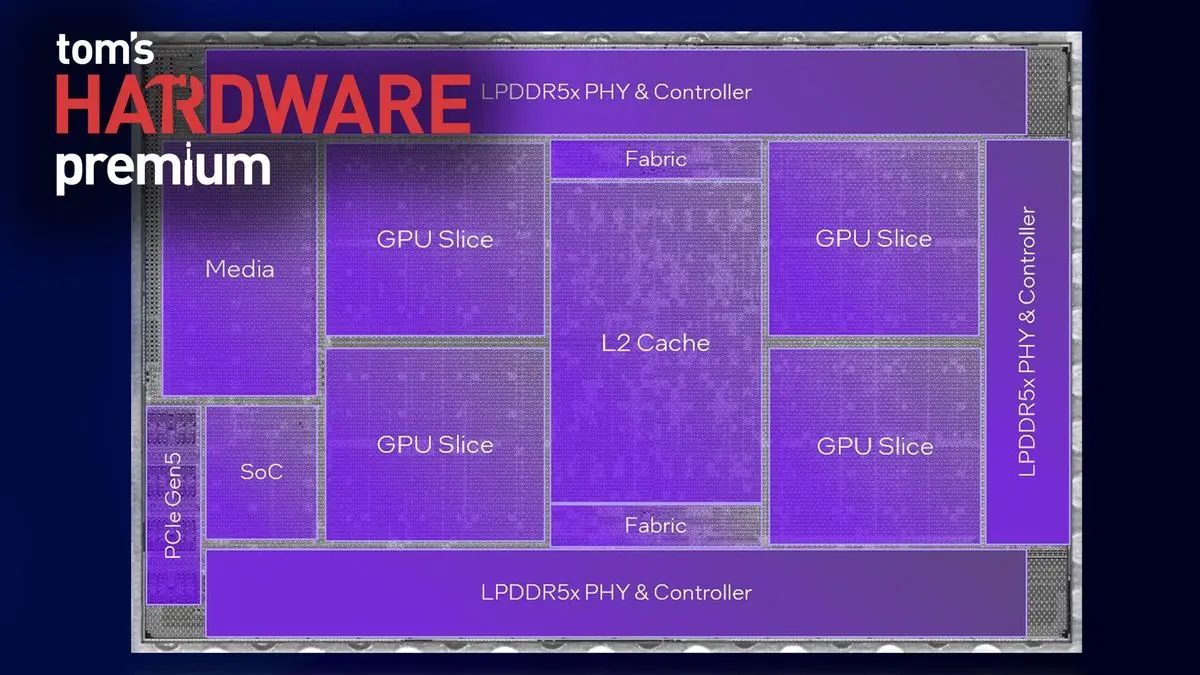
Intel announced Crescent Island in October 2025, confirming it would feature the Xe3P graphics architecture following the current Xe2 architecture. Notably, Xe3P will not appear in consumer Celestial gaming graphics cards, as Intel canceled that product line. Instead, the architecture will scale from client integrated GPUs to data center AI GPUs, with Crescent Island representing the high-end implementation
2
.
Source: Tom's Hardware
Intel plans to start customer sampling in the second half of 2026, giving the company time to refine the design and optimize its software stack
1
2
. The company is already evaluating its open and unified software stack for heterogeneous AI systems with its existing Arc Pro B-series lineup, which should enable smoother deployment for early adopters.The choice to use LPDDR5X memory represents a calculated trade-off. While memory bandwidth remains one of the most important factors in AI GPU performance for machine learning workloads, Intel appears confident that its architecture optimizations and cost advantages will appeal to customers focused on inference rather than training. As NVIDIA and AMD continue pushing HBM3E and teasing HBM4 for upcoming chips like Rubin and MI400, Intel's alternative approach could carve out a distinct market position—provided the Xe3P GPU delivers sufficient performance despite the bandwidth limitations. Watch for performance benchmarks and pricing announcements as customer sampling approaches later this year.
References
Summarized by

Navi
[2]
Related Stories
Intel Crescent Island AI Accelerator Packs 480GB Memory, 32 Xe3P Cores for Inference Workloads
25 Aug 2026•Technology
Intel Crescent Island targets AI inference with cheaper memory, air-cooling to challenge Nvidia
01 Jun 2026•Technology

Intel Unveils Crescent Island: A New AI-Focused GPU for Data Centers
14 Oct 2025•Technology
Recent Highlights



Recent Highlights
Today's Top Stories






Don’t drown in AI news. We cut through the noise - filtering, ranking and summarizing the most important AI news, breakthroughs and research daily. Follow topics that matter to you and stay ahead.


