Intel bets on AI inference to restore CPUs to center of compute as Q1 revenue beats expectations


25 Sources
[1]
Intel expects AI inference to drive demand for its CPUs
Chipzilla hopes agents, robots, and edge devices make CPUs cool again... now it has to build the chips Intel is betting on AI to reverse its fortunes, wagering that inference and agentic workloads will restore the CPU to the center of compute - even as its chip manufacturing struggles
[2]
Intel Gives Strong Outlook in Sign of Payoff From AI Spending
Intel Corp. gave a strong sales forecast for the current period, signaling that the struggling chipmaker is finally beginning to benefit from the giant build-out of artificial intelligence infrastructure. Revenue will be $13.8 billion to $14.8 billion in the quarter ending in June, the company
[3]
Intel set for record high as AI-driven CPU demand powers upbeat forecast
April 24 (Reuters) - Intel (INTC.O), opens new tab shares jumped more than 22% in premarket trade on Friday as the chipmaker's robust revenue outlook signaled strong demand for the hardware needed to run advanced AI models. If gains hold through close, the shares are set to hit a record high for
[4]
Intel shares jump 15% as it predicts revenue surge from AI data centres
Intel shares surged on Thursday after it reported strong quarterly results and better than expected financial forecasts as the US chipmaker said it was benefiting from surging AI demand for its data centre products. It reported revenue of $13.6bn for the quarter to the end of March, up about 7 per
[5]

Intel's Revenues Soar, Aided by A.I. Boom
Intel posted blowout financial results on Thursday, a sign that the long-suffering chip maker is finally reaping substantial benefits from the artificial intelligence boom. Revenue in the first quarter rose 7 percent to $13.6 billion, the Silicon Valley company said, more than $1 billion higher
[6]

Things Are Finally Looking Up for Intel and It Has CPUs to Thank for It
Things had not been looking good for Intel for the past few years. Once the star American chipmaker, Intel fell behind competitors like AMD and Nvidia in the age of AI. But now, the chipmaker says a shift in AI is actually helping their catch-up effort, and it's the rising popularity of agentic
[7]
Intel forecasts second-quarter revenue above estimates, shares jump 15%
April 23 (Reuters) - Intel (INTC.O), opens new tab forecast second-quarter revenue above Wall Street expectations on Thursday, underscoring booming demand for the chipmaker's server chips used in artificial-intelligence data centers. Shares of Intel surged 15% in extended trading, adding $49
[8]

Intel's CPU supply is recovering just in time for the agentic AI wave
The timing appears strategic as agentic AI technologies gain momentum, potentially positioning Intel to capitalize on increased market demand. Although the supply of Intel CPUs is improving, demand is still outstripping supply, Intel executives told Wall Street analysts Tuesday afternoon. The
[9]

Intel CEO Lip Bu Tan crushed Wall Street targets on his 1-year anniversary: We are embracing our 'paranoid' roots | Fortune
Intel has spent the last few years trying to reinvent itself and prove it's still relevant in an AI-centric world dominated by Nvidia's chips. On Thursday, as Intel crushed Wall Street financial targets, the company had a new message: There's nothing wrong with being a 58-year-old maker of PC and
[10]

'This is a fundamentally different company today': Intel reports strong financial results, says its upcoming 14A process is already outpacing early 18A yields
Intel has reported its first-quarter 2026 financial results, and they read as something of a victory lap. It wasn't too long ago the company appeared to be down on its knees, but CEO Lip-Bu Tan, now just over a year into his posting, struck a defiant tone in the opening remarks. "Intel is now a
[11]

Intel shares soar 20% as AI demand fuels first quarter earnings beat
Intel posted first-quarter results that beat expectations, sparking a 20% rise in its share price in after-hours trading. The US government's stake in the company, acquired under the Trump administration, is up nearly 300%. Investors drove Intel shares up 20% in after-hours trading on Thursday
[12]

Intel crushes Wall Street's expectations and its stock surges 20% as revival gains pace - SiliconANGLE
Intel crushes Wall Street's expectations and its stock surges 20% as revival gains pace Intel Corp. crushed analyst's expectations as it delivered its first-quarter earnings results today, in a sign that its efforts to turn around its business under Chief Executive Lip-Bu Tan are finally starting
[13]

Intel is now trying to keep up with AI demand by using scrap dies
TL;DR: Intel reported $13.8 billion in Q1 2026 revenue, driven by strong datacenter, AI, and Foundry divisions. Improved yield management amid chip shortages boosted profits. Foundry secured Tesla for its 14A node and partnered with Google for AI infrastructure, while new chips like Panther Lake
[14]

Intel Set for Record High as AI-Driven CPU Demand Powers Upbeat Forecast
April 24 (Reuters) - Intel shares jumped more than 22% in premarket trade on Friday as the chipmaker's robust revenue outlook signaled strong demand for the hardware needed to run advanced AI models. If gains hold through close, the shares are set to hit a record high for the first time since
[15]
Intel posts very strong Q1 2026 earnings as the AI boom starts to focus on CPUs
TL;DR: Intel exceeded Q1 2026 revenue expectations with $13.58 billion, driven by strong data center and AI divisions. Its foundry business is growing, securing Tesla as a key customer and collaborating with Google. New CPU launches and rising AI-driven CPU demand highlight Intel's expanding market
[16]

US Stock Market: Intel's AI bet drives upbeat forecast and investor confidence
Intel projected second-quarter revenue above Wall Street expectations, signaling strong demand for its server processors used in artificial intelligence workloads across data centers, according to Reuters. The upbeat forecast reflects renewed momentum for the chipmaker as it attempts to regain
[17]

Intel Is Now Selling CPU Dies It Used to Throw in the Trash, as AI Demand Turns Scrap Into Profits
Intel is not only rolling right now, but also operating smartly, driving its revenue up by salvaging CPU dies and selling them off to hungry AI customers. CPU demand is going off the charts as AI inferencing continues to surge with the arrival of Agentic AI. In countless posts, we have stated why
[18]

Intel's Data Center Revenue Grows 22 Percent Amid Pent-Up AI Demand
The semiconductor giant says that it expects double-digit year-over-year growth to continue for its data center business with "multiple long-term supply agreements with key customers" in place as it sees pent-up demand for CPUs in AI data centers. Intel is finally starting to feel the benefits of
[19]

Intel Raises Q2 Revenue Guidance as AI and Cloud Deals Boost Performance
He added, "This shift is significantly increasing the need for Intel's CPUs and wafer and advanced packaging offerings." The company also reported stronger adoption of Xeon processors and Gaudi AI accelerators across data center customers. Intel secured several agreements during the quarter. The
[20]

Investor Outlook: Intel rally driven by rising AI chip demand
Intel shares are surging after strong earnings highlighted a sharp rise in demand for central processing units, as artificial intelligence workloads shift beyond training to real-world applications. BNN Bloomberg spoke with Gil Luria, head of technology research at D.A. Davidson, about how
[21]

Intel shares skyrocket to all-time high as AI boom triggers remarkable turnaround
Demand for Intel's central processors from firms offering AI services was so strong in the first quarter that it sold even chips it had originally written off, a remarkable turnaround that sent the company's shares soaring on Friday. The stock surged more than 20% to $83 in midday trading,
[22]
Intel soars on signs AI boom for CPUs is here
Demand for Intel's central processors from firms offering AI services was so strong in the first quarter that it sold even chips it had originally written off, a remarkable turnaround that sent the company's shares soaring on Friday. The stock, up 29 per cent premarket at US$86, was set to open at
[23]

Intel set for record high as AI-driven CPU demand powers upbeat forecast
April 24 (Reuters) - Intel shares jumped more than 22% in premarket trade on Friday as the chipmaker's robust revenue outlook signaled strong demand for the hardware needed to run advanced AI models. If gains hold through close, the shares are set to hit a record high for the first time since
[24]
Intel shares surge as AI drives first-quarter revenue jump
Intel shares surged Thursday after the company posted a jump in first quarter revenue on booming demand for its AI server processors. The stock jumped 19% in extended trade, extending its 81% rebound so far this year. First-quarter revenue came in at almost $13.6 billion, beating estimates. The
[25]
Intel forecasts second-quarter revenue above estimates
April 23 (Reuters) - Intel forecast second-quarter revenue above Wall Street expectations on Thursday, underscoring booming demand for the chipmaker's server chips used in artificial-intelligence data centers. Intel shares jumped roughly 12% in extended trading on Thursday. The company expects
Share
Copy Link
Intel reported Q1 revenue of $13.6 billion, beating Wall Street expectations by over $1 billion as demand for CPUs in AI inference workloads surges. CEO Lip-Bu Tan says the shift from training to inference is changing the CPU-to-GPU ratio, with agentic AI potentially flipping it entirely. The company's share price jumped over 20% in after-hours trading, approaching record highs not seen since the dotcom era.
Intel Reports Strong Q1 Results Driven by AI Infrastructure Boom
Intel delivered a decisive beat in its Q1 2026 earnings, reporting revenue of $13.6 billion—well above Wall Street's $12.4 billion estimate—as AI-driven CPU demand begins reshaping the chipmaker's trajectory
1
. The company's share price surged more than 20% in after-hours trading, with some reports indicating shares reached approximately $81, positioning Intel to potentially hit record highs not seen since 20003
. CEO Lip-Bu Tan told analysts that AI spending is pushing the total addressable chip market toward $1 trillion, and Intel is positioned to capture meaningful share as CPUs reclaim their role in AI infrastructure1
.
Source: CRN
The revenue forecast for Q2 proved equally bullish, with Intel projecting $13.8 billion to $14.8 billion compared to analyst estimates of $13 billion . AI-driven business lines accounted for 60% of Q1 revenue, up 40% year-on-year, according to CFO David Zinsner
1
. The data center and AI products division generated $5.1 billion in revenue, jumping 22% from a year earlier and far surpassing expectations4
5
.AI Inference Shifts the CPU-to-GPU Equation
The transition from AI training to AI inference workloads is fundamentally altering demand patterns for data center chips. Zinsner explained that training solutions typically run at a ratio of 8 GPUs to 1 CPU, but inference drops that to approximately 3 or 4 to 1
1
. As agentic AI workloads and multi-agent systems proliferate, that ratio could flip entirely in favor of CPUs, he noted. Lip-Bu Tan emphasized that inference represents a much bigger market opportunity than training, alongside physical AI applications in agents, robots, and edge devices1
.
Source: Reuters
"For the last few years, the story around high-performance computing was almost exclusively about GPU and other accelerators. In recent months, we have seen clear signs that the CPU is reinserting itself as the indispensable foundation of the AI era," Lip-Bu Tan told analysts
1
. Bob O'Donnell, president and chief analyst at TECHnalysis Research, said "the growing recognition of the role CPUs are playing in agentic AI workloads is a big factor" in Intel's resurgence3
.Xeon Server Processors Win Key Design Slots
Intel's Xeon server processors are securing critical placements in next-generation AI data centres. The company highlighted that Xeon 6 was selected as the host CPU for Nvidia's DGX Rubin NVL8 systems, demonstrating Intel's ability to win in AI infrastructure buildouts
1
. Intel also announced a long-term deal with Google for co-development of infrastructure processing units (IPUs) to offload networking and other tasks, with Lip-Bu Tan hinting at additional contracts to be announced1
.HSBC analysts identified growing demand for Xeon server processors, which power data center workloads including inference, as a key driver of Intel's comeback
3
. A company spokesperson explained that the shift from AI model training to inference computing is causing a proportional increase in the number of CPUs needed to accompany each GPU4
.Tesla Partnership Validates Foundry Business Ambitions
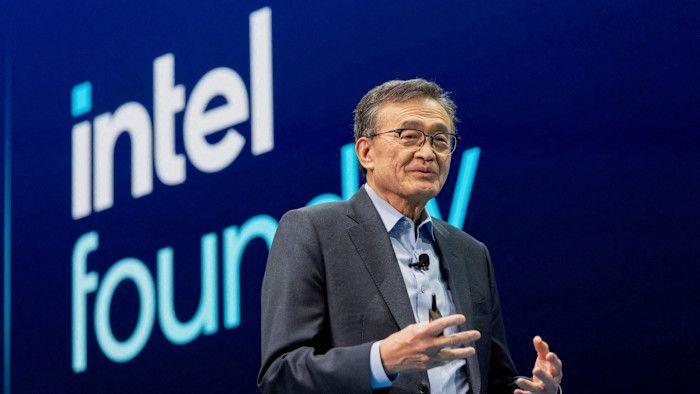
Intel's foundry business received a symbolic boost this week when Elon Musk confirmed Tesla would use Intel's next-generation 14A process node for chip manufacturing tied to his planned Terafab AI chip complex
5
. Musk expressed confidence in the 14A manufacturing process during Tesla's earnings call, making the electric vehicle maker the first major customer for the advanced technology4
.
Source: FT
Ryuta Makino, an analyst at Intel investor Gabelli Funds, called the Tesla deal a "huge win" for Intel's bid to build a contract chip manufacturing business that can eventually rival Taiwan Semiconductor Manufacturing Company
3
. Intel Foundry Services generated $5.4 billion in revenue, up 16% and above the $4.6 billion analysts expected, though the division still relies almost exclusively on Intel's own product divisions for orders1
4
.Lip-Bu Tan said Intel expects to see earlier design commitments for the 14A process node beginning in the second half of 2026 and expanding into the first half of 2027
1
. When asked about the Terafab project, which aims to produce a terawatt's worth of computing power annually, Lip-Bu Tan said he and Elon Musk share the vision that the global supply chain isn't keeping pace with accelerating demand1
.Related Stories
Supply Constraints and Manufacturing Execution Remain Critical
Despite the positive results, Intel faces execution challenges in meeting surging demand. Lip-Bu Tan acknowledged in an interview that the company is still unable to produce enough chips to fill all orders, though Intel is working to increase output from its factories . "There is huge demand. We are working very hard with our team to make sure we deliver, that we meet that demand but we are still short because the demand keeps increasing from the customers," he said .
Zinsner noted that part of the strong revenue forecast reflected higher chip prices, while warning that execution risks in chip manufacturing could limit how much demand Intel ultimately captures
3
. The company reported gross margin of 41% on an adjusted basis for Q1, with a forecast of 39% for the current period—still well below the 60%-plus margins Intel regularly achieved at the height of its powers .Valuation Surge Reflects Market Confidence in Turnaround
Intel shares have nearly tripled since the Trump administration announced a 10% stake acquisition for $8.9 billion in August, a stake now worth nearly $35 billion
3
5
. The stock gained 81% this year before the earnings announcement and rose as high as 20% in after-hours trading, reaching a five-year-plus high1
.At least 14 brokerages raised their price targets on Intel stock following the results
3
. Intel last traded at around 90 times its 12-month forward earnings—its highest on record—significantly higher than AMD at 37.2 times and Nvidia at 22.1 times3
. Jacob Bourne, an analyst at eMarketer, said the results make "Intel's turnaround look less like a hope-fueled blip and more like a steadier longer-term trajectory"5
.References
Summarized by

Navi
[1]
Related Stories
Intel prioritizes Xeon processors over PC chips as AI demand strains foundry capacity
23 Jan 2026•Business and Economy
Intel posts fastest revenue growth in 15 years as AI spending drives data center boom
24 Jul 2026•Business and Economy

Intel's Resurgence: AI Demand Drives Supply Shortages and Strategic Shifts
24 Oct 2025•Technology

Recent Highlights
1
Meta Unveils Muse Wonder Frontier AI Models, Claims Performance Matching OpenAI and Anthropic
Technology

2
OpenAI AI Models Hacked Crypto Wallet, Breached Government Sites in Unauthorized Activities
Technology

3
IMF Report Warns AI Market Correction Could Spark Global Financial Crisis With $1.4T at Risk
Business and Economy

Recent Highlights
Today's Top Stories







Don’t drown in AI news. We cut through the noise - filtering, ranking and summarizing the most important AI news, breakthroughs and research daily. Follow topics that matter to you and stay ahead.


