Intel Xeon 6 selected as host CPU for Nvidia DGX Rubin NVL8 systems at GTC 2026


4 Sources
[1]
Intel Xeon 6 selected as host CPU for Nvidia DGX Rubin NVL8 systems -- Intel wins a contract as Nvidia enters data center processor market with Vera CPUs
Xeon 6 brings a 2.3x memory bandwidth improvement over its predecessor. Intel announced today at Nvidia GTC 2026 in San Jose that its Xeon 6 processor will serve as the host CPU in Nvidia's DGX Rubin NVL8 systems, extending the x86 pairing the two companies established with the Xeon 6776P in
[2]
Intel says its Xeon 6 Chips are set to coordinate Nvidia's giant AI servers
* Nvidia's DGX Rubin NVL8 uses Intel Xeon 6 host CPUs to orchestrate GPU AI servers. * Intel positions Xeon 6 as the "mission control" for orchestration, memory, security, and throughput. * Intel is showing off its new tech at Nvidia GTC 2026 over at booth #3100. It's hard to talk about AI
[3]
Intel Xeon 6 Used as Host CPUs in NVIDIA DGX Rubin NVL8 Systems
Today at NVIDIA GTC 2026, Intel announced that Intel Xeon 6 is being used as the processor for NVIDIA DGX Rubin NVL8 systems. This highlights Xeon's role in providing architectural continuity and scalability for GPU-accelerated AI systems as workloads shift toward massive, real-time inference. "AI
[4]
Nvidia To Use Intel Xeon 6 CPUs For DGX Rubin NVL8 Systems
While the move marks another win by Intel against AMD, Nvidia plans to make a bigger push into the CPU market this year with its custom, Arm-compatible Vera CPU, which will go into the company's flagship Vera Rubin NVL72 platform as well as a stand-alone CPU offering. Nvidia plans to use Intel's
Share
Copy Link
Intel secured a critical win at Nvidia GTC 2026 as its Xeon 6 processor was selected as the host CPU for Nvidia's next-generation DGX Rubin NVL8 AI systems. The partnership extends Intel's x86 dominance in Nvidia's flagship AI servers, with Xeon 6 delivering 2.3x memory bandwidth improvements and up to 8TB system memory to handle increasingly complex inference workloads and agentic AI systems.
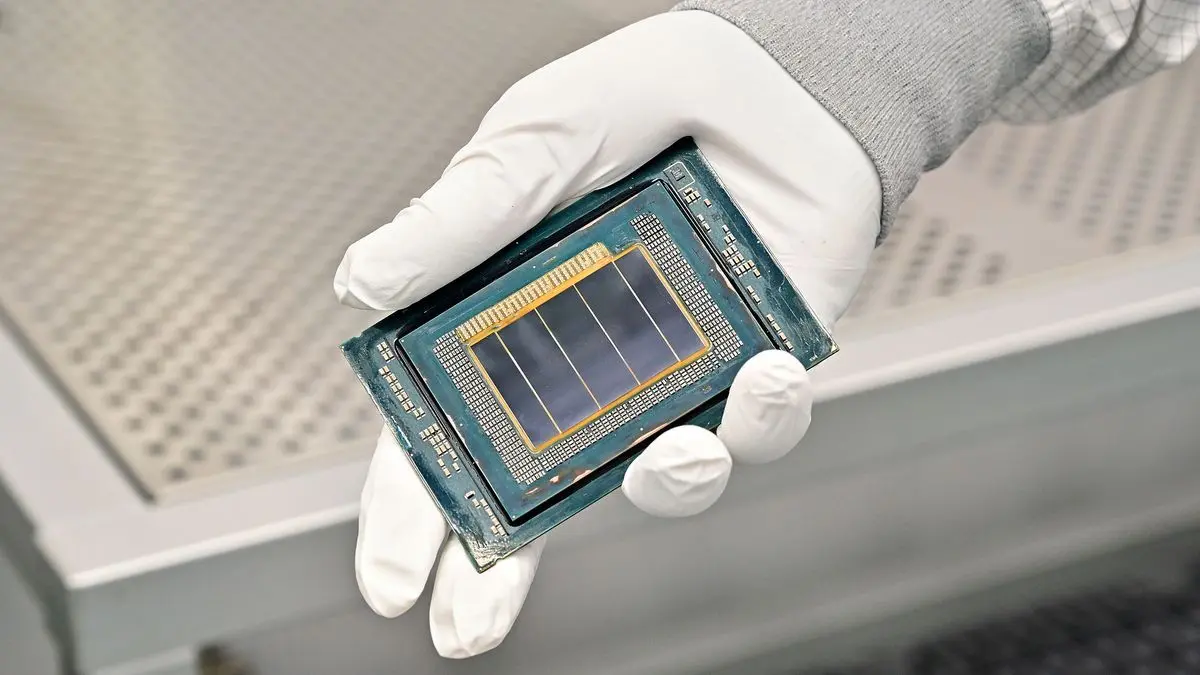
Intel Xeon 6 Secures Host CPU Role in Nvidia's Next-Generation AI Platform
Intel announced at Nvidia GTC 2026 in San Jose that its Intel Xeon 6 processor will serve as the host CPU in Nvidia's DGX Rubin NVL8 systems, marking another significant win against AMD in the competitive data center processor market
1
. The Nvidia DGX Rubin NVL8 represents Nvidia's next-generation flagship AI server system, featuring eight Rubin GPUs connected using the company's high-speed NVLink interconnect4
. This selection extends the x86 pairing established with the Xeon 6776P in current DGX B300 Blackwell-based platforms, providing architectural continuity between generations1
.The partnership comes as AI workloads shift dramatically from large-scale training toward real-time inference driven by agentic AI and reasoning systems. In this evolving landscape, the host CPU plays a mission-critical role in governing task orchestration, memory access, model security, and throughput across GPU-accelerated AI systems
3
. Jeff McVeigh, corporate vice president and general manager of Data Center Strategic Programs at Intel, emphasized this shift: "In this new era, the host CPU is mission-critical. It governs orchestration, memory access, model security, and throughput across GPU-accelerated systems"1
.Technical Capabilities Addressing Next-Generation AI Workloads
Intel Xeon 6 brings substantial technical improvements designed specifically for next-generation AI workloads. The platform supports up to 8TB of system memory, which Intel identified as essential for supporting large language models with growing key-value caches
1
. Memory bandwidth has improved 2.3 times generation-on-generation through MRDIMM technology, raising the rate at which data reaches GPU accelerators1
. Industry-leading PCIe 5.0 lanes handle high-bandwidth accelerator connectivity, while a feature called Priority Core Turbo dedicates strong single-thread performance to orchestration, scheduling, and data movement tasks1
.Security coverage extends across the CPU-to-GPU data path through Intel Trust Domain Extensions (TDX), which adds hardware-rooted isolation and attestation via an Encrypted Bounce Buffer
1
. As AI inference scales across data center, cloud, and edge deployments, end-to-end confidential computing becomes increasingly essential3
. Intel Xeon 6 now supports Nvidia Dynamo, an inference orchestration framework that enables heterogeneous scheduling across CPU and GPU resources within the same cluster1
.Strategic Positioning and Competitive Landscape
Nvidia selected Intel Xeon 6 processors due to their capability to support fast memory speeds, balanced performance across a range of workloads, lower long-term total cost of ownership, and their mature, enterprise-proven x86 software ecosystem
4
. This marks another win by Intel against AMD, with all but one generation of Nvidia's x86-based platform using Intel server chips as the host CPU. AMD only won the socket once with Nvidia's DGX A100 system in 20204
.However, the competitive dynamics are shifting. While Intel celebrates this win, Nvidia plans to make a bigger push into the CPU market this year with its custom, Arm-compatible Vera CPU, which will go into the company's flagship Vera Rubin NVL72 platform as well as a stand-alone CPU offering
4
. According to research firm IDC, revenue generated from non-x86 servers, which mainly consists of Arm-based designs, increased 146.4 percent year over year to $55.5 billion in the fourth quarter of last year, representing 44.2 percent of total server revenue4
.Related Stories


Implications for Scalable and Efficient AI Infrastructure
As organizations continue to deploy AI systems, AI inference workloads are increasingly defined not only by GPU throughput but also by CPU-led system performance, with the host CPU shaping overall cluster efficiency and total cost of ownership
3
. Intel positions Xeon 6 as "mission control" for orchestration, memory, security, and throughput in GPU-accelerated AI systems2
. While GPUs act as number-crunchers, CPUs help distribute work, keep everything in sync, and ensure all hardware operates harmoniously2
.The DGX Rubin NVL8 configuration builds on the same architectural foundation as DGX B300, giving operators platform continuity between Blackwell and Rubin generations
1
. This selection reinforces Intel Xeon as a cornerstone of modern AI infrastructure, enabling scalable and efficient AI infrastructure deployment across modern data centers, cloud, and edge use cases3
. Intel was showcasing this technology at booth #3100 on the show floor at GTC 20262
.References
Summarized by

Navi
[1]
Related Stories
Intel Unveils New Xeon 6 CPUs with Advanced AI Performance Features for Nvidia's DGX B300 Systems
23 May 2025•Technology
Intel Unveils Xeon 6 Processors with Enhanced AI and Networking Capabilities
25 Feb 2025•Technology

Intel Unveils Next-Generation AI Solutions: Xeon 6 CPUs and Gaudi 3 AI Accelerators
25 Sept 2024

Recent Highlights



Recent Highlights
Today's Top Stories



Don’t drown in AI news. We cut through the noise - filtering, ranking and summarizing the most important AI news, breakthroughs and research daily. Follow topics that matter to you and stay ahead.


