Italy's Postal Service Bids €13.5 Billion for Telecom Italia to Build AI Infrastructure


2 Sources
[1]
Focus: Special delivery: Italy's postman joins the AI infrastructure race
MILAN, July 10 (Reuters) - Italy has picked an unlikely champion to develop its technology infrastructure and protect digital sovereignty: its national postman. Poste Italiane (PST.MI), opens new tab, the postal service which pays out pensions through 12,600 post offices that are as much a feature
[2]
Special delivery: Italy's postal service joins the AI infrastructure race
Poste Italiane wants to turn post offices and old sorting centres into the plumbing of Italian AI, and it is leaning on Telecom Italia to get there. Italy's postal service has spent a century and a half moving letters, parcels and pension payments around the country. Now it wants to move data.
Share
Copy Link
Poste Italiane, Italy's state-backed postal service, is making an unexpected move into the AI infrastructure race with a €13.5 billion bid for Telecom Italia. The company plans to transform its nationwide network of post offices and sorting centers into distributed computing hubs, positioning itself as a sovereign alternative to U.S. tech giants in Europe's push for digital independence.
Poste Italiane Enters AI Infrastructure Race with Major Telecom Bid
Italy has chosen an unconventional player to lead its charge into the AI infrastructure race: its national postal service. Poste Italiane, two-thirds owned by the state, has placed a €13.5 billion ($15.4 billion) bid for Telecom Italia (TIM) in a bold move to accelerate Italy's digital sovereignty and build sovereign cloud and AI infrastructure on domestic soil
1
. The postal operator, which manages 12,600 post offices across Italy's remote towns and cities, already serves 46 million customers across banking, insurance, telecommunications and energy sectors1
.The proposed acquisition fits into a broader pattern of European efforts to reduce reliance on American hyperscalers like Amazon, Google, and Microsoft. Domestic telecom and tech firms in Germany and France are similarly building infrastructure to serve strategic sectors such as defense and healthcare
1
. Poste already owns 20% of TIM and has been positioning itself as the largest shareholder in what it envisions as a state-backed digital champion2
.Repurpose Extensive Network into Distributed Computing Infrastructure
Poste Italiane's strategy centers on leveraging its geographically distributed assets to build edge-computing sites across Italy. The company plans to boost computing capacity at TIM's existing telecom hubs and convert former postal sorting centers into local edge-computing facilities, bringing processing power closer to end users
1
. This approach addresses a growing industry trend toward networks of smaller facilities located closer to users rather than just large, centralized data centers.Antonio Capone, dean of the School of Industrial and Information Engineering at Milan's Politecnico University, validated this approach: "As demand for data centers grows, the industry is increasingly looking at networks of smaller facilities located closer to users rather than just large, centralised sites"
1
. With TIM's 125 megawatts of installed data center capacity making it a top three national operator, integrating postal and telecom assets could significantly expand Italy's computing footprint, though the country currently has only around 15% of Germany's installed capacity1
.Italy's Digital Sovereignty Push Meets Infrastructure Reality
Poste Italiane's digital transformation began in the early 2000s with digital payments, and over the past decade it has signed up 30 million users—around 70% of Italy's total—to the national digital ID system for accessing public services online
1
. The company's extensive branch network, Italy's largest retail presence, already provides access to public services like passport applications for less digitally savvy citizens.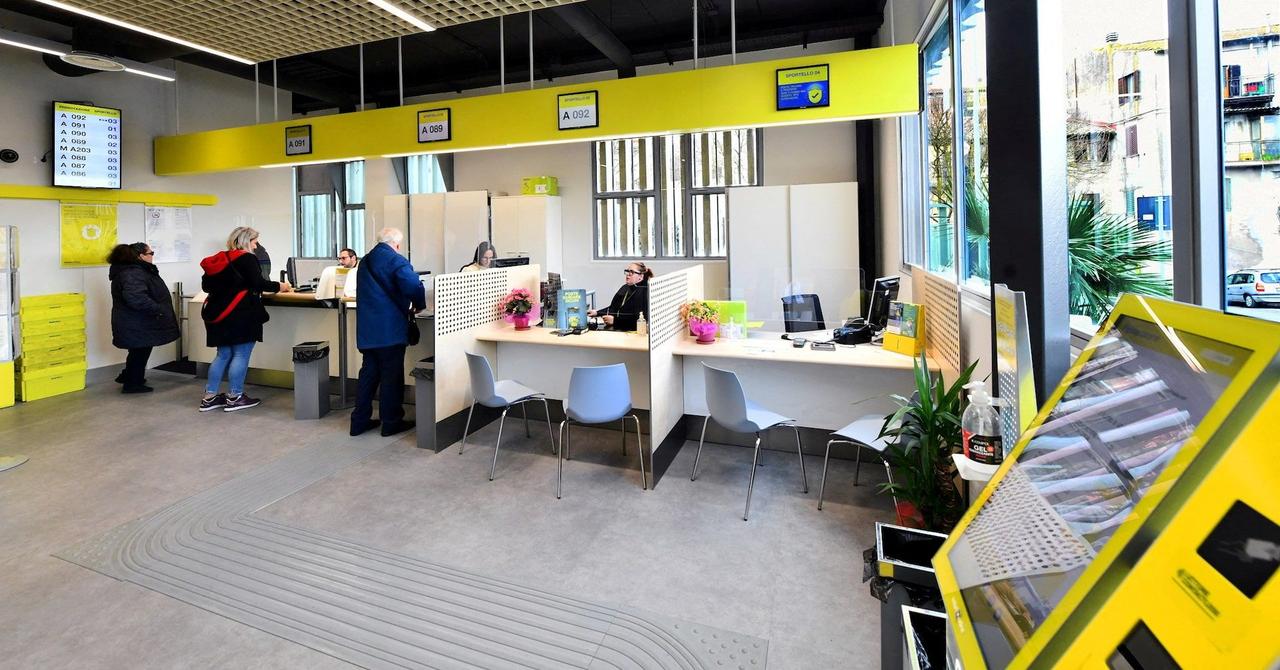
Source: Reuters
The move comes as Italy has become one of Europe's more active data center destinations, with the sector expected to roughly double over 2025-2026
2
. Microsoft alone has committed billions to expanding its Italian cloud services region, part of surging hardware demand reshaping the industry2
. However, Europe lags behind the United States in AI investment and digital infrastructure, with Italy further challenged by much higher energy costs than France or Spain1
.Related Stories

Telecom Industry Consolidation and AI-Powered Services
The acquisition addresses critical gaps in Italy's ability to support AI-powered services through advanced 5G networks. While Italy has made progress on basic 5G technology, AI applications require more sophisticated infrastructure. In the U.S., advanced 5G connections account for a fifth of total mobile connections, but Spain is the only European country where the figure exceeds 5%
1
.Telecom Italia has struggled since an ill-fated privatization three decades ago left it debt-laden and facing cut-throat price competition that curtailed infrastructure investment. Despite halving its debt-to-core-profit ratio and nearly doubling revenue per employee following the 2024 sale of its fixed-line network to U.S. fund KKR, TIM would struggle to sustain prospective 5G and cloud services investments alone
1
. A leading TIM investor noted that "building a 5G network is extremely capital intensive and you need scale to make it viable: you cannot sustain four mobile network operators in a market like Italy"1
.Challenges Ahead for AI Sovereignty Ambitions
While the industrial policy logic is clear, execution challenges loom large. Building and running competitive infrastructure requires capital, cooling systems, power contracts, and technical talent—resources a postal operator hasn't historically needed at scale
2
. Converting sorting centers into functioning edge nodes represents genuine engineering projects, not simple rebranding exercises, and Poste will compete against U.S. tech giants with years of experience2
.The market response has been cautiously optimistic. Poste's share price rose following the announcement, suggesting investors believe benefits may exceed the targeted €700 million in synergies
1
. A full takeover would allow Italy to capture higher profits at the former phone monopoly if telecom industry consolidation reduces the number of operators from four to three, as TIM currently competes with Vodafone-Fastweb, WindTre, and Iliad1
.References
Summarized by

Navi
Related Stories
Microsoft's €4.3 Billion Investment in Italy: Boosting AI and Cloud Infrastructure
03 Oct 2024

European Tech Firms Emerge as Unexpected AI Winners as Enterprise AI Adoption Takes Off
05 Aug 2026•Business and Economy

Anthropic opens Milan office, names Generali, Pirelli and Enel as Italian customers
28 May 2026•Business and Economy

Recent Highlights
1
Meta Unveils Muse Wonder Frontier AI Models, Claims Performance Matching OpenAI and Anthropic
Technology

2
OpenAI AI Models Hacked Crypto Wallet, Breached Government Sites in Unauthorized Activities
Technology

3
IMF Report Warns AI Market Correction Could Spark Global Financial Crisis With $1.4T at Risk
Business and Economy

Recent Highlights
Today's Top Stories







Don’t drown in AI news. We cut through the noise - filtering, ranking and summarizing the most important AI news, breakthroughs and research daily. Follow topics that matter to you and stay ahead.


