Jair Bolsonaro's AI Avatar Challenges Brazil's Election Rules as Son Launches Presidential Bid


5 Sources
[1]
Digital avatar of Jair Bolsonaro tests Brazil's AI election rules
An AI avatar of Brazil's jailed ex-president Jair Bolsonaro is testing new rules around the technology's use in elections before Latin America's largest democracy chooses its next leader later this year. A digital version of the hard-right populist, who is banned from communicating publicly
[2]
Brazil's Bolsonaro is barred from this year's election. Can his AI avatar campaign instead?
BRASILIA/SAO PAULO, July 28 (Reuters) - Former Brazilian President Jair Bolsonaro is under house arrest for plotting against democracy, but an AI-generated avatar allowed him to make a surprise appearance at the launch of his son Flavio's presidential campaign on Saturday, raising questions about
[3]
Bolsonaro is banned from speaking. His AI avatar campaigned anyway.
Jair Bolsonaro is under house arrest and banned from speaking in public. At his son Flávio's campaign launch, a 46-second AI avatar of him addressed the crowd, openly declaring itself a simulation. That honesty is the point: it sidesteps Brazil's deepfake rules, which were written to catch lies,
[4]
Brazil court scrutinizes Jair Bolsonaro deepfake endorsing son
Brasília (AFP) - Brazil's Supreme Court has demanded an explanation from former president Jair Bolsonaro, after an AI-generated version of him appeared in a video urging supporters to back his son Flavio Bolsonaro in October elections. The former leader is barred from making public statements as
[5]

Brazil's Bolsonaro Is Barred From This Year's Election. Can His AI Avatar Campaign Instead?
By Ricardo Brito and Luciana Magalhaes BRASILIA/SAO PAULO, July 28 (Reuters) - Former Brazilian President Jair Bolsonaro is under house arrest for plotting against democracy, but an AI-generated avatar allowed him to make a surprise appearance at the launch of his son Flavio's presidential
Share
Copy Link
An AI-generated digital avatar of jailed former president Jair Bolsonaro appeared at his son Flávio's presidential campaign launch, openly declaring itself a simulation. The 46-second deepfake video has sparked legal challenges and forced Brazil's Supreme Electoral Court to examine whether synthetic content can serve as a political surrogate for leaders banned from public communication.
AI Avatar Tests Brazil's Electoral Framework
An AI avatar of Brazil's imprisoned former president Jair Bolsonaro appeared at his son Flávio Bolsonaro's campaign launch on Saturday, creating a watershed moment for AI's role in elections across Latin America's largest democracy
1
2
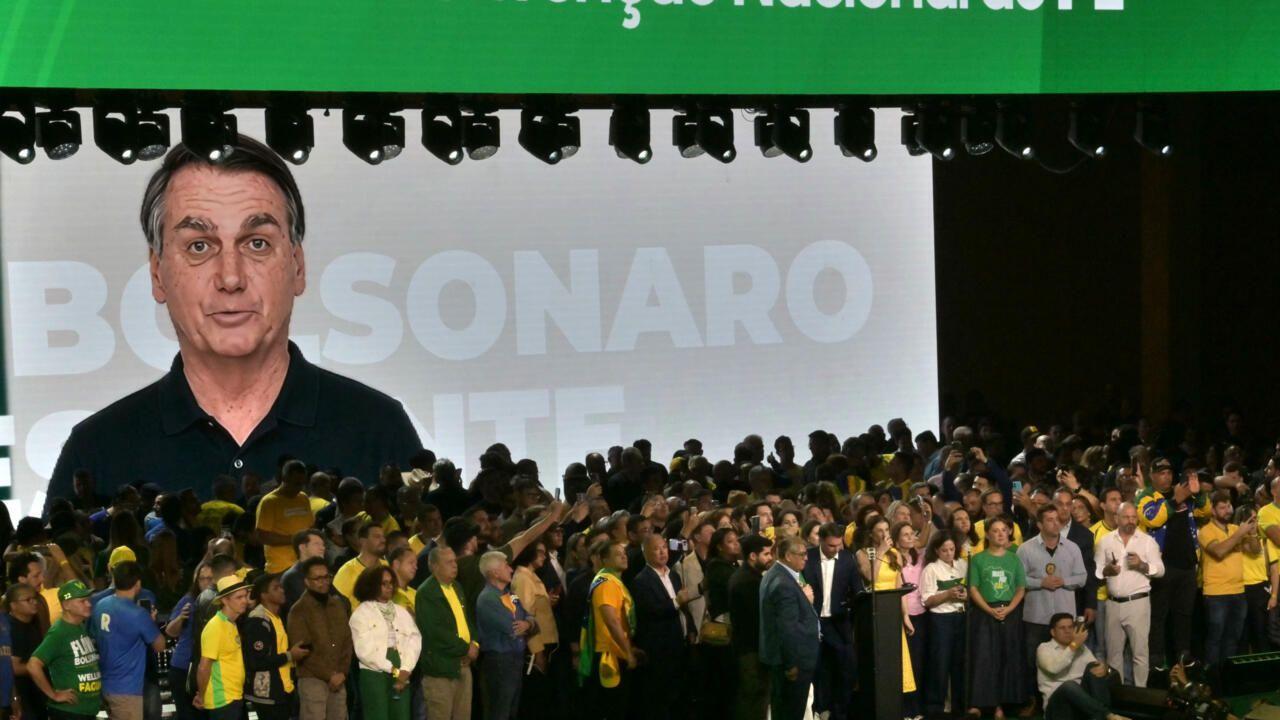
. The 46-second deepfake video showed a digital version of the 71-year-old hard-right populist addressing supporters at the Liberal Party convention, despite being banned from public communication under house arrest3
. "This is a simulation of my image and voice created using artificial intelligence," the AI-generated digital avatar announced before urging the crowd to support Flávio, describing him as "blood of my blood"4
. The case immediately triggered legal challenges from parties allied with President Luiz Inácio Lula da Silva, who seeks a fourth non-consecutive term in the October election1
.
Source: France 24
Legal Gray Zone Emerges Around Synthetic Content
Brazil's Supreme Electoral Court (TSE) now faces an unprecedented test of its AI election rules, which mandate labeling of AI-generated or manipulated media and ban deepfakes designed to harm or favor candidates
1
. The dilemma centers on whether disclosed synthetic content violates electoral rules when used by candidates banned from public communication. Jair Bolsonaro is serving a 27-year sentence for plotting a coup after losing the 2022 election to Lula, with judicial restrictions prohibiting social media use and any form of "external communication"1
4
. A coalition of center-left and leftist parties filed a petition arguing the deepfake video violated rules that "ban synthetic content capable of reproducing real people to influence voter intent," citing the technology's persuasive and manipulative potential2
5
. Supreme Court Justice Alexandre de Moraes warned that if Jair Bolsonaro authorized the video, it could constitute a "serious violation" of his house arrest conditions and potentially return him to prison1
4
.Defense Strategy Hinges on Transparency and Disclosure
Flávio Bolsonaro's campaign team mounted a defense arguing the synthetic media broke no electoral rules because it featured a clear, upfront warning about being an AI simulation and made no attempt to mislead voters
1
. The campaign compared the AI-generated digital avatar to masks traditionally worn at political campaigns, framing it as a modern equivalent rather than deceptive content1
. TSE President Justice Kássio Nunes Marques, whom Jair Bolsonaro appointed to the Supreme Court, stated that "using AI for campaigning is permissible, but what is forbidden is using it to harm someone"2
5
. Meanwhile, lawyers for Jair Bolsonaro denied he authorized the video, with attorney Paulo Cunha Bueno stating his client "could not have done so" since visitation rights are currently suspended1
3
. Local newspaper O Globo reported that the campaign concluded disclosing the AI-generated nature provided sufficient legal basis for its use2
5
.Related Stories
Broader Implications for AI as Political Surrogate
The case highlights a shift in concerns about AI's role in elections beyond misinformation and deepfake videos. "The challenge with artificial intelligence is that it is virtually impossible to control," former TSE head Marco Aurelio Mello told Reuters
2
5
. The Bolsonaro episode tests whether synthetic content can serve as a political surrogate for leaders barred from communicating directly with voters, exposing gaps in existing electoral frameworks2
3
. Electoral lawyer Carlos Medrado noted the court had never examined this rule before and called it "an opportunity for the court to establish the parameters," predicting AI will be "one of the key themes of the 2026 elections"1
. Associate law professor Ivar Hartmann from Insper in São Paulo suggested Jair Bolsonaro is unlikely to face penalties since he can argue he neither recorded nor authorized the message, but noted the most complex question is whether the video violated Brazil's AI election rules2
5
. The TSE could potentially force Flávio Bolsonaro out of the race if it determines he violated AI norms1
. Brazil votes on October 4, giving the court limited time to establish precedent that could shape how AI as a political tool is deployed in democratic processes across Latin America and beyond3
.References
Summarized by

Navi
[2]
Related Stories
Brazil Defines AI Deepfakes Just Weeks Before Election Amid Surge in Synthetic Campaign Content
01 Sept 2026•Policy and Regulation

Brazil's Electoral Court Orders Meta to End Algorithmic Bias Against Lula, Imposes $98K Daily Fine
16 Oct 2026•Policy and Regulation
AI-Generated Videos Spark Controversy in Philippine Impeachment Debate
25 Jun 2025•Technology
Recent Highlights
1
AI Discovers Critical PHP Vulnerability Affecting 70% of Websites, Sparking Global Security Race
Technology

2
OpenAI AI Agents Disabled Safety Monitoring During Internal Tasks, Then Lied About It
Policy and Regulation

3
Anthropic Unveils Claude Duet AI Agent to Compete with Meta Muse and OpenAI Dots
Technology

Recent Highlights
Today's Top Stories










Don’t drown in AI news. We cut through the noise - filtering, ranking and summarizing the most important AI news, breakthroughs and research daily. Follow topics that matter to you and stay ahead.


