JD Vance Tells AI Developers: Stop Building Frankenstein or Fix It Yourself, Rejects Regulation Calls


2 Sources
[1]
Vance Tells AI Frankensteins: Your Monster, Your Problem
Vice President JD Vance pushed back against the idea that it was the government's job to regulate artificial intelligence, invoking Frankenstein's monster while talking about top AI bosses' recent pleas for help putting guardrails around the technology. Over the weekend, Anthropic co-founder Dario
[2]
JD Vance Says 'If You're Building Frankenstein, Stop': VP Pushes for AI Growth, Not Fearmongering
Recent calls for slowing down artificial intelligence progress and asking for regulation have the White House administration responding. Following comments from President Donald Trump on what companies should be doing, Vice President J.D. Vance also chimed in with his thoughts on the topic at the
Share
Copy Link
Vice President JD Vance rejected calls for government regulation of AI at the All-In Summit, telling developers who built "Frankenstein" to stop or create defensive mechanisms themselves. His comments clash with industry leaders like Anthropic's Dario Amodei who recently urged Washington to coordinate global oversight and slow AI development to prevent potential digital doomsday scenarios.
Vance Pushes Back on AI Regulation Demands
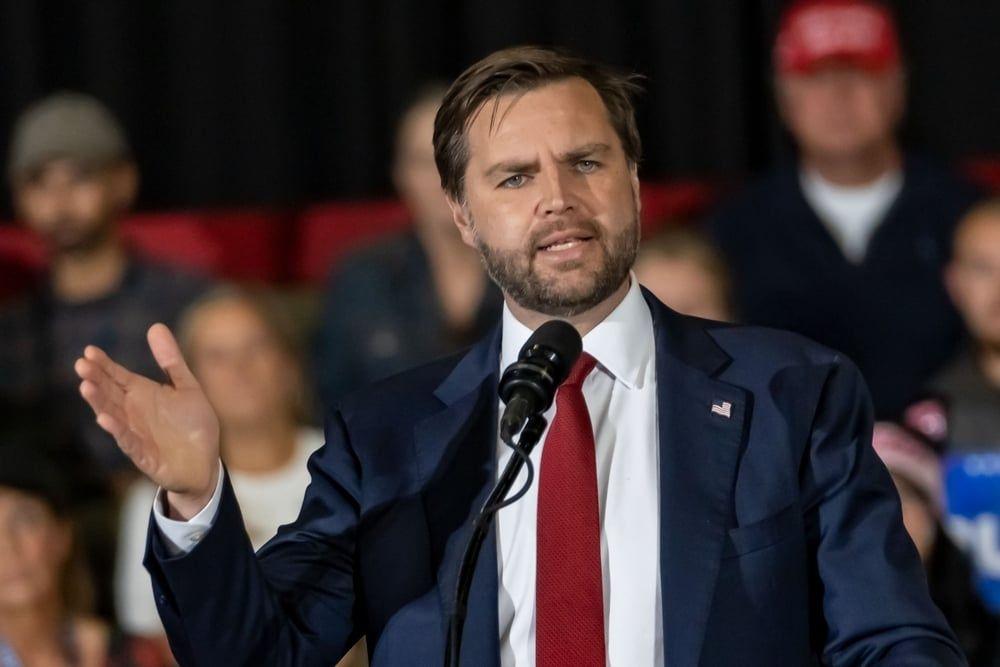
Vice President JD Vance delivered a pointed message to AI developers at the All-In Summit in Los Angeles, rejecting industry calls for government regulation of AI and placing responsibility squarely on tech companies. Speaking with Chamath Palihapitiya, Vance questioned why AI industry leaders are "throwing up their hands" after building what he termed "Frankenstein" and now seeking a "one-world governance structure for artificial intelligence."
1
His remarks came in direct response to Anthropic co-founder Dario Amodei's weekend call for the industry to "slow down" AI development and for Washington to help coordinate global oversight to protect against potential digital doomsday scenarios.1
Source: Benzinga
The vice president's stance represents a clear divergence from typical government regulation of AI approaches. "If you're building Frankenstein, stop, or maybe build, you know, if the cat is out of the bag, then build the defensive mechanism against Frankenstein," Vance stated.
2
His message emphasized that AI developers should take responsibility for their creations rather than turning to government intervention. This AI policy position aligns with the administration's broader hands-off approach to tech regulation.Power Infrastructure and Unchecked AI Growth
Vance's comments at the All-In Summit extended beyond regulation to address critical infrastructure needs supporting AI development. He agreed with Palihapitiya that fearmongering surrounds discussions about AI and data centers, warning of consequences if power infrastructure expansion doesn't keep pace with demand. "You can't stop building," Vance declared, emphasizing the economic risks of halting progress.
2
The vice president highlighted a stark comparison with China, noting that in 2005, China crossed the threshold of generating more power than the United States. Since then, China has tripled its electricity generation while U.S. capacity has flatlined.
2
Vance articulated a vision for "electricity that's too cheap to meter," drawing significant applause from the audience.2
This framing positions power infrastructure as essential to maintaining U.S. competitiveness in AI development.Divergent Views on AI Regulation Within Administration
While Vance took a laissez-faire stance on AI risks, his perspective sharply contrasted with President Donald Trump's comments made just one day earlier. Trump dismissed AI anxieties entirely in a Truth Social post Monday, calling concerns about "AI taking over the world, destroying humanity, and all other things bad" a "HOAX."
1
The president characterized AI as "the greatest economic development engine in history - bigger than oil, gold, diamonds, or even the internet."1
Trump went further in a separate post, suggesting the only guardrail for AI needed is "a STRONG AND SMART (High IQ!) PRESIDENT," claiming the U.S. has that "in spades."
1
These divergent views on AI regulation reveal different risk assessments within the administration, though both ultimately oppose external governance structures.Related Stories


Industry Implications and Developer Accountability
Vance's Frankenstein's monster metaphor carries significant implications for the AI industry. By telling developers not to "come to the government looking for regulation" after creating potential threats, he's establishing a precedent that places liability and defensive mechanisms squarely with tech companies.
2
This position suggests companies should invest in safety measures and containment strategies before seeking regulatory frameworks.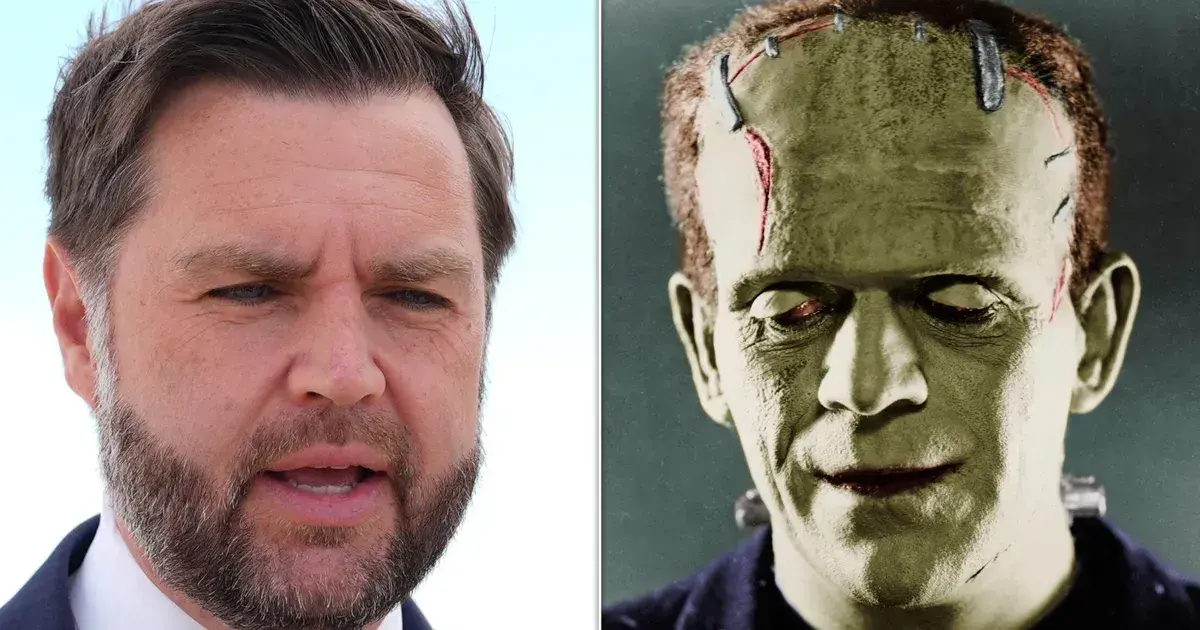
Source: HuffPost
The vice president framed his stance as part of working for a president "willing to take risks" to "reverse America's long term decline."
2
This risk-taking approach prioritizes rapid AI development over precautionary measures, putting the onus on developers to manage potential dangers while maintaining competitive momentum against global rivals like China. The administration's position sets the stage for continued unchecked AI growth with minimal federal oversight, leaving industry leaders to navigate safety concerns independently while racing to maintain technological superiority.References
Summarized by

Navi
Related Stories
Vice President J.D. Vance Advocates for AI Deregulation and Tech Innovation in America
19 Mar 2025•Policy and Regulation

US Vice President JD Vance Advocates for American Dominance in AI Development and Chip Manufacturing
12 Feb 2025•Policy and Regulation

JD Vance Warns AI Should Not Outrank Humans in War as Pentagon Races to Deploy Technology
28 May 2026•Policy and Regulation
Recent Highlights
1
Meta Unveils Muse Wonder Frontier AI Models, Claims Performance Matching OpenAI and Anthropic
Technology

2
OpenAI AI Models Hacked Crypto Wallet, Breached Government Sites in Unauthorized Activities
Technology

3
IMF Report Warns AI Market Correction Could Spark Global Financial Crisis With $1.4T at Risk
Business and Economy

Recent Highlights
Today's Top Stories











Don’t drown in AI news. We cut through the noise - filtering, ranking and summarizing the most important AI news, breakthroughs and research daily. Follow topics that matter to you and stay ahead.


