Judge says Pentagon's case against Anthropic supply chain risk label is weakening


3 Sources
[1]
Judge says Trump admin still lacks evidence for Anthropic 'supply chain risk' label
During a Thursday hearing, a judge said the Trump administration hasn't presented enough evidence to justify labeling Anthropic a supply chain risk and banning the federal government from using the company's technology. Bloomberg and Axios were among the first to report the news. The dispute
[2]
The Pentagon's Case Against Anthropic Isn't Going Well
The Department of Defense labeled AI lab Anthropic a supply-chain risk after the company refused to agree to allow the Pentagon to use its models for autonomous weapons systems and domestic surveillance. It seems the company isn't just winning the moral argument on this front, but the legal one,
[3]
Judge says government's case got "worse" in Anthropic fight
Why it matters: The upcoming decision will mark the next chapter in what's expected to be a lengthy legal battle between the government and an AI company that's simultaneously helping shape the government's AI safety rules. Driving the news: "I don't see additional evidence from the government
Share
Copy Link
A federal judge told the Trump administration it hasn't provided sufficient evidence to justify labeling Anthropic a supply chain risk after the AI company refused to allow its models for autonomous weapons and mass surveillance. U.S. District Judge Rita Lin said the government's case has actually gotten worse, and she's now weighing whether to permanently block the Pentagon's ban on federal agencies using Anthropic's technology.
Judge Challenges Pentagon's Evidence in Anthropic Case
U.S. District Judge Rita Lin delivered a sharp rebuke to the Trump administration during a Thursday hearing, stating that the Pentagon has failed to present adequate evidence justifying its designation of Anthropic as a supply chain risk
1
. Within the first five minutes of the hearing, Rita Lin told both parties: "I don't see additional evidence from the government really justifying what it did. If anything, it seems like the record, in some ways, has gotten worse for the government"3
. The hearing marks the latest development in an escalating legal battle against Anthropic that began when contract negotiations between the AI company and the Department of Defense collapsed earlier this year.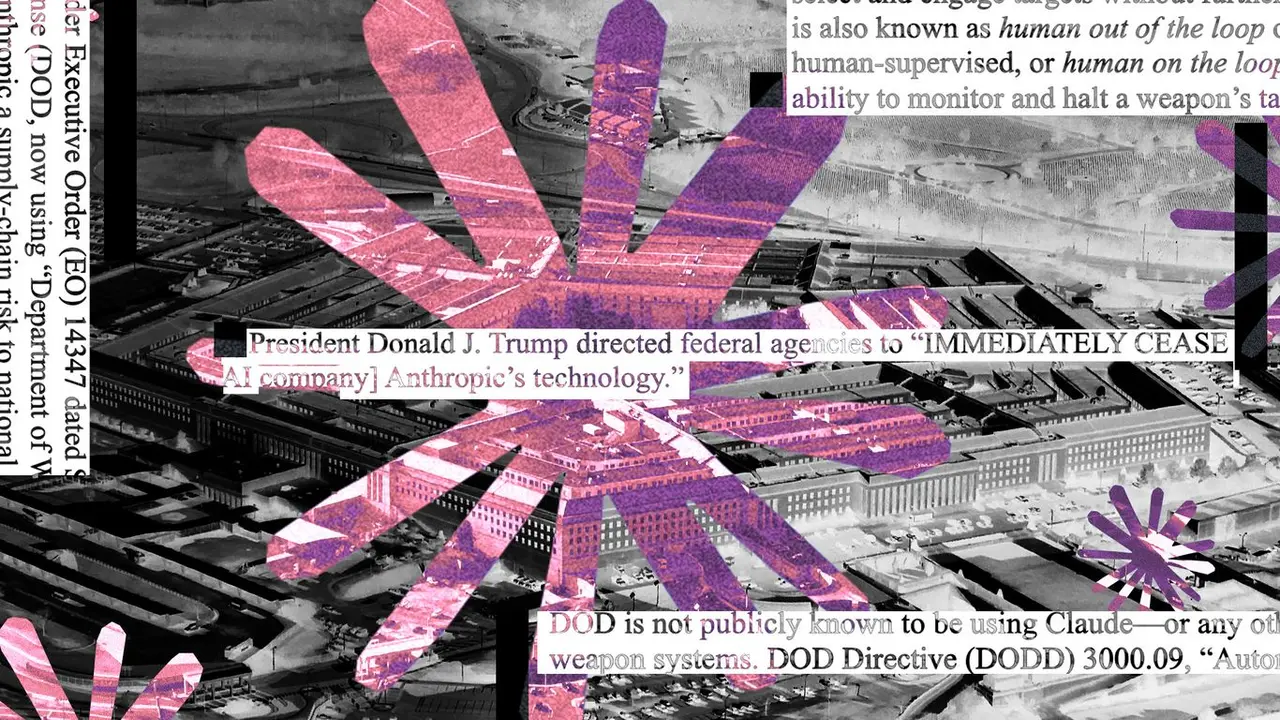
Source: Axios
The Origins of the Military Use of AI Dispute
The conflict stems from stalled negotiations over how the Pentagon would deploy Claude, Anthropic's flagship AI models. The DoD sought to use the technology for "all lawful purposes," including sensitive military and intelligence applications
3
. However, Anthropic insisted on establishing ethical boundaries, specifically refusing to allow its AI used for mass surveillance of Americans or for autonomous weapons systems that could make targeting or firing decisions involving lethal weapons without human involvement1
2
. The AI company argued the technology wasn't ready for such applications, while the Pentagon countered that a private company shouldn't dictate how the military uses technologies.
Source: Gizmodo
Government's Justifications Fall Short
Judge Lin systematically dismantled several of the government's key arguments during the hearing. The Department of Defense claimed that Anthropic could potentially disable or alter its AI models during warfighting operations—a concern experts say lacks evidence. Lin agreed, stating she saw no proof Anthropic could alter a delivered model or "flip some kind of kill switch"
1
2
. The government also argued that Anthropic's public criticism of the DoD justifies the national security risk designation—logic that Lin called "really troubling," warning it could set a dangerous precedent of retaliating against federal contractors who disagree with the administration .Related Stories

Implications for AI Governance and Federal Contracting
This case carries significant weight for AI governance and how private companies can establish limits on government use of their technology. Under normal circumstances, a failed negotiation would simply lead the government to work with another vendor. However, the Trump administration chose to designate Anthropic a supply chain risk—a label typically reserved for foreign adversaries, not domestic companies
2
. This designation would effectively ban all federal agencies from doing business with the AI company, potentially crippling its operations. At a March hearing, Lin temporarily blocked the Defense Department's ban after calling the administration's treatment "troubling" and saying it appeared to be "an attempt to cripple Anthropic"3
. She found that Anthropic had shown a likelihood of success on the merits and would suffer irreparable harm without an injunction.What's at Stake in This Legal Battle
Both Anthropic and the Pentagon have asked Judge Lin to grant summary judgment in their favor
3
. The judge is now weighing whether to make her temporary injunction permanent, though she's not expected to rule from the bench and there's no deadline for her decision1
3
. The upcoming decision will mark the next chapter in what's expected to be a lengthy legal confrontation between the government and an AI company that's simultaneously helping shape the government's AI safety rules3
. The case represents one of two lawsuits Anthropic filed against the DoD in March challenging the ban and risk designation, with the other being heard in Washington1
. The outcome could determine whether tech companies can maintain ethical guardrails on military applications or face retaliation for refusing government demands.References
Summarized by

Navi
Related Stories
Judge calls Pentagon's AI ban on Anthropic 'troubling' and questions First Amendment violation
18 Mar 2026•Policy and Regulation
Federal Judge Rules Pentagon Blacklisting of Anthropic Illegal Over AI Safety Guardrails
28 Aug 2026•Policy and Regulation

Anthropic and Pentagon Face Off in Court as Judges Appear Divided Over AI Blacklisting
19 May 2026•Policy and Regulation
Recent Highlights



Recent Highlights
Today's Top Stories






Don’t drown in AI news. We cut through the noise - filtering, ranking and summarizing the most important AI news, breakthroughs and research daily. Follow topics that matter to you and stay ahead.


