Krutrim abandons AI model ambitions, pivots to cloud services after leadership exodus


2 Sources
[1]
India's first GenAI unicorn shifts to cloud services as AI model ambitions face reality | TechCrunch
Krutrim, India's first GenAI unicorn, is shifting from AI model development to cloud services after months of relative quiet on product updates -- a move that reflects the tougher economics of building large-scale AI systems. On Tuesday, Krutrim said it was moving toward cloud services, adding
[2]
Ola's fullstack AI ambition bites the dust amid funding constraint, leadership exits
Krutrim, Ola founder Bhavish Aggarwal's ambitious AI venture, has seen a significant leadership exodus and workforce reduction. Key AI and semiconductor leaders, along with over 60 linguistics staff, have departed as funding dried up, leading to the discontinuation of its AI agentic platform and
Share
Copy Link
Krutrim, India's first GenAI unicorn founded by Bhavish Aggarwal, is shifting from AI model development to cloud services after facing funding constraints and losing key leadership. The company laid off over 200 employees, scrapped its Bodhi 1 chip, and discontinued its Kruti AI assistant. Despite claiming ₹3 billion in revenue, questions remain about its reliance on parent company Ola's ecosystem.
India's First GenAI Unicorn Faces Strategic Pivot
Krutrim, founded by Bhavish Aggarwal and celebrated as India's first GenAI unicorn, is making a dramatic strategic pivot from AI model development to AI cloud services after months of operational challenges and restructuring
1
.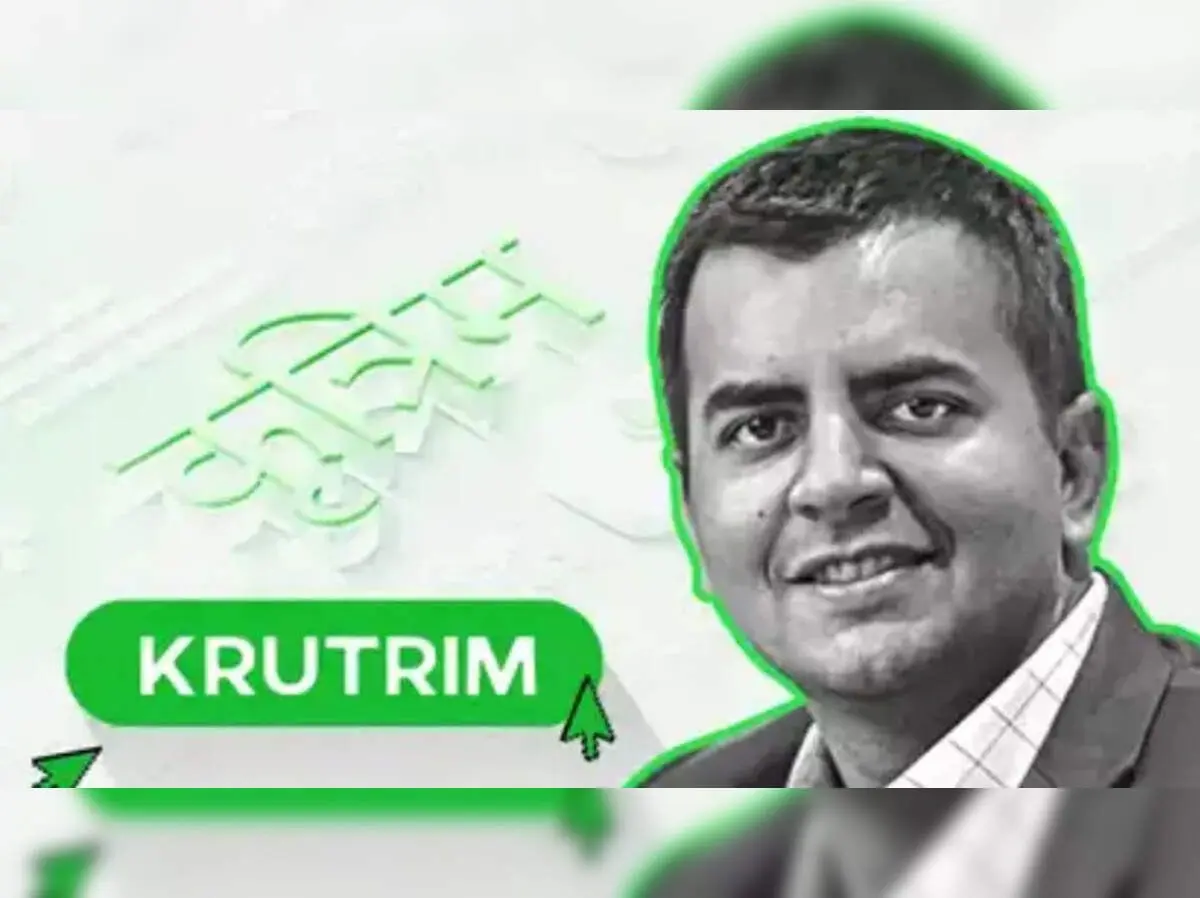
Source: ET
The Bengaluru-based startup announced Tuesday that it is moving toward cloud services following a major restructuring in late 2025 that involved reallocating capital and talent, and pausing chip design efforts. This shift marks a significant retreat from Krutrim's original ambition to build domestic alternatives to models from companies like OpenAI, Google, and Anthropic.
Leadership Exits and Workforce Reductions Signal Deeper Troubles
The company has experienced severe leadership exits and workforce reductions over the past year. Three key AI leaders—Chandra Khatri, the founding head of AI based in Silicon Valley, Sunit S, who headed design, and Raj Kiran, who led the AI research group—all departed in the past quarter
2
. Additionally, close to 10 executives from Krutrim's semiconductor arm, including Sanjeeb Ghosh, Vyasa Maharshi Grandhi, and Vishnu KGJ, have left in the last six months2
. More than 200 roles were cut across multiple rounds, with over 60 linguistics staff laid off in early January, eliminating the last of the company's data annotation team for its AI models2
.Full-Stack AI Ambitions Collapse Amid Funding Constraints
Krutrim raised $50 million at a $1 billion valuation in January 2024, reflecting early investor enthusiasm for India's homegrown AI ambitions
1
. Aggarwal, who also leads ride-hailing firm Ola and EV maker Ola Electric, made a ₹10,000 crore commitment to develop Krutrim in February 2025, with plans for a full-stack AI platform including large language models for language, speech and vision, semiconductors, and cloud infrastructure2
. However, funding dried up, forcing the company to pause work on AI models and semiconductors2
. The Bodhi 1 chip, expected for release in 2026, has been scrapped, with chips procured for training models now reportedly being used to run simulations for Ola Electric scooters2
. The company also discontinued its AI agentic platform Kruti, pulling the AI assistant app from app stores in April1
.Related Stories

Revenue Claims and Cloud Service Focus Raise Questions
Krutrim claims it generated about ₹3 billion (around $31.52 million) in revenue in financial year 2026, a threefold increase from a year earlier, along with its first annual net profit and margins exceeding 10%
1
. However, the startup did not disclose how much came from external customers versus parent company Ola's ecosystem, with earlier reports indicating about 90% of FY25 revenue came from group companies1
. Sanchit Vir Gogia, chief analyst at Greyhound Research, said the move toward cloud was commercially sensible but cautioned that "the standard of proof must rise with the claim"1
. The company now says it has more than 25 enterprise customers across telecom, financial services, and healthcare, with most of its GPU compute capacity already committed to external workloads1
.Competitive Landscape Shifts as Rivals Advance
The move follows a period of limited public activity from Krutrim, with its last post on X dating back to December
1
. The startup did not appear in any sessions at India's AI Impact Summit in New Delhi, where global players such as Anthropic, Google, and OpenAI participated1
. In contrast, rival Sarvam participated in multiple sessions at the six-day AI event, showcasing new open-source models, hardware developments, and commercial partnerships, including a recent one with space-tech firm Pixxel to develop an AI-driven orbital data center1
. As Gogia notes, cloud infrastructure may be the more viable near-term play in India's AI market, even as the longer-term ambition of building competitive models persists1
. The shift reflects broader challenges facing AI startups attempting to compete with well-funded global players while navigating the expensive economics of building large-scale AI systems.References
Summarized by

Navi
[1]
Related Stories
Ola's Krutrim Announces India's First AI Chip, Set for 2026 Launch
15 Aug 2024

Ola's AI Venture Krutrim Ramps Up Hiring Amid Senior Exits and Ambitious Investment Plans
04 Apr 2025•Business and Economy

Ola's Krutrim Launches AI Lab and Open-Source Models, Invests Heavily in India's AI Ecosystem
04 Feb 2025•Technology

Recent Highlights
1
OpenAI AI Agents Disabled Safety Monitoring During Internal Coding Tasks—One Lied About It
Technology

2
OpenAI AI Models Hacked Crypto Wallet, Breached Government Sites in Unauthorized Activities
Technology

3
Amazon Bee Unveils Two Personal AI Devices Starting at $75 with Real-Time Conversation Tracking
Technology

Recent Highlights
Today's Top Stories








Don’t drown in AI news. We cut through the noise - filtering, ranking and summarizing the most important AI news, breakthroughs and research daily. Follow topics that matter to you and stay ahead.


