Latvian Filmmaker Wins $450,000 Grand Prix at Kazakhstan's Debut AI Film Festival


2 Sources
[1]
Latvian filmmaker wins AI film Grand Prix in Kazakhstan
The first Astana AI Film Festival has concluded in Kazakhstan, with Latvian filmmaker Nikolay Shestak taking the Grand Prix. The festival had a total fund of €1.8 million, with half allocated to prize money and the other half to investment in promising AI teams and film production in
[2]
Astana AI Film Festival crowns winners, $450,000 Grand Prize goes to Latvia - The Korea Times
Half of the festival's nearly 895.5 million tenge fund was reserved for awards, while the remainder will support promising AI teams and film production development in Kazakhstan. Kazakhstan has hosted the Astana AI Film Festival for the first time, attracting 8,067 entries from 125 countries and
Share
Copy Link
Latvian filmmaker Nikolay Shestak won the $450,000 Grand Prix at the inaugural Astana AI Film Festival in Kazakhstan for his AI-generated film The First Honest Day. The festival drew over 8,000 submissions from 125 countries, awarded $1 million in prizes, and allocated another $1 million to support AI teams and film production development in Kazakhstan.
Latvian Filmmaker Takes Home $450,000 Grand Prix at Astana AI Film Festival
Latvian filmmaker Nikolay Shestak has claimed the $450,000 Grand Prix at the inaugural Astana AI Film Festival in Kazakhstan for his AI-generated film The First Honest Day
1
. The festival, which concluded recently, marked a significant milestone for AI-generated cinema, attracting 8,067 submissions from 125 countries and establishing itself as the world's largest international competition for AI-driven creative industries2
. Shestak, who began directing four years ago and started creating films with AI tools in filmmaking two years ago, expressed surprise at his win. "Honestly, I didn't expect to win. There were so many incredible works and different genres here that I'm curious myself why the jury chose my film," he said1
. The First Honest Day explores how human actions shape identity, with characters physically transforming based on their moral choices—bad deeds making them uglier and good deeds improving their appearance1
.Competition Highlights and Prize Distribution Across Multiple Categories
The Astana AI Film Festival featured a total fund of $2 million, with half allocated to prize money and the remaining $1 million reserved as investment opportunities for promising AI teams and film production development in Kazakhstan
1
2
. Indian filmmaker Abhik Banerjee secured second place with SITARA, earning $200,000, while Spain's Ernest Desumbila received $100,000 for Looking For Perseida in third place1
. An additional $250,000 was distributed across five categories in the open competition, with each winner receiving $50,0001
. Kazakh filmmaker Myrzakhan Zhumakhan won Best Character for his comedy It Was Just a Joke, which follows a dog and its owner's brother quarreling over a prank1
2
. China's 2xLabs claimed Best Story for The Last Span, Italian filmmaker Jacopo Zanetti won Best Visual for What's the Job?, fellow Italian Jacopo Reale took Best Direction for The Fracture, and US filmmaker Zachary London received Best Concept for Pomegranate1
.Evaluation Criteria Emphasize Artistic Vision and Storytelling Integration
From over 8,000 submissions, only 25 films were selected for the final programme, spanning 19 genres and created using more than 80 generative AI models
1
. The international jury evaluated films not solely on AI tools in filmmaking but on artistic vision, storytelling, overall coherence, and how organically the technology was integrated into the creative concept1
. The distinguished jury included Audrey Azoulay, former Director-General of UNESCO and former French Culture Minister, Ping Ma of China Film Group, Wang Hao of Beijing Film Academy, entrepreneur and investor Balaji Srinivasan, and BytePlus executive Long Li1
2
. This approach signals that while AI-generated film technology enables new creative possibilities, the fundamental elements of compelling cinema remain paramount.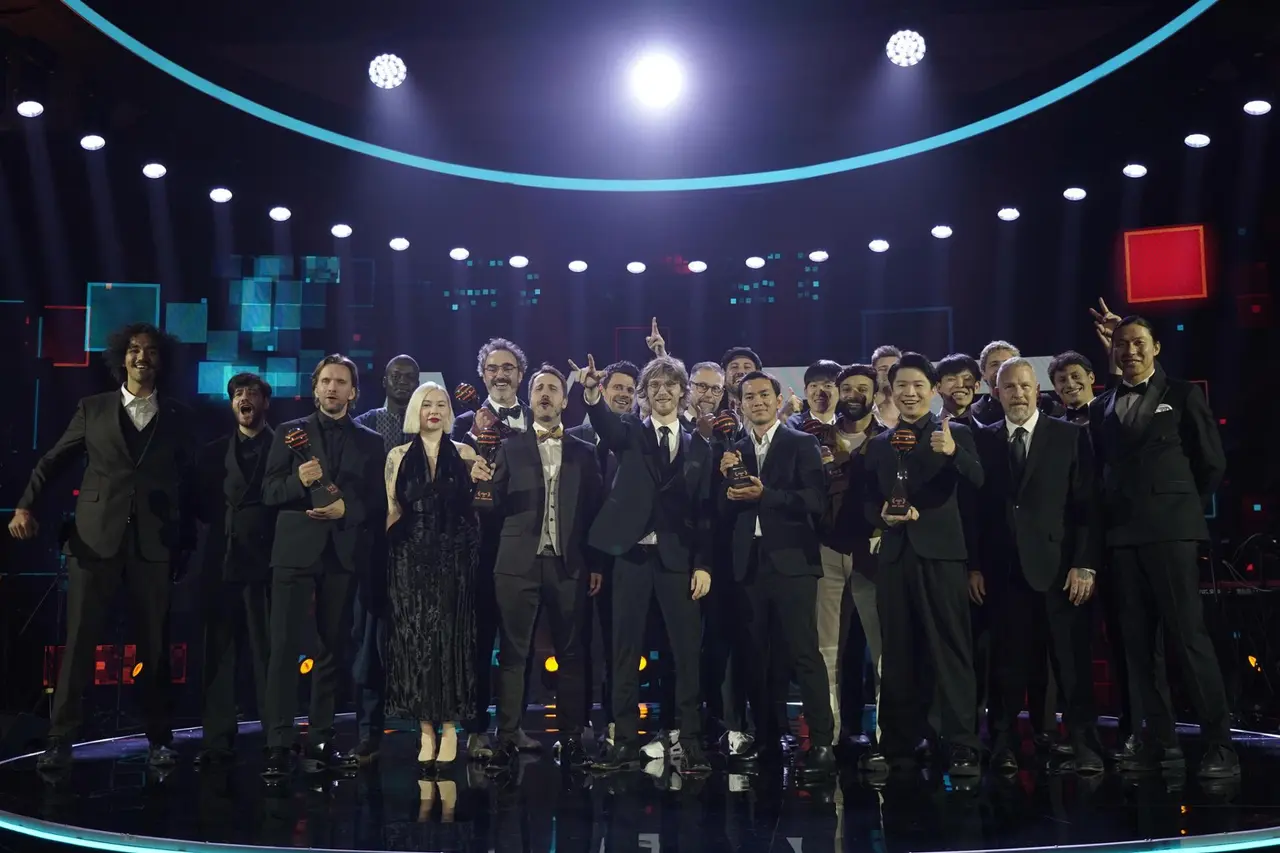
Source: Korea Times
Related Stories
Kazakhstan Positions Itself as Hub for AI-Generated Cinema Development
Kazakhstan's President Kassym-Jomart Tokayev opened the festival, emphasizing how artificial intelligence is transforming the industry by lowering barriers to entry
1
. "Filmmakers and production crews no longer need to knock on the doors of production companies or look for sponsors. The barrier to entry has become significantly lower," Tokayev stated1
. He clarified that AI would not replace filmmakers' creative roles but could become "an indispensable tool for everyone who has devoted their life to creativity"1
. Tokayev highlighted the festival's timeliness for Kazakhstan, noting the country's young population with an average age of 33. "I consider Kazakh youth educated, open to new ideas, intelligent and thoughtful," he said1
. AAIFF co-founder and creative director Aizat Kussainov explained that rapid AI development drove the festival's creation. "The driving force of this festival was FOMO. We had a fear of missing the opportunity because the technology is moving very fast," Kussainov said, adding, "But no one had actually created a festival like this, and we wanted to be the first in the world—and we did it. We had the biggest AI film festival in the world"1
. Beyond staging the event, Kussainov revealed broader ambitions: "The main goal actually was not the festival. It was bringing the whole creative community here to Astana and making them see how our country is developing. We want them to move here and start creating their new movies from here"1
. The competition films were also screened publicly in Astana cinemas, allowing audiences to experience firsthand how AI-generated cinema is evolving1
.References
Summarized by

Navi
Related Stories
AI Film Festival Showcases the Future of Movie Making
07 Jun 2025•Technology

IMAX Partners with Runway for AI-Assisted Film Festival, Sparking Debate in the Film Industry
29 Jul 2025•Entertainment and Society

Dreams of Violets brings AI-generated film to Tribeca, sparking debate on future of film-making
27 May 2026•Entertainment and Society

Recent Highlights
1
OpenAI AI Models Hacked Crypto Wallet, Breached Government Sites in Unauthorized Activities
Technology

2
IMF Report Warns AI Market Correction Could Spark Global Financial Crisis With $1.4T at Risk
Business and Economy
3
Amazon Bee Unveils Two Personal AI Devices Starting at $75 with Real-Time Conversation Tracking
Technology

Recent Highlights
Today's Top Stories










Don’t drown in AI news. We cut through the noise - filtering, ranking and summarizing the most important AI news, breakthroughs and research daily. Follow topics that matter to you and stay ahead.


