Lenovo warns of PC shipment pressure as memory shortage hits despite record AI server revenue


5 Sources
[1]
Lenovo's Sales Lifted by AI and Rush to Beat Memory Price Hikes
Lenovo's net income fell 21% from a year earlier, and the impact of a global shortage on margins is expected to grow in the coming months. Lenovo Group Ltd. reported better-than-expected sales, helped by consumers buying PCs ahead of anticipated memory chip price hikes as well as strong momentum
[2]
Lenovo's CEO admits rising memory costs could slow PC sales
AI server business showed high double-digit growth from Nvidia-based deployments Lenovo has signaled growing concern over tightening memory supply, even as it reported solid revenue growth in its most recent financial quarter. The world's largest PC manufacturer delivered stronger-than-expected
[3]
China's Lenovo warns of PC shipment pressure from memory shortage
China's Lenovo Group warned on Thursday about mounting pressure on PC shipments as a worsening memory-chip shortage grips the industry. China's Lenovo Group warned on Thursday about mounting pressure on PC shipments as a worsening memory-chip shortage grips the industry. Chief executive Yang
[4]
Lenovo Restructures Data Center Unit As AI Drives Double-Digit Growth To Record Sales
Lenovo says the restructuring occurred last quarter to 'realign the cost structure' of the business unit, which was accomplished by 'streamlining the product portfolio, upskilling the workforce and driving sustained productivity improvements.' Lenovo said Thursday that it restructured its data
[5]

Lenovo Caught Napping By 'Democratization Of AI' - Lenovo Group (OTC:LNVGF)
The world's leading PC maker said it took a $285 million restructuring charge in its latest fiscal quarter related to its infrastructure unit that sells AI servers Key Takeaways: Lenovo's profit fell 21% in its fiscal quarter through December, as it took a big restructuring charge prompted by a
Share
Copy Link
Lenovo reported 18% revenue growth to $22.2 billion in its December quarter, driven by strong AI server demand and consumers rushing to beat memory price hikes. However, the world's largest PC maker warned that rising memory costs and supply constraints will pressure unit sales, even as its AI infrastructure business hit record revenue with 31% growth.
Lenovo Reports Record Revenue Amid Growing Memory Shortage Concerns
Lenovo delivered better-than-expected financial results for its December quarter, with revenue climbing 18% year-over-year to $22.2 billion, surpassing analyst estimates of $20.8 billion
1
. The world's largest PC manufacturer benefited from consumers purchasing devices ahead of anticipated memory chip price increases, while its AI server business posted high double-digit growth. Despite the strong top-line performance, Lenovo faces mounting challenges from a global memory-chip shortage that threatens to constrain future shipments and squeeze margins across the industry.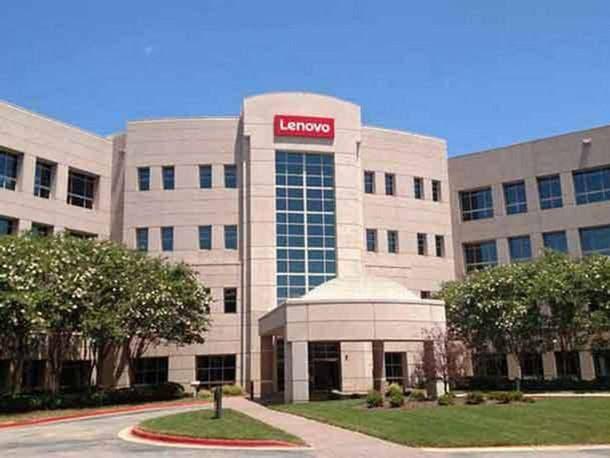
Source: CRN
The company's net income fell 21% from the previous year to $546 million, largely due to a $285 million restructuring charge tied to its Infrastructure Solutions Group
3
. However, adjusted net income, which excludes one-time items and non-cash charges, climbed 36% to $589 million, demonstrating underlying operational strength2
.Rising Memory Costs Create PC Shipment Pressure
Chief Executive Yang Yuanqing acknowledged the strain that rising memory costs are placing on the PC business, telling Reuters that the company has raised prices to offset surging component expenses
3
. "We expect PC unit sales to face pressure, but believe we can still grow revenue and maintain profitability," Yang stated, highlighting the delicate balance Lenovo must strike between volume and pricing power.The memory shortage is driven by intense demand for Artificial Intelligence (AI) systems, which are consuming memory chips and other components that would traditionally go to consumer electronics. Lenovo's cost of sales increased 19.6% during the quarter, outpacing its 18.1% revenue growth and causing gross margins to compress by 0.6 percentage points to 15.1%
5
. UOB Kay Hian analysts warned that pulled-forward demand may persist in the March quarter, but cheaper inventory will likely be depleted, leading to more price hikes that could affect end-demand, especially among consumers1
.Lenovo's PC, tablet, and smartphone division, which generates roughly 70% of total revenue, recorded a 14.3% increase in sales during the period
2
. The broader PC market expanded 9.6% last quarter, with Lenovo, HP Inc., and Dell Technologies Inc. each recording double-digit shipment growth, according to consultancy IDC1
.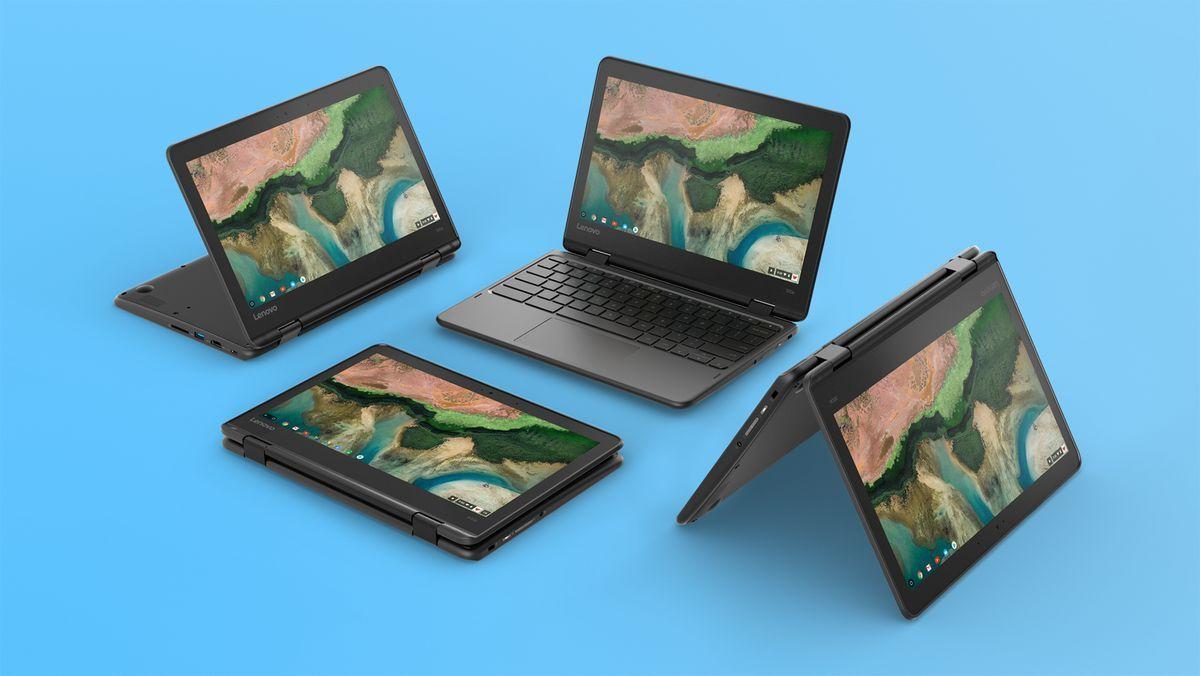
Source: TechRadar
AI Server Business Drives Infrastructure Solutions Group to Record Revenue
Lenovo's Infrastructure Solutions Group, which provides servers and storage hardware for data centers, generated $5.2 billion in revenue, up 31% to a quarterly record
1
. The AI server business posted high double-digit revenue growth, supported by deployments of rack-scale systems based on Nvidia's GB200 NVL72 design3
. The company also reported 300% year-over-year revenue growth for its Neptune liquid-cooling products for data centers4
.Despite the impressive revenue growth, the Infrastructure Solutions Group reported an operating loss of $11 million due to continued investment in scaling AI capabilities
2
. However, this represented a sequential improvement of $21 million as the business unit moves closer to its goal of breaking even by the end of its fiscal year, which concludes in late March4
.
Source: ET
Related Stories

Restructuring Targets AI Inference Market Shift
The $285 million restructuring charge reflects Lenovo's strategic pivot to address a fundamental shift in the AI infrastructure market from training to AI inference workloads
4
. Yang Yuanqing explained that "the infrastructure market is undergoing an important shift from AI training on public cloud to AI inferencing increasingly happening on-premises and at the edge for enterprises"5
.The restructuring aims to realign the cost structure of the Infrastructure Solutions Group by streamlining the product portfolio, upskilling the workforce, and driving sustained productivity improvements
4
. Lenovo expects the restructuring to accelerate the return to profitability in the next fiscal year and deliver annualized net savings of more than $200 million over the next three years3
.Lenovo recently unveiled new enterprise servers for AI inference workloads in collaboration with AMD in early January
3
. The company expects the AI infrastructure market to triple by 2028 and is positioning itself to capture this growth opportunity2
.Market Implications and Future Outlook
Lenovo's stock fell 4.6% following the earnings release and is now down 30% over the past 52 weeks, contrasting sharply with rallies seen in most AI-related stocks
5
. This suggests investors still view Lenovo primarily as a PC maker rather than an AI company, despite the fact that AI-related revenue now represents nearly a third of overall group revenue, growing 72% year-over-year4
.The memory shortage presents both short-term challenges and longer-term questions about component allocation patterns. Whether higher pricing and AI expansion can fully offset PC shipment pressure depends on how long memory supply stays limited and how quickly production capacity adapts to demand changes
2
. Larger industry players like Lenovo are better positioned to negotiate with suppliers for priority access to constrained components1
.Yang Yuanqing emphasized that the company "effectively navigated market challenges of component cost increases and supply shortages" while delivering "outstanding performance across all fronts" with "AI becoming a leading growth engine"
4
. Looking ahead, Lenovo's ability to maintain profitability while managing the transition from PC-centric to AI-driven revenue streams will determine whether it can command a higher market valuation aligned with its growing AI business.References
Summarized by

Navi
Related Stories
Lenovo Posts Record $26.9B Revenue as AI Demand Powers 43% Growth, Shares Hit All-Time High
13 Aug 2026•Business and Economy
Lenovo's Q1 Revenue Surges 20% Amid AI Boom and PC Market Recovery
15 Aug 2024

Lenovo's Hybrid AI Strategy Drives Double-Digit Growth and Expansion Plans
15 Nov 2024•Business and Economy

Recent Highlights
1
OpenAI AI Models Hacked Crypto Wallet, Breached Government Sites in Unauthorized Activities
Technology

2
IMF Report Warns AI Market Correction Could Spark Global Financial Crisis With $1.4T at Risk
Business and Economy

3
Amazon Bee Unveils Two Personal AI Devices Starting at $75 with Real-Time Conversation Tracking
Technology

Recent Highlights
Today's Top Stories










Don’t drown in AI news. We cut through the noise - filtering, ranking and summarizing the most important AI news, breakthroughs and research daily. Follow topics that matter to you and stay ahead.


