LG unveils Zero Labor Home vision with CLOiD robot and Physical AI at CES 2026


5 Sources
[1]
The Next Frontier: LG's future is not just the TV and fridge in your home
LG Electronics is accelerating its transformation: LG Electronics is transforming from a home appliance maker to a technology powerhouse. The company is expanding into recurring services and business-to-business solutions. LG is also investing heavily in AI infrastructure and robotics. This
[2]
LG envisions Zero Labor Home powered by Physical AI and CLOiD robot ecosystem
LG Electronics is extending Physical AI from factory environments into residential spaces with its LG CLOiD™ robot, first unveiled at CES 2026. The company's robotics strategy is based on a deep understanding of living environments across homes, mobility, commercial sites, and industrial settings,
[3]
LG details AI Home roadmap toward Zero Labor Home ecosystem
LG Electronics (LG) has outlined its vision for AI Home experiences, presenting a roadmap toward a "Zero Labor Home" where intelligent technologies reduce household effort and support everyday activities. The company said future homes should move beyond simply connecting devices and instead be
[4]
Why LG is making its own robot joints: What that actually means
The dead graveyard of smart home robots that proved smarter than you hoped and more useless than you imagined is long and includes everything from Honda's ASIMO to Sony's AIBO when it stopped playing fetch and instead became a novelty toy. And a whole lot of concepts showcased every year at CES
[5]
LG brings its AI Home vision to India: Promises appliances that think ahead
LG's AI Home concept has finally made its way into India this week, with a roadmap in which LG's household appliances can go beyond being command-driven units and become devices which can learn about the needs of its users, act in a coordinated manner and minimize the effort involved in managing a
Share
Copy Link
LG Electronics is transforming from a home appliance maker into a Physical AI powerhouse with its Zero Labor Home concept. Unveiled at CES 2026, the CLOiD robot works with the ThinQ AI platform to create an autonomous home ecosystem. The company is also expanding its B2B revenue streams and subscription services while bringing AI-powered appliances to India.
LG's AI Home Vision Extends Beyond Traditional Appliances
LG Electronics is no longer content with manufacturing refrigerators and televisions that sit quietly in homes. The South Korean company outlined an ambitious transformation at briefings in Seoul and through its CES 2026 showcase, positioning itself as a provider of recurring services, a business-to-business technology partner, and a player in Physical AI and home robotics . This strategic shift reflects LG's effort to reduce reliance on cyclical consumer spending and build steadier, higher-margin businesses around contracts, subscription services, and infrastructure.
The company's B2B revenue generated approximately Rs 398 billion in first-quarter sales, accounting for 36% of total revenue with a 19% sequential increase . Meanwhile, LG's appliance subscription model expanded by more than 75% in 2024, generating around $1.5 billion in annual revenue according to ratings agency S&P . This subscription business maintains double-digit growth and offers consumers flexibility to lease products bundled with maintenance services while retaining ownership options.
Zero Labor Home Powered by Physical AI and CLOiD Robot

Source: Digit
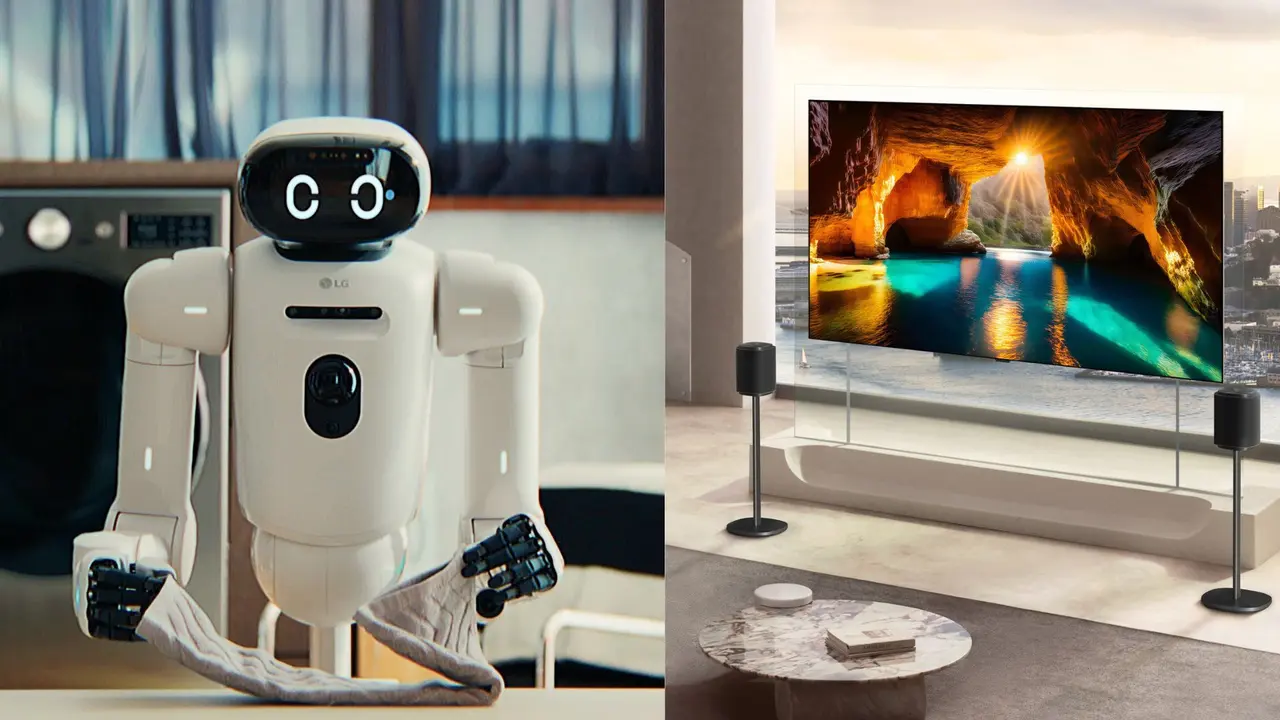
At the heart of LG's AI Home vision lies the Zero Labor Home concept, where intelligent robots, connected appliances, and AI Orchestration systems work together to manage household tasks with minimal human intervention
2
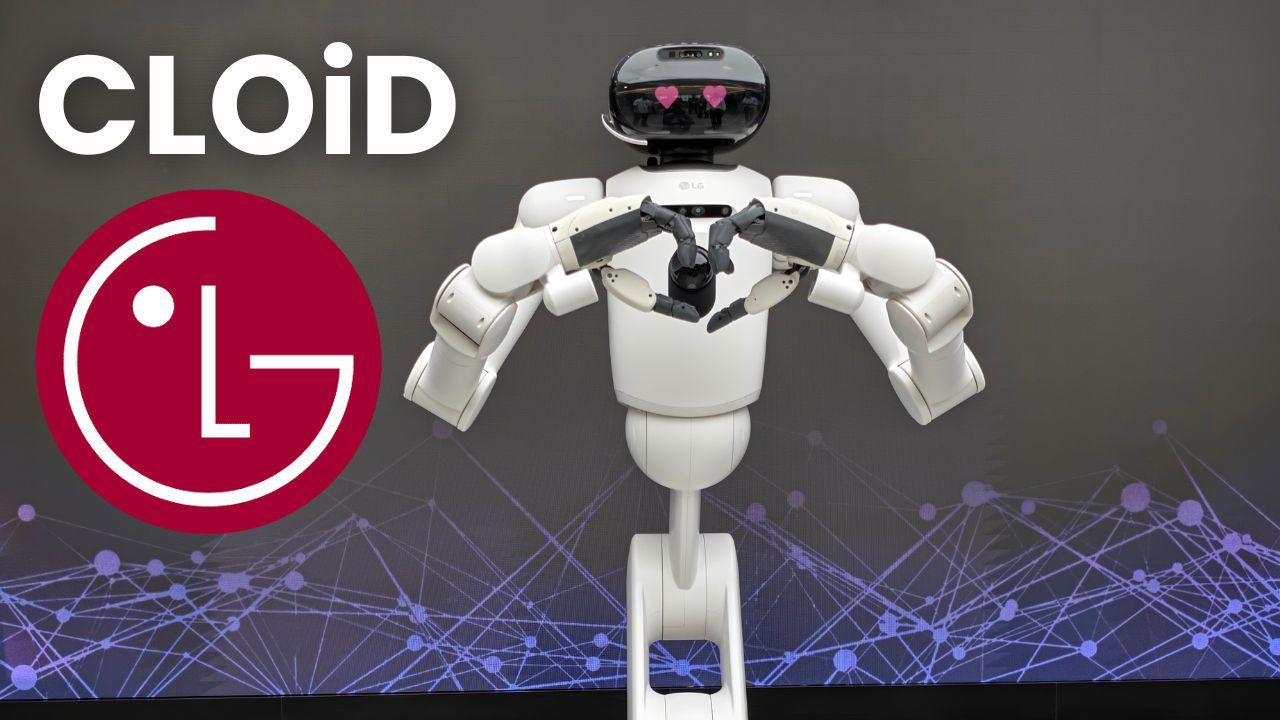
. The LG CLOiD robot, first unveiled at CES 2026, serves as a key component in this ecosystem. Powered by an advanced spatial vision engine, the CLOiD robot can navigate homes autonomously and perform physical household tasks while integrating with the ThinQ ON hub3
.
Source: Digit
What sets the CLOiD robot apart is LG's proprietary LG Actuator AXIUM technology. Unlike most home robots that rely on third-party components, LG designed its own actuator combining motor, drive system, and gearbox into one compact package
4
. This actuator converts electrical signals into mechanical force, enabling precise control over robotic motion. The vertical integration approach mirrors Apple's silicon strategy, allowing LG to design hardware and software to fit perfectly without limitations dictated by external manufacturers4
.ThinQ AI Platform Creates Unified AI-Driven Smart Home
LG's ThinQ AI platform has evolved through three distinct phases. The initial phase offered reactive automation with smartphone-based remote control. The second phase introduced ThinQ UP with over-the-air software updates, enabling continuous adaptability as AI-powered appliances learned user habits
3
. The current third phase leverages generative AI through the ThinQ ON hub, integrated with Athom's open ecosystem Homey, supporting more than 50,000 devices across hundreds of brands3
.This unified AI-driven smart home ecosystem is built on three core pillars: AI-powered appliances that understand usage patterns and optimize performance, ThinQ AI Orchestration that serves as the central intelligence layer coordinating devices across the home, and autonomous home robots like CLOiD that extend intelligence into the physical environment
3
. The system interprets natural conversational context and coordinates unified home actions with limited manual intervention.Related Stories
Physical AI Ecosystem Backed by Decades of Robotics Development
LG's Physical AI approach rests on four interconnected pillars: decades of consumer insights from millions of connected home appliances worldwide, over 20 years of robotics development across residential, commercial, and industrial environments, core robotics technologies including actuators and precision motion systems, and a group-wide Physical AI ecosystem enabled through collaboration across LG companies
2
. Since introducing its first cleaning robot in 2003, LG has accumulated real-world operational data from diverse environments spanning home robotics, logistics, and industrial sectors.The company's smart factory technologies already deploy robotics, digital twins, autonomous logistics, and AI-based automation at scale, generating continuous operational data and validation
2
. This ecosystem connects perception, intelligence, and physical action through LG AI Research's EXAONE AI, LG Innotek's sensing and vision capabilities, ROBOSTAR's industrial robotics, LG Energy Solution's batteries, LG CNS software integration, and LG Electronics home appliances2
.India Manufacturing and Market Expansion
LG highlighted India as a critical market for its AI Home strategy, citing growing adoption of premium appliances across metro markets
3
. The company's manufacturing facilities in Greater Noida, Pune, and an upcoming facility in Sri City are integrated into its global AI roadmap, allowing next-generation components to be localized and scaled5
. This India manufacturing strategy supports wider deployment of AI-powered washing machines, refrigerators, air conditioners, and cooking systems for Indian households.Young Min Hwang, Vice President of Home Appliance Solution at LG Electronics India Limited, noted that India is entering a transformative phase of home appliance premiumization driven by rising household incomes, rapid urbanization, and growing consumer preference
3
. The ThinQ AI platform brought to India this week positions the country not merely as a market but as a manufacturing partner in the global effort to produce AI-based home appliances5
.The challenge ahead remains whether LG can deliver the CLOiD robot at a price point that transforms it from a premium showpiece into a genuine consumer product. Home robots face more complex challenges than industrial counterparts, including unpredictable environments with carpets, pets, and children, while needing to operate silently and compactly
4
. However, the proprietary robot joints and actuator technology represent the most technically serious approach a home appliance company has taken with robotics to date4
.References
Summarized by

Navi
Related Stories
LG CLOiD home robot with dual arms and AI debuts at CES 2026 as new growth engine
27 Dec 2025•Technology
LG CLOiD home robot debuts at CES 2026 to tackle cooking, laundry and household chores
04 Jan 2026•Technology

LG and Nvidia Partner to Build Humanoid Robot Launching Q1 2027 with AI Factory Infrastructure
14 Aug 2026•Technology

Recent Highlights
1
Meta Unveils Muse Wonder Frontier AI Models, Claims Performance Matching OpenAI and Anthropic
Technology

2
IMF Report Warns AI Market Correction Could Spark Global Financial Crisis With $1.4T at Risk
Business and Economy

3
OpenAI Releases 722 AI-Generated Math Solutions, Triggering Existential Crisis in Mathematics
Technology

Recent Highlights
Today's Top Stories








Don’t drown in AI news. We cut through the noise - filtering, ranking and summarizing the most important AI news, breakthroughs and research daily. Follow topics that matter to you and stay ahead.


