Li Qiang defends China's tech advancements, rejects state subsidies claims at World Economic Forum

2 Sources
[1]
Premier says China's tech advancements an 'opportunity' for world, not threat
China's Premier Li Qiang has countered global concerns about the nation's technological surge, framing it as a worldwide opportunity, not a threat. He dismissed claims that hefty state subsidies are the primary driver of China's high-tech boom, attributing its success to a vast domestic market and
[2]
Singling out Huawei, China's premier defends tech rise, rejects subsidy claims
China's Premier Li Qiang has pushed back against claims that state subsidies fuel the nation's tech advancements in areas like AI and EVs. Speaking at a World Economic Forum summit, he attributed China's innovation to substantial firm investments, citing Huawei's resilience against foreign
Share
Copy Link
China's Premier Li Qiang pushed back against claims that state subsidies fuel the nation's technological surge, framing China's tech advancements as a global opportunity rather than a threat. Speaking at the World Economic Forum in Dalian, he attributed success in AI, EVs, and semiconductors to massive corporate investment and a vast domestic market, while singling out Huawei as proof of China's innovation resilience.
Li Qiang Frames China's Tech Advancements as Global Opportunity
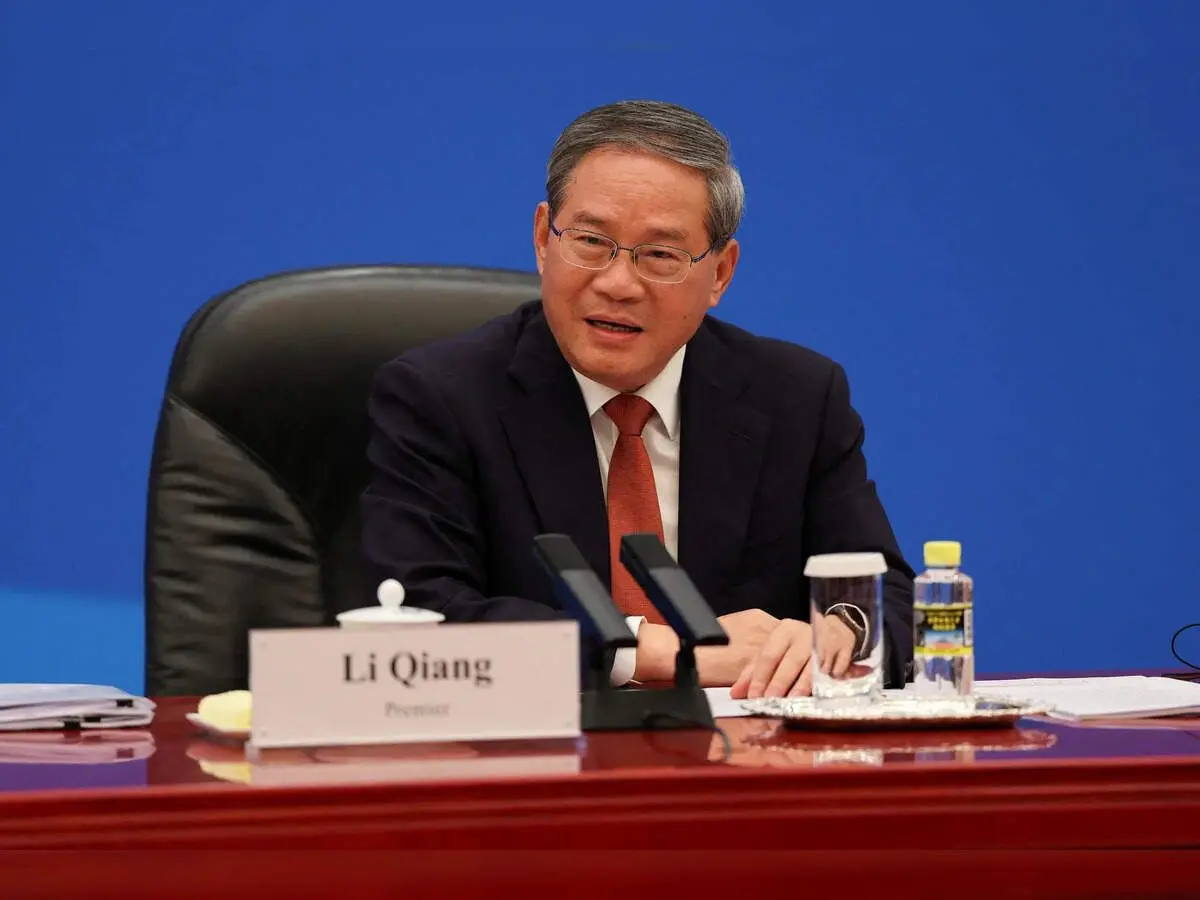
China's Premier Li Qiang delivered a forceful defense of the nation's technological surge at the World Economic Forum's Annual Meeting of the New Champions in Dalian, directly challenging Western concerns about China's tech advancements. Speaking at what's known as Summer Davos, Li Qiang reframed the narrative around what critics call "China Shock 2.0," instead proposing the term China Opportunity 2.0 to describe how China's technological advancements should be viewed globally
1
. "From the global development perspective, 'China Opportunity 2.0' means there'll be broader access to advanced technologies and more widely shared benefits," Li said, positioning China's emerging technologies and products as bringing opportunities rather than threats to the world1
.
Source: ET
State Subsidies Claims Rejected by China's No. 2 Leader
In a rare moment of joviality, Li Qiang directly dismissed accusations that state subsidies are the primary driver behind China's competitiveness in high-tech sectors. "People say Chinese products are competitive mainly because the Chinese government extends subsidies, but that is not the case: the Chinese government is not that wealthy," the official in charge of the $20 trillion economy's day-to-day operations stated
2
. This comes as US and European policymakers have raised concerns over Chinese state subsidies creating unfairness to their industries, with a June report by the 38-country Organisation for Economic Cooperation and Development indicating that huge state subsidies can distort global markets and create unfair competitive advantages1
. Instead, Li attributed China's technological advancements to the nation's large domestic market of 1.4 billion people, which allows mass and fast deployment of new technologies, along with substantial firm investments1
.Huawei and Unitree Highlighted Amid Pentagon List Expansion
Li Qiang specifically singled out Huawei as a prime example of China's innovation success, noting the tech giant has "long suffered from foreign restrictions" without directly referencing the United States or European Union, which have both curbed the company's role in critical infrastructure
2
. He also name-checked robotics company Unitree as examples of firms that have risen quickly in size and market share1
. The timing is notable: the Pentagon earlier this month expanded its blacklist of alleged Chinese military companies to 188 entities, with Unitree's inclusion preventing the firm from landing US defense contracts1
. The Pentagon list also includes Huawei, reflecting concerns that China's military could tap the private sector for advancements2
.
Source: ET
Related Stories

Growing Trade Tensions Over AI, EVs, Robotics, and Semiconductors
China's tech advancements and growing exports of AI, EVs, solar panels, chips, batteries, and robotics have offered affordable options to global markets but also raised criticisms among governments concerned about oversupply, with some taking protectionist responses
1
. Li struck a defiant tone in Dalian, highlighting China's achievements in multi-use rockets, quantum technology, and semiconductors, while pointing to the rapid pace at which Chinese researchers are consuming AI tokens in their pursuit of fresh advances2
. Analysts warn that Beijing could soon confront a second, European front in its trade war with the West, as Brussels increasingly echoes Washington's concerns over alleged state support for Chinese firms and the risk they could dominate critical technologies including AI, big data, and manufacturing2
. Li said China would continue to participate in global AI governance and discussions on frontier technologies with a "responsible and constructive attitude," debates which experts say will have major ramifications for the use of these technologies on battlefields and in civilian life2
.References
Summarized by

Navi
Related Stories
China Proposes Global AI Cooperation Organization, Challenging US Dominance
26 Jul 2025•Policy and Regulation

China's Premier Li Qiang calls for power and computing resources to accelerate AI advancement
11 Feb 2026•Policy and Regulation
China declares itself world leader in AI R&D, pledges to accelerate tech self-reliance
05 Mar 2026•Policy and Regulation
Recent Highlights
1
Microsoft and Nvidia Launch Surface Laptop Ultra: A $2,599 AI-Ready PC With RTX Spark Chip
Technology

2
Meta Muse AI Agent Surges to 6.6M Downloads Despite Privacy and Security Controversies
Technology

3
Scientists Build AI Model That Reconstructs Images From Brain Scans in Record Time
Science and Research

Recent Highlights
Today's Top Stories










Don’t drown in AI news. We cut through the noise - filtering, ranking and summarizing the most important AI news, breakthroughs and research daily. Follow topics that matter to you and stay ahead.


