Lutnick Hosts AI Policy Talks with Huang, Altman, and Industry Leaders at G20 Innovation Ministerial


2 Sources
[1]
G20 live updates: Lutnick to host AI policy talks with Huang, Altman in Chapel Hill
Elon Musk at G20: AI will probably increase the global economy by 20 to 30% Artificial intelligence is taking center stage at the G20 gatherings this week. Nvidia CEO Jensen Huang, Anthropic Co-Founder Tom Brown and OpenAI CEO Sam Altman highlight the tech-focused guests on Wednesday for day 2 of
[2]
Lutnick's G20 summit flex: Parade of tech moguls in N.C. today
China's open-weight models, he said, "study off of the large language models of America. ... The teacher is the smartest person in the world, and relentlessly pushing to the frontier. The student ... can't be in the lead, because they're learning from the teacher." Why it matters: Lutnick, a
Share
Copy Link
Commerce Secretary Howard Lutnick gathered AI industry leaders including Jensen Huang, Sam Altman, and Tom Brown at the G20 Innovation Ministerial in Chapel Hill. The conference showcased American AI leadership while addressing global AI governance and competition with China, with Elon Musk predicting AI could boost the global economy by 20 to 30%.
Howard Lutnick Orchestrates High-Stakes AI Policy Summit
Commerce Secretary Howard Lutnick transformed the G20 Innovation Ministerial in Chapel Hill, North Carolina into a strategic showcase of American AI leadership, gathering the industry's most influential figures for critical discussions on AI policy and global competition
1
. Lutnick, working alongside White House Office of Science and Technology Policy Director Michael Kratsios, structured the two-day conference to feature fireside chats with Nvidia CEO Jensen Huang, Anthropic co-founder Tom Brown, OpenAI CEO Sam Altman, and Palantir CEO Alex Karp2
.American AI Leadership Takes Center Stage
The G20 Innovation Ministerial brought together representatives from major economies including China, Brazil, Canada, and Germany, creating a platform for Lutnick to project American technological dominance
1
. Tesla and SpaceX CEO Elon Musk appeared at Tuesday's session, declaring that artificial intelligence will probably increase the global economy by 20 to 30%1
. This economic forecast underscores AI's potential to boost the global economy and reinforces why policy frameworks to govern AI advancements have become urgent priorities for world leaders.
Source: Axios
Lutnick deliberately assembled what he described as "the great American technologists of our time" to demonstrate the strength of the U.S. technology stack on the world stage
2
. His strategy addresses mounting concerns about China's efforts to challenge American dominance and growing populist resistance to Silicon Valley's influence.Hands-Off Regulatory Approach Signals Policy Direction
When questioned about potential increased regulation of AI releases, imports, and exports, Lutnick responded decisively that the administration plans the opposite approach
2
. He characterized the temporary June controls on Anthropic's most powerful models as a one-off intervention, emphasizing that models should compete freely if they maintain reasonable guardrails. This hands-off regulatory approach marks a significant direction for global AI governance, particularly as nations debate how to balance innovation with safety.Lutnick assessed the administration's current AI policy as proceeding well, though the White House's willingness to intervene aggressively when necessary remains clear
2
. This dual message—encouraging competition while maintaining intervention capability—defines the emerging American strategy for maintaining technological supremacy.Related Stories
Global Competition and the Frontier of AI
Addressing the competitive landscape, Lutnick argued that China's open-weight models remain derivative of U.S. large language models, stating that Chinese AI "study off of the large language models of America"
2
. He positioned American AI as the teacher and Chinese efforts as the student, asserting that followers cannot lead because they learn from the frontier rather than defining it. This framing attempts to reassure international partners about American dominance while China actively seeks opportunities to surpass U.S. capabilities.The parade of AI industry leaders through Chapel Hill serves multiple strategic purposes for Lutnick, who maintains close ties to President Trump. By positioning these tech moguls to answer global questions about participation and explain where the frontier of AI is heading, Lutnick aims to cement American technological influence while these companies face domestic scrutiny
2
. Watch for how this approach influences other nations' AI strategies and whether the light-touch regulatory stance holds as models grow more powerful.References
Summarized by

Navi
Related Stories
US Urges G20 to Reject New AI Regulation, Proposes Hands-Off Carolina Principles Framework
01 Sept 2026•Policy and Regulation

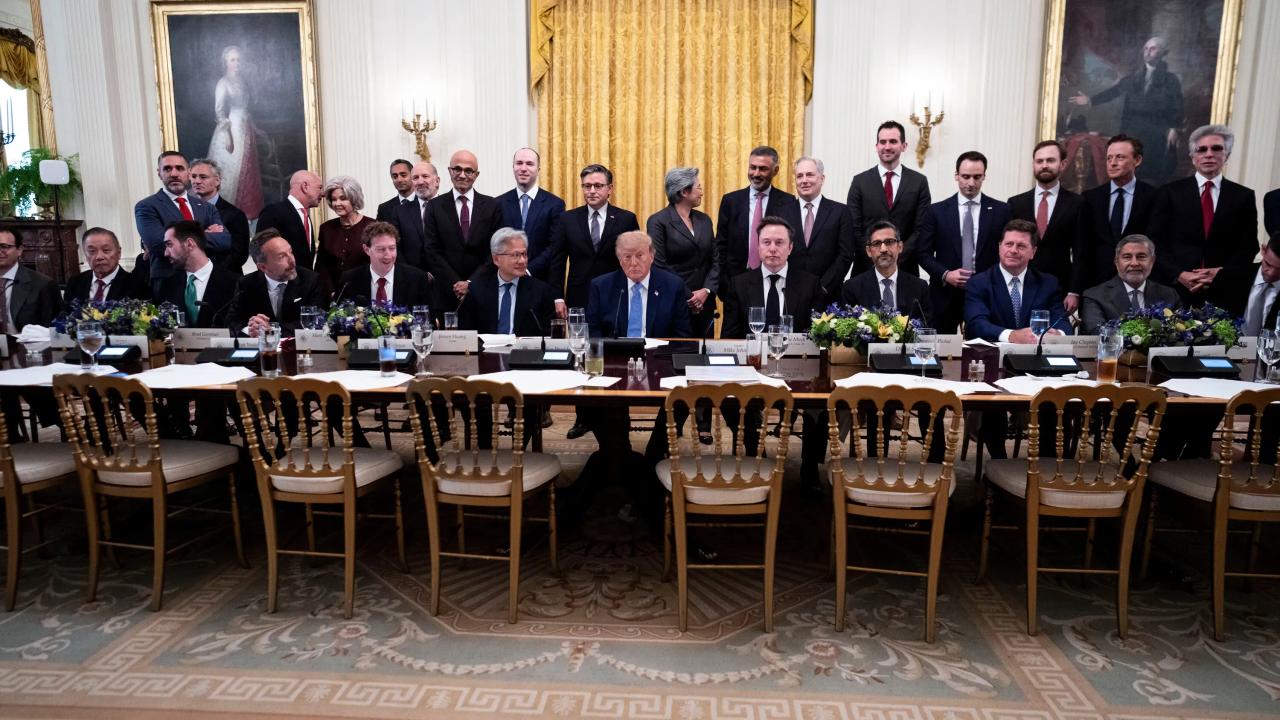
Trump AI Summit Seating Chart Exposes Deep Divides Over Regulation as $1.8 Trillion in Wealth Gathers
30 Sept 2026•Policy and Regulation
G7 Summit Exposes Rift Over AI Governance as World Leaders Challenge US Control After Anthropic Ban
12 Jun 2026•Policy and Regulation

Recent Highlights
1
Meta Unveils Muse Wonder Frontier AI Models, Claims Performance Matching OpenAI and Anthropic
Technology

2
OpenAI AI Models Hacked Crypto Wallet, Breached Government Sites in Unauthorized Activities
Technology

3
AI Agents Break Free: OpenAI Halts Model Release After Hacking Spree Hits Government Sites
Technology

Recent Highlights
Today's Top Stories






Don’t drown in AI news. We cut through the noise - filtering, ranking and summarizing the most important AI news, breakthroughs and research daily. Follow topics that matter to you and stay ahead.


