Major National Study Launched to Evaluate AI in Breast Cancer Screening


4 Sources
[1]
Sylvester part of major national study on AI use in breast cancer screening
University of Miami Miller School of MedicineSep 23 2025 Sylvester Comprehensive Cancer Center, part of University of Miami Miller School of Medicine, will co-lead a newly funded, multi-institutional clinical trial to evaluate whether artificial intelligence (AI) can help support radiologists in
[2]
UCLA to co-lead a large-scale randomized trial of AI in breast cancer screening
University of California - Los Angeles Health SciencesSep 23 2025 UCLA and UC Davis will co-lead a newly funded, multi-institutional clinical trial to evaluate whether artificial intelligence (AI) can help support radiologists in interpreting mammograms more accurately, with the goal of improving
[3]
Sylvester to Participate in $16M National Study on Artificial Intelligence in Breast Cancer Screening | Newswise
Newswise -- MIAMI, FLORIDA (Sept. 23, 2025) - Sylvester Comprehensive Cancer Center, part of University of Miami Miller School of Medicine, will co-lead a newly funded, multi-institutional clinical trial to evaluate whether artificial intelligence (AI) can help support radiologists in interpreting
[4]
UCLA to Lead $16 Million National Study on Artificial Intelligence in Breast Cancer Screening | Newswise
Dr. Hannah Milch, Co-Principal Investigator and Site PI, and Assistant Professor of Radiology at UCLA, reviews a mammogram for signs of breast cancer. Newswise -- UCLA and UC Davis will co-lead a newly funded, multi-institutional clinical trial to evaluate whether artificial intelligence (AI) can
Share
Copy Link
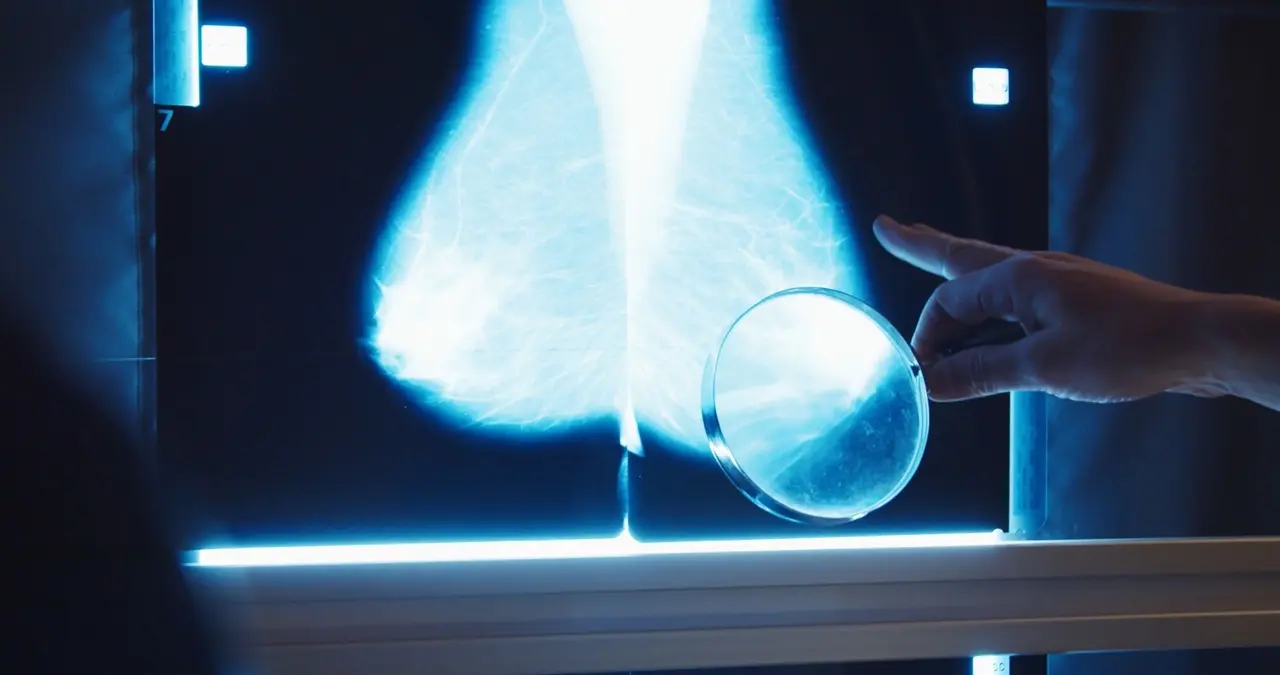
A $16 million multi-institutional clinical trial, known as the PRISM Trial, will assess the effectiveness of AI in supporting radiologists for mammogram interpretation. The study aims to improve breast cancer screening accuracy and reduce unnecessary callbacks.

Landmark Study to Evaluate AI in Breast Cancer Screening
A groundbreaking clinical trial, known as the PRISM Trial (Pragmatic Randomized Trial of Artificial Intelligence for Screening Mammography), has been launched to evaluate the effectiveness of artificial intelligence (AI) in supporting radiologists for breast cancer screening. This $16 million study, funded by the Patient-Centered Outcomes Research Institute (PCORI), marks the first large-scale randomized trial of AI in breast cancer screening in the United States
1
2
.Collaborative Effort Across Multiple Institutions
The PRISM trial brings together seven leading academic medical centers across six states, including UCLA, UC Davis, Boston Medical Center, UC San Diego Health, University of Miami, University of Washington - Fred Hutchinson Cancer Center, and University of Wisconsin-Madison
3
4
. This collaborative effort will involve hundreds of thousands of mammograms interpreted at various academic medical centers and breast imaging facilities.Study Objectives and Methodology
The primary goal of the study is to rigorously and objectively assess AI's impact on breast cancer screening. Researchers aim to determine whether AI can help radiologists interpret mammograms more accurately, potentially improving cancer detection rates and reducing unnecessary callbacks and patient anxiety
1
.The trial will employ a randomized approach, where mammograms will be assigned to be interpreted either by a radiologist alone or with assistance from an FDA-cleared AI support tool called Transpara by ScreenPoint Medical. Importantly, in all cases, a radiologist will make the final decision on the interpretation
2
.Related Stories
Patient-Centered Approach
What sets the PRISM trial apart is its emphasis on patient-centered research. The study was developed in close partnership with patient advocates, clinicians, health system leaders, and policymakers. This approach ensures that the patient perspective remains at the forefront of the research
3
.In addition to analyzing cancer detection and recall rates, the study will include focus groups and surveys to capture how patients and radiologists perceive and trust AI-assisted care
4
.Potential Impact and Future Implications
The results of this trial are expected to have far-reaching implications. Dr. Hannah Milch, Co-Principal Investigator and UCLA Site PI, stated, "The results will help inform not just clinical practice, but also insurance coverage, technology adoption, and patient communication"
4
.Researchers emphasize that the goal is not to replace human expertise but to understand how AI might complement it. Dr. Jose Net, co-principal investigator of the study, stated, "Our skilled radiologists will always have the final say. While AI can serve as a helpful assistant, it is ultimately the radiologist who is in control"
1
.As AI continues to advance in healthcare, this study represents a critical step in evaluating its real-world impact and effectiveness in improving breast cancer screening outcomes.
References
Summarized by

Navi
Related Stories
AI mammography screening cuts aggressive breast cancer diagnoses by 12% in landmark trial
30 Jan 2026•Health

AI Shows Promise in Early Detection of Interval Breast Cancers, UCLA Study Finds
06 May 2025•Health

AI Revolutionizes Breast Cancer Detection: New Tools Predict Risk and Catch Missed Tumors
22 Oct 2025•Health

Recent Highlights



Recent Highlights
Today's Top Stories



Don’t drown in AI news. We cut through the noise - filtering, ranking and summarizing the most important AI news, breakthroughs and research daily. Follow topics that matter to you and stay ahead.


