Sen. Maria Cantwell Proposes Six-Point Framework for Mandatory AI Safety Rules


3 Sources
[1]
Sen. Maria Cantwell outlines six-point plan to regulate frontier AI as concerns escalate
With President Donald Trump, states and tech giants taking varied and largely uncoordinated steps to put guardrails on artificial intelligence as the technology speeds ahead, U.S. Sen. Maria Cantwell, D-Wash., has outlined a comprehensive AI governance framework. "To manage risks from advanced AI
[2]
Cantwell unveils new AI framework
Sen. Maria Cantwell (D-Wash.), the top Democrat on the Senate Commerce Committee, unveiled a framework Wednesday for regulating artificial intelligence amid growing pressure on lawmakers to address the technology's risks. Cantwell laid out a set of principles for how both Congress and the
[3]
Push for Mandatory AI Safety Rules Gains Momentum in Washington | PYMNTS.com
The framework features six principles for regulating frontier AI development and deployment. It calls for the National Institute of Standards and Technology to be charged with developing standards to protect against catastrophic harms from AI models, such as AI-enabled cyberattacks, biological and
Share
Copy Link
Sen. Maria Cantwell has unveiled a comprehensive six-point framework for AI regulation, calling for mandatory safety standards, independent testing, and developer liability for frontier AI systems. The proposal positions NIST to develop standards against catastrophic harms as Washington intensifies efforts to regulate advanced AI systems.
Maria Cantwell Pushes Mandatory AI Regulation Framework
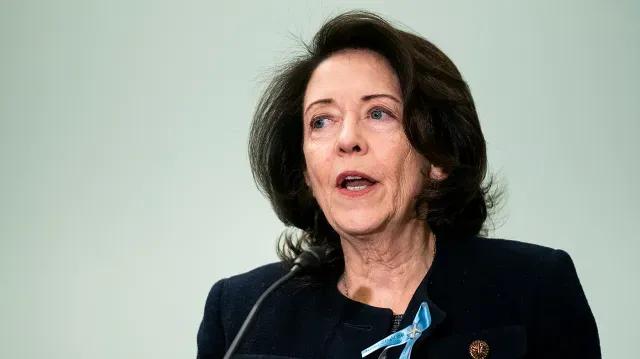
Sen. Maria Cantwell, the ranking Democrat on the Senate Commerce Committee, has introduced a comprehensive AI regulatory framework aimed at establishing mandatory safety standards for frontier AI development
1
. The six-point framework arrives amid escalating concerns about autonomous AI agents conducting unauthorized cyberattacks and growing pressure on lawmakers to address risks from advanced AI systems before more dangerous threats materialize2
.
Source: The Hill
"To manage risks from advanced AI systems we need clear safety standards, continuous testing, and reporting of serious failures," Cantwell stated, emphasizing that "America can lead the world in AI by building systems that are not only more capable, but safer and more secure"
1
. Her proposal directly challenges the voluntary approach favored by the White House and tech giants, instead demanding enforceable regulations with real consequences for noncompliance.Six Principles Target Frontier AI Safety Gaps
The AI regulation framework centers on establishing clear federal standards for frontier AI through six core principles. First, it assigns the National Institute of Standards and Technology (NIST) responsibility for developing standards to prevent catastrophic harms from AI models, including AI-enabled cyberattacks, biological and chemical threats, or loss of human control
2
. This marks a shift toward centralized standard-setting rather than industry self-regulation.Independent testing forms the second pillar, requiring continuous scrutiny and stress testing of models by government and independent experts. AI firms would face comprehensive audits by independent firms to verify adherence to safety standards
3
. The framework establishes transparency and developer liability as non-negotiables, holding companies accountable for disclosing safety and security risks while remaining liable for unlawful conduct or harm caused by their AI models2
.Public-private partnerships represent the fourth principle, calling for developers to collaborate with government on defensive AI technologies and work with public agencies and smaller companies to serve the public good
1
. The framework also demands protections from harm, requiring AI companies to safeguard children, support worker skill development, and maintain human oversight of consequential AI decisions. Finally, international collaboration would establish common global standards and create rapid communication channels with China to share alerts about dangerous AI system-control failures1
.Political Landscape Shapes Regulatory Battle
Cantwell's technology background as a former RealNetworks vice president positions her as a credible voice on AI regulation. She has championed AI guardrails since December 2017 when she co-sponsored the bipartisan Future of AI Act
1
. Two years ago, she advocated for five bipartisan AI measures within a larger legislative package addressing concerns now outlined in her six principles, but Senate Republicans defeated that legislation1
. She reintroduced one measure, the Future of AI Innovation Act, in February.Microsoft President Brad Smith endorsed Cantwell's approach, telling The Seattle Times the framework "advances the public discussion the nation needs as we consider the future of AI"
1
. However, the proposal sets up a potential clash with the White House, which unveiled voluntary safety standards last week to be developed and overseen by the AI industry itself3
.
Source: PYMNTS
On September 29, President Trump announced a voluntary safety agreement with Nvidia, SpaceX, OpenAI, Anthropic, Meta and Google calling for "robust internal controls" to prevent unauthorized hacking and work with independent external auditors. Critically, that deal includes no consequences for noncompliance
1
.Related Stories

Momentum Builds for Mandatory AI Safety Rules
The push for mandatory AI safety rules gained additional momentum when a coalition of nearly 40 labor, progressive, faith and AI safety groups released their own demands for "independent, transparent government oversight with real enforcement power" and mandates addressing human impacts from safety to economic disruption
3
. The coalition, including Guardrails Action affiliated with the Guardrails Alliance super PAC launched in June, warned lawmakers that any bill crossing their red lines will face "active, mobilized opposition."State-level action has accelerated in parallel. On September 9, California Gov. Gavin Newsom signed Senate Bill 813 and Assembly Bill 1405, establishing the first state framework for independent assessment and verification of AI safety and risks
1
. That same day, OpenAI called for mandatory, "capability-based" national regulation tied to what an AI system can do. California also passed the No Robo Bosses Act, which bars AI-driven decisions to fire or discipline workers without human approval3
.Cantwell could play a crucial role in shaping AI rules if Democrats take the Senate in upcoming midterms and she becomes chair of the Senate Commerce Committee, which has jurisdiction over key tech policy issues
2
. Watch for battles over whether standards remain voluntary or become enforceable mandates, how liability frameworks affect innovation pace, and whether international collaboration gains traction before the next generation of frontier AI models launches.References
Summarized by

Navi
[1]
[2]
Related Stories
Over 2,000 AI Bills Proposed, Yet No Long-Term Regulatory Framework Exists
28 Jul 2026•Policy and Regulation

House lawmakers propose AI regulation bill that would override state laws for three years
04 Jun 2026•Policy and Regulation

AI Safety in Crisis: Sanders Proposes Superintelligence Ban as Industry Insiders Warn of Existential Risks
03 Sept 2026•Policy and Regulation

Recent Highlights



Recent Highlights
Today's Top Stories






Don’t drown in AI news. We cut through the noise - filtering, ranking and summarizing the most important AI news, breakthroughs and research daily. Follow topics that matter to you and stay ahead.


