House lawmakers propose AI regulation bill that would override state laws for three years


7 Sources
[1]
New Bipartisan Legislation Takes a Big Step Forward in Restricting State Regulation of AI
A new draft bill that would regulate some of the most advanced artificial intelligence tools was released for public comment by Republican Rep. Jay Obernolte of California and Democratic Rep. Lori Trahan of Massachusetts on Thursday. The Obernolte-Trahan bill, dubbed the Great American AI Act,
[2]
What's inside the House draft bill to regulate AI
Why it matters: The draft's release is major step in what will be a difficult path forward for a bipartisan AI bill that can pass the House and the Senate. * The White House has been skeptical of any approach that imposes strict requirements on companies. Driving the news: Reps. Jay Obernolte
[3]
AI firms craft state rules as White House, Congress stall
Major artificial intelligence labs are done waiting on Washington to pass a national standard for AI, turning to state bills to carve out their own policy lines while Congress tries to catch up. Most AI labs support a national safety framework for AI that would eliminate the patchwork of state
[4]
US House lawmakers release draft bill to regulate AI
US Representatives Lori Trahan, a Democrat, and Jay Obernolte, a Republican, released draft legislation to regulate AI, according to a spokesperson for Trahan. A bipartisan pair of US House lawmakers released draft legislation on Thursday that would prohibit states from passing laws
[5]
House lawmakers introduce draft for national AI framework
A bipartisan pair of House lawmakers released a long-awaited draft of a national framework on artificial intelligence on Thursday, aiming to preempt some state laws on AI, minimize the technology's risks and expand research. The discussion draft, obtained by The Hill, proposes overriding state
[6]

House Members Propose Replacing State AI Laws With National Standard | PYMNTS.com
The discussion draft of the Great American AI Act is meant to encourage feedback from stakeholders, experts and the public before the bill is formally introduced, Reps. Jay Obernolte, R-Calif., and Lori Trahan, D-Mass., said in a Thursday (June 4) press release. Obernolte said in the release:
[7]

US lawmakers propose 'Great American Act' to block state AI rules
* Read the draft text here. * Read the section-by-section summary here. A bipartisan group of US House lawmakers has released a draft bill that would bar states from regulating the development of AI models, reigniting a debate over whether the federal government or states should oversee. The
Share
Copy Link
Republican Rep. Jay Obernolte and Democratic Rep. Lori Trahan released a draft bill to regulate advanced AI tools, proposing a national framework that would preempt state laws on AI model development for three years. The Great American AI Act allocates $300 million for oversight but faces criticism from consumer advocates who argue it weakens existing state protections without establishing strong federal safeguards.
Bipartisan AI Legislation Introduces National Framework
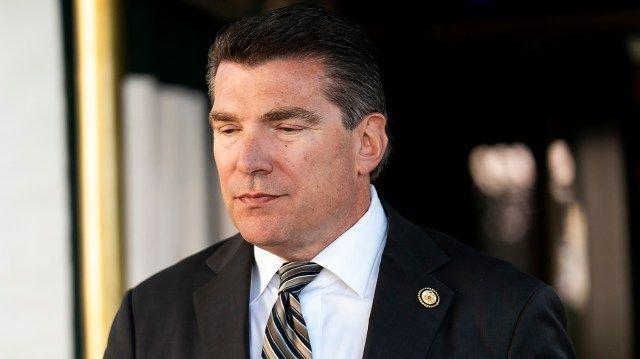
Republican Rep. Jay Obernolte of California and Democratic Rep. Lori Trahan of Massachusetts released a 269-page discussion draft of the Great American AI Act on Thursday, marking a significant step in regulating advanced AI tools at the federal level
1
2
. The bipartisan AI legislation would require large AI developers to keep the government informed about frontier model development, create plans to mitigate severe cybersecurity risks, and allow auditors to ensure compliance1
. Co-sponsors include Reps. Scott Franklin (R-Fla.), Suhas Subramanyam (D-Va.), Erin Houchin (R-Ind.), and Scott Peters (D-Calif.)2
.
Source: The Hill
State Law Preemption Sparks Controversy
The most contentious element of the national AI framework involves state law preemption, which would override state regulations targeting AI model development for three years
4
5
. However, the draft explicitly would not preempt state-level AI regulations governing how AI is used once released, laws of general applicability, or common law remedies5
. Consumer advocacy organization Public Citizen called the proposal a "disastrous proposal" that Big Tech is "celebrating," with J.B. Branch, AI governance and technology policy counsel, arguing it does nothing to address algorithmic discrimination, consumer fraud, youth mental health harms, AI companions, and deepfakes1
. The Tech Oversight Project released surveys showing 56% of Obernolte's constituents and 63% of Trahan's constituents oppose efforts to weaken state AI laws1
.
Source: PYMNTS
Center for AI Standards and Innovation Gets $300 Million
The legislation would formally establish the Center for AI Standards and Innovation (CAISI) within the Commerce Department's National Institute of Standards and Technology, allocating $100 million per year from 2027-2029, totaling $300 million for the effort
1
2
. President Trump's recent executive order on AI sought to establish this office, but it lacks funding without congressional approval1
. CAISI would evaluate frontier models, oversee voluntary guidelines and standards for AI security, and license independent verification organizations to audit labs' compliance with catastrophic risks protocols5
.OpenAI Pursues Reverse Federalism Strategy
While Congress debates AI regulation, major firms like OpenAI and Anthropic have turned to state bills to establish their own policy positions
3
. Chris Lehane, OpenAI's chief of global affairs, described the company's approach as "reverse federalism," creating a "de-facto" national framework by endorsing state bills in major blue states3
. OpenAI has secured wins in Illinois, California, and New York with bills requiring frontier developers to publish safety frameworks addressing catastrophic risks and submit third-party audits3
. Illinois SB 315 mandates frontier labs with more than $500 million in revenue to submit annual third-party audits of their safety plans3
.
Source: The Hill
Related Stories

Workforce Impact and Additional Protections
The draft addresses workforce impact by requiring the Secretary of Labor to oversee data collection, hold workshops, and establish an AI Workforce Research Hub to conduct analysis and develop policy recommendations
5
. Jay Obernolte and Lori Trahan emphasized in a Bloomberg Law op-ed that "we can't prepare Americans for the future if we're not measuring what's happening in real time"5
. The framework would also protect whistleblower protection for AI workers, increase fines for AI-enabled fraud, and boost funding for AI literacy, education, and research2
. The legislation touches on content moderation, research security, and international AI standards2
.What Comes Next for Federal AI Regulation
The lawmakers describe this discussion draft as "the start of a serious national conversation" to gather feedback from stakeholders, experts, and the public before formal introduction
2
. The White House has been skeptical of approaches imposing strict requirements on companies, presenting challenges for passage2
. Mixed feedback on the House proposal, combined with separate Senate negotiations, indicates lawmakers face a difficult path forward with less than six months before a new Congress3
. The framework represents Congress's first substantive response to the Trump administration's AI policy "wish list" sent earlier this year5
.References
Summarized by

Navi
[1]
Related Stories
Proposed Moratorium on State AI Regulations Sparks Debate in US Congress
22 May 2025•Policy and Regulation

GOP Proposes 10-Year Ban on State AI Regulation in Budget Bill
13 May 2025•Policy and Regulation

Anthropic CEO Opposes 10-Year Moratorium on State AI Laws, Sparking Debate on AI Regulation
05 Jun 2025•Policy and Regulation
Recent Highlights



Recent Highlights
Today's Top Stories





Don’t drown in AI news. We cut through the noise - filtering, ranking and summarizing the most important AI news, breakthroughs and research daily. Follow topics that matter to you and stay ahead.


