Mark Cuban and Sam Altman Predict AI's Transformative Impact on Business and Employment


2 Sources
[1]
Exclusive: Mark Cuban says AI will be a baseline skill like email or Excel in 5 years and entrepreneurs should embrace it or get left behind
Mark Cuban is no stranger to AI advocacy -- but now the billionaire investor sees a reality where AI will be a "baseline skill like email or Excel" in five years time. Cuban believes that for business owners, being skilled in AI will be a table-stakes expectation. It's how they leverage the
[2]
Mark Cuban and Sam Altman Just Warned About Disappearing Jobs and the Need to Learn AI
OpenAI CEO Sam Altman isn't shy about discussing the future of AI. As the CEO of a market leading company, his predictions carry plenty of weight, such as his worry that AI could make things go "horribly wrong," or that AI agents will completely transform the workplace. Nor is billionaire Mark
Share
Copy Link
Mark Cuban and Sam Altman share insights on AI's future role in business, emphasizing its potential to revolutionize entrepreneurship and reshape job markets.
AI as a Baseline Skill
Mark Cuban, the billionaire investor and entrepreneur, has made a bold prediction about the future of artificial intelligence in business. According to Cuban, AI will become a "baseline skill like email or Excel" within the next five years
1
. This assertion underscores the growing importance of AI in the business world and suggests that entrepreneurs and professionals who fail to embrace this technology may find themselves at a significant disadvantage.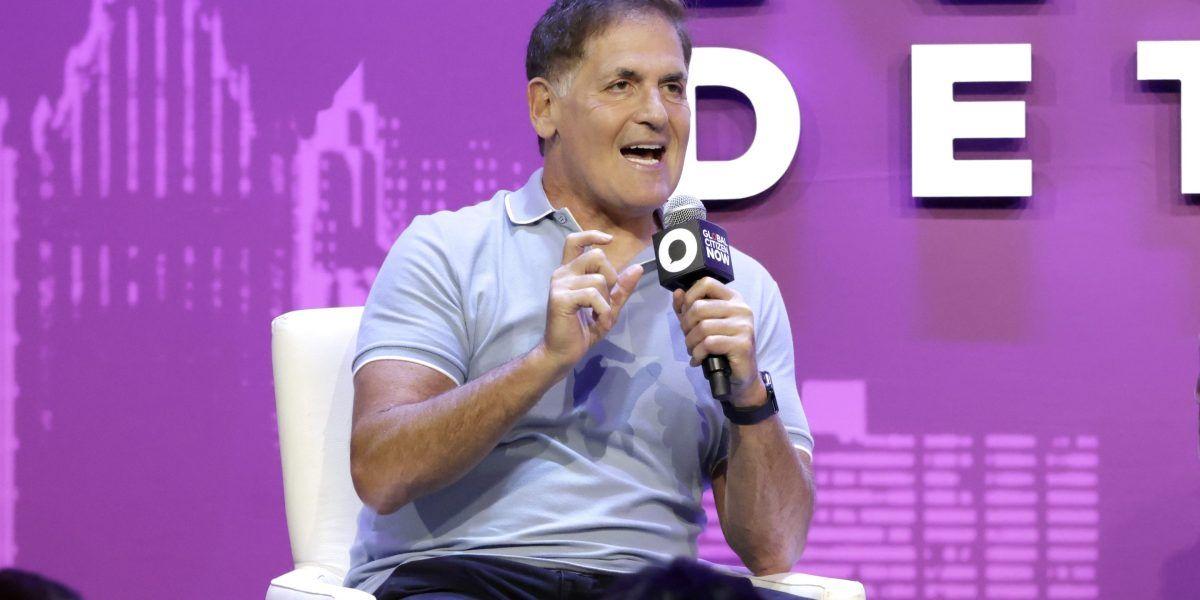
Source: Fortune
Cuban emphasizes that AI proficiency will be a crucial factor in determining business success in the coming years. He states, "If you're not using [AI] to move faster or make smarter decisions, you're behind"
1
. This perspective highlights the potential of AI to enhance productivity and decision-making processes across various industries.AI's Impact on Entrepreneurship
One of the most intriguing aspects of Cuban's vision is the potential for AI to empower solo entrepreneurs. He predicts that in the next decade, "we'll see more people working for themselves" with the assistance of AI tools
1
. These AI assistants could potentially transform "solo founders into full teams," enabling individuals to manage complex business operations without the need for extensive human resources.To illustrate this point, Cuban cites the example of ZenBusiness, an AI platform that has already helped over 850,000 small business owners launch their companies
1
. The platform recently introduced "Velo," an AI agent designed to automate various business operations, including regulatory filings, research, and website creation1
.Job Market Transformation
While Cuban's outlook is largely optimistic, Sam Altman, CEO of OpenAI, offers a more cautionary perspective on AI's impact on the job market. Altman warns that entire job categories may be "eaten up" by AI in the near future
2
. He specifically points to customer service as an industry ripe for AI takeover, suggesting that AI-powered systems can already handle customer inquiries more efficiently than human agents.
Source: Inc.
Altman goes further, claiming that AI is "already better than human doctors" in many diagnostic scenarios
2
. However, he acknowledges that there is still a human preference for interacting with doctors, highlighting the complex relationship between AI capabilities and human trust.Related Stories

Challenges and Opportunities
Both Cuban and Altman stress the importance of adapting to the AI-driven future. Cuban advises entrepreneurs to treat AI like "your smartest intern: ask the right questions, but always double-check the answers"
1
. This approach emphasizes the need for human oversight and critical thinking in conjunction with AI tools.Altman, while highlighting AI's potential, also warns of possible risks. He expresses concern about bad actors using AI to attack financial systems, citing AI voice clones as a particular threat
2
. This underscores the need for robust security measures and regulations as AI becomes more prevalent in sensitive industries.Preparing for an AI-Driven Future
The insights from Cuban and Altman point to a future where AI literacy will be crucial for business success. Cuban's prediction that AI will be a baseline skill within five years suggests that professionals and entrepreneurs should start upskilling now to remain competitive
2
.For business owners, this may mean investing in AI tools and training for themselves and their employees. It also implies a need to rethink business models and processes to leverage AI's capabilities fully. As Cuban puts it, "The most successful entrepreneur will understand how to properly use AI"
1
.In conclusion, while the exact timeline and extent of AI's impact on business and employment remain uncertain, the message from these industry leaders is clear: embracing AI is no longer optional for those who wish to thrive in the future business landscape.
References
Summarized by

Navi
Related Stories
Mark Cuban warns workers: Master AI skills or risk job security as automation reshapes careers
01 May 2026•Business and Economy

Mark Cuban Challenges AI Job Displacement Fears, Predicts New Employment Opportunities
30 May 2025•Business and Economy
Mark Cuban Predicts AI Will Create World's First Trillionaire, Urges Focus on AI Learning
04 Jul 2025•Technology
Recent Highlights
1
Microsoft and Nvidia Launch Surface Laptop Ultra: A $2,599 AI-Ready PC With RTX Spark Chip
Technology

2
Trump Consulted Grok AI Before Ordering Venezuela Invasion and Capture of Nicolás Maduro
Policy and Regulation

3
Scientists Build AI Model That Reconstructs Images From Brain Scans in Record Time
Science and Research

Recent Highlights
Today's Top Stories




Don’t drown in AI news. We cut through the noise - filtering, ranking and summarizing the most important AI news, breakthroughs and research daily. Follow topics that matter to you and stay ahead.


