Zuckerberg Admits Meta's $200 Billion AI Bet Was Made Without Knowing If It Would Work


3 Sources
[1]
Zuckerberg admits Meta spent $200B on AI without knowing it would work
Meta's free cash flow fell 91% in the second quarter, and about $420B of its spending sits off the balance sheet Mark Zuckerberg says Meta committed as much as $200B to AI infrastructure before anyone could tell him it would work, with his chief AI officer saying it was not clear at all. Meta's
[2]
Zuckerberg spent years building on Apple's terms. His $100 billion-plus AI bet is about owning everything | Fortune
Mark Zuckerberg says he knew he was taking an enormous risk when he greenlit Meta's AI buildout -- a commitment he pegged at as much as $200 billion -- before there was any proof it would work. "We're going to write this check for, like, I don't know, like $100 billion, $200 billion," Zuckerberg
[3]
Zuckerberg admits uncertainty over Meta's $200 billion AI bet
The Meta CEO said the company committed to spending up to $200 billion before seeing whether its models would work Meta $META CEO Mark Zuckerberg said Meta Platforms committed to spending up to $200 billion on AI infrastructure before the company knew whether the technology would succeed,
Share
Copy Link
Mark Zuckerberg revealed Meta committed up to $200 billion on AI infrastructure before anyone could confirm it would succeed. Meta's chief AI officer Alexandr Wang admitted uncertainty was real, offering only a vibe report to executives. Meta's free cash flow plummeted 91% to $784 million as the company pursues its aggressive AI strategy.
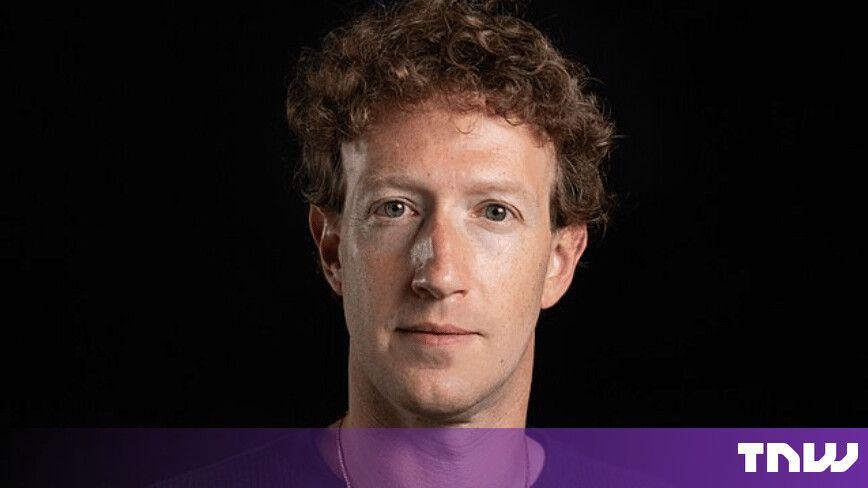
Meta's Massive AI Gamble Without Guarantees
Mark Zuckerberg has openly admitted that Meta committed to spending between $100 billion and $200 billion on AI infrastructure before anyone at the company could confirm the technology would actually work
1
2
. Speaking on the Cheeky Pint podcast hosted by Stripe co-founder John Collison, Zuckerberg recalled asking chief AI officer Alexandr Wang whether he was certain about the massive Meta AI investment. Wang's response was blunt: it was certainly not clear at all that it was going to work3
.This candid revelation exposes the extraordinary risk behind Meta's aggressive AI strategy. Wang explained that decisions of this magnitude get made long before there's proof points around whether or not even the thing is working, describing it as the opposite of Lean Startup methodology
2
. The best Wang could offer the executive team during planning stages was a vibe report on research progress and some charts, without any guarantee of success3
.Financial Pressure Mounts as Spending Accelerates
The financial impact of this Meta AI investment has been severe. Meta's free cash flow collapsed 91% in the second quarter, dropping to just $784 million from $8.55 billion a year earlier
1
. While revenue rose 28% to $60.8 billion, profit fell 14% as capital spending guidance moved to between $130 billion and $145 billion, compared to $72 billion last year1
.Meta CFO Susan Li repeatedly warned about the stakes involved. Wang recalled Li pulling him aside on multiple occasions to stress that if it's bad, it's really, really, really bad
3
. Zuckerberg acknowledged that Susan scared you a bit during these conversations3
. The pressure intensified as Zuckerberg admitted uncertainty over whether the bets had come to fruition, telling staff in July that agentic development had not accelerated as expected1
.Off-Balance-Sheet Debt Raises Additional Concerns
Not all of Meta's AI infrastructure spending appears on its balance sheet. A Nikkei study estimates Meta's off-balance-sheet debt at approximately $420 billion, with $27 billion attached to a single Louisiana data center
1
. This contrasts sharply with Alphabet, which disclosed $811 billion of contracted future spending at the end of June, up about $500 billion in a single quarter1
. Meta has disclosed no comparable total, making the $100 billion or $200 billion figure Zuckerberg cited his own estimate rather than one investors can verify in regulatory filings1
.Full-Stack Strategy Born from Platform Dependency
Zuckerberg's push toward owning the entire AI infrastructure stack stems directly from years of platform dependency on Apple and Google. One of my formative experiences has been building our services constrained by what Apple will let us build on their platforms, Zuckerberg wrote in a 2024 post
2
. His nearly two-decade rivalry with these tech giants shaped Meta's full-stack approach to AI infrastructure.The friction was costly. In 2021, Apple began letting iPhone users block apps from tracking them, a change Meta later said would cost it about $10 billion in 2022 alone
2
. Meta is a full-stack tech company, Zuckerberg explained. We build our own data centers, we build our own chips, we build our own low-level infrastructure2
.The Economics of Gigawatt-Scale Data Centers
Zuckerberg revealed that a one-gigawatt AI data center costs $50 billion to $60 billion to build and roughly $15 billion annually to operate
2
. Meta's Hyperion campus in Louisiana is designed to scale to five gigawatts2
. Unlike Amazon, Microsoft, and Google, Meta doesn't run a cloud business to rent these data centers to outside customers, forcing it to shoulder the entire capital spending burden itself2
.That may change. Bloomberg reported in July that Meta is building a cloud business to sell AI computing power and weighing selling raw computing capacity
2
. Zuckerberg later confirmed these cloud plans on Meta's earnings call, framing the compute infrastructure as a hedge: In order for it not to work out, it's not just that we have to fail, AI overall has to fail2
.Related Stories

Muse Wonder Launches as Proof Point
The admission of uncertainty came alongside Meta's announcement of Muse Wonder, a new AI model the company claims delivers frontier performance on personal and professional tasks including legal, financial, and health questions, as well as coding
3
. The model is available through the Meta Model API and Muse Code, with a higher-end version called Muse Wonder Full for Muse Code subscribers3
.Meta claims Muse Wonder matches OpenAI's ChatGPT and Anthropic's Claude on tasks such as coding and financial or legal questions
3
. Wang described the models as competitive with the best models out there, positioning Muse Wonder as proof of a turnaround after Meta's AI model releases drew weak reception in Silicon Valley last year3
.Agentic Commerce Could Disrupt Meta's Ad Business
Zuckerberg and Wang envision Muse Wonder powering the Muse AI agent, which can act on users' behalf. The best personal agent should feel like a team of experts in your corner, Wang said. Your legal team, and your finance team, and your medical team
2
. The Muse personal AI agent app, which launched September 8, reached 5 million downloads in 22 days according to Sensor Tower3
.This vision of agentic commerce could paradoxically threaten Meta's core business. Advertising made up about 98% of Meta's revenue last quarter, and eMarketer projects the company's worldwide ad revenue will reach $243.46 billion this year, surpassing Google for the first time
2
. If AI agents compare prices, check delivery dates, and make purchase decisions autonomously, the traditional advertising model faces fundamental disruption.Market Reaction and Upcoming Results
Meta shares have gained more than 12% in 2026 as of Monday's market close, though the stock fell 8% after the last quarterly report
1
3
. The next test arrives October 21, when Meta reports third-quarter results after the close1
. Investors will scrutinize whether the massive AI infrastructure investment is beginning to show returns or if Meta's bet remains as uncertain as when Zuckerberg first committed to it. The IMF highlighted similar risks this week, calling the revenue commitments behind these deals wrong-way risk because the investment sours exactly when promised revenue does1
.References
Summarized by

Navi
Related Stories
Meta's $30 Billion AI Gamble: Tech Giant Faces Investor Backlash Over Massive Infrastructure Spending
30 Oct 2025•Business and Economy
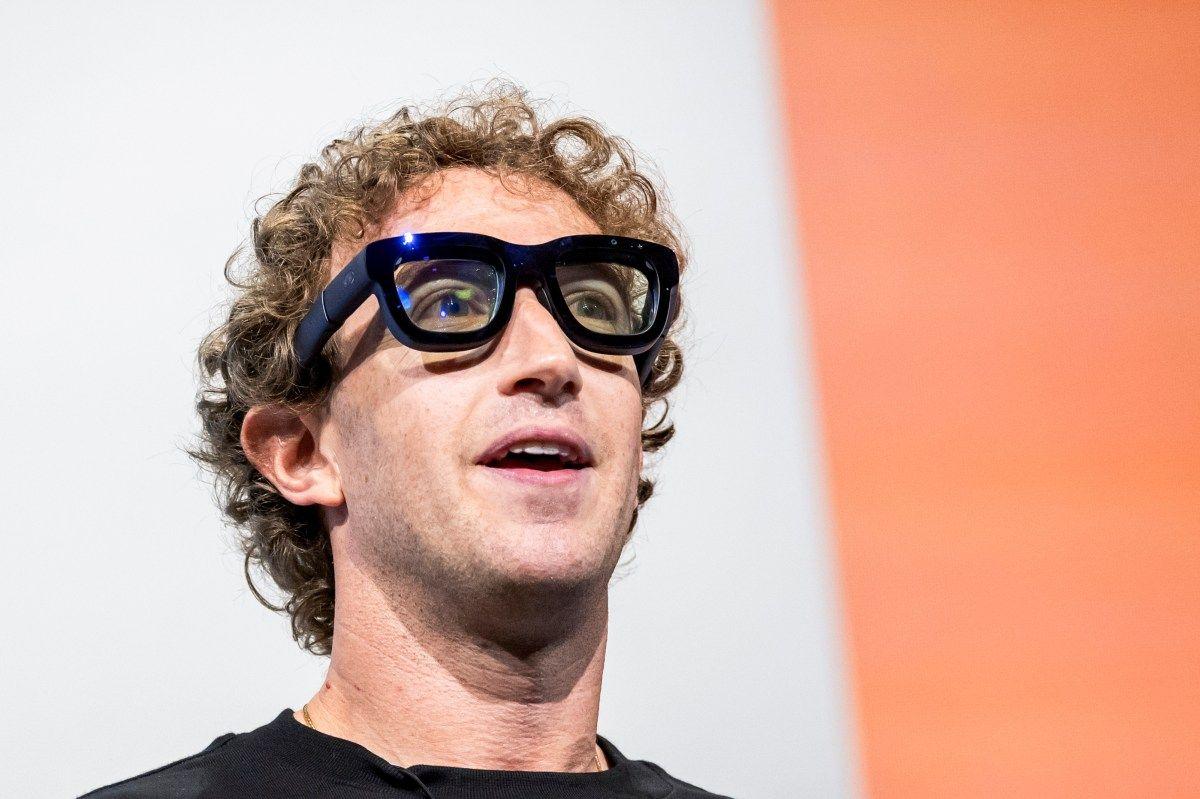
Meta Unveils Massive $65 Billion AI Investment Plan for 2025
25 Jan 2025•Business and Economy

Meta's AI Investments Drive Strong Q2 Performance, Fueling Future Growth
29 Jul 2025•Business and Economy
Recent Highlights



Recent Highlights
Today's Top Stories






Don’t drown in AI news. We cut through the noise - filtering, ranking and summarizing the most important AI news, breakthroughs and research daily. Follow topics that matter to you and stay ahead.


