AI is claiming maths' hardest prizes, and top mathematicians say the winning is the harm


2 Sources
[1]
AI has solved a host of big maths problems - here's why this threatens the whole field of mathematics
For many, the year 2026 will be remembered as the one where mathematics had an identity crisis and forever changed. Frontier (cutting edge) AI models made by OpenAI and Anthropic made stunning progress on hundreds of open problems that have baffled mathematicians for decades - and centuries in some
[2]
AI has solved a host of big math problems -- here's why this threatens the whole field of mathematics
For many, the year 2026 will be remembered as the one when mathematics had an identity crisis and forever changed. Frontier (cutting-edge) AI models made by OpenAI and Anthropic made stunning progress on hundreds of open problems that have baffled mathematicians for decades -- and centuries in some
Share
Copy Link
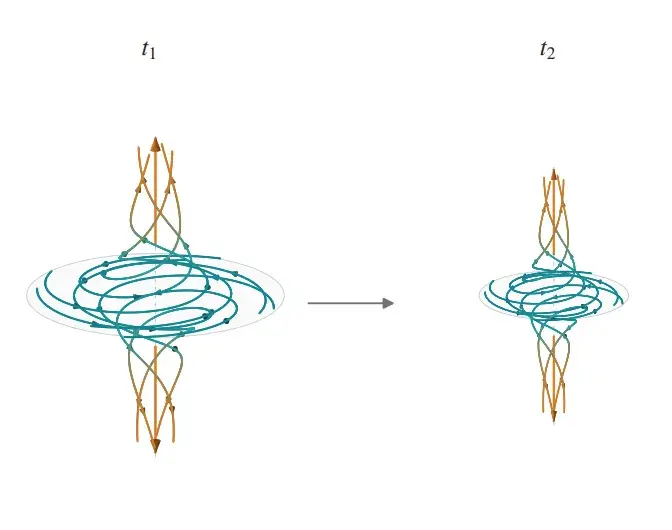
In September 2026, OpenAI announced a claimed solution to Navier-Stokes, one of seven millennium problems named by the Clay Mathematics Institute in 2000
1
. A claimed proof of a millennium problem is a landmark event whatever eventually comes of the verification, and this one landed in a year already full of them.
Source: Phys.org
A year of claimed breakthroughs
The September and October announcements continued a stream that began in April 2026, when OpenAI claimed results on the Erdős unit distance problem and the Jacobian conjecture
1
. In October the company released more than 700 papers claiming solutions, proofs or counterexamples across 372 open problems, a release that has been called the OpenAI dump1
. The dump's papers are claims, and the article reports no independent verification of their contents1
.Anthropic researcher Levent Alpöge separately announced a proof of the Riemann Hypothesis, built with Claude's help. The proof of the problem Riemann posed in 1867 runs to more than 250,000 pages and over 17 million lines of Lean verification code, and independent researchers have checked the Lean code
1
.How the machines did it
For Navier-Stokes, OpenAI ran 10,000 AI agents that worked collaboratively, taking 88 hours to find the solution and 17 more to verify it in Lean, the formalisation software
1
. Where Grigori Perelman needed years of solitary human work to prove the Poincaré conjecture in the early 2000s, these problems were resolved by agents with almost no human intervention1
.The article's explanation of the capability is that large language models trained on the whole corpus of mathematical literature now work through agents that reason, run code and observe the results. It leans on Moravec's paradox, the observation that hard problems are easy for machines and the easy problems are hard, to explain why mathematics fell
1
.The field pushes back
Hugo Duminil-Copin, a Fields medallist and professor at the Institute of Advanced Scientific Studies in Paris, described the dump as having "annihilated my field of research"
1
. He warned it could "dismantle" mathematics as a discipline.Terence Tao, a professor at the University of California, Los Angeles, and a 2006 Fields medallist, compared the companies' output to "dumping carcasses of raw meat onto our table and saying 'here you go, I solved your food problem'"
1
. On September 11 he and 25 other Fields medallists issued a declaration stating that "the goals of the AI companies and the goals of the mathematical community are severely misaligned"1
. It warns that the mass production of true/false statements "could destroy fertile ground instead of breathing life into new ideas". It has gathered more than 8,000 signatures so far1
. A new Association for Human Mathematics, whose members pledge to keep their research entirely AI-free, counts more than 1,000 members1
.Related Stories

What the argument is really about
The author's warning is that the threat runs past the open problems to the human ecosystem around them
1
. That means theory-building, peer dissemination, PhD training, and the careers that flow from mathematics into government, data science, finance and cybersecurity. If a top-down, black-box approach becomes the norm, he argues, that pipeline may be at risk1
.
Source: The Conversation
There is also a commercial wrinkle. OpenAI has estimated the cost of the Navier-Stokes effort at about $15 million, a net loss of roughly $14 million against the Clay Institute's $1 million prize
1
. That suggests the companies have little financial reason to keep proving conjectures. The author, for his part, says no moment has been better for studying mathematics1
.References
Summarized by

Navi
[1]
Related Stories
OpenAI Solves 719 Math Problems Overnight as AI Challenges Maths and Sparks Calls for Maths 2.0
20 Oct 2026•Science and Research

OpenAI Releases 722 AI-Generated Math Solutions, Triggering Existential Crisis in Mathematics
08 Oct 2026•Technology
OpenAI's AI Solves Navier-Stokes Problem But Ignites Existential Crisis in Mathematics Community
15 Sept 2026•Science and Research

Recent Highlights



Recent Highlights
Today's Top Stories





Don’t drown in AI news. We cut through the noise - filtering, ranking and summarizing the most important AI news, breakthroughs and research daily. Follow topics that matter to you and stay ahead.


