Mark Zuckerberg says US should not block Chinese AI models, warns against regulatory capture


11 Sources
[1]
Meta's Zuckerberg says US should not block Chinese AI models, FT reports
July 28 (Reuters) - Meta (META.O), opens new tab CEO Mark Zuckerberg told the Financial Times the U.S. government should not block Chinese models to gain an edge in the AI race, and warned against "regulatory capture" by American frontier labs that could stifle domestic competition. In an
[2]
Mark Zuckerberg says US should not ban Chinese AI
Mark Zuckerberg has said the US administration should not block Chinese models to gain an edge in the AI arms race and warned against "regulatory capture" by American frontier labs that could throttle domestic competition. In an interview with the FT, Zuckerberg said that banning cutting-edge
[3]
Mark Zuckerberg says the US should not block Chinese AI models
Meta's chief told the Financial Times that banning Chinese models is 'not an effective solution', and took aim at rivals who want tighter controls. Mark Zuckerberg has come out against one of Washington's favourite ideas about artificial intelligence: that the way to beat China is to shut its
[4]
Mark Zuckerberg urges U.S. to accelerate AI development
Mark Zuckerberg is pushing the U.S. government to focus on speeding up domestic AI development rather than placing restrictions on the technology. In an opinion column published in the Wall Street Journal on Tuesday, the Meta $META CEO argued that the benefits of distributing AI broadly outweigh
[5]

Zuckerberg knocks AI development centralization, control
Meta CEO Mark Zuckerberg criticized the centralization of AI development on Tuesday, arguing the future of the technology should not be controlled by a limited group of major players. In a Wall Street Journal op-ed, the tech mogul focused on the prospect of superintelligence, or AI that can
[6]

In Just 3 Words, Mark Zuckerberg Explained How America Could Lose the AI Race
To develop cutting-edge AI models, AI makers invest vast sums into computer resources, and pay researchers handsomely to develop powerful software that runs on expensive chips. These are homed in gargantuan datacenters that consume precious power and water resources (and upset nearby homeowners).
[7]

Mark Zuckerberg Says Concentrating AI Power in a Few Companies Is 'Dangerous'
Meta CEO Mark Zuckerberg believes that "superintelligence" shouldn't belong to a few giant tech companies but should be shared by everyone. In a recent op-ed for The Wall Street Journal, he wrote: "The notion that AI is so dangerous that the only safe path is an extreme concentration of power seems
[8]

Meta's Mark Zuckerberg says US should not block Chinese AI models: FT
In an interview with the newspaper published on Tuesday, Zuckerberg said that banning cutting-edge Chinese AI in the US would not be "an effective solution". Meta CEO Mark Zuckerberg told the Financial Times the U.S. government should not block Chinese models to gain an edge in the AI race, and
[9]

Meta's Mark Zuckerberg blasts AI 'centralization,' opposes US ban on Chinese models
Meta CEO Mark Zuckerberg blasted the "centralization" of AI in the hands of a few powerful companies and voiced opposition to potential bans on Chinese AI models as he hailed open access to the new tech as a way to unlock prosperity. Writing in a Wall Street Journal op-ed, Zuck said he is
[10]

Zuckerberg Says AI Should Stay Open, Not Tightly Controlled
Meta CEO Mark Zuckerberg has spoken against keeping advanced AI under the control of a few companies. In an interview with The New York Times, he said AI should stay open so more people can build, use, and improve the technology. He believes heavy restrictions could slow innovation and reduce
[11]

Meta's Zuckerberg warns against curbs on Chinese AI models, FT reports
July 28 (Reuters) - The U.S. government should not block Chinese models to gain an edge in the AI race, Meta Platforms CEO Mark Zuckerberg told the Financial Times in an interview published on Tuesday, as Washington warns that Chinese companies could face penalties over the alleged theft of U.S.
Share
Copy Link
Meta's CEO Mark Zuckerberg has publicly opposed banning Chinese AI models in the US, calling it ineffective. In interviews with the Financial Times and an op-ed in the Wall Street Journal, he warned against centralization of AI development and regulatory capture by frontier labs like OpenAI and Anthropic. His stance comes as Washington debates how to respond to China's Moonshot AI releasing the Kimi K3 model.
Mark Zuckerberg Opposes Banning Chinese AI Models
Mark Zuckerberg has entered the heated AI policy debate in Washington, arguing that the US should not block Chinese AI models to gain an edge in the technology race. In an interview with the Financial Times published on Tuesday, the Meta CEO said that banning cutting-edge Chinese AI in the US would not be "an effective solution"
1
2
. His position directly challenges proposals from senior Trump administration officials, including Treasury Secretary Scott Bessent, who last week said "sanctions" were on the table for Chinese labs that "cross the line into IP theft"2
. The debate has intensified since Beijing-based Moonshot AI released its Kimi K3 model this month, whose capabilities are nearing those of OpenAI and Anthropic2
.
Source: New York Post
Warnings Against Regulatory Capture and Centralization of AI Development
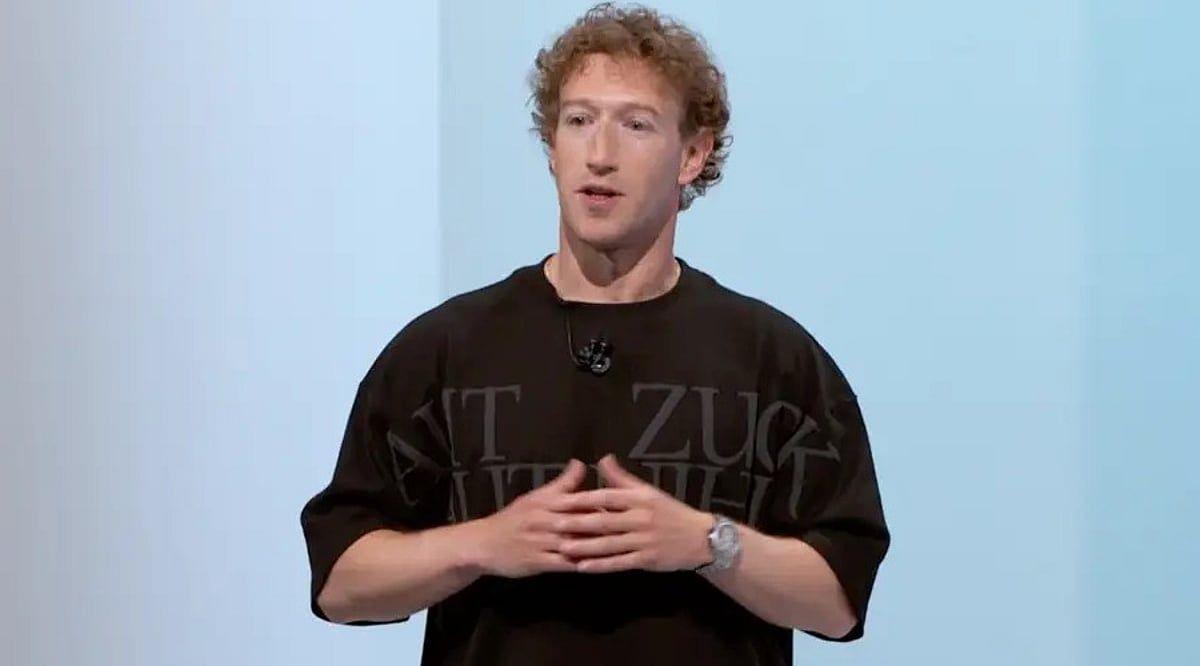
Zuckerberg warned against "regulatory capture" by American frontier labs that could stifle domestic competition and concentrate power in too few hands
1
2
. "There's always this question of regulatory capture if you have a set of businesses that have their own interests that are doing peer review," Zuckerberg said. "Are the frontier labs going to want an open-source model to succeed? I think that there have kind of been some mixed signals on that"2
. In a Wall Street Journal op-ed published the same day, he took thinly veiled swipes at Anthropic's Dario Amodei and OpenAI's Sam Altman, questioning why leaders developing AI offer perspectives "so filled with doom"5
. "The notion that AI is so dangerous that the only safe path is an extreme concentration of power seems dangerous," he wrote5
.
Source: Analytics Insight
Push to Accelerate AI Development Through Open Models
Rather than building barriers, Zuckerberg argued the US should "systematically" identify bottlenecks and roadblocks to better compete with Beijing in an AI race both countries regard as critical to national security and prosperity
2
. He expressed concern about the Trump administration's voluntary 30-day review period for new AI models, saying "the field is moving so quickly, that actually is quite a meaningful amount of time"4
. Meta has championed open-weight AI models, joining Nvidia, Microsoft, and Elon Musk in this stance, while OpenAI and Anthropic have pressed for stricter oversight citing safety concerns and national security concerns3
4
. Earlier this month, a coalition of more than 20 technology companies—including Meta, Nvidia, Microsoft, and Palantir—released a joint letter urging policymakers to avoid placing restrictions on open-weight AI models .Related Stories

Vision for Personal Superintelligence and Democratizing AI
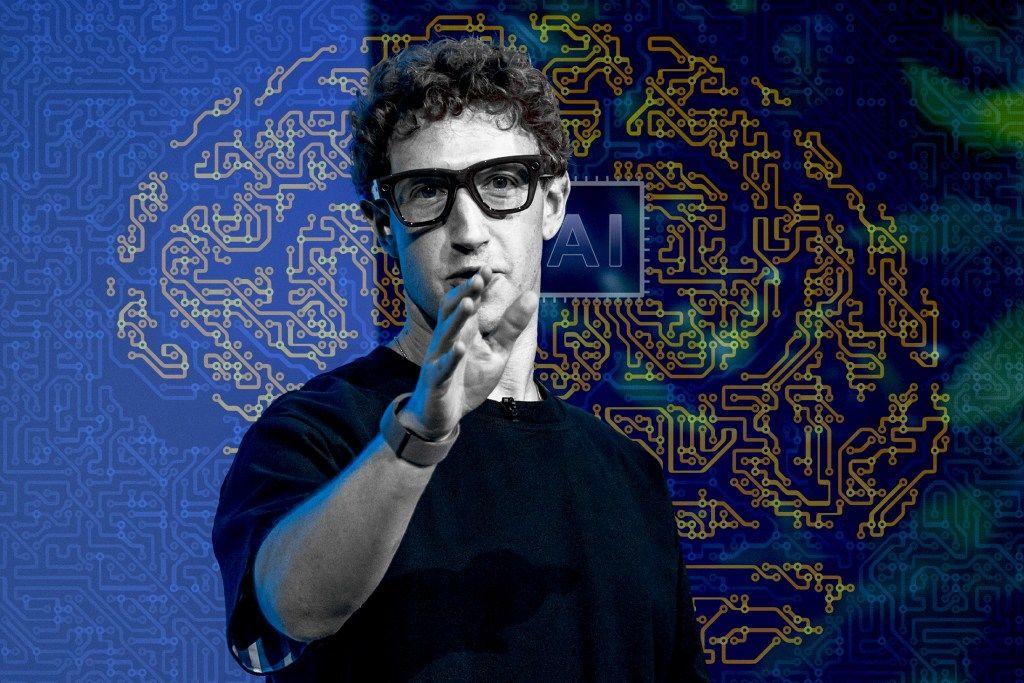
Zuckerberg outlined his vision for "AI for everyone" and advocated for "personal superintelligence" rather than centralized control
2
5
. "The defining question of our age isn't whether superintelligence will exist, but who will have access to it," he wrote in the Wall Street Journal. "Will it be centralized and restricted to a few institutions, or will it be a tool that empowers everyone?"5
. This vision of democratizing AI aligns with Meta's strategy of building open models, though the company recently released its own closed model, Muse Spark, opening up a new revenue stream while citing safety issues as a reason for keeping the model proprietary2
. Meta has forecast capital expenditures of as much as $145 billion this year to support its AI infrastructure buildout and eliminated roughly 8,000 jobs in May, citing AI spending as the reason4
. The industry divide reflects a fundamental tension about whether openness makes American AI development stronger or merely easier to copy, a judgement Washington is struggling to make as it weighs export controls and model restrictions3
.
Source: Entrepreneur
References
Summarized by

Navi
[3]
Related Stories
Meta Signals Shift in AI Strategy: Zuckerberg Hints at Closed Models for 'Superintelligence'
31 Jul 2025•Technology

Meta's AI Strategy: Open-Sourcing LLaMA 3.1 and Its Impact on the AI Landscape
26 Jul 2024

Mark Zuckerberg's AI Manifesto Sparks Skepticism as Meta Struggles to Compete in AI Race
11 Aug 2026•Policy and Regulation

Recent Highlights



Recent Highlights
Today's Top Stories






Don’t drown in AI news. We cut through the noise - filtering, ranking and summarizing the most important AI news, breakthroughs and research daily. Follow topics that matter to you and stay ahead.


