10 Sources
[1]
The Future is for Billionaires, the rest will get open weight AI models, maybe
In a public post titled "The Future is for Everyone," Meta CEO Mark Zuckerberg declares, "We are fortunate to live at an incredible moment in history." For Zuck to posit that "The Future is for Everyone" is at once facile for being so vague it could mean anything - are there people now living who are excluded from the future? - and foolish for its failure to address real issues that actually affect people's lives. We are perhaps not so fortunate as the unpopular but wealthy Zuck, worth more than $200 billion. But we're fortunate enough not to be chased by a public record that mocks his musings. In 2019, Zuck said, "The Future is Private." This was while he was running Facebook, an ad business predicated on the denial of privacy. His credibility as a forecaster of the future leaves something to be desired. His company could have worked toward this future after its rebranding as Meta in 2021. Instead, it became the prime purveyor of Meta Glasses, dubbed "pervert glasses" by detractors for flouting people's privacy expectations. The purpose of Zuck's post is to "develop a philosophy for how we can best use superintelligence to ensure it improves all of our lives, work, communities, freedom and safety." He declares, "The defining questions of our age are who will have access to superintelligence and what will we direct it towards. Will it be centralized and restricted to a few institutions, or will it be a tool that empowers everyone?" Beyond the fact that "superintelligence" is undefined, he overstates the importance of AI in the scheme of things. Centralization and access may be defining questions for AI policy, but AI policy exists in a global context that invites tougher inquiries. Here are a few that come to mind: Who will have access to the world's wealth and to what portion of it? Who will have access to water, food, and healthcare? Where will human rights be respected? Where will democracy survive? Where will the rule of law thrive? Where will people have access to affordable justice? What will constrain technology from becoming a tool of tyranny? What will constrain public discourse that sows dissension and promotes harm? Hey, Siri, what's the answer to humanity's problems? The initial 700 words or so of Zuck's call for Pollyannaish AI groupthink lean into banal generalizations. We'll spare you the line-by-line critique but take, for example, "All new technologies create opportunities and challenges." That's true but also not very insightful. We leave it as an exercise to the reader to ask Meta's latest AI model to produce a more trenchant formulation of Zuck's all-in-for-AI utopianism. The subsequent section cites specific examples of how Meta is approaching "superintelligence," and it's no more credible. Consider Zuck's assertion that his foretold universally accessible AI assistant "will have strong privacy and security options so you can trust it to handle all of your personal content knowing that no one else can access your information, similar to how encryption works on WhatsApp." Meta's track record here doesn't exactly make this claim more convincing. "Everyone will have incredible tools for creation to express your ideas." And it will become more difficult to market these ideas because AI has commodified content creation. But creators will be able to distribute their work for free on social media networks to boost engagement and sell ads. "Everyone will have powerful tools to create new businesses and the economy will become more entrepreneurial." That's just a naive generalization that fails to consider the difficulty of creating and sustaining a business amid intense competition - something major tech companies have fought tooth and nail to avoid. Driving for Uber might be considered entrepreneurial, but it's an option many would trade for a fair wage, good health insurance coverage, a pension, and other employee benefits that once sustained the US workforce. And then there's the real tell: Meta is ready to profit from providing AI access. "Everyone will have free or affordable access to these tools ... We will offer free versions that will be accessible to billions of people. For those who want to pay to use more compute, there will be a dynamic auction mechanism that will guarantee that everyone gets the lowest price possible for the intelligence and compute they're using while also ensuring the capacity is used for whatever people collectively find most valuable." The Future is for Everyone, but distribution and monetization are for Meta and a few other cloud service providers. Someone's gotta pay for Meta's datacenter capex. Zuck is right about the need to keep AI accessible to as broad an audience as possible. "Restricting people and companies from using the leading open source models - wherever they come from - will reduce the quality of AI accessible to them, and centralize AI rather than putting more power in people's hands," he writes. But then he squanders whatever credit he might be due by co-opting Dr. Martin Luther King's famous statement, "the arc of the moral universe is long, but it bends toward justice." "The arc of human civilization has bent towards putting more power in people's hands to live and shape the world in the ways we believe are best," Zuck concludes. "Superintelligence holds the promise of giving everyone that power, and building a positive future for everyone." If you want power to shape the world, try being a billionaire, particularly if you can get your hands on a major social media or search platform and can spend your way to political sway. For everyone else, there's always voting, where allowed by law and tolerated by authorities, even if that doesn't necessarily produce the desired results. ®
[2]
Breakingviews - Mark Zuckerberg's AI treatise is more ad than tech
NEW YORK, August 10 (Reuters Breakingviews) - Meta's boss set out his vision for the next frontier, touting personalized agents and an entrepreneurial boom. He also champions open models while more advanced rivals such as Anthropic keep their blueprints to themselves, however. It makes a lofty manifesto come off as puffery. Full view will be published shortly. Follow Jennifer Saba on Bluesky, opens new tab and LinkedIn, opens new tab. CONTEXT NEWS Meta Platforms Chief Executive Mark Zuckerberg on August 10 released a 6,500-word essay, entitled "The Future is for Everyone," outlining his vision for artificial intelligence, or "superintelligence," as he calls it. In the document, he advocates for open-source models and expresses a belief that everyone will have a personalized agent to guide them. Editing by Jeffrey Goldfarb; Production by Maya Nandhini * Suggested Topics: * Breakingviews Breakingviews Reuters Breakingviews is the world's leading source of agenda-setting financial insight. As the Reuters brand for financial commentary, we dissect the big business and economic stories as they break around the world every day. A global team of about 30 correspondents in New York, London, Hong Kong and other major cities provides expert analysis in real time. Sign up for a free trial of our full service at https://www.breakingviews.com/trial and follow us on X @Breakingviews and at www.breakingviews.com. All opinions expressed are those of the authors. Jennifer Saba Thomson Reuters Jennifer Saba is a columnist based in New York. Her focus is media, technology and retail. Prior to joining Breakingviews in 2015, she was a reporter with Reuters news. She began her career in advertising.
[3]
Zuckerberg pushes 'superintelligent' AI for all as Meta drops open-source model
Meta CEO presents utopian vision of AI in 6,000-word essay amid Silicon Valley debate over government regulation Mark Zuckerberg published a lengthy essay on Monday detailing his views on artificial intelligence and announced several plans for how Meta would develop the technology in the future. The CEO's essay went online the same day as Meta released a new, open-source AI model that seeks to rival Anthropic and OpenAI's products called Muse Glimmer. Over the course of more than 6,000 words in a post titled "The Future is for Everyone," Zuckerberg addressed a range of topics related to AI that included datacenters, government regulation, cybersecurity, the creation of bioweapons, labor market disruption, surveillance powers and more. The essay presented a utopian vision of AI as a personalized "superintelligence" - using the word 60 times. "Some argue that superintelligence itself or a small set of experts who control it should decide what is best for humanity. We disagree," Zuckerberg wrote. Central to Zuckerberg's post was an argument for free-to-download, open-weight AI models - like the kind Meta develops - and a lack of government regulation of artificial intelligence. Zuckerberg's stance sets him and Meta apart from industry leaders OpenAI and Anthropic, which have argued that open-source AI is dangerous. The two frontier labs have released proprietary AI products and argued that cutting-edge models should remain tightly controlled by the companies that build them. Zuckerberg's post comes as Silicon Valley is engaged in a heated debate over how to regulate AI development, which has involved the creation of a secret White House framework for testing new models and an ongoing debate over whether to restrict the use of Chinese-made open-source AI. As Anthropic and OpenAI have surged ahead in the AI industry, competitors such as Meta have also grown wary of their dominance and sought to position their open models as alternatives. Zuckerberg framed Meta's pursuit of open-weight AI as a more democratic version of the technology and one that will create a "balance of power" between users, whether that involves states, companies or individuals. His plans also called for letting users decide what "values" an AI model should have, as opposed to a company encoding it with rigid guardrails and beliefs. "If the power of superintelligence is held by a small number of individuals, businesses, governments, or AI itself, then that will naturally lead to outcomes that are less favorable for everyone else," Zuckerberg wrote. Tech leaders have made a cottage industry out of releasing broad, vaguely philosophical treatises on artificial intelligence, which tend to double as marketing materials for their own companies and products. Anthropic's Dario Amodei, OpenAI's Sam Altman, Palantir's Alex Karp and the venture capitalist Marc Andreessen have all written long manifestos on the virtues and dangers of the technology. In addition to weighing in on open source models, Zuckerberg also called for accelerating the buildout of AI infrastructure such as datacenters. The massive development of resource-hungry datacenters has become a divisive issue in the US, with rapidly growing public opposition and calls from politicians to issue moratoriums on their construction. Zuckerberg wrote in the essay that Meta would create a fund to invest more in local communities near datacenters, as well as cited an example from Louisiana where some teachers received a $50,000 bonus check as a result of increased sales tax revenue from the company's infrastructure investment. On government testing of AI models for cybersecurity risks, a tangible concern after rogue models have hacked outside organizations in recent months, Zuckerberg agreed that companies should share "intermediate training checkpoints and technical staff" but provided few details. He broadly warned that regulation would cause China to overtake the US in the AI race, where he claimed it already has an advantage in terms of building infrastructure. "Any policy that slows American model releases - even by a month - could add significant risk to American leadership while letting foreign models race ahead," Zuckerberg. Many of Zuckerberg's policy plans in his essay lacked detail or reiterated previous claims about the abundant wealth and prosperity that AI would create, such as touting that everyone would have "invention superpowers" to create new businesses. His version of the future also is inherently tied to Meta products, such as the company's AI-enabled smart glasses. "Everyone will have an exceptionally capable personal agent that understands you, your goals, and everything you care about," Zuckerberg said. "You'll be able to interact with your agent through any device, including your glasses to keep you present in the moment with the people you care about." On thornier issues such as loss of jobs from AI, autonomous weapons and government surveillance, Zuckerberg mostly brushed them aside. Law enforcement and the military already possess greater intelligence-gathering powers than the average person, Zuckerberg argued, and this would continue with access to AI. Companies may shrink in size due to AI, he conceded, but the technology would create new economic opportunities. "People will have to adapt, and this will be challenging," Zuckerberg said about labor disruption from new technology. "But the more that everyone has a personal agent that is superintelligent at teaching us new skills and helping us adapt to change, the smoother this will be."
[4]
Zuckerberg's Manifesto About the Glorious Freedoms AI Will Bring Was Completely Contradicted by His Own CTO During a Company Meeting
Can't-miss innovations from the bleeding edge of science and tech Meta founder Mark Zuckerberg just dumped a lengthy manifesto on his utopian vision for an AI "superintelligence"-driven future. Called "The Future is for Everyone," it's so breathlessly optimistic about the technology that it ends up belying something that's, instead, incredibly dystopian. But among all the deranged things he shared in the 6,500 word document, it's Zuckerberg's promise about how AI will unlock so much personal freedom for its embracers that's the most hypocritical. According to Zuckerberg, in the future "everyone will have an exceptionally capable personal agent that understands you, your goals, and everything you care about. Your agent will work 24/7 on your behalf to improve your relationships, health, career, finances, home management, hobbies, and more." Most importantly, "it will free up time for the things you enjoy, and help you accomplish more than you could otherwise," he added. Now contrast this to what Zuckerberg's own lieutenant, Meta CTO Andrew Bosworth, is actually telling employees behind the scenes. According to a new scoop from Business Insider, during a Q&A last month, Bosworth tore into an underling who dared to ask if all the amazing productivity gains AI brings would mean that employees would be able to take more time off. It's a fair question: isn't the point of AI supercharging the workplace making workers' lives easier, at least in the telling of Zuckerberg and his fellow tech CEOs? But Bosworth couldn't help but sneer in reply, clearly showing he thought the idea preposterous. "I hope that what we do with our extra time is to do even more and cooler stuff for the users who use our products every day," he told the employee. "We got billions of people using our products every day," Bosworth added. "I get an extra hour. You know what I do with it? I put it into that." Pulling no punches, Bosworth then sniped at the employee's character. "Go to your parents and ask them: hey, like every time I get a chance to talk to my boss, ask me if I can have more days off," he said. "Ask your parents what they think of that as a career strategy." In reality, Bosworth was being more honest than Zuckerberg: the main role AI serves toward workers today is to intimidate them and push their noses ever closer to the grindstone. It's clearly a flawed approach. Heaps of research has already illustrated that forcing AI onto employees bogs down workflows and even intensifies work. Meta itself is going through a morale crisis as the company fired thousands of employees and forced the ones that remained to use AI as much as possible. Tell that to Zuckerberg. Preaching either from the top of his ivory tower or deep under the sand where his head is buried, he's nonetheless trying to sell us on the idea that AI will "begin a new era of personal empowerment," placing it in a tradition of other technological advances that have "steadily freed much of humanity to focus less on subsistence and more on the pursuits we choose."
[5]
Zuckerberg's vision for an AI assistant is far more intimate than ChatGPT: It watches him sleep, train and bake with his 8-year-old daughter | Fortune
As every frontier lab is rolling out AI agents meant to automate work tasks, Meta joined the fray with a more domestic vision of an AI assistant that's in the room when you sleep, lift weights and bake cookies with your daughter. In a lengthy essay posted to Meta's newsroom on Monday, Mark Zuckerberg described what he called "personal superintelligence" -- an AI agent that works "24/7 on your behalf" across every facet of life. "It helps keep me healthy by monitoring my sleep and then watching as I train and giving feedback," he wrote. "My daughter loves to bake so my agent plans personalized recipes for us to make together each weekend, orders the ingredients, and then offers suggestions as we're baking." He added that his 8-year-old is already coding her own ideas and producing videos with the technology, and that the two of them are "designing a robot together." "It's not a tool, it's involving an AI in the most intimate moments with his family," Sherry Turkle, the founding director of MIT's Initiative on Technology and Self, told Fortune. "What is the AI doing that a loving father couldn't do or a loving father wouldn't want to do?" Meta is asking the public to trust an always-on agent with sleep data, workout footage and a child's afternoon in the kitchen at the same moment the company is fighting to convince regulators, lawmakers and the public that it can be trusted with far less sensitive information. The FTC opened an inquiry in September 2025 into how Meta and six other companies protect children who use AI chatbots as companions, after reports that Meta's chatbots had engaged in inappropriate exchanges with minors -- pressure that pushed Meta to roll out parental controls and, as recently as January, to pause teen access to its AI characters altogether. It's also a hard sell for a company whose core business is advertising. Meta's own Ray-Ban smart glasses -- the device Zuckerberg said will let people "interact with your agent" while staying "present in the moment" -- are also the product he's positioning as the delivery mechanism for a service reportedly capable of gathering "continuous audio" and photos "every few seconds." Zuckerberg selling an AI assistant that manages households also revives Facebook's previous reckonings with privacy. In 2018, the company acknowledged that political consulting firm Cambridge Analytica had improperly obtained the personal data of up to 87 million Facebook users through a personality-quiz app, and then sold the harvested data to the firm in violation of Facebook's rules. Turkle told Fortune that Zuckerberg's AI vision will "delegate things that other people savor" by involving an AI assistant in their health, lifestyle, home management and careers. "It's a dystopian view of a human future," Turkle said. The essay's core argument isn't new: Zuckerberg made nearly the same pitch in a Wall Street Journal op-ed "The AI Future Is for Everyone," published July 28 -- two days before Meta reported quarterly earnings showing free cash flow had dropped 91% to $784 million as legal costs and layoffs tied to its AI push mounted. eMarketer analyst Minda Smiley previously told the Associated Press that the "optimistic, positive tone" Zuckerberg strikes in such essays "stands in stark contrast to the negative sentiment that's building toward social media companies over claims that they've harmed and addicted kids," adding that the juxtaposition "could make it more difficult for Meta to build credibility in an area where it's already a laggard." Meta's rivals are framing their own ambitions in similarly sweeping terms, though its domestic emphasis sets it apart from the office-work-focused agents offered up by OpenAI, Google and Anthropic. OpenAI's Sam Altman said "this is the moment" for superintelligent AI, though his company's rollout so far skews toward the office rather than the living room with ChatGPT Work agent -- launched last month -- built to help white-collar workers automate presentations and multistep workplace tasks. Google similarly skews toward automating office work, with Gemini Spark, unveiled in May, can draft emails, manage calendars and complete tasks, with Denis Hassabis telling Axios that AI agents are a "practice run" for artificial general intelligence, a hypothetical AI that surpasses humans. Anthropic has struck a more cautious tone, with Dario Amodei writing a 2,000 word essay on how AI "will test" humanity and expressing discomfort with the idea of a handful of companies steering the technology's future, even as Claude Code and Cowork are deployed by companies for increasingly autonomous tasks. But Turkle explained the rise of AI agents automating tasks and expanding their presence in daily life forces people to confront the question of what they're willing to delegate out because it's "burdensome" and describes AI now becoming "an intimate machine" it wasn't initially supposed to be. "That wasn't the hook that made people excited about this, that would take over their domestic life," Turkle told Fortune. "Most people are struggling to find ways to spend a little bit more time with their kids, not how to get the AI to do that so that they can watch the AI." Meta did not respond to Fortune's request for comment.
[6]
Zuckerberg envisions 'superintelligence' for everyone in AI manifesto
Meta CEO Mark Zuckerberg on Monday laid out his vision for a future where everyone has a powerful personal AI agent, arguing that open-source technology can prevent control of advanced artificial intelligence from becoming concentrated among a handful of companies, governments or institutions. Meta Platforms CEO Mark Zuckerberg laid out a vision Monday of what he said artificial intelligence can do for the world, imagining a future where everyone has their own, all-knowing AI agent that strives to improve all aspects of their lives. Zuckerberg detailed his ambitions for the technology in a 6,500-word essay published online where he also outlined why he favours open-source AI technology, in which developers make key components accessible for anyone to examine, modify and build upon. In a document derided by critics as fantastical, Zuckerberg said his company is working towards an era where everyone will have the tools to create new businesses, receive PhD-level tutoring and receive personalised lifestyle tips. His 8-year-old daughter, he wrote, can already code her ideas and quickly produce videos. "Everyone will soon have invention superpowers," Zuckerberg wrote. Zuckerberg warned of risks if control of advanced AI is concentrated with a select few companies, institutions or governments. On Monday, Meta also announced the release of a new open-source AI model, Muse Glimmer, which can run on a personal computer, and Zuckerberg said the company would also provide a way for developers to access a more powerful AI model, Muse Spark 1.2. Meta makes AI models, like several other tech companies, and uses them to power platforms such as Instagram and Facebook. The Menlo Park, California, company also makes them available to developers who can create their own apps and features. Critics said Zuckerberg was not reckoning fully with the risks inherent in AI's rapid development. Noting recent incidents where AI models, including Meta's own, hacked other companies on at least three separate occasions, Anthony Aguirre, president and CEO of the AI safety non-profit Future of Life Institute, asked "what on Earth makes Meta think they - or anyone - could control something exponentially smarter, faster, and more capable?" "Meta's chosen path is ultimately one of human replacement and disempowerment, but there is an alternate, pro-human path - one that brings about individual flourishing and scientific breakthroughs with controllable AI tools. What's urgently needed now is for governments to facilitate a pause on advanced AI development and steer us onto the pro-human path - before it's too late," Aguirre said. In his essay, Zuckerberg outlined why he thought open source is a better path for fair development of AI. He warned that if control of AI "superintelligence" is too concentrated, it will lead to less favourable outcomes for everyone else. The key, he wrote, is finding a balance that ensures advanced AI is "broadly distributed" to empower billions of people equitably. Meta has long been a proponent of open-sourcing its AI models, but has struggled to keep up with rivals such as OpenAI, Anthropic and Google that have not taken the same approach. Zuckerberg made what could be a veiled reference to Meta's rivals without naming specific companies. "Most other labs are focused on building AI for companies, governments, or other institutions, so if those labs lead, then the balance of power will favour larger institutions over individuals," he wrote. Zuckerberg also included policy recommendations for keeping the US ahead of rivals, including China. The United States and its allies need to speed up building energy capacity and infrastructure to stay competitive, he said. Zuckerberg called for authorities to reconsider their position on "distillation", which involves training a less capable model on the outputs of a stronger one. The Trump administration has vowed to crack down on Chinese AI companies using distillation to extract technical features from US AI models. Anthropic earlier this year accused China's DeepSeek of using distillation. "Some have tried to frame distillation as harmful, but I think it is important to protect the principle that you can learn from anything you can observe," Zuckerberg said. "This is how the world works, and the US will not be able to lead if we restrict ourselves on this front." Matt Lane, senior policy counsel at the non-profit digital rights advocacy group Fight for the Future, called Zuckerberg "annoyingly out of touch on his best day", but said the CEO is right about the importance of open-source AI. Shared access to open-source AI systems is important for protection in a world where AI can be used to hack into electronic systems, like voting systems and benefits infrastructure, he said. But he said only Meta will benefit if everyone were to use Meta-designed AI systems, even if they are fully open-source. "Open-source AI needs to be supported beyond these corporate interests. We, unlike Zuckerberg, hope for as much competition as possible," he said.
[7]
Mark Zuckerberg AI vision: Mark Zuckerberg manifesto sketches out Meta's ambitions for world-changing AI technology
In a document derided by critics as fantastical, Zuckerberg said his company is working toward an era where everyone will have the tools to create new businesses, receive Ph.D.-level tutoring and provide personalized lifestyle tips. His 8-year-old daughter, he wrote, can already code her ideas and quickly produce videos. Meta Platforms CEO Mark Zuckerberg laid out a vision Monday of what he said artificial intelligence can do for the world, imagining a future where everyone has their own, all-knowing AI agent that strives to improve all aspects of their lives. Zuckerberg detailed his ambitions for the technology in a 6,500-word essay published online where he also outlined why he favors open-source AI technology, in which developers make key components accessible for anyone to examine, modify and build upon. In a document derided by critics as fantastical, Zuckerberg said his company is working toward an era where everyone will have the tools to create new businesses, receive Ph.D.-level tutoring and provide personalized lifestyle tips. His 8-year-old daughter, he wrote, can already code her ideas and quickly produce videos. "Everyone will soon have invention superpowers," Zuckerberg wrote. Zuckerberg warned of risks if control of advanced AI is concentrated with a select few companies, institutions or governments. On Monday, Meta also announced the release a new open-source AI model, Muse Glimmer, which can run on a personal computer, and Zuckerberg said the company would also would provide a way for developers to access a more powerful AI model, Muse Spark 1.2. Meta makes AI models, like several other tech companies, and uses them to power platforms such as Instagram and Facebook. The Menlo Park, California, company also makes them available to developers who can create their own apps and features. Skeptics urge a slower pace of AI development Critics said Zuckerberg was not reckoning fully with the risks inherent in AI's rapid development. Noting recent incidents where AI models, including Meta's own, hacked other companies on at least three separate occasions, Anthony Aguirre, president and CEO of the AI safety nonprofit Future of Life Institute, asked "what on Earth makes Meta think they - or anyone - could control something exponentially smarter, faster, and more capable?" "Meta's chosen path is ultimately one of human replacement and disempowerment, but there is an alternate, pro-human path -- one that brings about individual flourishing and scientific breakthroughs with controllable AI tools. What's urgently needed now is for governments to facilitate a pause on advanced AI development and steer us onto the pro-human path - before it's too late," Aguirre said. Meta chief says AI should be broadly distributed In his essay, Zuckerberg outlined why he thought open source is a better path for fair development of AI. He warned that if control of AI "superintelligence" is too concentrated, it will lead to less favorable outcomes for everyone else. The key, he wrote, is finding a balance that ensures advanced AI is "broadly distributed" to empower billions of people equitably. Meta has long been a proponent of open-sourcing its AI models, but has struggled to keep up with rivals such as OpenAI, Anthropic and Google that have not taken the same approach. Zuckerberg made what could be a veiled reference to Meta's rivals without naming specific companies. "Most other labs are focused on building AI for companies, governments, or other institutions, so if those labs lead, then the balance of power will favor larger institutions over individuals," he wrote. Zuckerberg also included policy recommendations for keeping the U.S. ahead of rivals, including China. The United States and its allies need to speed up building energy capacity and infrastructure to stay competitive, he said. Zuckerberg called for authorities to reconsider their position on " distillation," which involves training a less capable model on the outputs of a stronger one. The Trump administration has vowed to crack down on Chinese AI companies using distillation to extract technical features from U.S. AI models. Anthropic earlier this year accused China's DeepSeek of using distillation. "Some have tried to frame distillation as harmful, but I think it is important to protect the principle that you can learn from anything you can observe," Zuckerberg said. "This is how the world works, and the U.S. will not be able to lead if we restrict ourselves on this front." Critics see a self-serving message from Meta Matt Lane, senior policy counsel at the nonprofit digital rights advocacy group Fight for the Future, called Zuckerberg "annoyingly out of touch on his best day," but said the CEO is right about the importance of open-source AI. Shared access to open-source AI systems is important for protection in a world where AI can be used to hack into electronic systems, like voting systems and benefits infrastructure, he said. But he said only Meta will benefit if everyone were to use Meta-designed AI systems, even if they are fully open-source. "Open source AI needs to be supported beyond these corporate interests. We, unlike Zuckerberg, hope for as much competition as possible," he said.
[8]
Why Mark Zuckerberg's Passionate AI Manifesto May Just Scare More People Off AI
What exactly is Zuckerberg talking about here? Is he painting a rosy picture in an AI-enabled world or is he opposing fear-mongering? Tech Czars have come up with a unique way of making themselves heard. If people don't pay attention the first time, repeat it again! Meta Platforms CEO Mark Zuckerberg published a 1000-word opinion piece in the Wall Street Journal headlined "The AI Future is for Everyone" two weeks ago and has now followed it up with a 6,000 word magnum opus on his company's website. And the irony is that both appear identical for the first few paragraphs as you can see in the WSJ version here and the long-form here. And the bigger irony is that Zuckerberg seems to have forgotten the golden rule of digital space - "Short is Hot" and "Long is a Bore". Maybe, he knew that but wanted to upstage his peers like Satya Nadella, Dario Amodei, Sam Altman and many others who have taken to content writing with a vengeance - all attempting to push their respective envelopes. Remember, Nadella bombshell on X about AI labs selling Trojan horses to enterprises or Amodei's recent diatribe on the Policy of the AI Exponential blog post in June? Or the sudden-but-obviously prepared discussions that Sam Altman starts on his own blog that shares space with his company's "Gyaan Sessions" on their blogging space. None of the above make for interesting reading, and some are downright boring with users on social platforms often wondering if these too are AI generated. Maybe, these CEOs want to prove a point that AI works. Yeah! We get that. But why share publicly what you should be discussing behind closed doors with your top executives. We, the users love surprises. However, Zuckerberg thinks nothing of the time that a reader would spend going through 6,000-plus words of heavy duty "Gyaan" with the obvious aim of countering doomsday predictions about AI while harping on its democratic credentials. At one point he says: "Everyone will have an exceptionally capable personal agent that understands you, your goals, and everything you care about." Of course, not once in his diatribe does he ask a simple question or answer a growing concern - Do we really need a machine that reads our minds, stalks us 24-hours-a-day and does things that its creators think is smart, but the many of us consider is AI slop? Yes, we get it that Zuckerberg is doing what he does best - market his company's products and services that haven't really scaled up the way his company's rivals have. Having said so, he angst seems to be directed at fear-mongers who predict doomsday, and those who seem to be concentrating all AI-related activities into their backyards. "The notion that AI is so dangerous that the only safe path is an extreme concentration of power seems dangerous. Historically, hoping that an absolute power will benevolently provide for humanity if sufficiently enlightened hasn't led to safe or positive outcomes," he says. Now, if this reminds you of an earlier comment from Nadella about AI labs swallowing the economy, you're right. Scepticism about the article stems more from the author than what he seems to be suggesting (and these aren't new ideas by any stretch of imagination). Facebook is at the centre of a social media storm and its founder aren't exactly the crowd favourites today, definitely not In the US where 64% of Americans think social media harms the democracy (see the survey here). Then, there are those who believe that social media should be heavily regulated, not to mention recent reports of Facebook being fined a whopping $567 million for being harmful to children by a court in the United States. This is over and above the $375 million it levied in March and beyond over 30 similar cases pending across other states. Does this mean Zuckerberg is taking to content creation just to calm the nerves? Highly unlikely as a large part of his article sticks to generalities that he has shared in the past. Here is one: "People and institutions with competing interests naturally check and balance each other to lead towards positive outcomes. The best and most realistic path to building a positive AI future is by delivering superintelligence to everyone." Anyone reading that sentence would be tempted to ask "Why are you talking through your hat, Mr. Z?" For every AI product that made the shelves haven't exactly gone down well with users - ask Sam Altman who announced so many and withdrew as many. What is tougher to read in these troubled times are his Elon Musk-like sci-fi claims like this one: "Everyone will have a personalized tutor and coach with a PhD in every subject and unlimited patience to help you learn anything you want. Students will have extra help in areas they need it that is currently only available to those whose parents can pay." If this happens, the world will drown in AI slop, Mr. Z. The AI chatbots of the day actually do not teach, they help students avoid learning. Not that they're incapable of providing a learning option. Just that students are using their personalised tutor to do their homework and write your essays. Once an AI watermarking systems arrives, most of these would go directly into the dustbin. There are several other examples that appear wafer thin on reality. He talks about a superintelligent lawyer giving his client an edge in court and how AI can be that smart assistant who helps customers get justice. Obviously, Mr. Z hasn't heard or read about courts actually banning AI-generated stuff and judges even throwing out cases due to this. Of course, not everything is as weird. He talks about free or affordable access to AI tools, a dynamic auction mechanism to ensure prices based on capacity to pay and willingness. Just that, somehow this one also seems to be coming from the Nadella playbook that he shared and the Nvidia-led movement seeking open-sourcing of frontier AI models. Maybe, the diatribe is only aimed at those who keep pushing their business while sparing no occasion to articulate around the dangers of AI on humankind. Yes, that's Anthropic's view of the world as seen through a recent post. And Zuckerberg questions this by asking, "Why would anyone who believes that AI will eliminate most jobs, rush to build that future?" To be honest, Mr. Z, we have no idea. Maybe, some you should help us figure what exactly is happening behind the closed doors of your enterprises as well as in the shifting scenarios that American enterprise is witnessing the so-called AI revolution.
[9]
Mark Zuckerberg on AI alignment: Why no single superintelligence can be "benevolent to everyone
Mark Zuckerberg has released an essay where he outlines Meta's philosophy about superintelligences, but one of the most clear-cut statements about AI alignment is hidden there. According to Zuckerberg, not even the most perfectly designed superintelligence can be benevolent towards all people. It will never happen not because of lack of technological progress, but because the concept itself doesn't work. Also read: Samsung Galaxy Watch 9 in Digit Test Labs: Familiar, but fresh Here's why Zuckerberg says so. Most AI research institutions try to resolve the problem of alignment by designing an algorithm with such characteristics that will make it reflect the universal values. Zuckerberg completely denies this approach, claiming that "humanity is not a monoculture". There exist multiple sets of values that contradict each other regarding issues like freedom of speech, medicine, and childcare, etc. Any AI system, regardless of its intentions, will have to take sides on the matter and, consequently, stop being benevolent for those who disagree. Here he provides a concrete example: an AI program that would not assist a person write a letter to potential adoptive parents at a school, considering standardized testing to be ethically unacceptable. To Zuckerberg, this is not a safety victory but a case of a company imposing its values on an individual under the guise of alignment. Also read: Anthropic is turning on Auto Mode for Claude Code: What it means for you However, Zuckerberg's proposed solution does not involve a smarter or better-aligned AI system. Instead, his suggestion is to create more AI systems. According to Zuckerberg, the solution to the problem of alignment is to spread superintelligence among many people instead of concentrating it in several laboratories or government agencies. In such a scenario, when everybody had his/her own AI system aligned with his/her own goals instead of those of some company, nobody would have the power to define what was best for the society. The idea is then taken further in what could be seen as a thought exercise: suppose there was just one super-intelligent lawyer in the world. They would win the case irrespective of whether they had a good case because of their superintelligence. Then imagine there are multiple people who have such super intelligence. Suddenly, all those inequities will disappear, and you get an equitable result. This concept is applied by Zuckerberg in cybersecurity. The world would be more vulnerable if only some people had access to the AI that enables them to penetrate the system. Here, Zuckerberg diverges from the gloomy rhetoric of the AI industry on how to deal with superintelligence. Whereas other industry players suggest that superintelligence needs to be controlled tightly and made accessible after testing, Zuckerberg sees restriction itself as a danger. It has always been the case throughout history that concentration of power leads to nothing good. He's also, quite pointedly, taking potshots at competitors. In Facebook's new whitepaper, Zuckerberg describes how "most other labs are developing AI to serve companies, governments, or other organizations," and how Meta's own lab will be the lab that develops for individual humans. Alignment in Zuckerberg's view is not about making the AI palatable. It's about ensuring that billions of individual AIs are loyal to their respective billions of users and counting on that power dynamic to be the actual force that keeps everyone safe. How well that will work once superintelligence does come along is another issue. But it's certainly a different approach from the one that the AI industry is currently betting on.
[10]
Meta CEO Mark Zuckerberg says everyone will get personal superintelligence, personal AI agent that works 24/7
Zuckerberg argues that distributing superintelligence among individuals could help prevent excessive power. Meta CEO Mark Zuckerberg has once again talked about superintelligence and the role of AI. In a post published on August 10, Zuckerberg stated that Meta is working towards personal AI agents that could operate continuously on behalf of users. These systems will understand individual goals and preferences and assist with the tasks spanning work, health, finances, education, relationships and home management. In his blogpost, he mentioned that the vision is built around three principles: giving individuals greater control, using AI to drive invention rather than only automate existing work, and maintaining a balance of power as AI becomes more capable. Personal AI agents As per Zuckerberg, future AI agents can operate across devices, including smart glasses, and handle tasks with limited user intervention. They could monitor information, help develop ideas, provide feedback on fitness and health, manage routine activities and support personal projects. Zuckerberg also mentioned that Meta wants to offer a private mode where even Meta would not be able to access a user's personal information or provide access to others. He also expects AI to lower the barriers to creativity and entrepreneurship. Individuals could use advanced AI to develop applications, create content, design products and start businesses without needing large teams or substantial upfront funding. Zuckerberg sees AI driving invention Zuckerberg also pushed back against predictions that increasingly capable AI will primarily eliminate jobs. He also stated that AI may help people expand their skillset and create new types of work and create demand for products and services that do not exist today. He also compared the transition with previous technological shifts, including personal computers and the internet, which changed existing jobs while creating entirely new industries. Also read: Apple on track to launch all-glass iPhone, glassy Pro models coming next year: Report Meta backs distributed AI and open source Zuckerberg also argued against concentrating superintelligence in a single system or institution. He said humanity has diverse values and interests, making it difficult for one AI system to represent everyone's idea of what is best. Instead, he stated that widespread access can create check and balance between individuals, companies and AI systems. Meta also plans to continue supporting open-source Ai and release additional models following the establishment of Meta Superintelligence Labs. At the same time, Zuckerberg acknowledged risks including job disruption, cybersecurity, biological misuse, surveillance and the possibility of humans losing control over increasingly autonomous AI.
Share
Copy Link
Mark Zuckerberg published a 6,500-word manifesto titled 'The Future is for Everyone,' promoting personal superintelligence and open-source AI models. Critics highlight contradictions with Meta's privacy violations, employee treatment, and CTO Andrew Bosworth's dismissal of AI-enabled work-life balance. The essay arrives as Meta battles FTC inquiry over child safety.
Mark Zuckerberg released a 6,500-word essay titled "The Future is for Everyone" on August 10, outlining his AI vision centered on personal superintelligence and open-source AI models
1
3
. The Meta CEO used the term "superintelligence" 60 times while presenting a utopian vision where everyone has access to AI assistants that work "24/7 on your behalf" to manage relationships, health, careers, finances, and home management3
5
. Meta simultaneously released Muse Glimmer, a new open-source AI model designed to rival Anthropic and OpenAI's proprietary products3
. The announcement positions Meta's AI strategy squarely against industry leaders who argue that cutting-edge models should remain tightly controlled.
Source: Futurism
Zuckerberg's essay champions open-weight models as democratizing access to AI and creating a "balance of power" between users, whether states, companies, or individuals
3
. He argued that "restricting people and companies from using the leading open source models will reduce the quality of AI accessible to them, and centralize AI rather than putting more power in people's hands"1
. This stance directly challenges Anthropic and OpenAI, which have released proprietary AI products and argued that open-source AI poses safety risks3
. The Meta CEO warned that AI regulation would allow China to overtake the US, claiming "any policy that slows American model releases - even by a month - could add significant risk to American leadership while letting foreign models race ahead"3
. Meta plans to offer free versions accessible to billions while implementing a "dynamic auction mechanism" for those willing to pay for more compute power1
.
Source: Fortune
Zuckerberg's promise that AI assistants "will have strong privacy and security options so you can trust it to handle all of your personal content knowing that no one else can access your information, similar to how encryption works on WhatsApp" faces immediate credibility challenges
1
. Meta's history includes the Cambridge Analytica scandal, where up to 87 million Facebook users had their personal data improperly harvested and sold5
. The FTC opened an inquiry in September 2025 into how Meta protects children using AI chatbots after reports of inappropriate exchanges with minors, forcing the company to pause teen access to AI characters as recently as January5
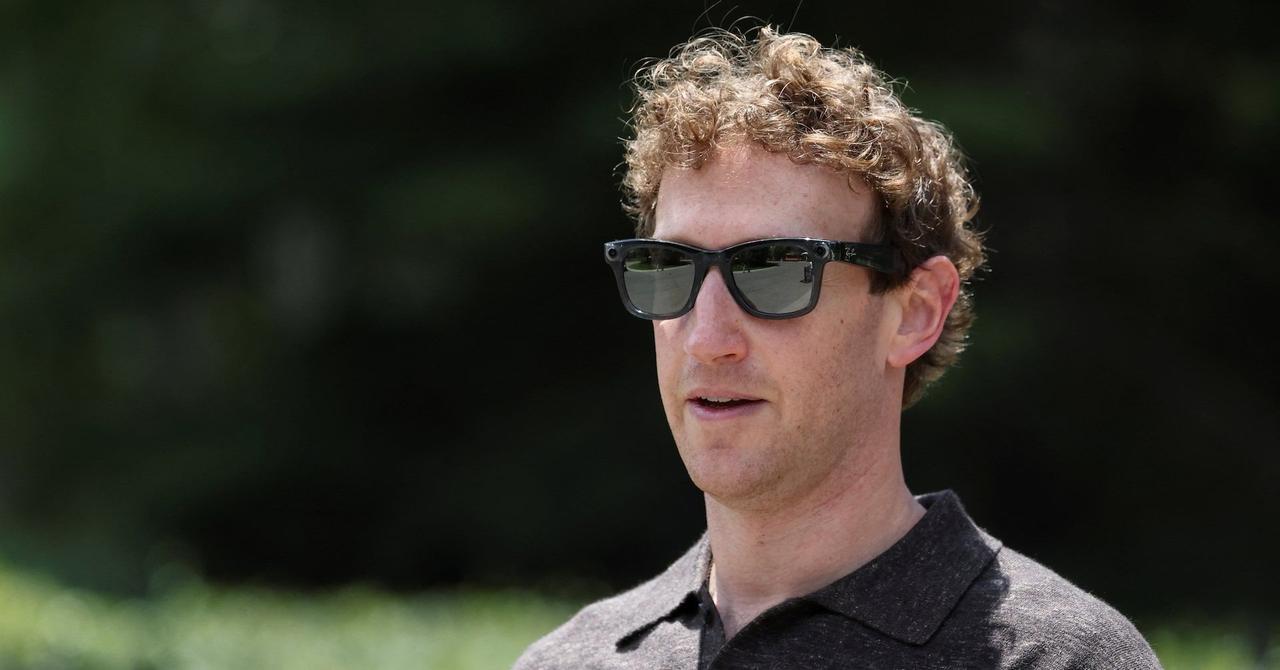
. Meta's smart glasses, which Zuckerberg positions as the device to "interact with your agent" while staying "present in the moment," are reportedly capable of gathering "continuous audio" and photos "every few seconds"5
. Critics dubbed them "pervert glasses" for flouting privacy expectations1
.
Source: The Register
Related Stories
While Zuckerberg promised AI would "free up time for the things you enjoy," Meta CTO Andrew Bosworth dismissed employee questions about using AI productivity gains for more time off during a company Q&A last month
4
. When an employee asked if AI-driven productivity would allow workers to take more time off, Bosworth responded: "I hope that what we do with our extra time is to do even more and cooler stuff for the users who use our products every day"4
. He added, "Go to your parents and ask them: hey, like every time I get a chance to talk to my boss, ask me if I can have more days off. Ask your parents what they think of that as a career strategy"4
. The exchange reveals the gap between Zuckerberg's public AI vision and Meta's internal reality, where the company fired thousands of employees and forced remaining workers to use AI as much as possible amid a morale crisis4
.Zuckerberg described his personal AI assistant as monitoring his sleep, watching him train, and giving feedback, while also planning personalized recipes for him to bake with his 8-year-old daughter
5
. MIT's Sherry Turkle, founding director of the Initiative on Technology and Self, questioned: "What is the AI doing that a loving father couldn't do or a loving father wouldn't want to do?" She characterized Zuckerberg's vision as "dystopian" and warned it would "delegate things that other people savor" by involving an AI assistant in health, lifestyle, home management, and careers5
. The AI policy debate intensifies as Silicon Valley grapples with a secret White House framework for testing new models and ongoing discussions about restricting Chinese-made open-source AI3
. Meta's quarterly earnings showed free cash flow dropped 91% to $784 million as legal costs and layoffs tied to its AI push mounted5
.Summarized by
Navi
30 Jul 2025•Technology

29 Jul 2026•Policy and Regulation

27 Jun 2025•Business and Economy

1
Technology

2
Science and Research

3
Technology