McKinsey and General Catalyst leaders declare the era of 'learn once, work forever' is over


3 Sources
[1]
McKinsey and General Catalyst execs say the era of 'learn once, work forever' is over | TechCrunch
If there is one point of consensus among the CES 2026 keynote speakers, it is that AI is reshaping technology with a speed and scale unlike any previous technological revolution. In a live taping on Tuesday of the All-In podcast, co-host Jason Calacanis interviewed Bob Sternfels, Global Managing
[2]
The typical American plan to study for 22 years and work for 40 'is broken,' VC CEO says. Thanks to AI, employees can't coast after graduation anymore | Fortune
Top consulting and venture capital leaders say the idea learning ends after college is outdated in today's AI-driven economy. While many assume formal learning is limited to a bachelor's or master's degree, both the CEO of VC firm General Catalyst, Hemant Taneja, and McKinsey's top executive, Bob
[3]
CES 2026: AI is helping organisations scale faster, resulting in sharp valuation gains: General Catalyst CEO Hemant Taneja
McKinsey and company chief executive Bob Sternfels believes that there is a need to take a relook at the 700-year-old education system, and create a very different talent base that can operate in an AI-infused world Artificial intelligence (AI) is helping large corporations move faster, shorten
Share
Copy Link
Top executives from McKinsey and General Catalyst say AI is fundamentally reshaping how people work and learn. Speaking at CES 2026, they argued that the traditional model of 22 years of education followed by 40 years of work is broken. Workers must now embrace lifelong skilling and re-skilling to remain relevant as AI agents transform organizations at unprecedented speed.
AI Transforms Traditional Career Models at Unprecedented Speed
The era of 'learn once, work forever' is over, according to leading voices from McKinsey and General Catalyst who spoke at CES 2026. During a live taping of the All-In podcast, Bob Sternfels, Global Managing Partner of McKinsey, and Hemant Taneja, CEO of venture capital firm General Catalyst, outlined how AI is fundamentally altering workforce dynamics and investment strategies
1
. Their message was clear: the traditional model of spending 22 years learning followed by 40 years working is broken, and continuous learning is now essential for survival in an AI-driven economy2
.
Source: ET
Taneja emphasized that skilling and re-skilling will be a lifelong endeavor for workers navigating this transformation. "This idea that we spend 22 years learning and then 40 years working is broken," he stated during the discussion
1
. The shift reflects AI's transformative impact on the workforce, where AI agents can be trained faster than human employees, forcing workers to demonstrate qualities beyond technical knowledge.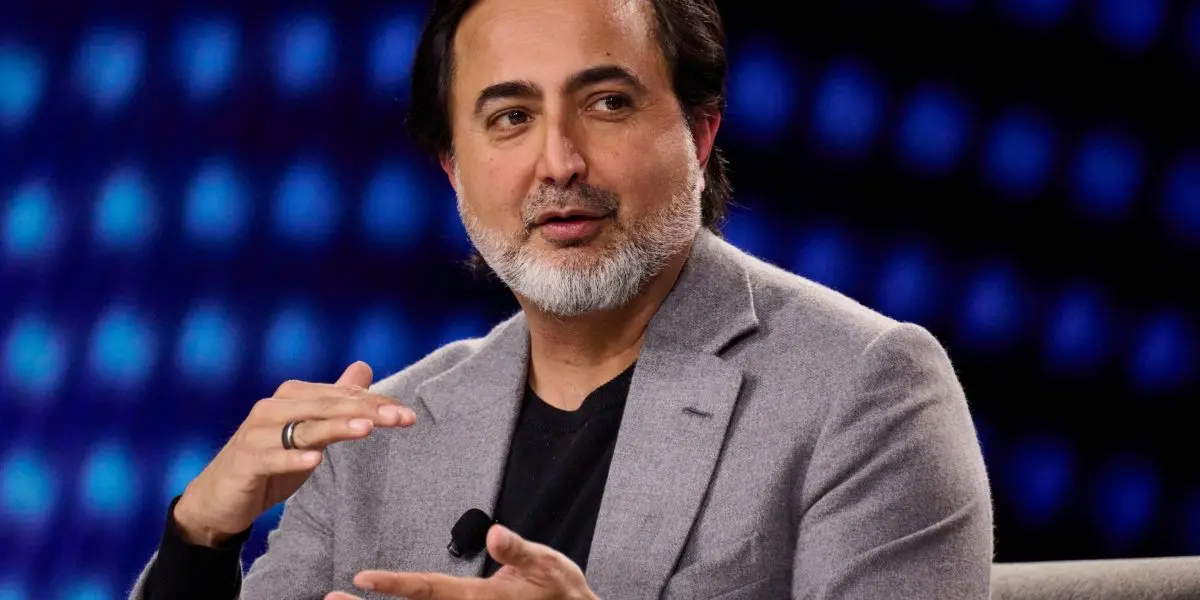
Source: Fortune
AI Helping Organisations Scale Faster With Dramatic Valuation Gains
The speed at which AI is enabling organizational growth has created unprecedented valuation gains across the technology sector. Taneja highlighted that while payments company Stripe took approximately 12 years to reach a $100 billion valuation, Anthropic—a General Catalyst portfolio company—soared from a $60 billion valuation to "a couple hundred billion dollars" within a single year
1
. More specifically, Anthropic raised $13 billion in September, pushing its valuation to $183 billion, up from $61.5 billion in March 2025, while its revenue run rate scaled from $1 billion at the start of 2025 to $5 billion by August3
.Taneja believes we are approaching a new wave of trillion-dollar companies, noting that "that's not a pie-in-the-sky idea with Anthropic, OpenAI, and a couple of others"
1
. Sternfels attributed this explosive growth to large enterprises adopting AI integration at unprecedented rates, with IT spend as a percentage of revenue increasing significantly3
.McKinsey's Real-World Example of AI-Driven Job Displacement
Sternfels provided concrete evidence of how AI agents are reshaping organizational growth and workforce composition. McKinsey plans to have as many personalized AI agents as human employees by the end of 2026
1
. Currently, the firm has 40,000 human employees compared to 25,000 AI agents2
.
Source: TechCrunch
The consulting firm has increased client-facing roles by 25% while simultaneously cutting the same percentage of back-office positions, achieving a 10% overall increase in output
2
. "Our model has always been synonymous that growth only occurs with total head count growth. Now it's actually splitting," Sternfels explained2
. This demonstrates both the potential for AI-driven job displacement in certain roles and the creation of new opportunities in others.Related Stories

Human Skills in an AI-Dominated Future Require Different Approaches
While AI models can handle many technical tasks, the executives emphasized that human skills in an AI-dominated future must focus on judgment and creativity. Sternfels noted these remain essential capabilities that humans must bring to succeed in an AI-infused world
1
. Host Jason Calacanis added that workers will need to "show chutzpah, drive, passion" to stand out in an environment where AI agents can be trained more quickly than human employees1
.Taneja argued that the education system historically focused on training people to solve hard problems, but AI is increasingly taking over that function. "It's about learning how to ask the right questions rather than solving entire worlds of hard problems. That requires a very different mindset, rooted in curiosity," he said
3
. This suggests a fundamental need to overhaul the education system to prepare future workers for AI-integrated workplaces.Investment Strategies Shift as AI Reshapes Industries
The AI transformation is also changing investment strategies across venture capital. In October 2025, General Catalyst acquired Summa Health, an Ohio-based healthcare organization, in what Taneja described as an effort to create platforms where AI can transform traditional industries
3
. Rather than backing startups that disrupt incumbents from outside, the firm aims to acquire underperforming legacy institutions and open them to technology-led transformation.Sternfels described this approach as "creating a new asset class" that differs from traditional private equity by fundamentally transforming incumbent entities
3
. For hiring, he suggested that technical roles should prioritize demonstrable skills, such as contributions on platforms like GitHub, over traditional credentials like university pedigree3
.Research supports concerns about AI's workforce impact. A Stanford University Digital Economy Lab study found early career workers aged 22 to 25 in occupations most at risk experienced a 13% relative decline in employment levels since 2022, when OpenAI released ChatGPT
2
. A Gallup study found 37% of workers reported their workplace had implemented AI2
. However, Amazon Web Services CEO Matt Garman has pushed back, calling the replacement of entry-level workers with AI "one of the dumbest things I've ever heard," arguing that without entry-level workers, organizations have no talent pipeline2
.References
Summarized by

Navi
[1]
Related Stories
AI forces skills reset across workforce as job security shifts from degrees to adaptability
02 Mar 2026•Business and Economy

AI's Impact on Entry-Level Jobs: Challenges and Opportunities for Gen Z
19 Jun 2025•Technology

AI Job Market Shows Mixed Impact on Recent Graduates as Computer Science Grads Face 7.1% Unemployment
19 Sept 2026•Business and Economy

Recent Highlights
1
Microsoft and Nvidia Launch Surface Laptop Ultra: A $2,599 AI-Ready PC With RTX Spark Chip
Technology

2
OpenAI Releases 722 AI-Generated Math Papers on GitHub, Igniting Fury Among Mathematicians
Science and Research

3
Trump Consulted Grok AI Before Ordering Venezuela Invasion and Capture of Nicolás Maduro
Policy and Regulation

Recent Highlights
Today's Top Stories








Don’t drown in AI news. We cut through the noise - filtering, ranking and summarizing the most important AI news, breakthroughs and research daily. Follow topics that matter to you and stay ahead.


