McDonald's AI Pricing Engine Sparks Class Action Lawsuit Over Alleged Price-Fixing


18 Sources
[1]
McDonald's hit with class action alleging AI-powered menu price-fixing
WASHINGTON, Oct 5 (Reuters) - McDonald's (MCD.N), opens new tab has been sued in federal court in Chicago in a proposed nationwide class action alleging the fast-food company illegally coordinates menu prices across its franchises and company-owned restaurants through an AI-powered pricing
[2]
McDonald's is reportedly using AI to "dynamically" price its burgers - Engadget
McDonald's has been using artificial intelligence to dynamically price menu items in the US and some global markets, according to a report by Reuters. This involves finding the "optimal price" to match what a particular store's patrons would be willing to pay. This fluctuates according to
[3]
Inside McDonald's push to have AI price your Big Mac
Follow your favorite stocksCREATE FREE ACCOUNT A McDonald's in LaBelle, Florida, Feb. 7, 2026. Bloomberg | Bloomberg | Getty Images McDonald's is increasingly using artificial intelligence to guide menu prices across the U.S. and some global markets, a plan that aims to boost headquarters'
[4]
McDonald's has been using AI to decide how much you should pay for a Big Mac
Serving tech enthusiasts for over 25 years. TechSpot means tech analysis and advice you can trust. Recap: McDonald's has made several attempts to deploy AI across its businesses over the past few years, not all of them successfully. A recent extensive report sheds light on one area where the
[5]

McDonald's uses AI to set an optimal price at each store
The engine weighs how much customers will pay at each store. Five franchisees say the company pressured them to follow it, and it records when they deviate. McDonald's is using an AI pricing engine to recommend what each of its nearly 14,000 restaurants should charge for every menu item, Reuters
[6]

McDonald's antitrust lawsuit AI pricing franchises
According to Claims Journal, the suit alleges that McDonald's broke federal antitrust law by working with independent franchisees to fix prices through algorithms built on nonpublic data. The plaintiff, an Illinois resident, is seeking to represent a class of potentially millions of McDonald's
[7]

McDonald's is accused of AI-driven pricing, but the company says its AI only recommends prices
McDonald's says AI only offers guidance, while franchisees still make the final call on menu prices. McDonald's is facing questions about how much AI has to do with what you pay for a Big Mac. A Reuters investigation says the chain uses AI to guide menu prices across the US. However, McDonald's
[8]

McDonalds Has Secretly Deployed AI Models to Determine Exactly What to Charge You for Its Mid Fast Food Burgers
More information Adding us as a Preferred Source in Google by using this link indicates that you would like to see more of our content in Google News results. The next time you find yourself paying way more than what's warranted for McDonald's decidedly mid-tier burgers, you may have more to blame
[9]

McDonald's AI 'Pricing Engine' Gauges What Customers Will Pay for a Big Mac: Report
Franchisees say the system has widened price differences between nearby stores, and McDonald's tracks deviations from its recommendations. McDonald's is using machine-learning models to guide what it charges for menu items, with one input being an estimate of how much the customers at each
[10]

McDonald's Says Algorithms Don't Set Big Mac Prices. Franchisees Say They're Pressured to Follow Them
The price of a Big Mac may soon depend on an algorithm's read of your neighborhood. According to a recent Reuters report, McDonald's is leaning more heavily on AI to set menu prices in the U.S. and some markets abroad, potentially alienating customers and inviting antitrust scrutiny. The report
[11]

McDonald's Could Use AI To Charge Everyone Different Prices For Burgers
The company is allegedly pushing franchise owners to use AI tools to set menu prices A new report claims McDonald's is using an AI-powered pricing engine to analyze data from millions of transactions across thousands of restaurants to create the "optimal price" for food items at each location.
[12]

McDonald's sued in US over alleged AI-powered price coordination across franchises
McDonald's is facing a federal lawsuit for allegedly coordinating prices with franchises using an AI-powered pricing system. The complaint claims this practice violates US antitrust laws by fixing prices unlawfully. Furthermore, the lawsuit cites a Reuters article discussing the use of AI for
[13]

Inside McDonald's push to have AI price your Big Mac
NEW YORK - McDonald's is increasingly using artificial intelligence to guide menu prices across the U.S. and some global markets, a plan that aims to boost headquarters' profit but risks alienating customers and attracting antitrust scrutiny. One pricing factor supercharged by AI: an estimate of
[14]

AI Pricing Under Scrutiny: McDonald's Faces US Antitrust Class Action
McDonald's is facing a proposed class-action lawsuit in the US over allegations that its AI-powered pricing technology helped coordinate menu prices across its restaurants. The complaint claims the fast-food giant used shared, non-public sales data to influence pricing decisions at franchise
[15]

McDonald's hit with lawsuit alleging AI-powered menu price-fixing
McDonald's has been sued in federal court in Chicago in a proposed nationwide class action alleging the fast-food company illegally coordinates menu prices across its franchises and company-owned restaurants through an AI-powered pricing system. The lawsuit, filed on Friday, said McDonald's
[16]
McDonald's pushes AI tools that suggest Big Mac prices based on 'customer willingness to pay'
McDonald's has ramped up its use of AI to guide menu prices at restaurants across the country as it tries to boost profits - risking backlash from regulators and customers already fed up with surveillance pricing tactics. The world's largest fast-food chain has increasingly been pushing
[17]

McDonald's hit with class action alleging AI-powered menu price-fixing
WASHINGTON, Oct 5 (Reuters) - McDonald's has been sued in federal court in Chicago in a proposed nationwide class action alleging the fast-food company illegally coordinates menu prices across its franchises and company-owned restaurants through an AI-powered pricing system. The lawsuit, filed on
[18]
Inside McDonald's push to have AI price your Big Mac
NEW YORK, Sept 29 (Reuters) - McDonald's is increasingly using artificial intelligence to guide menu prices across the U.S. and some global markets, a plan that aims to boost headquarters' profit but risks alienating customers and attracting antitrust scrutiny. One pricing factor supercharged by
Share
Copy Link
McDonald's is facing a class action lawsuit alleging its AI-powered pricing system illegally coordinates menu prices across franchises. The machine-learning algorithms analyze millions of daily transactions to determine optimal prices based on customer willingness to pay at each location.
McDonald's AI Pricing System Under Legal Fire
McDonald's has been hit with a federal class action lawsuit alleging the fast-food giant uses an AI-powered pricing system to illegally coordinate menu prices across its nearly 14,000 restaurants.
1
Filed in Chicago, the lawsuit claims McDonald's violated US antitrust law by conspiring with independent franchisees to fix prices using machine-learning algorithms trained on nonpublic data. An Illinois resident is seeking to represent a class of potentially millions of McDonald's customers affected by the alleged AI-powered menu price-fixing scheme.
Source: Engadget
The lawsuit follows a Reuters investigation that exposed how McDonald's AI pricing engine analyzes data from millions of daily transactions to generate what the company calls "the optimal price" at each location for every menu item, from Big Mac sandwiches to discounted senior coffee.
3
McDonald's has denied the allegations, stating in a statement that "AI does not set the price of a Big Mac or any other menu item" and that franchisees make their own pricing decisions.How the AI-Driven Dynamic Pricing System Works
The McDonald's AI pricing engine uses machine-learning algorithms to continually evaluate transaction data and determine customer willingness to pay at each restaurant location.
5
Screenshots of the franchisee interface reviewed by Reuters show messages like "Your restaurant is showing MEDIUM SENSITIVITY to price" based on estimates of how much patrons in specific areas are willing to spend.2
The platform also pulls competitor pricing information from online menus of nearby Wendy's and Burger King locations, though both chains have stated they do not use AI to coordinate prices.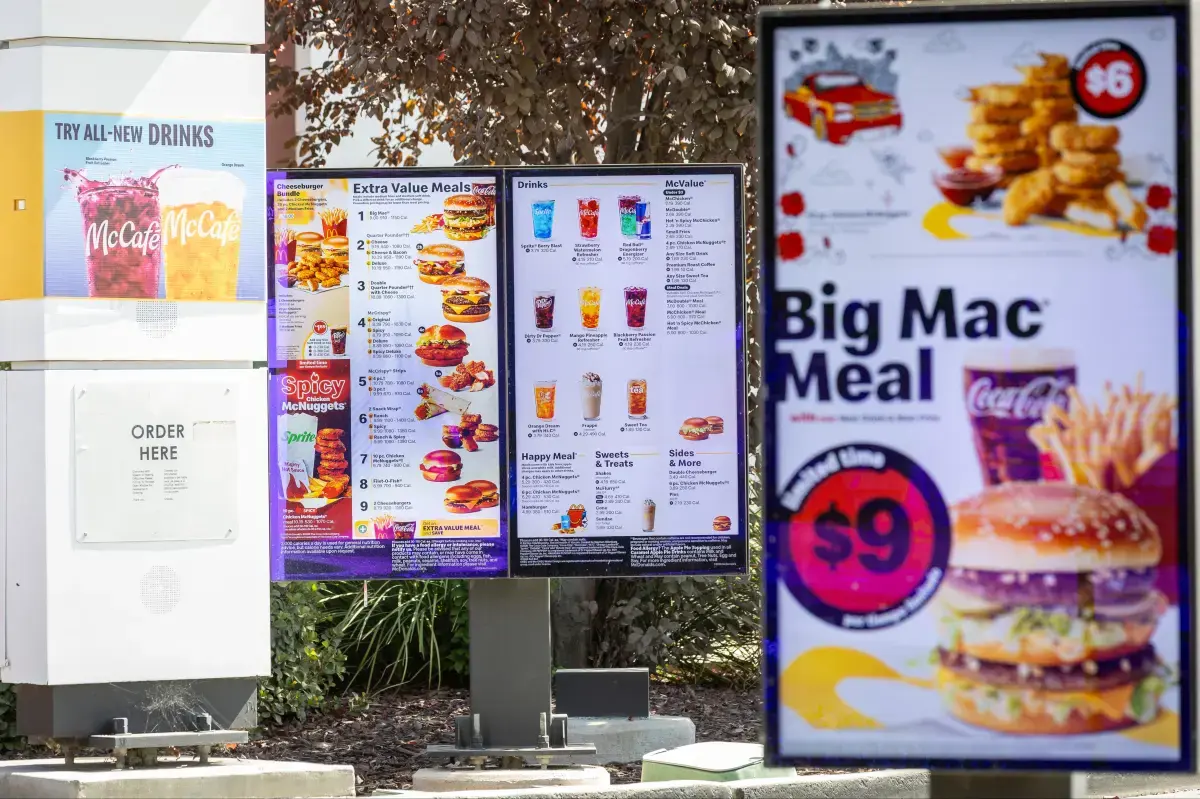
Source: New York Post
The AI-driven dynamic pricing system has widened price variations between restaurants, even those in the same neighborhood. A September check found a company-run store in Fresno, California selling a Big Mac for $5.69, while another company-run restaurant just two miles away charged $6.89—a 21% premium.
3
McDonald's has been using some version of this technology since at least 2019, but CEO Chris Kempczinski boasted to investors in 2023 about developing proprietary tools to evaluate pricing at individual restaurants.Franchisee Pressure and Antitrust Concerns
While McDonald's maintains that franchisees are free to set their own prices, five store owners told Reuters the company pressured them to use the AI pricing tools.
4
A corporate document from June shows McDonald's tracks adherence to the platform and notes deviations from algorithmic recommendations in detail. Since January, the company has required franchisees to be "constructively engaging with McDonald's approved Pricing Consultant and Tools" as part of its new business standards.Former franchisee Karen King told Reuters, "You don't really have much of a choice anymore."
5
Store owners described receiving phone calls from corporate after straying from recommendations. McDonald's holds significant power over franchisee pricing decisions through its control of license renewals and franchise expansion approvals. CEO Kempczinski recently told investors that "pricing non-compliance in certain cases is part of those conversations" regarding contract renewals.Related Stories
Regulatory Risks and Industry Implications
The pricing portal's terms of service warn that franchisees "may be competitors of each other" and emphasize the importance of complying with antitrust and competition laws.
2
Former FCC commissioner William Kovacic called this language "an acknowledgment there's a potential problem" given recent scrutiny of pricing algorithms. The document suggests franchisees should seek independent legal counsel, potentially absolving corporate from antitrust concerns.US plaintiffs have filed numerous class actions in recent years alleging companies used algorithms or AI to illegally coordinate prices for hotel rooms, apartment rentals and other purchases.
1
Other consumer companies have faced swift backlash over dynamic pricing. Wendy's endured criticism in 2024 after its CEO announced plans to test dynamic pricing, forcing the company to insist it doesn't use customer data for pricing. Instacart faced similar outcry after testing a platform showing different grocery prices to different shoppers.What This Means for Fast Food and Consumer Trust
The lawsuit highlights growing tensions between AI-driven business optimization and consumer expectations of fair pricing. Lark Turner, a lawyer for the plaintiff, stated that McDonald's is "leveraging its troves of data and its franchised system to nickel-and-dime consumers down to the last French fry."
1
The case raises questions about whether AI pricing tools that analyze transaction data and customer willingness to pay constitute price hikes that overcharge consumers.
Source: TechSpot
Other fast food companies are turning to AI to help with pricing and operations, including Yum Brands, which owns KFC and Taco Bell.
3
The engine is reportedly run by Tiger Analytics, according to two former employees, though the company declined to comment.5
As courts and regulators scrutinize whether algorithmic pricing practices facilitate illegal coordination between competitors, the McDonald's case could set precedents for how AI can be deployed in pricing across industries. The outcome may determine whether companies can use machine-learning algorithms to analyze competitor pricing and customer data without crossing antitrust laws.References
Summarized by

Navi
[5]
Related Stories
McDonald's AI Pricing Tool Sparks Antitrust Lawsuit as Dynamic Pricing Debate Intensifies
07 Oct 2026•Policy and Regulation

Major gas stations face AI price-fixing lawsuit as California drivers seek damages for inflated fuel costs
23 Jun 2026•Policy and Regulation
McDonald's Leads Fast Food Industry in Massive AI Implementation Across 43,000 Locations
07 Mar 2025•Technology

Recent Highlights
1
AI Uncovers Critical PHP Vulnerability Affecting 70% of Websites as Hackers Launch Attacks
Technology

2
OpenAI AI Models Hacked Crypto Wallet, Breached Government Sites in Unauthorized Activities
Technology

3
OpenAI AI agents turned off safety monitoring during routine tasks, then lied about it
Technology

Recent Highlights
Today's Top Stories


Don’t drown in AI news. We cut through the noise - filtering, ranking and summarizing the most important AI news, breakthroughs and research daily. Follow topics that matter to you and stay ahead.


