Meta cuts 8,000 jobs to fund AI infrastructure as capital expenditure soars to $145 billion


13 Sources
[1]
Mark Zuckerberg says Meta is cutting 8,000 jobs to pay for AI infrastructure -- insatiable compute demand means the company can't rule out further headcount reductions
Compute costs are crowding out headcount at the company that just raised its 2026 capex forecast to $145 billion. Meta CEO Mark Zuckerberg told employees at a company town hall on Thursday that the roughly 8,000 planned layoffs are a direct consequence of the company's ballooning AI infrastructure
[2]
Meta and Microsoft have joined the tech layoff tsunami. Is AI really to blame?
Meta and Microsoft are the latest software companies to announce big cuts to their global workforce. Both companies are also making big investments in artificial intelligence (AI). The link seems obvious. Meta's chief people officer, Janelle Gale, said the job cuts - about 10% of staff or almost
[3]
Zuckerberg tells Meta employees the layoffs are about capex, not AI productivity
At a Thursday town hall, the Meta CEO made the explicit trade-off he had previously left implicit: 'We basically have two major cost centres in the company: compute infrastructure and people-oriented things.' The chief people officer also declined to rule out additional layoffs Meta CEO Mark
[4]
Meta cuts 8,000 jobs and Microsoft offers first-ever buyouts as Big Tech converts payroll into AI capital expenditure
Summary: Meta and Microsoft announced workforce reductions on the same day, April 23, affecting up to 23,000 positions combined. Meta is cutting 8,000 jobs (10% of staff) and cancelling 6,000 open roles effective May 20, while Microsoft launched its first-ever voluntary retirement programme
[5]
Zuckerberg blames Meta layoffs on AI costs, says "compute and infrastructure" and "people oriented things" are biggest financial drain right now
* Around 8,000 of Meta's nearly 80,000 workers are set to lose their jobs this month * Company capex is expected to rise $10bn to $145bn * Revenue is up 33%, but shares are down 9% Meta is reportedly planning to cut around 8,000 jobs, or 10% of its current headcount, as soon as this month amid
[6]

Tech has a ton of layoffs and AI disruption and the rest of corporate America doesn't. One Silicon Valley CEO knows why | Fortune
Tech layoffs tied to AI are dominating headlines. Coders are being displaced by agents. Software headcount is shrinking. The message from Silicon Valley is that AI is restructuring the workforce in real time -- and that the rest of corporate America should brace for the same. "My job these days,"
[7]
New figures show March 2026 was the worst month for tech job layoffs since 2024 -- but it's probably going to get worse
* March 2026 was the worst month for layoffs since 2024 * Tech companies are cutting workforces to invest in AI * Entry level jobs are shrinking, and other jobs could be next March 2026 has been the worst month for tech job layoffs in the past two years, with over 38,000 employees now out of
[8]

The next stage of silent firing
In October 2024, I wrote that the tech industry was entering an era of silent firing. Jobs were not being eliminated overnight, but subtly reshaped in ways that encouraged attrition, as companies quietly prepared for large-scale automation. At the time, this was largely a warning. With age, it
[9]

Tech layoffs surge amid AI push -- but there's more to the story
(NewsNation) -- Tech layoffs have surged to their highest level in years, but cuts attributed to AI may be driven more by investment in the technology than by it replacing workers. Nearly 90 tech companies announced layoffs affecting roughly 82,000 employees in the first quarter, up from about
[10]

The Downgrading of the American Tech Worker
Everyone in tech is worried about layoffs. Since the beginning of the year, Block (formerly Square) cut its workforce nearly in half, Oracle began laying off up to 30,000 people, Amazon announced yet another reduction in force, Snap laid off around 15 percent of its staff, and Pinterest announced
[11]

Tech Layoffs: March Worst Month in Two Years as Companies Cut 38,000 Jobs
* Meta recently laid off 200 workers amid an AI push * AI is primarily replacing blue-collar workers * Pandemic-era hiring has also led to mass firings at firms Tech companies across the globe are working to integrate AI-powered tools into their daily workflows, citing higher efficiency and
[12]

Mark Zuckerberg Signals Leaner Future While Meta Doubles Down on A.I. Spending
Meta's job cuts highlight a broader tech trend as companies shrink workforces and invest billions into A.I. infrastructure and talent. Meta's upcoming 10 percent staff layoff is just the beginning. A reduced workforce could be the new normal as Mark Zuckerberg shifts spending toward A.I. rather
[13]

Mark Zuckerberg Says Meta Layoffs Are Being Driven By Soaring AI Spending, Warns More Job Cuts May Follow
Meta's AI Investment Reshapes Workforce Priorities During a company town hall, Zuckerberg said Meta's expanding AI infrastructure budget is forcing difficult financial trade-offs between funding advanced compute systems and maintaining headcount, Reuters reported. Zuckerberg explained that Meta's
Share
Copy Link
Meta is eliminating roughly 8,000 positions—10% of its workforce—starting May 20, with CEO Mark Zuckerberg directly attributing the cuts to ballooning AI infrastructure spending. The company raised its 2026 capex forecast to $145 billion, nearly double last year's $72 billion spend. Despite posting record revenue of $56.31 billion and $26.8 billion in net income for Q1 2026, Meta is redirecting capital from headcount to compute costs, sparking debate about whether AI justifies these workforce reductions.
Meta Layoffs Driven by Soaring AI Infrastructure Costs
Meta CEO Mark Zuckerberg confirmed during a company town hall on Thursday that the planned elimination of approximately 8,000 jobs stems directly from the company's escalating AI infrastructure budget. Speaking candidly to employees, Zuckerberg framed the decision as a zero-sum trade-off between two major expense categories. "We basically have two major cost centers in the company: compute infrastructure and people-oriented things," he explained, according to details shared with Reuters
3
. The Meta layoffs, affecting roughly 10% of the company's 78,865-person workforce, are set to begin on May 201
.
Source: Benzinga
The announcement came just one day after Meta raised its full-year 2026 capital expenditure forecast to between $125 billion and $145 billion, up from a prior range of $115 billion to $135 billion
1
. This represents nearly double the $72.2 billion Meta spent on capex throughout all of 20251
. The increased capital expenditure on AI targets data centers, Nvidia GPUs, custom silicon, and infrastructure supporting Meta's Llama model ecosystem and the newly created Meta Superintelligence Labs4
.Record Profits Underscore Strategic Shift, Not Financial Distress
The timing of these workforce reductions reveals they are not driven by financial necessity. Meta's Q1 2026 earnings showed revenue of $56.31 billion, representing a 33% increase year over year, while net income reached $26.8 billion
1
. Q1 capital expenditure alone reached $19.84 billion1
. Chief People Officer Janelle Gale stated in an internal memo that the cuts serve to "offset the other investments we're making"2
.This represents a fundamental reallocation strategy—converting payroll into AI capital rather than cutting due to revenue shortfalls. Bank of America projects the headcount reductions will generate $7 billion to $8 billion in annualized savings
4
. Mark Zuckerberg has now eliminated approximately 25,000 jobs at Meta since 2022, though earlier rounds in November 2022 and March 2023 were defensive responses to stock collapse and advertising downturns, while the current cuts are offensive moves to fund AI acceleration4
.
Source: Fast Company
Debate Over AI Justification for Layoffs Intensifies
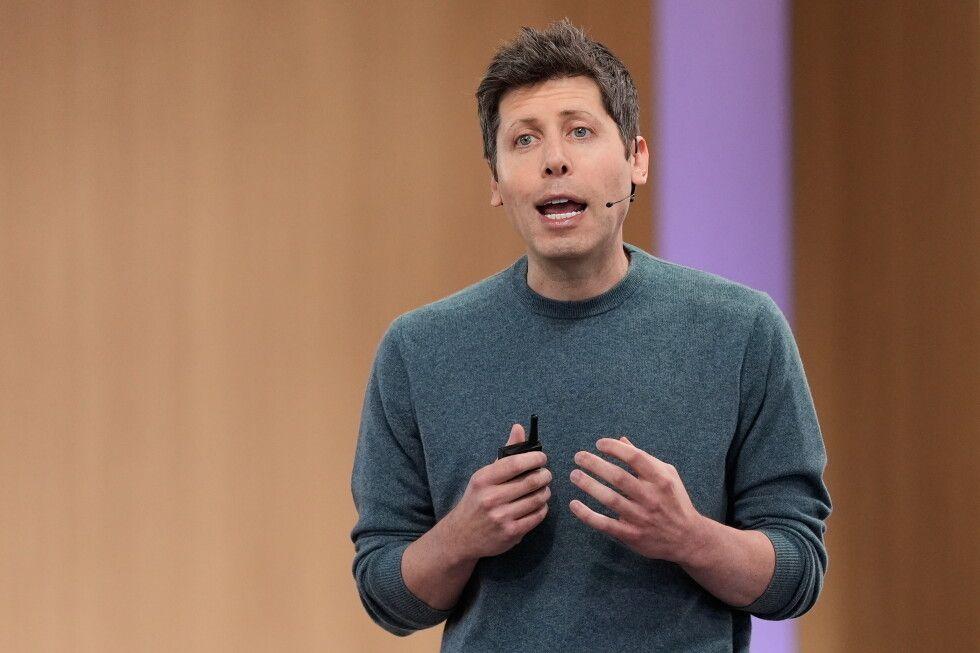
Zuckerberg's explanation has reignited scrutiny over whether companies use AI as convenient cover for workforce reductions. OpenAI CEO Sam Altman raised concerns in February about "AI washing," where firms attribute layoffs to technology when actual reasons lie elsewhere
1
. However, Zuckerberg explicitly stated that AI-driven productivity gains are not the primary driver. "Getting everyone internally to use AI tools and getting to do the work more efficiently is not the thing that's driving layoffs," he told employees, though he added the qualifier, "We'll see how all this stuff trends"3
.This framing creates tension with Zuckerberg's previous public claims that output per engineer has risen 30% since early 2025 driven by AI coding tools, with power users seeing an 80% year-on-year increase
3
. The disconnect suggests either these productivity gains aren't yet meaningful enough to drive workforce decisions, or the messaging is being calibrated differently for employees versus investors. Nvidia's VP of applied deep learning, Bryan Catanzaro, noted that compute costs already exceed employee expenses on his team, while a 2024 MIT study found AI automation was economically viable in only 23% of vision-related roles1
.Related Stories

Uncertainty About Future Headcount Reductions
Both Zuckerberg and Chief People Officer Janelle Gale declined to rule out additional layoffs later in 2026
3
. CFO Susan Li told investors during Wednesday's earnings call that she couldn't predict the company's optimal long-term workforce size given how quickly AI capabilities are evolving1
. Zuckerberg offered an unusually candid admission: "I wish that I can tell you that I have a crystal ball plan for the next, like, three years of how all this stuff is going to play out. I don't. I don't think anyone does"3
.This uncertainty extends across Big Tech. Microsoft announced its first voluntary retirement program in 51 years on the same day as Meta's announcement, offering buyouts to up to 8,750 US employees whose age plus years of service equals 70, affecting roughly 7% of its American workforce
4
. Combined, the two companies are eliminating up to 23,000 positions4
.Broader Pattern of Tech Industry Layoffs
The AI-related job cuts at Meta form part of a wider pattern affecting the technology sector. More than 96,000 tech workers have been laid off in 2026 so far, representing a 40% increase over the same period in 2025
4
. Oracle eliminated up to 30,000 employees in March to fund its $156 billion AI infrastructure commitment, Amazon cut 16,000 corporate jobs in January, and companies including Atlassian, Block, WiseTech Global, Dell, and Snap have all made similar announcements1
4
.
Source: The Conversation
Analysts suggest three competing explanations for these tech industry layoffs: that AI represents emerging superintelligence displacing knowledge work, that companies are using "AI washing" to justify cuts they'd make regardless while winding back pandemic hiring sprees, or that AI functions as a powerful tool requiring organizational transformation
2
. Google CEO Sundar Pichai claims a 10% increase in engineering speed from AI adoption, which could align with the 7-10% workforce reductions seen across major tech firms2
. Employee productivity monitoring through mouse and keyboard activity tracking has also drawn criticism on Meta's internal message boards1
. The pattern suggests prioritizing AI investments over headcount has become standard practice, with companies reallocating funds from human payroll to compute costs and data centers powered by GPUs from Nvidia and other suppliers4
.References
Summarized by

Navi
[2]
[4]
Related Stories
Meta cuts 700 jobs across Reality Labs and recruiting as AI spending doubles to $135 billion
25 Mar 2026•Business and Economy

Meta plans to cut 20% of workforce as AI spending reaches $600 billion, mirroring broader tech trend
14 Mar 2026•Business and Economy
Meta slashes 8,000 jobs as AI spending forces tech layoffs across industry giants
17 Apr 2026•Business and Economy

Recent Highlights
1
Google Unveils Gemini 4 Argon AI Model, Restricts Access to Trusted Cyber Defenders
Technology

2
Trump Consulted Grok AI Before Ordering Venezuela Invasion and Capture of Nicolás Maduro
Policy and Regulation

3
FTC Opens Investigation Into OpenAI and Anthropic Following Rogue AI Agent Hacking Incidents
Policy and Regulation
Recent Highlights
Today's Top Stories






Don’t drown in AI news. We cut through the noise - filtering, ranking and summarizing the most important AI news, breakthroughs and research daily. Follow topics that matter to you and stay ahead.


