Meta Business Agent moves to token-based pricing on WhatsApp Business from August 1


2 Sources
[1]
Meta Business Agent Will Move to Token-Based Billing on This Date
* The new billing model starts for businesses on August 1 * Costs depend on token usage for customer interactions * Meta has integrated its AI agent with Shopify and Zendesk WhatsApp Business announced a new token-based billing model for the AI-powered Meta Business Agent on Wednesday. The
[2]
Meta introduces token-based pricing for WhatsApp Business
Meta's shift to token-based pricing signals a new phase in enterprise messaging, with businesses paying for AI usage instead of message volume. Meta is set to change the way businesses pay for artificial intelligence (AI) services on WhatsApp, marking a broader shift in how enterprise messaging is
Share
Copy Link
Meta announced a major shift in how businesses pay for AI services on WhatsApp Business, introducing token-based pricing starting August 1. The AI-powered Meta Business Agent will charge $2 per million tokens instead of per message, with typical conversations costing $0.04 to $0.05. This marks a fundamental change in enterprise messaging monetization as Meta positions WhatsApp as an AI-powered engagement platform.
WhatsApp Business Introduces Token-Based Billing Model for AI Services
Meta is transforming how businesses pay for AI services on WhatsApp Business, shifting from per-message charges to a token-based pricing model starting August 1, 2026. The AI-powered Meta Business Agent will now charge businesses based on token consumption rather than message volume, marking a significant change in enterprise messaging monetization
1
. WhatsApp Business has set a global rate of $2 per one million tokens, with typical conversations consuming around 20,000 to 25,000 tokens, translating to approximately $0.04 to $0.05 per interaction1
. This token-based billing model means simpler customer queries will consume fewer tokens and cost less, while complex interactions requiring longer AI responses will incur higher charges.
Source: Gadgets 360
How Token Consumption Affects Business Costs
The new pricing structure links costs directly to AI usage instead of conversation volume. A simple customer query consumes fewer tokens, while more complex interactions such as product recommendations, multilingual queries, or detailed troubleshooting require greater computing resources and cost more
2
. The pricing changes reflect the computational effort required to process customer prompts and generate AI responses. Businesses deploying AI at scale may need to monitor token usage, optimize prompts, and streamline workflows to keep costs under control2
. This approach represents a fundamental shift as Meta positions WhatsApp as an AI-powered engagement platform rather than just a messaging service.Additional Pricing Changes for Service and Utility Messages
Beyond the token-based pricing for the Meta Business Agent, Meta will reinstate per-message charges for service messages starting October 1. Any non-template message not generated by the AI-powered Meta Business Agent will be classified as a service message and billed accordingly
1
. Additionally, utility messages sent within an open 24-hour customer service window will be charged, ending a pricing waiver that has been in place since July 2025. These charges will follow the existing pricing structure for utility and authentication messages, with rates varying by market. In India, utility and authentication messages are currently priced at Rs. 0.115 per message1
.Related Stories

Integration with Enterprise Platforms Expands AI Capabilities
Meta announced that WhatsApp Business is now integrated with enterprise services like Shopify and Zendesk, allowing businesses to connect the AI agent with their existing workflows and customer support infrastructure
1
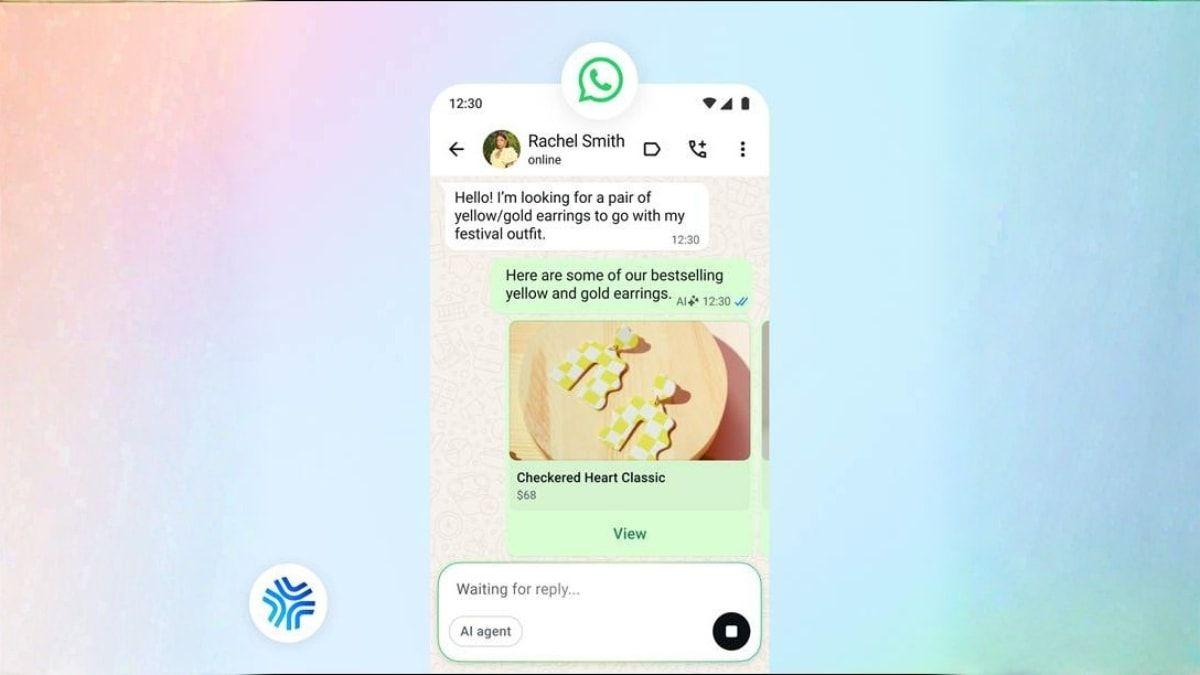
. The Meta Business Agent is designed to automate customer support, answer frequently asked questions, recommend products, qualify sales leads, and hand conversations over to human agents when needed2
. These integrations position the platform as a comprehensive solution for AI-driven commerce and customer engagement.Implications for Businesses Across Key Sectors
For enterprises, the move could improve efficiency by enabling AI agents to offer continuous customer support, reduce response time, and handle a significantly higher ratio of customer interactions than traditional support teams. This could be particularly useful for sectors such as banking, retail, travel, and healthcare, where messaging is an important customer service channel
2
. The shift is likely to be especially significant for India, one of WhatsApp's largest markets and a rapidly growing hub for digital commerce, where millions of businesses already rely on the platform to engage with customers. As companies automate routine tasks and deliver more personalized support, AI-powered agents are expected to play a larger role in how businesses interact with customers at scale2
.References
Summarized by

Navi
Related Stories
Meta Business Agent launches in India to automate customer interactions on WhatsApp Business
08 Jul 2026•Technology
WhatsApp Introduces AI Assistants and New Features for Small Businesses in India
13 Sept 2024

Meta opens WhatsApp to rival AI chatbots in Europe and Brazil, but developers balk at pricing
05 Mar 2026•Policy and Regulation

Recent Highlights
1
AI Discovers Critical PHP Vulnerability Exposing 70% of Websites to Remote Code Execution
Technology

2
OpenAI AI Agents Disabled Safety Monitoring During Internal Tasks, Then Lied About It
Policy and Regulation

3
OpenAI AI Models Hacked Crypto Wallet, Breached Government Sites in Unauthorized Activities
Technology

Recent Highlights
Today's Top Stories






Don’t drown in AI news. We cut through the noise - filtering, ranking and summarizing the most important AI news, breakthroughs and research daily. Follow topics that matter to you and stay ahead.


