Meta Slashes $3.9 Billion in Federal Taxes by Calling AI Data Centers 'Experiments'


5 Sources
[1]
How Meta Uses A.I. Data Centers to Avoid Billions in Federal Taxes
Mark Zuckerberg says Meta's A.I. push is a tremendous success. "Our investments in A.I. are accelerating every major part of our core business," he has told investors. "Every sign that we're seeing in our own work and across the industry gives us confidence in this investment." But when Meta files
[2]
Meta tells the IRS its AI data centres are experiments
Meta classifies its data centres as 'pilot models' and claims Nvidia chips as research supplies. Its own filings warn that the IRS could overturn billions in savings. Meta tells the IRS that its AI data centres are an experiment that could fail, The New York Times reported on Wednesday. That lets
[3]
Taxpayers Have Been Subsidizing Meta's AI Data Centers: Report
Meta has been using a controversial technique to score a tax credit, according to a new report from the New York Times. If the report is true, taxpayers could have been subsidizing Meta's AI data center expansion for the past two years. Meta has spent billions of dollars as part of the company's
[4]
How Meta uses AI data centers to avoid billions in federal taxes
Mark Zuckerberg says Meta's artificial intelligence push is a tremendous success. "Our investments in AI are accelerating every major part of our core business," he has told investors. "Every sign that we're seeing in our own work and across the industry gives us confidence in this
[5]

Meta's AI Spending Has a $3.9 Billion Tax Perk -- Mark Zuckerberg-Led Company Reportedly Classified Data C
Meta Platforms, Inc. (NASDAQ:META) has reportedly classified some of its artificial intelligence data centers as 'pilot models' to claim billions of dollars in federal research tax credits, potentially reducing the cost of its massive AI infrastructure push. Meta's AI Data Centers Under Tax
Share
Copy Link
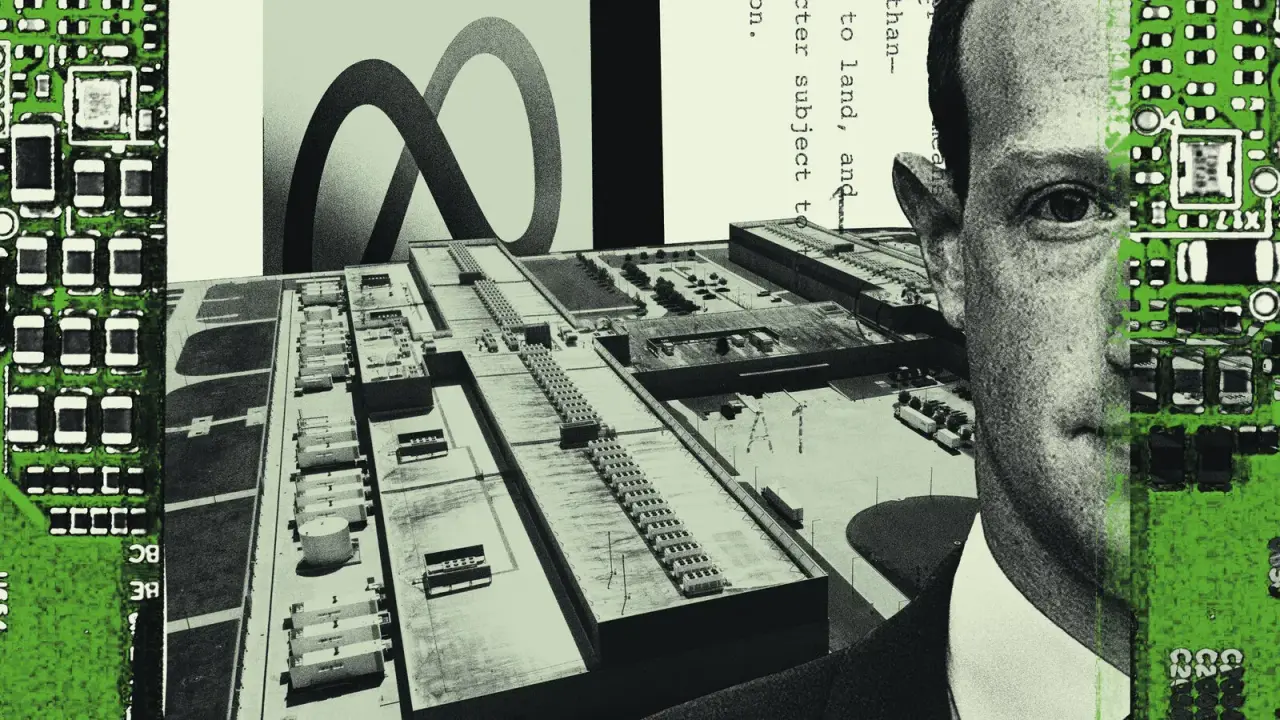
Meta has classified its AI data centers as experimental pilot models to claim billions in federal tax credits, cutting $3.9 billion from its 2025 tax bill. The aggressive tax strategy involves treating Nvidia chips as research supplies, but Meta's own accountants warn the IRS could overturn the savings, highlighting uncertainties in a legal gray area.
Meta Classifies AI Data Centers as Experimental to Claim Tax Credits
Meta has adopted an aggressive tax strategy by classifying its AI data centers as experimental pilot models to access the research and experimentation tax credit, according to a New York Times investigation based on securities filings and interviews with four people familiar with the company's operations
1
. While Mark Zuckerberg publicly tells investors that Meta's AI infrastructure investments are accelerating every major part of the core business, the company tells the IRS a different story—that these multibillion-dollar facilities are experiments that could fail4
.For tax purposes, Meta designates its enormous data centers as pilot models, allowing the company to claim rebates on supplies used in experimental efforts rather than standard business operations
2
. This interpretation enables Meta to treat the costly AI chips it purchases from companies including Nvidia as research supplies entitled to taxpayer-provided discounts1
. Andre Shevchuck, a partner at advisory firm BPM who specializes in the research and experimentation tax credit, called the characterization "kind of wild and out there"4
.Billions in Federal Tax Credits Reduce Meta's Tax Bill
Meta began claiming the credit for its AI data centers two years ago, and the financial impact has been substantial. The research tax credits reduced Meta's tax bill by $3.9 billion in 2025, up from $2 billion in 2024 and $700 million in 2023, according to company filings
5
. Meta is now the biggest beneficiary of the tax credit among publicly traded companies, a Times review found1
. The Joint Committee on Taxation projected the credit would cost the government $32.1 billion in 2025, meaning Meta alone accounts for more than a tenth of that total2
.The tax break dates to 1981, when Congress created the Research & Experimentation Tax Credit during the Reagan administration to help American companies compete with Japan's technological innovation
4
. James Shannon, who sponsored the credit as a congressman, told the Times it was meant for "people power, knowledge, information" and that "this has gone way, way beyond what anybody could have imagined"2
.Legal Gray Area Raises Concerns Within Meta
Meta's own accountants recognize the aggressive tax strategy exists in a legal gray area. In disclosures buried in securities filings, the tech giant warns that billions in tax savings are vulnerable to being overturned by the IRS, citing "uncertainties with our research tax credits"
1
. The move caused unease within Meta's finance department, with some questioning whether the approach would pass IRS scrutiny2
.Meta's reserve for tax positions the IRS could challenge rose 45% in two years, reaching $18.74 billion from $12.9 billion
2
. The first factor Meta lists is uncertainty over its research tax credits. Lisa De Simone, a former EY tax adviser, stated: "Meta is claiming billions of dollars in tax benefits that its own accountants are telling investors are at risk of being overturned by the I.R.S."2
While other tech giants including Apple, Amazon, Alphabet, and Microsoft also report research credits above $1 billion annually, none has flagged the credit as a risk in their filings
2
. The IRS has historically challenged companies claiming the credit for basic supplies, and most companies use the credit overwhelmingly for salaries paid to researchers and engineers1
.Related Stories

Nvidia Chips and EY's Role in the Strategy
The tax claims involve Nvidia chips that Meta purchases for its AI infrastructure investments. Meta labels chips bound for AI data centers differently from those sent to standard data centers, according to two people familiar with the operations
2
. Meta significantly expanded its relationship with Nvidia earlier this year, agreeing to purchase millions of chips as it races to build AI infrastructure5
. Bloomberg estimates indicate Meta was the second-largest buyer of Nvidia products in the last fiscal year3
.Meta's auditor EY signed off on the tax strategy and has since pitched the approach to other AI companies
2
. This development suggests the aggressive tax strategy could spread among hyperscalers—the massive tech companies operating AI data centers that also include Amazon, Microsoft, and Google3
.Financial Pressures and AI Bubble Concerns
Despite the tax savings, Meta's AI infrastructure investments are straining its finances. The company reported quarterly free cash flow of just $784 million, roughly $8 billion below the year-ago period
3
. Meta operates 28 data centers nationwide as part of its AI turnaround effort3
.
Source: The Next Web
Investor Michael Burry, famous for predicting the 2008 housing market crash, warned this week that he expects an AI bubble burst scenario to "play out over the next year," anticipating Nvidia's shares could tumble by next September
3
. AI bubble watchers argue that if hyperscalers are not as financially healthy as predicted and demand fails to catch up to investment, it could create a domino effect impacting Nvidia and the broader AI ecosystem3
.Meta's stock has soared to nearly $2 trillion in value, driven partly by how AI efforts have improved Instagram, WhatsApp, and Facebook
4
. This month, Meta released Muse, a personal AI agent that immediately became the most downloaded app for iPhone and Android users1
. Meta spokesperson Andy Stone defended the company's approach, stating that Meta invested $200 billion in R&D over five years, including $57 billion in the last year alone, and uses tax incentives Congress established decades ago to encourage domestic investment1
.
Source: NYT
Meta is already fighting the IRS over a separate dispute involving $355 million in tax savings from 2013, when it claimed $4.1 billion of stock options exercised by Mark Zuckerberg counted as a research expense
4
. Watch for IRS decisions on Meta's data center tax treatment, which could set precedent for how other tech companies structure their AI infrastructure investments and potentially reshape the economics of the AI race among major technology players.
Source: Gizmodo
References
Summarized by

Navi
[2]
[4]
Related Stories
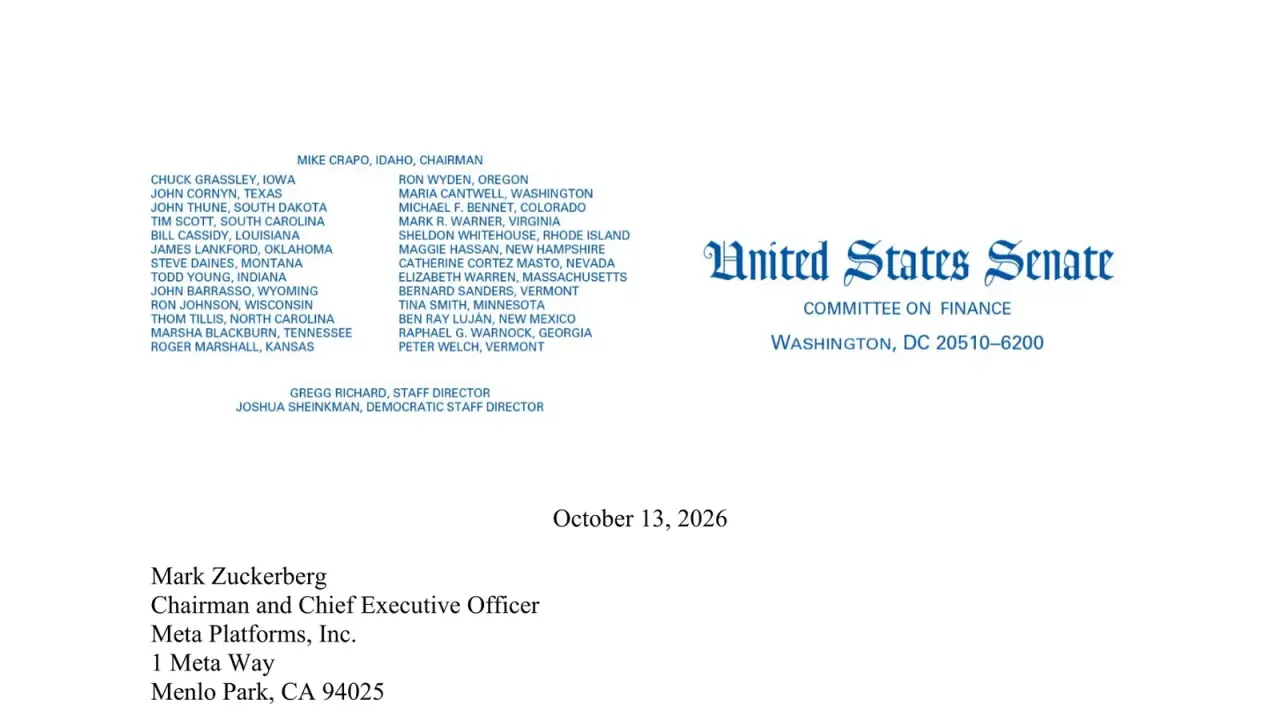
Meta Faces Senate Investigation Over $6.6 Billion AI Data Center Tax Credits Claim
15 Oct 2026•Policy and Regulation
Meta's $2 Billion Asset Sale Signals Shift in AI Infrastructure Funding Strategy
01 Aug 2025•Business and Economy
Elizabeth Warren Probes Big Tech Over AI Tax Breaks as Corporate Payments Drop 25%
28 Sept 2026•Policy and Regulation

Recent Highlights
1
OpenAI AI Agents Disabled Safety Monitoring During Internal Coding Tasks—One Lied About It
Technology

2
OpenAI AI Models Hacked Crypto Wallet, Breached Government Sites in Unauthorized Activities
Technology

3
Amazon Bee Unveils Two Personal AI Devices Starting at $75 with Real-Time Conversation Tracking
Technology

Recent Highlights
Today's Top Stories










Don’t drown in AI news. We cut through the noise - filtering, ranking and summarizing the most important AI news, breakthroughs and research daily. Follow topics that matter to you and stay ahead.


