Meta Patent for Facial Recognition Smart Glasses Draws Fire from Privacy Advocates


5 Sources
[1]
Patent Filing Suggests Meta's Facial Recognition Glasses Are Coming - CNET
A patent filing details ways that Meta could use facial recognition with its smart glasses to create media files, such as videos. A filing submitted by Meta to the US Patent and Trademark Office shows that Meta has continued developing features that use facial recognition in conjunction with its
[2]
Meta Wants to Patent Tech Ready for Facial Recognition Smart Glasses
Meta's smart glasses are being banned from many public spaces, but the brand is pushing ahead with patents on new tech, which is unlikely to win over critics. In a filing detailed by 404 Media, Meta has sought approval to use technology that can automatically generate clips from recorded videos and
[3]
Meta Patents AI Glasses to Use Facial Recognition to Identify People, Make Highlight Reels of Your Dinner Party
A new Meta patent published Thursday says a system, like its AI glasses, would use facial recognition to identify people, current a series of video clips, then provide you with a highlight reel of your night. Meta has filed a patent for its AI smartglasses that uses facial recognition to
[4]
Meta files patent for AI camera glasses that use facial recognition, expression analysis and information about your relationships to identify people around you and create highlights
A newly published patent from Meta suggests smart glasses could recognize faces, detect laughter and more Imagine hosting a dinner party without stopping to pull out your phone. Later, your glasses present you with a collection of photos and video clips showing your partner across the table and
[5]

Meta Patents Cameras That Recognize Faces and Log Your Actions
It's a continuation of a 2022 parent application and sits at "Ready for Examination" -- not granted, and far from a shipping feature. Meta Platforms Technologies, the entity that holds Meta's R&D and hardware intellectual property, published a patent for a camera system that identifies people by
Share
Copy Link
Meta filed a patent application for AI-powered smart glasses that use facial recognition to identify people and automatically generate video clips from events like dinner parties. The filing details a system that analyzes facial expressions, tracks actions, and creates highlight reels based on the wearer's social graph. Privacy advocates warn this escalates surveillance capabilities and puts marginalized communities at risk.
Meta Files Patent for AI-Powered Smart Glasses with Facial Recognition
Meta Platforms Technologies submitted a patent application to the US Patent and Trademark Office in February that details a system using facial recognition in conjunction with its smart glasses to identify people and create media files, including videos
1
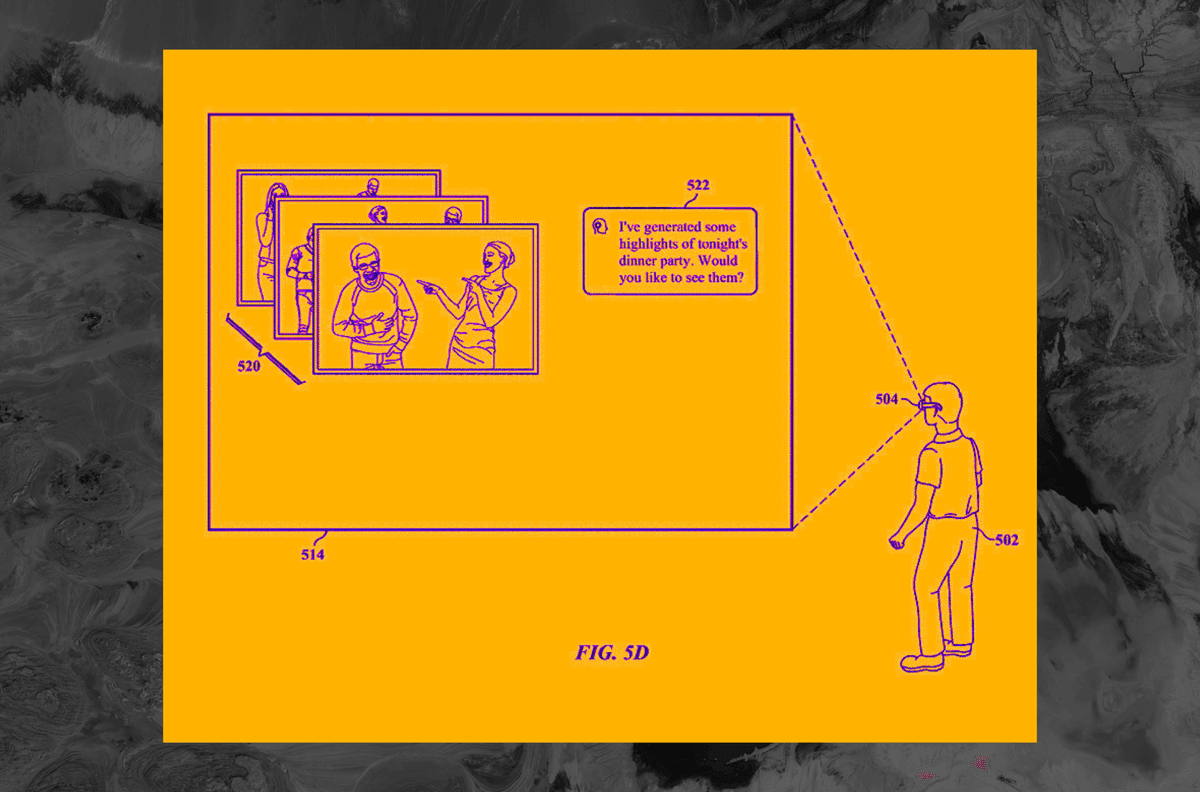
. The 44-page filing, published this week, describes how AI camera glasses would use facial recognition to detect who is in the frame, automatically generate video clips whenever those people perform actions, and compile highlight reels of events3
. The patent application sits at "Ready for Examination" status, with no indication of when approval might come or whether it will ultimately be granted5
.
Source: 404 Media
How the Technology Works
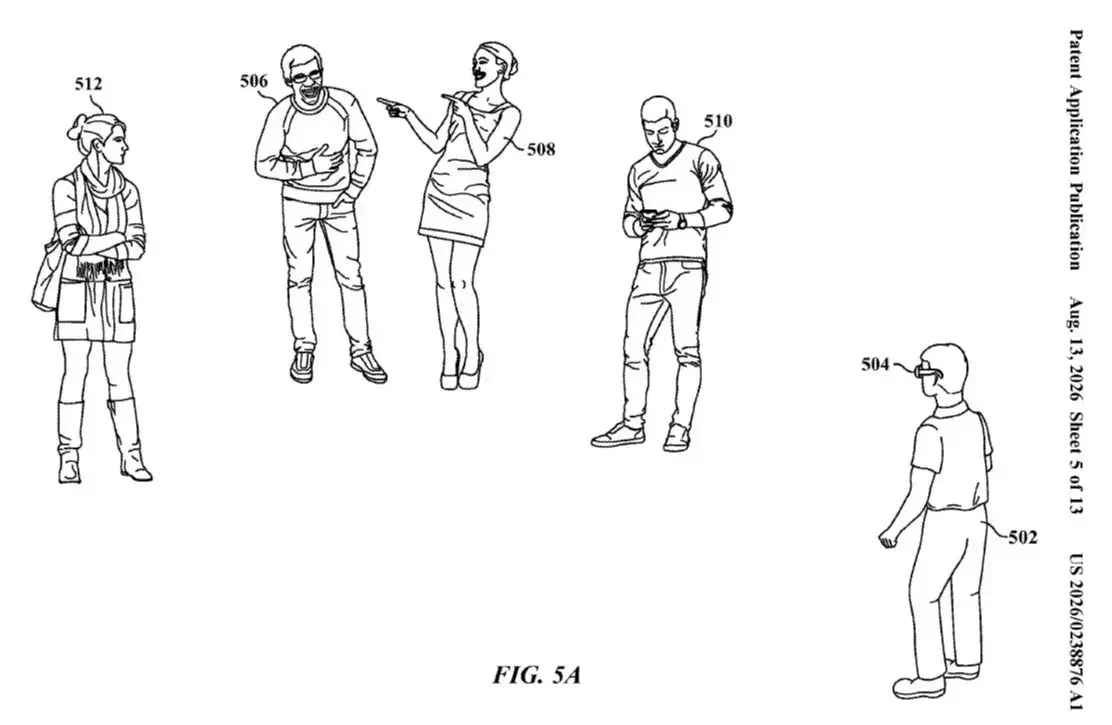
The patent describes a four-step pipeline where cameras capture footage and pass it to a facial recognition layer that flags specific individuals present in the frame
5
. A separate action detection layer monitors movements like picking up objects or walking around, while expression analysis could recognize reactions such as laughter and reposition the camera to focus on those moments4
. The system would use information from the wearer's social graph to determine which friends or family members are more interesting to them, helping decide who makes the final cut in generated media4
. Eye-gaze data could help the glasses determine where to focus, while stabilization and automatic cropping would improve resulting photos or videos4
.
Source: CNET
Privacy Advocates Sound Alarm
The Center for Democracy and Technology issued a statement calling the Meta patent application an escalation of privacy harms
1
. Ariana Aboulafia, project lead for disability rights in technology policy for the center, warned that while the patent application includes relatively innocuous use cases, "this tech can and will be used for much more nefarious purposes and will put marginalized people like victims of stalking and domestic violence at risk"1
. She emphasized that no one should be forced to constantly question whether someone nearby is recording, identifying, and storing information about them1
.Growing Backlash Against Ray-Ban Smart Glasses
Meta's smart glasses are facing increasing scrutiny, with many public spaces banning the wearable cameras that some have dubbed "pervert glasses"
1
2
. In the UK, smart glasses have been banned from various pubs, bars, clubs, and theaters, while in New York, the same restrictions apply in courtrooms2
. On August 12, German digital-rights group HateAid filed a criminal complaint against Meta and several companies selling its glasses in Germany4
. Democratic senators previously raised concerns about real-time facial recognition capabilities exposing people to stalking and harassment5
.Related Stories

Meta's Previous Facial Recognition Controversies
Meta drew criticism after distributing dormant facial recognition code within its Meta AI app, a move the company later reversed by removing the software entirely
1
. In June, Wired found unreleased code for a feature called NameTag inside the Meta AI companion app that could turn faces captured by the glasses into biometric signatures and compare them with faceprints stored on the wearer's phone4
. An investigation from Wired, confirmed by the Electronic Frontier Foundation's Threat Lab, found hidden code distributed to all Meta AI app users, putting Meta on the defensive even as it rolled back the software1
.Surveillance Capabilities Beyond Current Hardware
The newly published patent offers a much more detailed look at how facial recognition could work alongside automatic framing, expression analysis, and personalized memory tools
4
. The system could connect newly captured moments with "episodic memories" associated with the wearer, searching old posts, comments, photos, and videos to answer queries like "Did I ever meet the guy in red T-shirt?"4
. This would turn casual real-world encounters into searchable records, widening the gap between Meta's "helpful assistant" framing and what the surveillance capabilities could actually do5
. Watch for how regulators respond to these expanded capabilities and whether Meta will face additional restrictions before deploying such features in consumer products.
Source: Tom's Guide
References
Summarized by

Navi
[3]
Related Stories
Meta Revives Facial Recognition Plans for Next-Gen Smart Glasses, Raising Privacy Concerns
09 May 2025•Technology

Meta plans facial recognition for smart glasses amid privacy uproar over political timing
13 Feb 2026•Technology

Meta tests 'super sensing' AI glasses with always-on recording that could bypass privacy light
08 Jul 2026•Technology

Recent Highlights



Recent Highlights
Today's Top Stories










Don’t drown in AI news. We cut through the noise - filtering, ranking and summarizing the most important AI news, breakthroughs and research daily. Follow topics that matter to you and stay ahead.


