Meta plans facial recognition for smart glasses amid privacy uproar over political timing


11 Sources
[1]
Meta's Smart Glasses Could Get Face Tracking Soon. That Worries Me
Nearly 20 years writing about tech, and over a decade reviewing wearable tech, VR, and AR products and apps One of the biggest fantasies - and fears - in the science fiction-like realm of smart glasses is the idea of looking across a room, seeing someone, and instantly being able to recognize who
[2]
Meta will ruin its smart glasses by being Meta
Whenever I write about Meta's Ray-Ban smart glasses, I already know the comments I'm going to get. Cool hardware, but hard pass on anything Meta makes; will wait for someone else to come along. It's hard to imagine that sentiment changing anytime soon after The New York Times reported that Meta
[3]
Meta Reportedly Wants to Add Facial-Recognition Tech to Its Smart Glasses
Meta's smart glasses have proved a hit for the company, and leaked internal documents suggest it may soon add facial recognition to help it stay ahead of growing competition from rivals like Apple, Samsung, and Snap. According to a report from The New York Times, Meta plans to add a feature called
[4]
Meta is reportedly working to bring facial recognition to its smart glasses
Meta has backed away from highly controversial facial recognition tech in its products and services before, but seemingly not so far that it isn't willing to have another crack at it. A new report from claims Mark Zuckerberg's company wants to add facial recognition to its lineup of branded smart
[5]

Meta Plans to Add Facial Recognition Technology to Its Smart Glasses
Kashmir Hill reported from New York, and Kalley Huang and Mike Isaac from San Francisco. Five years ago, Facebook shut down the facial recognition system for tagging people in photos on its social network, saying it wanted to find "the right balance" for a technology that raises privacy and legal
[6]

Meta's privacy-invading feature for smartglasses confirms it doesn't care what you think
It's hard to imagine a feature like facial recognition being generally welcomed and liked, but that apparently hasn't stopped Meta considering it for its smartglasses. The feature, discussed internally at this stage, is referred to as Name Tag, and may arrive at some point in 2026 according to a
[7]

Meta Plans 'Name Tag' Facial Recognition for Ray-Ban Smart Glasses
Meta plans to add a facial recognition feature to its Ray-Ban smart glasses as soon as this year, reports The New York Times ($). According to people involved in the plans who spoke to the publication, the feature is internally called "Name Tag," and would let wearers identify people and get
[8]

Meta's smart glasses could soon identify people in real time
Five years after shutting down facial recognition on Facebook over privacy concerns, Meta is preparing to bring the technology back - this time through its smart glasses. According to reports, the company is developing a feature internally called "Name Tag" that would allow wearers of its Ray-Ban
[9]

Meta Wants to Add Facial Recognition to Its Smart Glasses -- But 1 Major Concern Is Holding It Back
Facebook's parent company, Meta, is developing plans to incorporate facial recognition technology into the smart glasses it produces with Ray Ban and Oakley. The new feature, dubbed Name Tag, would enable users to identify people in their range of vision and access information about them through
[10]

Meta plans to add facial recognition technology to its smart glasses
Meta is planning to reintroduce facial recognition in its smart glasses. This feature, called 'Name Tag', would identify people using Meta's AI assistant. The company previously shut down a similar system due to privacy concerns. Five years ago, Facebook shut down the facial recognition system for
[11]

Meta smart glasses may get facial recognition feature: Report
Meta is also working on a feature called Smart Sensing which would enable glasses to record a user's entire day. Meta is preparing to introduce facial recognition technology to its smart glasses, according to a report by The New York Times. The feature, internally referred to as 'Name Tag', could
Share
Copy Link
Meta is moving forward with plans to add facial recognition technology to its Ray-Ban smart glasses as soon as this year, according to leaked internal documents. The feature, codenamed Name Tag, would allow wearers to identify people and retrieve information through Meta's AI assistant. A leaked memo from Meta's Reality Labs reveals the company views the current dynamic political environment as ideal for launching the controversial feature, suggesting privacy advocates would be distracted by other concerns.
Meta Advances Facial Recognition Plans for Smart Glasses
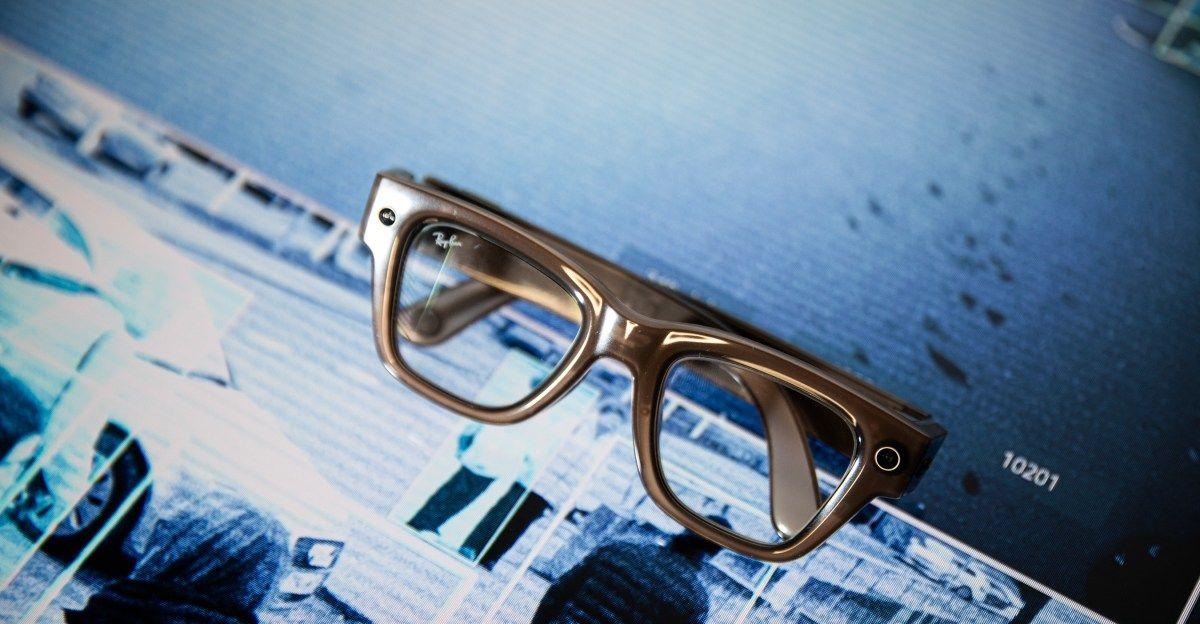
Meta is preparing to introduce facial recognition technology to its smart glasses lineup as soon as this year, marking a significant shift for a company that previously shut down similar features over privacy concerns
5
. According to The New York Times, the feature internally called Name Tag would enable wearers of Ray-Ban smart glasses to identify people they encounter and access information about them through Meta's AI assistant1
3
. Four anonymous sources familiar with Meta's plans confirmed the development, which comes as the company seeks to differentiate its wearable tech from emerging competitors like OpenAI, Apple, and Samsung3
.
Source: The Verge
Controversial Timing Strategy Raises Alarm
A leaked internal memo from May 2025, obtained from Meta's Reality Labs, reveals a troubling strategic calculation behind the launch timing
5
. The document states that Meta plans to "launch during a dynamic political environment where many civil society groups that we would expect to attack us would have their resources focused on other concerns"1
2
. This admission has intensified scrutiny from privacy advocates who view the approach as an attempt to slip controversial technology past distracted civil society groups. The sentiment proves particularly concerning given Mark Zuckerberg's company has been at the center of data privacy scandals before, most notably the Cambridge Analytica controversy2
.How AI-Powered Facial Recognition Would Function
Meta is exploring multiple implementation options for the AI-powered facial recognition feature
3
. One approach would recognize people the wearer already knows through connections on Facebook or Instagram, while another could identify individuals with public accounts on Meta platforms5
. The company has indicated the feature would not function as a universal facial recognition tool capable of identifying any stranger on the street5
. Meta originally planned to debut Name Tag at a conference for the blind in 2025, highlighting potential assistive purposes for vision-impaired communities, though that announcement never materialized3
5
.
Source: NYT
Privacy Concerns Mount Over Recording Without Consent
The development amplifies existing privacy concerns surrounding Meta's smart glasses, which already enable discreet recording through a tiny LED indicator light that many people fail to notice in public settings
2
. Reports indicate that a $60 modification can disable the privacy light, and some units have experienced malfunctions where the indicator simply stopped working while recording capabilities remained functional2
. The issue of recording individuals without consent has already emerged, with reports of influencers misusing the technology to record women without permission2
. In 2024, two Harvard students demonstrated how easily Ray-Ban Meta glasses could be combined with commercial facial recognition tools like PimEyes to identify strangers on public transit5
.Related Stories

Commercial Success Drives Feature Development
Meta's push to add facial recognition comes as its smart glasses have become an unexpected commercial hit for the company
5
. EssilorLuxottica, Meta's manufacturing partner for the Ray-Ban branded devices, announced this week that it sold more than seven million units last year5
. Mark Zuckerberg views facial recognition as essential to differentiate Meta's products in an increasingly competitive market and to enhance the capabilities of the integrated AI assistant5
. The company is also developing "super sensing" glasses that would continuously run cameras and sensors to maintain a record of a wearer's entire day, similar to AI note-taking tools for video meetings5
.
Source: ET
Surveillance Risks Echo Google Glass Failures
The facial recognition push resurrects concerns that doomed Google Glass, which failed partly due to public backlash over privacy and surveillance fears
2
. Privacy advocates warn that facial recognition on wearable devices poses unique threats to practical anonymity in public spaces5
. Nathan Freed Wessler of the American Civil Liberties Union stated that "face recognition technology on the streets of America poses a uniquely dire threat to the practical anonymity we all rely on" and noted the technology is "ripe for abuse"5
. Meta previously abandoned Facebook's Face Recognition system in 2021 following widespread public backlash, with then-VP of artificial intelligence Jerome Pesenti acknowledging the need to "find the right balance" with new technology3
. The company later reintroduced limited facial recognition in 2024 as a tool to detect scam advertisements using celebrity faces . Whether Meta can successfully navigate the balance between innovation and consent mechanisms remains uncertain as the company moves forward with plans that could fundamentally alter how we interact in public spaces.References
Summarized by

Navi
[2]
Related Stories
Meta Revives Facial Recognition Plans for Next-Gen Smart Glasses, Raising Privacy Concerns
09 May 2025•Technology

Ray-Ban Smart Glasses Face Privacy Backlash Over AI Training and Recording Without Consent
16 Mar 2026•Policy and Regulation
Apple Smart Glasses Face WWDC 2027 Delay as Privacy Concerns Force Camera Rethink
26 Jul 2026•Technology

Recent Highlights



Recent Highlights
Today's Top Stories






Don’t drown in AI news. We cut through the noise - filtering, ranking and summarizing the most important AI news, breakthroughs and research daily. Follow topics that matter to you and stay ahead.


