Meta tests 'super sensing' AI glasses with always-on recording that could bypass privacy light


15 Sources
[1]
Meta tests 'super sensing' AI glasses that can record every moment
Meta is testing a prototype of "super sensing" AI glasses that would use cameras and audio recordings to capture a wearer's every moment, as it pushes into the contentious market for all-seeing, all-hearing devices. The $1.5tn social media platform has been advancing a new hardware line of smart
[2]
Thought Meta's smart glasses were creepy? Its new glasses could be a predator's dream.
Privacy concerns are already front and center, with Meta reportedly considering disabling the recording LED while the feature is active. Meta's vision for AI glasses may be getting much more ambitious, but it may also be kicking off its biggest privacy fight yet. Meta is working on "super
[3]
Meta Is Toying With the Idea of Smart Glasses That Record Everything, All the Time
Smart glasses ick people out for various reasons, and many have to do with cameras. In response to that ever-growing aversion, companies that make face computers with cameras on them have extended some small but helpful olive branches to people worried about privacy. For example, there's the
[4]
Meta fixed its smart glasses privacy light problem, just in time for always-on model to reportedly not use it
In a case of hilarious timing - you know, in a dystopian kind of way - a new report details Meta's forthcoming "super sensing" smart glasses that would have microphones and cameras that are constantly active, right as the company has fixed a glaring privacy problem with existing models. Meta
[5]

Meta's 'Super Sensing' Prototype Glasses Quietly Record Everything
Meta has prototyped "super sensing" smart glasses that use cameras and audio recordings to capture the wearer's every moment, reports the Financial Times ($). The smart glasses continuously collect audio while taking photos every few seconds, allowing the user to leverage AI to help query what
[6]

I praised Meta's smart glasses privacy update yesterday -- today, its 'super sensing' glasses proved me completely wrong
* Meta is reportedly testing "super-sensing" AI glasses that continuously record audio and snap photos every few seconds. * To combat "LED fatigue," executives plan to disable the recording light during always-on AI monitoring. * This follows a recent Meta update meant to stop creeps from
[7]

Meta's super-sensing AI glasses are still in the works, and I don't know if I should be excited or terrified
* Meta reportedly has a new AI glasses prototype * It is helping the company finalize a super sensing AI model * Meta execs apparently aren't yet certain what rules the all seeing AI should follow Meta is reportedly trialling a new super-sensing AI glasses prototype that aim to offer an ultimate
[8]

Meta could be working on always-seeing, always-hearing smart glasses with AI super sensing
Meta apparently wants to create an advanced agent that knows everything about your life. Yikes! Meta is testing arguably its most controversial wearable idea, it seems. According to a report by Financial Times, the social media giant currently has "super sensing" AI glasses at work in its test
[9]

Meta reportedly testing prototype AI specs that record everything the user sees and hears
Meta reportedly testing prototype AI specs that record everything the user sees and hears Meta Platforms Inc. this week sought to reassure consumers about the privacy safeguards of its controversial artificial intelligence-enabled glasses, yet at the same time it's reportedly pushing even creepier
[10]

Meta's next smart glasses to be secretly always watching, always listening
Meta is reportedly developing smart glasses that continuously record audio and snap photos, and users might not even see the data. The company describes this device internally as "super sensing", and according to a recent report from The Verge, the device could capture audio and images every few
[11]

What privacy? Meta makes 'super sensor' glasses to record every moment
Santa Barbara | Meta is testing a prototype of "super sensing" AI glasses that would use cameras and audio recordings to capture a wearer's every moment, as it pushes into the contentious market for all-seeing, all-hearing devices. The $US1.5 trillion ($2.2 trillion) social media platform has been
[12]

Meta Super Sensing Glasses could capture everything you see and hear
Meta's current Ray-Ban glasses only start recording when you press a button or say "Hey Meta." A small LED lights up the moment they do. According to the Financial Times (paywall), Meta Super Sensing Glasses would do away with that whole system. The prototype reportedly captures photos and audio
[13]

Meta's New Smart Glasses Said to Arrive With 'Super Sensing' Capabilities
* Meta might store the metadata of audio and video recordings * Meta's new smart glasses could continuously record audio * Meta has yet to confirm the development Meta and Ray-Ban have now launched two generations of smart glasses. The Ray-Ban Meta Gen 2 Glasses were launched in September last
[14]

Meta Tests Super Sensing AI Glasses with New Privacy Concerns Rising
The project has raised new privacy questions inside and outside the company. The main concern centers on whether people nearby would clearly know when the glasses collect visual or audio data. Meta is that use cameras and audio recording to collect information from a wearer's daily life. The
[15]

Meta has a prototype of smart glasses that's really scary
At a time when smart glasses are raising the biggest security concerns, we can look at the case of the new Solos and their curious Privacy Kit, Meta is, as far as we know, developing a new smart glasses prototype with "super-sensing" functions capable of recording each and every moment we
Share
Copy Link
Meta is testing prototype smart glasses that continuously record audio and capture photos every few seconds, allowing AI to recall a wearer's entire day. The $1.5tn company plans to disable the LED indicator during recording, intensifying privacy concerns as the technology pushes boundaries on surveillance and data collection.
Meta Develops Super Sensing AI Glasses With Continuous Recording
Meta is testing prototype smart glasses that represent a significant leap in wearable AI technology, but the development has ignited fierce debates over privacy and surveillance. According to a report from the Financial Times
1
, the $1.5tn social media platform is advancing a new hardware line of AI glasses that would continuously record audio while taking photos every few seconds. The super sensing AI glasses would allow users to query what they saw or heard throughout their day, effectively creating an always-on recording system that captures every moment.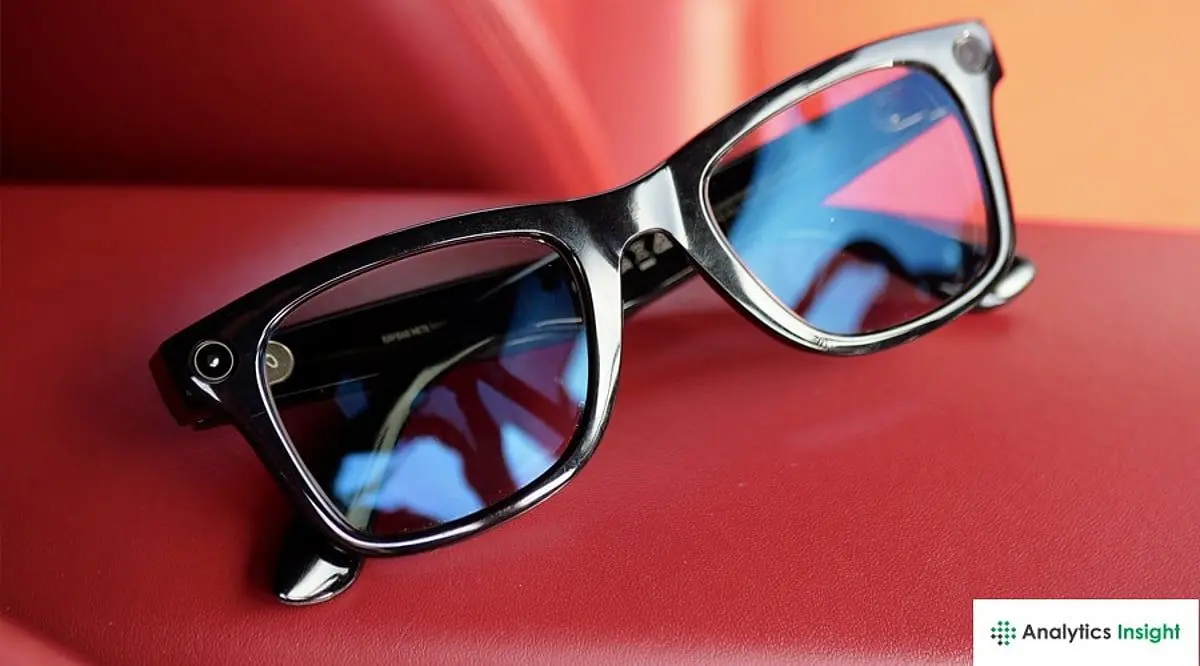
Source: Analytics Insight
The technology builds on Meta's existing partnership with EssilorLuxottica for Meta Ray-Ban smart glasses, but pushes the concept much further. CEO Mark Zuckerberg has argued that AI glasses could one day replace smartphones as the main device people use to access AI tools, including translation services and chatbots
1
. During Meta's first-quarter earnings, Zuckerberg hinted at this vision, saying he wanted glasses to evolve "from being able to answer questions to being able to be a personal agent that's with you all day long, helping you remember things and achieve your goals"1
.
Source: Financial Review
Privacy Concerns Mount Over Disabled LED Indicator
The most controversial aspect of Meta's prototype smart glasses centers on the recording LED indicator. Current AI-powered smart glasses from Meta feature an LED in the corner of the frame that lights up to signal when a wearer is taking photographs or filming. However, executives are currently planning not to activate the LED when the super-sensing features are being used
1
. This decision would make it significantly harder for bystanders to know when they were being recorded, potentially intensifying privacy concerns surrounding the technology.The timing is particularly striking. A mandatory software update is now rolling out to existing Meta Ray-Ban smart glasses to fix a problem where bad actors were modifying the glasses to disable the privacy light
4
. Meta fixed its smart glasses privacy light problem just as reports emerged about the always-on model that reportedly wouldn't use it. In a 2025 policy paper, Meta defended this approach, stating that "if the LED blinked for extended periods at a time (like whenever there was an AI interaction), people could stop noticing it -- reducing the awareness of when photos or videos are being captured"1
.How Data Collection and Metadata Processing Work
In one proposed system for the prototype smart glasses, raw footage and audio would not be stored by Meta or made available to the user
1
. Instead, metadata from that audio and images would be extracted and uploaded to the server for Meta's AI to query. Proponents argue this approach would have fewer privacy implications than storing complete recordings. The company is also discussing whether data collected through the glasses could be used to train its own AI models, as it pours billions into competing with OpenAI, Google, and Anthropic in the AI race1
.The super-sensing features could potentially be activated on Meta's existing glasses via a software update
1
, meaning current owners might find their devices capable of continuous audio recording without purchasing new hardware. Meta is also exploring other always-on devices beyond glasses. In December, it acquired Limitless, a maker of AI-powered pendants that can record and transcribe conversations in real time1
.Related Stories

Legal and Regulatory Challenges Loom Large
Privacy experts and legal scholars are raising significant concerns about the technology's compliance with existing laws. "There's no one law that addresses all the different dangerous ways these tools have been designed and built," said Woodrow Hartzog, professor of law at the Boston University School of Law. "Lawmakers have to take this seriously and update to accommodate this reality of always-on, always-seeing devices"
1
.The always-on devices could potentially violate data privacy or biometric data laws
1
. It remains unclear whether the company or the wearer would be responsible for any breach of wiretapping laws, as it remains illegal in multiple US states to record audio of a third party without their consent1
. Legal experts are already questioning whether current regulations are sufficient for always-on AI wearables2
.
Source: SiliconANGLE
Meta's track record with privacy adds another layer of concern. A report from Swedish newspaper Svenska Dagbladet earlier this year detailed how photos and videos used for training Meta's AI were being sent to human contractors for review, containing private moments like people having sex, using the bathroom, and sensitive banking information
3
. In February, reports emerged that Meta had an inactive facial recognition feature embedded in its Ray-Ban smart glasses platform, which the company later removed5
.What This Means for Wearable Technology's Future
Meta has shifted its virtual and augmented reality strategy toward AI glasses following the success of its Meta Ray-Ban smart glasses, after its costly push to build an avatar-filled "metaverse" failed to gain consumer traction
1
. Last month, Meta launched an even cheaper version of those glasses, including one product with frames designed by influencer Kylie Jenner1
.The technology faces significant hurdles beyond legal challenges. Recording constant video is a huge drain on hardware, raising questions about whether smart glasses would have the required battery to make such a feature plausible
3
. Meta could theoretically equip its glasses with a super low-resolution camera that uses less battery or saddle its hardware with an external battery pack, though neither solution appears ideal.Meta declined to comment on "internal prototypes" but said its approach focused on "privacy built in from the ground up"
1
. The company maintains that when glasses are used for AI features, it takes "steps to protect people's privacy, like removing key identifiable information"1
. However, convincing regulators and consumers may prove harder than building the technology itself2
. Watch for potential regulatory action as lawmakers grapple with how to address always-on surveillance devices, and monitor whether Meta's plans for the LED indicator change in response to public pressure.References
Summarized by

Navi
[2]
[4]
Related Stories
Meta Revives Facial Recognition Plans for Next-Gen Smart Glasses, Raising Privacy Concerns
09 May 2025•Technology

Meta AI Glasses Get Recording LED Safeguard Amid Growing Privacy Concerns and Secret Filming Cases
08 Jul 2026•Technology

Meta plans facial recognition for smart glasses amid privacy uproar over political timing
13 Feb 2026•Technology

Recent Highlights



Recent Highlights
Today's Top Stories






Don’t drown in AI news. We cut through the noise - filtering, ranking and summarizing the most important AI news, breakthroughs and research daily. Follow topics that matter to you and stay ahead.


