3 Sources
[1]
Meta's Smart Glasses Are Testing Facial Recognition Software Used by Police and the Military
Omar Gallaga has covered technology, digital culture and other topics for outlets including CNET, NPR, WIRED, Texas Monthly, MSNBC, Consumer Reports, The Washington Post, the Los Angeles Times, The Atlantic and the Austin American-Statesman, where he was a longtime tech reporter, editor and podcaster. He lives in the Texas Hill Country. Meta Ray-Bans have been under increased public scrutiny following revelations about the facial recognition work Meta has been doing on its smart glasses. Consumers are rightly wary of products that could convert wearable tech into everyday surveillance devices. In early June, an investigation by Wired exposed how Meta had quietly embedded code for dormant facial recognition software under the internal designation "NameTag." The feature, if rolled out, could have allowed Meta smart glasses to biometrically identify anyone in view -- in real time, without consent -- using a stored digital faceprint. The code, which was never made active for users, was removed a day later. The Electronic Frontier Foundation's Threat Lab verified the initial findings and reported that Meta reversed course following public blowback. But the privacy nonprofit noted that Meta deleting the code "does not equal a permanent change of heart." Now, just a week after Meta removed the code, the company is facing new questions about its facial recognition software prototype. A new investigation by Wired uncovered that Meta partnered with Rank One Computing, a supplier for the US military and law enforcement agencies, for its biometric identification technology. Wired said it uncovered a software license tying the Pentagon vendor to the Meta AI app, the same one used for Meta's smart glasses products. The license agreement would authorize Meta to use Rank One's military-grade facial recognition and "liveness detection," which confirms whether someone is seeing a live person or a mask or photo. This business relationship, as Wired pointed out, "shows how thin the line has grown between the surveillance technology sold to law enforcement and the military and the consumer products sold to everyone else." According to Wired, Rank One Computing declined to comment on the findings. The Denver-based firm, which earns roughly 80% of its revenue from government clients, didn't respond to a request from CNET for comment. A Meta spokesperson told CNET that it has made no final decisions on facial recognition software for Meta Glasses, but would not confirm whether the tech giant is licensing a military-grade engine for its glasses. In an emailed statement, Meta noted: "Nothing has shipped to consumers and no final decision has been made on what to do here, if anything. If we do decide to roll something out, we will take a thoughtful approach and do so with full transparency." Meta's facial recognition controversies In our previous coverage, CNET noted a dangerous precedent if Meta's glasses store biometric face data in an embedded database architecture that can compare new faceprints to existing ones. At the time, a Meta spokesperson responded that the company is "not building a central face database." In late 2021, under public pressure, Meta announced plans to shut down its efforts to build a central facial recognition database on the Facebook platform. By that point, the company said, about 600 million users globally had already opted into the software, which could identify faces in photos and videos for tagging people on the social media site. Meta later settled a 2024 lawsuit filed by the state of Texas over the collection of facial recognition data for $1.4 billion. Earlier this year, the New York Times reported that Meta was developing software for its smart glasses to identify people, presumably using data from its social networks, such as Facebook and Instagram. The article cited an internal memo from Meta that said political tumult in the US would distract critics from the feature's release. Privacy advocacy groups such as the EFF have long spelled out the harms of facial recognition technology, as biometric-enabled public surveillance severely undermines anonymity. Facial recognition technology also has a disproportionately negative impact on marginalized groups, as it can track movement, misidentify people of color and lead to wrongful arrests. Businesses and governments can also abuse faceprints without consent, creating risks for identity theft and cybersecurity.
[2]
Meta face recognition glasses tied to a Pentagon vendor
Meta licensed face recognition from Rank One Computing, a vendor that earns most of its money from US police and the military, to prototype identifying people through its glasses. It shipped the code dormant to 50 million phones, then deleted it. The Meta face recognition system for its smart glasses was built on software licensed from Rank One Computing, a Pentagon and police contractor, according to a WIRED investigation. Reporters Dell Cameron and Dhruv Mehrotra found a leaked, still-active licence tying Meta to a vendor that draws roughly 80 per cent of its revenue from government clients. Rank One is no consumer startup. The Denver firm, founded in 2015 and newly listed on Nasdaq this February, supplies face recognition to US police and the military. Its technology has verified prisoners for the US Marshals Service since 2021; the Navy's criminal investigators bought its video tool; and US Special Operations Command funded work that, the company says, can identify a face from up to a kilometre away. Its board is stacked with former CIA, FBI and Pentagon officials, and its chief executive once ran the FBI division that keeps the bureau's biometric databases. The Meta face recognition code, already pulled This lands on top of a story Meta hoped had ended. WIRED reported on 5 June that Meta's AI companion app, installed on more than 50 million phones, carried a dormant face-recognition pipeline, internally called NameTag, that could turn a glance through the glasses into a name. Meta deleted the code the next day. What it did not say was where the technology came from. The Rank One licence, which WIRED says supports up to 10 million facial templates, is the answer: it sat dormant inside the app alongside Meta's own face-recognition system, and was never switched on for users. A defence-grade tool, and a public contradiction The detail matters because of what Meta says in public. The company insists it will not add face recognition to its Ray-Ban and Oakley glasses without robust privacy safeguards, and it switched off Facebook's photo-tagging in 2021. Quietly licensing a military-grade engine to prototype exactly that feature is the gap between the message and the build. Pairing always-on camera glasses with this kind of recognition is the scenario privacy researchers have warned about for years: identifying a stranger on the street, in real time, without consent. There are reasons to be wary of the technology itself, not just the optics. In NIST testing, a version of Rank One's algorithm produced false matches at sharply different rates by sex and country of birth, a proxy the agency uses for race, with higher error rates for women. The US has almost no national rules on face recognition. Meta declined to say why it licensed the software, when the relationship began, or whether it continues; Rank One declined to comment. The takeaway is uncomfortable but simple: the tech to put a name to every face you look at has been licensed and tested, and the only real question left is who ships it first, and on what legal footing.
[3]
Meta is testing smart glass facial recognition tech that's also used by police and military: Report
Meta secretly tested military-grade face recognition software on its Ray-Ban smart glasses app Meta seemed to be quietly testing face recognition software for its Ray-Ban and Oakley smart glasses. A new WIRED investigation reveals that the company licensed it from Rank One Computing, a Denver-based firm that earns roughly 80% of its revenue from government clients, including the US military and police departments nationwide. This is the first known evidence of a business relationship between Meta and Rank One, and it raises serious questions about where consumer technology ends and surveillance infrastructure begins. So what exactly is Rank One Computing? Rank One is not your average tech company. It supplies face recognition to the US Marshals Service, the Naval Criminal Investigative Service, and the US Special Operations Command, which funded research that can reportedly identify a face from up to one kilometer away. Recommended Videos Its CEO previously ran the FBI's biometric database division, and its board includes former CIA, FBI, and Pentagon officials. The company went public on the Nasdaq in February 2026. What was Meta actually building inside its smart glasses app? The license Meta acquired covered Rank One's face recognition software, along with liveness detection, a tool that checks whether a camera is looking at a real person instead of a photo. It supported up to 10 million facial templates. WIRED found remnants of Rank One's code sitting dormant inside a version of Meta's AI app that shipped to more than 50 million phones this month. Meta also built its own internal face recognition system, called NameTag, into the same app. However, none of it was ever active for users. Meta deleted both systems, one day after the news broke, and denied using facial scanning. The company also declined to say why it licensed the software or whether the arrangement is still ongoing. There are currently almost no national rules in the US governing face recognition, making the legal landscape murky around what Meta was testing.
Share
Copy Link
Meta partnered with Rank One Computing, a Pentagon vendor serving US military and police, to test facial recognition technology on its Ray-Ban smart glasses. The dormant code, shipped to over 50 million phones, was deleted after public exposure. The partnership reveals how consumer tech merging with surveillance infrastructure blurs ethical boundaries in AI development.
Meta has been testing facial recognition capabilities on its Ray-Ban smart glasses using technology licensed from Rank One Computing, a Denver-based firm that earns roughly 80% of its revenue from government clients including the US military and law enforcement agencies
2
. This marks the first known business relationship between Meta and the Pentagon vendor, raising questions about consumer tech merging with surveillance infrastructure that was previously reserved for defense and policing applications2
.
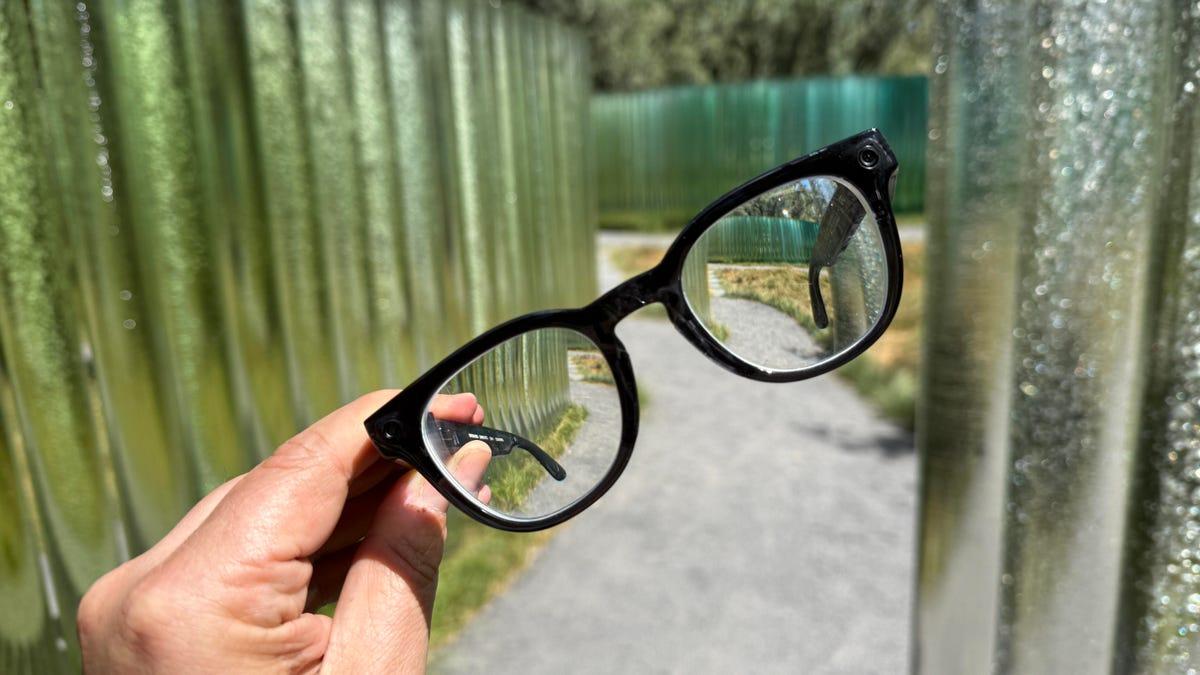
Source: CNET
The partnership came to light through a WIRED investigation that uncovered a software license tying Rank One Computing to Meta's AI companion app, the same application used for the company's smart glasses products
1
. The license authorized Meta to use military-grade facial recognition technology and liveness detection, which confirms whether a camera is viewing a live person rather than a photo or mask1
.The investigation revealed that remnants of Rank One's code sat dormant inside Meta's AI app that shipped to more than 50 million phones
3
. Meta also developed its own internal facial recognition system, internally designated as NameTag, within the same application. This feature, if activated, could have enabled Meta smart glasses to conduct real-time biometric identification of anyone in view without consent, using stored digital faceprints1
.The code was never made active for users, and Meta deleted both systems one day after the news broke in early June
2
. The Electronic Frontier Foundation's Threat Lab verified the findings and noted that while Meta reversed course following public blowback, deleting the code "does not equal a permanent change of heart"1
.Rank One Computing is no ordinary technology vendor. Founded in 2015 and listed on Nasdaq in February 2026, the company supplies AI-powered biometric systems to the US Marshals Service, the Naval Criminal Investigative Service, and US Special Operations Command
3
. The firm has verified prisoners for the US Marshals Service since 2021, and Special Operations Command funded research that can reportedly identify faces from up to one kilometer away2
.The company's leadership reflects its deep ties to government surveillance. Its CEO previously ran the FBI division responsible for maintaining the bureau's biometric databases, while its board includes former CIA, FBI, and Pentagon officials
2
. The license Meta acquired supported up to 10 million facial templates2
, demonstrating the scale at which this technology could theoretically operate.The partnership intensifies privacy concerns around wearable technology becoming everyday surveillance devices. NIST testing revealed that a version of Rank One's algorithm produced false matches at different rates based on sex and country of birth, a proxy the agency uses for race, with higher error rates for women
2
. Privacy advocacy groups have long documented how facial recognition technology disproportionately harms marginalized groups through movement tracking, misidentification of people of color, and wrongful arrests1
.The US currently has almost no national rules governing facial recognition
3
, creating a murky legal landscape around what Meta was testing. Pairing always-on camera glasses with this kind of recognition represents the scenario privacy researchers have warned about for years: identifying strangers on the street in real time without consent2
.Related Stories
Meta's experimentation contradicts its public commitments on biometric data. In late 2021, under public pressure, Meta announced plans to shut down its central facial recognition database on Facebook, which had enrolled about 600 million users globally
1
. The company later settled a 2024 lawsuit filed by Texas over facial recognition data collection for $1.4 billion1
.A Meta spokesperson told CNET the company has made no final decisions on facial recognition software for Meta Glasses, stating: "Nothing has shipped to consumers and no final decision has been made on what to do here, if anything. If we do decide to roll something out, we will take a thoughtful approach and do so with full transparency"
1
. However, Meta declined to confirm whether it is licensing military-grade technology, when the relationship with Rank One began, or whether it continues2
. Rank One Computing also declined to comment on the findings1
.The ethical implications extend beyond Meta's immediate plans. The incident demonstrates how thin the line has grown between surveillance technology sold to police contractors and consumer products marketed to the general public
1
. The technology to identify every face you look at has been licensed and tested; the remaining questions center on who ships it first and under what legal framework2
. Earlier this year, the New York Times reported Meta was developing software for its smart glasses to identify people using data from Facebook and Instagram, with an internal memo suggesting political tumult in the US would distract critics from the feature's release1
.Summarized by
Navi
[1]
[2]
05 Jun 2026•Technology

13 Feb 2026•Technology

09 May 2025•Technology

1
Policy and Regulation

2
Business and Economy

3
Technology