Meta Keeps 11% of Nvidia GPUs Idle in Prometheus Supercluster to Prevent AI Training Failures


3 Sources
[1]
Tens of thousands of Nvidia GPUs sit in Meta's Prometheus supercluster, waiting for a failure
And other fun facts about how Zuckercorp aims to keep a million GPUs running long enough to train a model More than 11 percent of the GPUs at Meta's Prometheus supercluster in New Albany, Ohio, are either dead or sitting idle waiting to step in when the next drops out, Zuckercorp revealed this
[2]
Tens of thousands of Nvidia GPUs sit idle in Meta's Prometheus supercluster, just waiting for a failure
And other fun facts about how Zuckercorp aims to keep a million GPUs running long enough to train a model More than 11 percent of the GPUs at Meta's Prometheus supercluster in New Albany, Ohio, are either dead or sitting idle waiting to step in when the next drops out, Zuckercorp revealed this
[3]
Meta's Prometheus supercluster is heading for 1 million Nvidia GPUs
The gigawatt-scale cluster in Ohio trained Meta's Muse models. Meta also published rare failure data, from a peak of 1,000 interruptions a day to a 99% cut. Meta's Prometheus supercluster in New Albany, Ohio, already runs hundreds of thousands of Nvidia GPUs across several buildings, and Meta
Share
Copy Link
Meta revealed that over 11% of Nvidia GPUs in its Prometheus supercluster sit idle or dead as hot spares. The New Albany facility cut interruptions by 99% through redundancy, data parallelism, and checkpointing. The infrastructure improvements enable Meta to train models like Muse Wonder across nearly 1 million GPUs.
Meta disclosed operational details about its Prometheus supercluster that expose the harsh realities of running AI training infrastructure at unprecedented scale. More than 11% of Nvidia GPUs at the New Albany, Ohio facility are either failed or kept idle as hot spares, waiting to replace the next component that drops out
1
2
. This massive redundancy strategy represents one of several measures Meta has implemented to keep large-scale AI training runs on track as it scales toward roughly 1 million distributed GPUs3
.From 1,000 Daily Interruptions to Near-Continuous Operation
When Meta began the first phase of its Prometheus deployment, the company experienced roughly 1,000 interruptions per day for every 8,000 GPUs
1
. These interruptions forced AI model training runs to stop and roll back to the last known good checkpoint. A year of focused engineering work cut that figure by 99%, bringing interruptions down to about 11 per day per 8,000 GPUs2
. The cluster now runs about 47,000 GPU hours on average between interruptions, recently pushing above 54,000 after firmware fixes, with Meta targeting approximately 100,0003
. This improvement enabled Meta to train models like Muse Spark and Muse Wonder with minimal disruption.Hot Spares and Redundancy Drive Continuity Costs
The Meta Prometheus supercluster currently runs a combination of GB200 and GB300 systems from Nvidia's Grace Blackwell generation, each featuring 72 GPUs per NVLink domain
1
. However, only 64 GPUs are actively used in training at any moment, with the remaining eight serving as hot spares2
. Meta also holds about 2% of racks in reserve3
. This means a training run on 32,768 Nvidia GPUs actually requires 37,656 GPUs, representing about 13% overhead3
. When a GPU fails, a spare can immediately slot in, preventing an entire rack from dropping out of the cluster and minimizing interruption time.Data Parallelism Prevents Total System Halts
Meta leveraged data parallelism in large-scale AI training to further reduce operational challenges. Multiple copies of the AI model training run simultaneously across different portions of the cluster. When a fault can be isolated to a single data-parallel model replica, Meta takes only that faulty replica offline while the remaining cluster continues productive training
1
. The compromised slice restarts on available spare hosts and resynchronizes, converting what would have been a total system halt into a minor, temporary reduction in aggregate throughput. Training runs only get interrupted when faults exceed the data parallel domain, at which point Meta's comprehensive checkpointing scheme saves the day by preserving model state, gradients, and optimizer data to multi-tier storage2
.NVLink Fabric Challenges at Blackwell Scale
Making the NVLink fabric connecting 72 GPUs behave like one unified accelerator presented significant infrastructure improvements challenges. Earlier H100 and H200-based systems featured just eight GPUs per NVLink domain with shorter, less numerous links. Nvidia's Grace Blackwell generation expanded this functionality nine-fold
1
. With over 600,000 NVLink connections, even marginal signal degradation triggers frequent recovery cycles2
. Signal quality on these connections became the biggest early problem during mid-20253
. Meta implemented continuous telemetry systems and conducted L11 diagnostic burns to isolate weak links before putting systems into production, addressing these operational challenges head-on.Power Transients and Energy Management at Gigawatt Scale
Ramping up and down tens of thousands of Nvidia GPUs for AI training infrastructure creates massive power transients that can overwhelm supply equipment
1
. When tens of thousands of GPUs compute and communicate in lockstep, the cluster's power draw swings by 30% to 40%3
. Starting or pausing a large job can shift tens of megawatts in seconds. Meta developed software called Dynamo Dimmer to gradually cap GPU power, backed by batteries at rack, facility, and grid levels to smooth these fluctuations. The company says it pays the full cost of energy used in New Albany, Ohio and matches it with new clean and renewable energy, though it left the RE100 pact in July as its gas build-out for AI outpaced renewables3
.Related Stories
Achieving High Goodput Despite Massive Scale
By focusing relentlessly on stability and reliability, Meta achieved more than 85% goodput for pre-training and more than 90% for reinforcement learning during Muse Wonder's development
2
3
. Goodput measures useful throughput, distinguishing productive computation from wasted cycles due to failures and restarts. The Meta Prometheus supercluster spans multiple buildings in New Albany, Ohio, including traditional data centers, AI-optimized buildings, and rapid-deployment structures, all linked by miles of fiber3
. Each building's network connects up to 20,736 GPUs, with a separate aggregation network joining buildings over distances from 2km to more than 100km.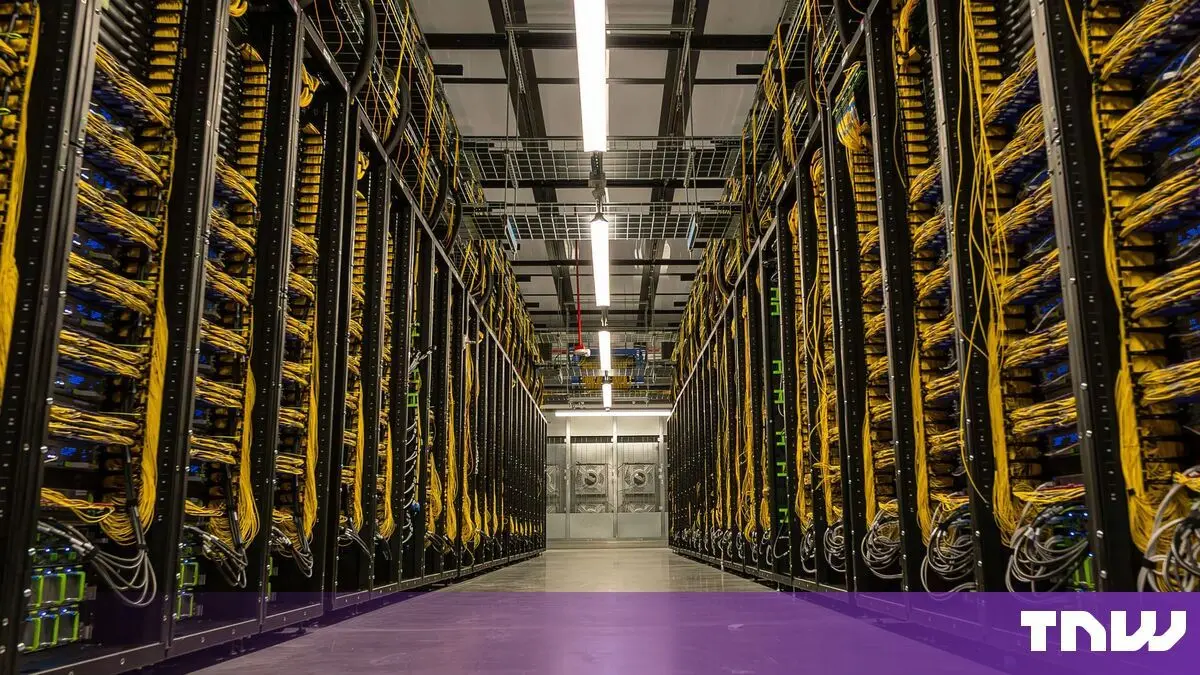
Source: The Next Web
Three Generations and Future Expansion
Prometheus currently runs two Nvidia platforms: Catalina using GB200 NVL72 racks and Clemente using the newer GB300 NVL72 systems
3
. A third platform called San Miguel will add Nvidia's Vera Rubin systems NVL72 racks to the mix. At full scale, the AI training infrastructure will comprise roughly 1 million distributed GPUs functioning in lockstep, consuming a gigawatt of capacity1
3
. Meta is already applying lessons learned to its next supercluster, Hyperion, being built in Richland Parish, Louisiana3
. The company has pledged $1 billion to data center communities as it continues expanding AI model training capacity. Watch for how Meta's approach to redundancy and checkpointing influences industry standards for large-scale AI training as competitors race to build similar infrastructure.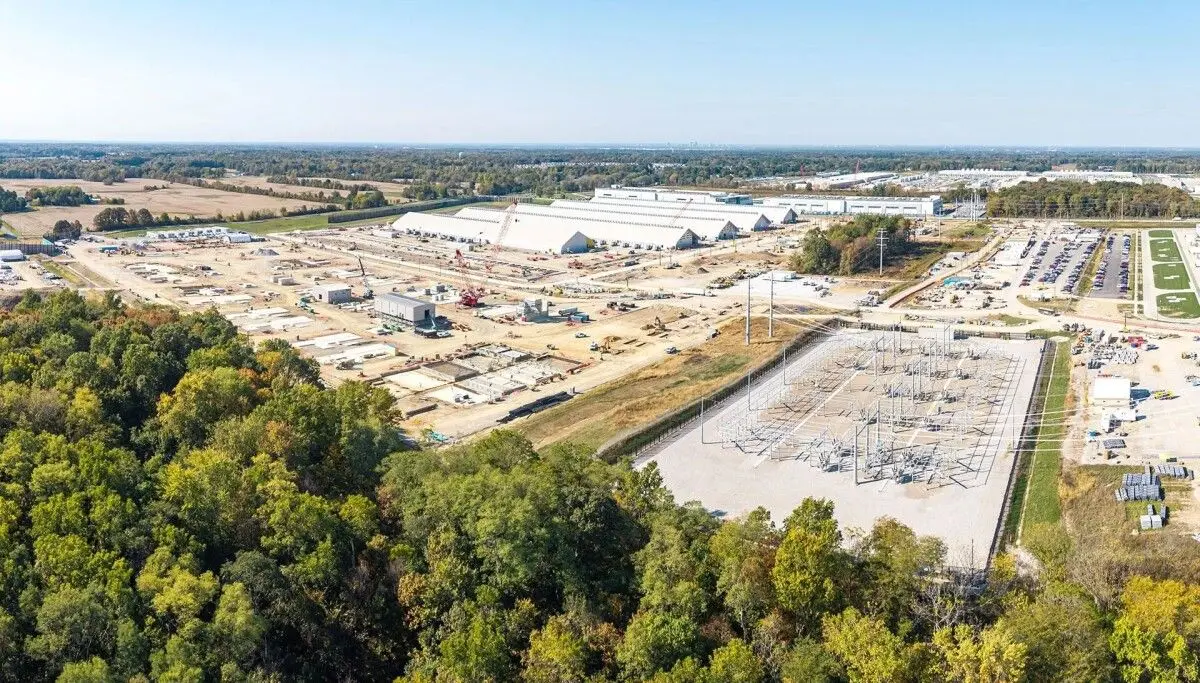
Source: The Register
References
Summarized by

Navi
[1]
[2]
Related Stories
OpenAI's Ambitious Plan: 100 Million GPUs and the Future of AI Infrastructure
22 Jul 2025•Technology

Meta's Llama 4: Training on Massive GPU Cluster for Early 2025 Release
26 Oct 2024•Technology

Meta unveils four MTIA chip generations to power AI inference and reduce Nvidia dependence
12 Mar 2026•Technology
Recent Highlights



Recent Highlights
Today's Top Stories









Don’t drown in AI news. We cut through the noise - filtering, ranking and summarizing the most important AI news, breakthroughs and research daily. Follow topics that matter to you and stay ahead.


