Nvidia DSX Platform Drives 40% Energy Efficiency Gains as Power Becomes AI Infrastructure's Biggest Constraint


5 Sources
[1]
Nvidia goes green to keep grid capacity from zapping its revenues
Nvidia's ability to sell GPUs is ultimately limited by how much juice the power grid can provide. With ever-growing depreciation cycles, it'll be years before datacenters decommission their aging Hopper or Blackwell systems. More GPUs mean pulling more power from the grid. Nvidia can't exactly
[2]
From Megawatts to Tokens: How NVIDIA Maximizes AI Factory Production
By codesigning compute, networking, power, cooling and operations, NVIDIA DSX helps infrastructure builders squeeze more tokens from every available watt, and build factories the energy grid can work with. On a sweltering August evening in Silicon Valley, as the sun dropped and air conditioning
[3]
AI Infra Summit: NVIDIA Vera Rubin and DSX Platform Advancements Showcase Energy Efficiencies of Optimizing Tokens Per Watt for AI Factories
Ian Buck, vice president of hyperscale and high-performance computing at NVIDIA, Tuesday spoke on AI factory efficiency at the AI Infra Summit, the Santa Clara Convention Center event that has morphed into a Coachella of infrastructure tech. Before a packed audience -- with more than 8,000
[4]
Nvidia's AI Boom Hits Its Next Challenge: Power - NVIDIA (NASDAQ:NVDA)
Nvidia Is Fighting the AI Slowdown Narrative -- With Power as Its Next Problem The biggest threat to Nvidia Corp's (NASDAQ:NVDA) AI boom may not be a slowdown in demand. It may be whether the power grid can keep up. As Nvidia CEO Jensen Huang pushes back against calls to slow AI development,
[5]
NVIDIA's DSX MaxLPS Drives 40% More Token Throughput Per Megawatt, As Lambda's Cluster Jumps To 5 Million Tokens Per Second
NVIDIA showcased its energy efficiency optimizations that have been featured on Vera Rubin platforms for increased token throughput. NVIDIA Discloses Some Hefty Power Efficiency Gains For Its Vera Rubin Platforms at AI Infra Summit AI demand continues to pose a serious burden on energy
Share
Copy Link
Nvidia unveiled DSX MaxLPS and DSX Flex platforms at AI Infra Summit, addressing power grid limitations that threaten AI expansion. Lambda achieved 24% more token throughput within the same power budget, while Emerald AI demonstrated automated load reduction responding to 200+ grid signals from Silicon Valley Power without disrupting critical AI workloads.
Nvidia Tackles Power Grid Constraints Limiting AI Growth
Nvidia's ability to sell GPUs faces an unexpected bottleneck: power grid capacity
1
. As AI infrastructure expands, datacenters consume massive amounts of electricity, and grid operators struggle to add capacity fast enough. At the AI Infra Summit this week, Nvidia introduced its DSX platform to maximize AI infrastructure energy efficiency and help customers extract more compute from every available watt2
. "At the datacenter scale and at the AI-factory scale, we're literally trying to think about how can we eke out every bit of efficiency to drive more performance per gigawatt," said Dion Harris, senior director of Nvidia HPC and AI Hyperscale Infrastructure Solutions1
. The platform addresses a critical reality: every kilowatt of stranded power represents a GPU Nvidia could have sold.
Source: NVIDIA
DSX MaxLPS Delivers 24% Token Throughput Boost
Cloud provider Lambda released the first validation of Nvidia DSX MaxLPS on Blackwell servers, demonstrating significant performance per watt improvements
3
. Lambda ran 19 nodes within the same power budget typically allocated to 16 full-power nodes, increasing cluster-wide token throughput by 24%—from roughly 4 million to 5 million tokens per second2
. Performance per watt improved by 23%5
. DSX MaxLPS continuously monitors power consumption across GPUs and racks, dynamically shifting available power where AI workloads need it most and reclaiming capacity that static provisioning leaves unused3
. The system works by recognizing that training and inference draw power differently, then optimizing allocation across mixed-workload AI factories. For next-generation Vera Rubin NVL72 AI factories, DSX MaxLPS can enable up to 40% more GPU capacity within the same megawatt budget in the right deployment environments2
.DSX Flex Enables Grid-Responsive AI Factories
Nvidia demonstrated DSX Flex working with Emerald AI and Silicon Valley Power to free up datacenter power when grid demand spikes without disrupting critical workloads
1
. On a sweltering August evening in Silicon Valley, as air conditioning loads spiked, Silicon Valley Power sent a signal to an AI factory to adjust its power consumption2
. Emerald AI's Conductor platform—using DSX Flex—received the signal and automatically adjusted flexible computing workloads. Work that could wait was slowed or rescheduled, while higher-priority services continued operating. Power fell from four megawatts to three, automated with no operator intervention2
. Silicon Valley Power has since sent more than 200 demand signals to that AI factory, and the system worked every single time2
. DSX Flex receives grid signals—load-shedding requests, demand-response events and pricing signals—and automatically acts within a predefined workload hierarchy3
.
Source: The Register
Power Management Unlocks Additional Grid Capacity
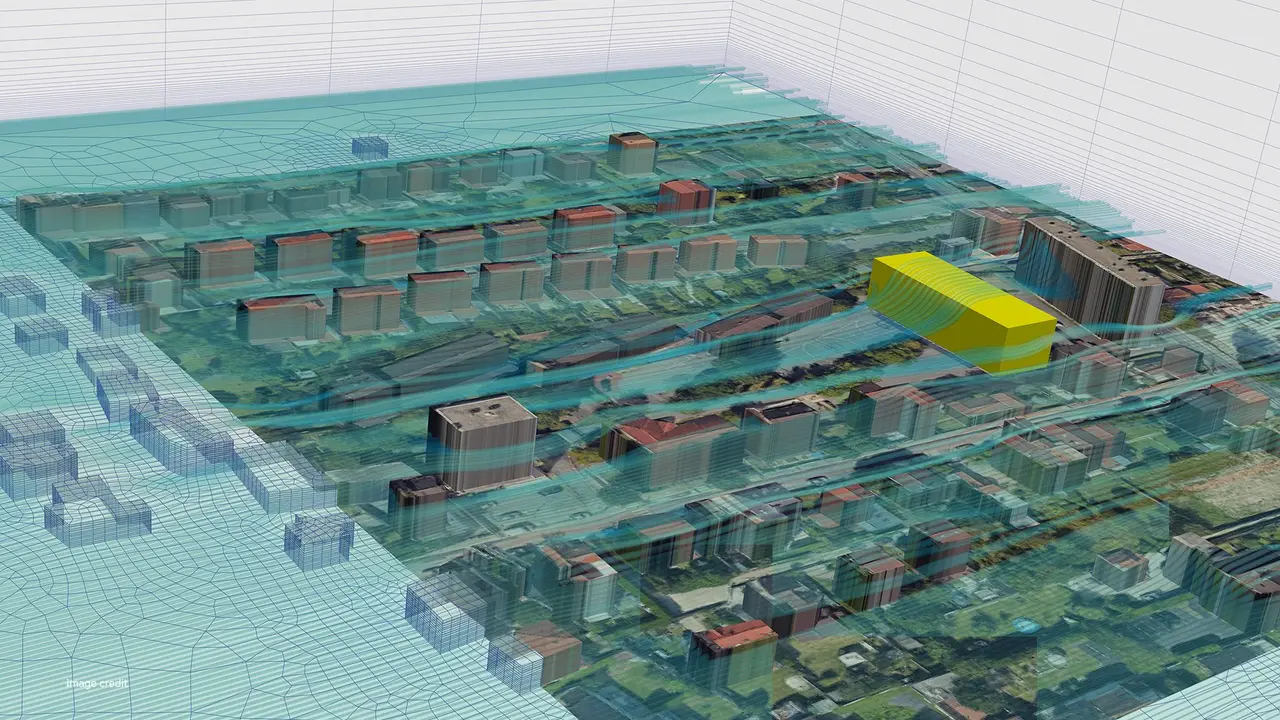
The flexible-load program could help unlock up to 100 gigawatts of existing U.S. grid capacity for AI factories
4
. Nvidia, Google and Emerald AI launched the AI Energy Management Alliance, bringing together 18 companies across AI, utilities and energy4
. The alliance aims to make data centers flexible enough to adjust electricity consumption in response to grid conditions, potentially allowing more AI capacity to connect without overwhelming local power systems. Nvidia says Emerald AI has demonstrated data centers reducing power demand by as much as 40% in under a minute while maintaining critical AI workloads4
. This capability may be less about keeping AI from causing brownouts and more about getting utilities to greenlight additional capacity on the proviso that they can reclaim some portion of it at a moment's notice1
.Related Stories
Full-Stack Approach Addresses Infrastructure Constraints
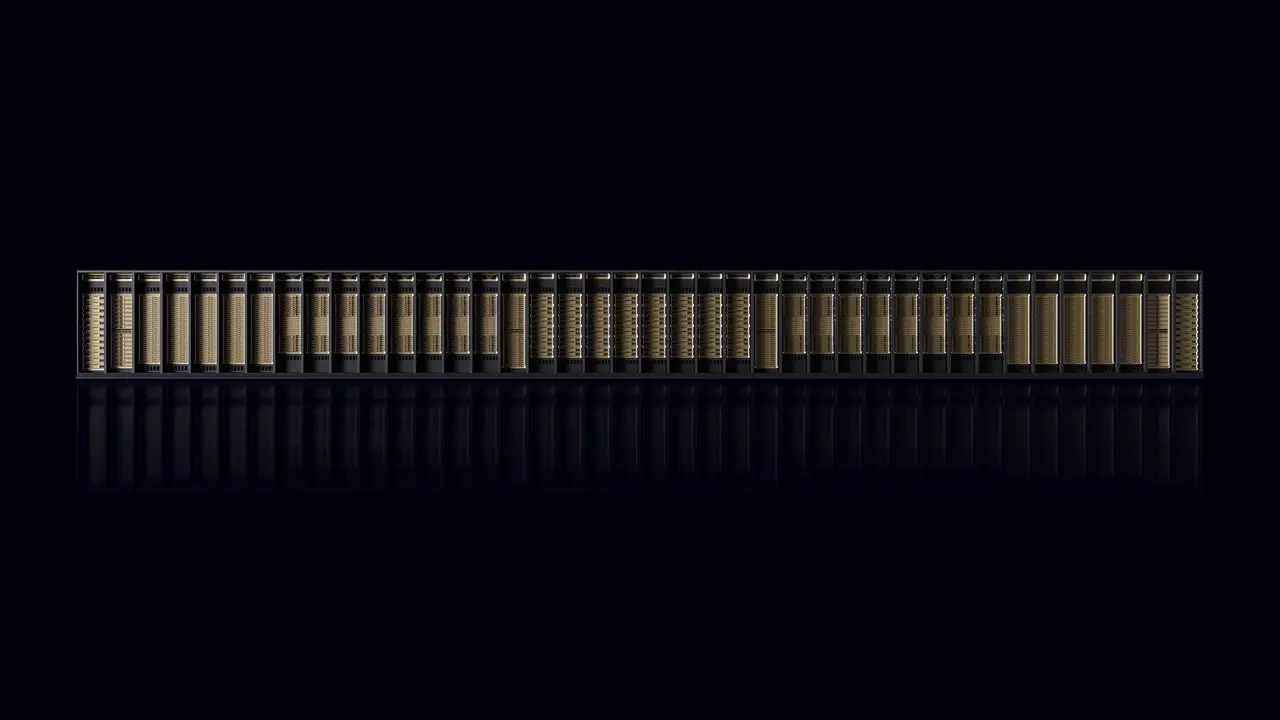
Nvidia DSX is a full-stack AI factory platform spanning Vera Rubin systems, networking, cooling, water efficiency and facility design
2
. The platform includes NVLink for scale-up computing, Spectrum-X Ethernet and ConnectX SuperNICs for connecting thousands of nodes, BlueField-powered context-memory storage and BlueField DPUs for infrastructure security3
. DSX Exchange functions as an API that captures information not just from core systems but from other DSX-ready providers like Vertiv and Schneider Electric and all the building management systems1
. If air handlers know how much power a rack is pulling, they can ramp up and down based on demand rather than running maxed out constantly. The result is that datacenters don't need to overprovision their facilities to the same extent since they have greater visibility and control over compute density1
.
Source: NVIDIA
Industry Implications and Future Outlook
For Nvidia investors, this creates an unusual tension: the company argues that AI development should continue rapidly while simultaneously investing in technology designed to manage one of the physical limits to that expansion
4
. Jensen Huang has said "a one-gigawatt factory will never become a two-gigawatt factory"2
. The metric for AI infrastructure is shifting from peak performance to validated agentic tokens per megawatt3
. Dave Ward, president of cloud services at Lambda, said "we believe we've moved beyond the limitation of fixed power budgets. Nvidia DSX MaxLPS paves the way to reclaiming stranded capacity and converting it into real-world usage, with significantly more compute density in the same footprint"2
. If Nvidia can help customers turn power-hungry AI factories into flexible grid assets, electricity will no longer be just a constraint on AI growth but will become another infrastructure market Nvidia can help optimize4
. The next phase of the AI infrastructure race may be measured not just in GPUs or racks but in megawatts that can actually reach them.References
Summarized by

Navi
Related Stories
Nvidia partners with major energy companies to build flexible AI factories that respond to grid needs
23 Mar 2026•Technology

Nvidia's $20B Groq bet and Vera Rubin platform reveal how AI inference is splitting the GPU era
03 Jan 2026•Technology
AI's Surging Energy Demands Pose Challenges and Opportunities for Power Grids
27 Jun 2025•Technology

Recent Highlights



Recent Highlights
Today's Top Stories






Don’t drown in AI news. We cut through the noise - filtering, ranking and summarizing the most important AI news, breakthroughs and research daily. Follow topics that matter to you and stay ahead.


