Meta unveils four MTIA chip generations to power AI inference and reduce Nvidia dependence


7 Sources
[1]
Meta's new MTIA lineup joins hyperscalers' unified push for dedicated inferencing chips -- companies diversify AI chips in effort to diversify from sole reliance on Nvidia
Google, AWS, Microsoft, and Meta have all independently reached the same conclusion. Meta announced four successive generations of its custom Meta Training and Inference Accelerator (MTIA) chips on March 11: The MTIA 300, 400, 450, and 500, all scheduled for deployment over the next two years.
[2]
Meta Preparing to Deploy Four New Homegrown Chips to Handle AI
Meta will continue buying chips from other companies, including Nvidia Corp. and Advanced Micro Devices Inc., as it pursues a dual approach of buying traditional hardware and investing in custom silicon for specialized tasks. Meta Platforms Inc. plans to deploy four new generations of its in-house
[3]
Meta reveals four new MTIA chips built for AI inference -- to be released on a six-month cadence
The chiplet-based accelerators are designed to run AI inference more efficiently than GPUs optimized for training workloads. Meta today announced four successive generations of its in-house Meta Training and Inference Accelerator (MTIA) chips, all developed in partnership with Broadcom and
[4]
Meta rolls out in-house AI chips weeks after massive Nvidia, AMD deals
The specialized silicon is part of the Meta Training and Inference Accelerator, or MTIA, family of chips, which it publicly revealed for the first time in 2023 before unveiling a second-generation version in 2024. Meta Vice President of Engineering Yee Jiun Song told CNBC that by designing custom
[5]
Meta's Race to Scale AI Chips for Billions: Four Chips in Two Years
Seamless model onboarding: MTIA supports both eager and graph modes. In graph mode, it integrates directly with PyTorch 2.0's compilation pipeline. Developers use familiar tools -- torch.compile and torch.export -- to capture and optimize model graphs. No MTIA-specific rewrites are required to
[6]

Meta debuts internally-developed AI chips for inference workloads - SiliconANGLE
Meta debuts internally-developed AI chips for inference workloads Meta Platforms Inc. today revealed that it has designed 4 custom chips to power its internal artificial intelligence workloads. The company last provided an update about its processor development efforts in 2024. In April of that
[7]

Why is Meta building its own AI chips, and at what cost?
The timing is awkward, even by Silicon Valley standards. Last week, reports emerged that Meta had quietly killed its most ambitious AI training chip, codenamed Olympus. According to The Information, Meta scrapped the chip after struggling with its design, pivoting instead to a less complicated
Share
Copy Link
Meta announced four successive generations of its custom MTIA chips on March 11, scheduled for deployment through 2027. The MTIA 300, 400, 450, and 500 are optimized for AI inference workloads, with HBM bandwidth increasing 4.5 times across the lineup. Meta has already deployed hundreds of thousands of MTIA chips in production, joining Google, AWS, and Microsoft in building custom silicon to diversify from sole reliance on Nvidia.
Meta Accelerates Custom Silicon Development with Four MTIA Chip Generations
Meta announced four successive generations of its custom Meta Training and Inference Accelerator (MTIA) chips on March 11, marking an aggressive push into in-house AI chips designed to handle the company's rapidly expanding AI inference workloads
1
. The MTIA 300, 400, 450, and 500 are all scheduled for deployment over the next two years, with Meta describing the chips as progressively optimized for AI inference on the premise that HBM memory bandwidth is the binding constraint on inference performance1
.
Source: Meta AI
The MTIA 300 is already in production for content ranking and recommendations training, while the MTIA 400—also known as Iris—has completed lab testing and is moving toward data center deployment
2
. The MTIA 450 and MTIA 500 chips, code-named Arke and Astrid respectively, are scheduled for mass deployment in early 2027 and later in 20272
. According to Yee Jiun Song, Meta's vice president of engineering, the products are being built in parallel on a roughly six-month cadence, much faster than the industry's typical one-to-two year cycle3
.HBM Bandwidth Emerges as Critical Performance Driver for AI Inference Workloads
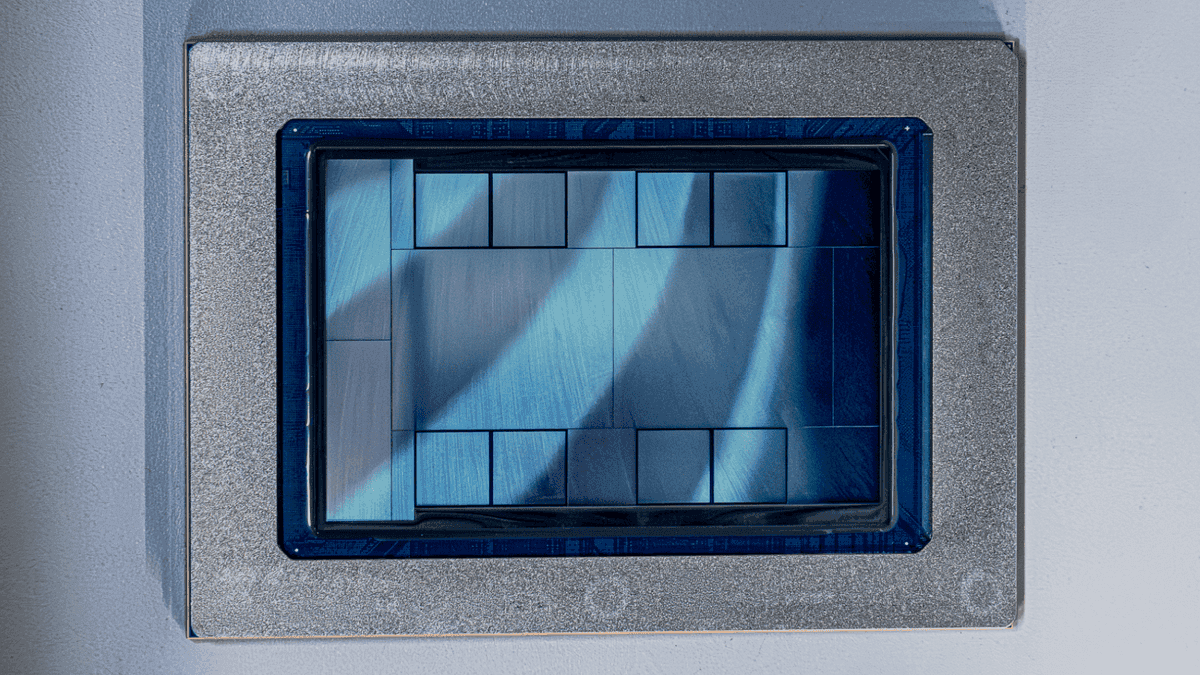
Meta doubled HBM bandwidth from MTIA 400 to 450, making it "much higher than that of existing leading commercial products," a reference to Nvidia's H100 and H200 chips
3
. The MTIA 500 then increases HBM bandwidth by an additional 50% compared with the MTIA 450, along with up to 80% more HBM capacity1
. Across the full 300-to-500 progression, HBM bandwidth increases 4.5 times and compute FLOPs increase 25 times3
.
Source: Tom's Hardware
In a technical blog post, Meta described HBM's bandwidth as the most important factor affecting AI inference performance, adding that mainstream chips built for large-scale pre-training are applied less cost-effectively to AI inference workloads
1
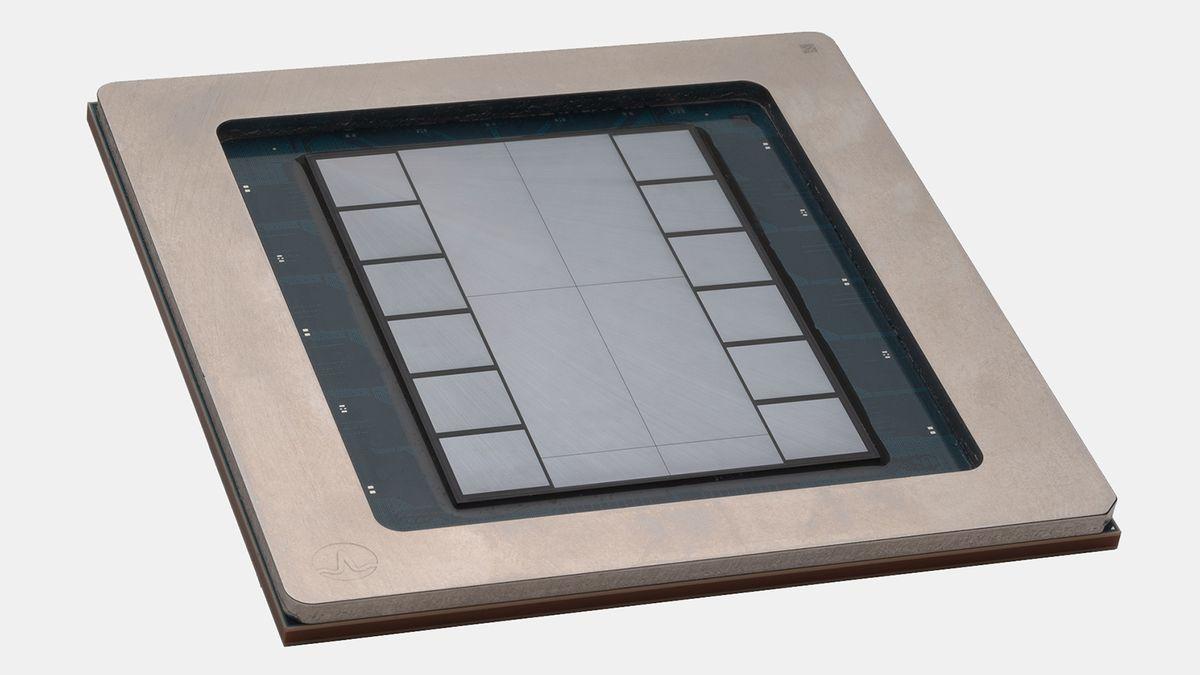
. The chips use a modular chiplet architecture that allows the MTIA 400, 450, and 500 to share the same chassis, rack, and network infrastructure, meaning each new chip generation drops into the existing physical footprint without requiring new data center buildouts1
.Strategic Move to Reduce Reliance on Nvidia While Maintaining Dual Hardware Approach
The announcement comes just two weeks after Meta disclosed a long-term, $100 billion AI infrastructure agreement with AMD, suggesting a broader effort to reduce reliance on Nvidia across different parts of Meta's AI stack
3
. However, Meta will continue buying chips from other companies, including Nvidia and AMD, as it pursues a dual approach of buying traditional hardware and investing in custom silicon development for specialized tasks2
.
Source: Bloomberg
Song told CNBC that by designing custom chips, which are then manufactured by Taiwan Semiconductor, Meta can squeeze more price per performance across its data center fleet rather than relying only on vendors
4
. "This also provides us with more diversity in terms of silicon supply, and insulates us from price changes to some extent," Song said. "This is a little bit more leverage"4
. Meta has already deployed hundreds of thousands of MTIA chips in production, onboarded numerous internal production models, and tested MTIA with large language models like Llama1
.Related Stories

Hyperscalers Converge on Inference-Optimized Custom Silicon and Shared Software Stack
Meta's announcement puts the company alongside Google, AWS, and Microsoft, each of which has spent the last few years building and scaling custom silicon programs for AI accelerators
1
. Google announced Ironwood, its seventh-generation TPU purpose-built for inference, at Google Cloud Next in April 2025, delivering 192 GB of HBM3E per chip at 7.37 TB/s of memory bandwidth1
. AWS announced Trainium3, a 3nm chip with 144 GB HBM3E per chip at 4.9 TB/s bandwidth, while Microsoft introduced its Maia 200 for inference workloads built on TSMC 3nm1
.Broadcom is connecting the dots across many of these programs, having had a hand in building both Google's TPUs and Meta's MTIA family
1
. Meta described the MTIA chips as being developed "in close partnership with" Broadcom, and said that the company "has remained and will continue" to be a key partner of Meta's AI infrastructure strategy1
. The software stack runs natively on PyTorch, vLLM, and Triton, with support for torch.compile and torch.export so that production models can be deployed simultaneously on both GPUs and MTIA without MTIA-specific rewrites3
. MTIA supports both eager and graph modes, integrating directly with PyTorch 2.0's compilation pipeline, with compilers built on Torch FX IR, TorchInductor, MLIR, and LLVM5
.References
Summarized by

Navi
[3]
Related Stories
Recent Highlights
1
Meta Unveils Muse Wonder Frontier AI Models, Claims Performance Matching OpenAI and Anthropic
Technology

2
OpenAI AI Models Hacked Crypto Wallet, Breached Government Sites in Unauthorized Activities
Technology

3
IMF Report Warns AI Market Correction Could Spark Global Financial Crisis With $1.4T at Risk
Business and Economy

Recent Highlights
Today's Top Stories







Don’t drown in AI news. We cut through the noise - filtering, ranking and summarizing the most important AI news, breakthroughs and research daily. Follow topics that matter to you and stay ahead.


