Meta launches Muse Spark 1.1 to compete with OpenAI and Anthropic on AI coding


24 Sources
[1]
Meta enters the crowded AI coding battle with Muse Spark 1.1
Meta publicly launched a new version of Muse Spark on Thursday, a multimodal AI model designed for agentic coding that aims to compete with similar products offered by OpenAI and Anthropic. Spark 1.1, the first version of which was announced in April, can engage in multi-step reasoning and handle
[2]
Meta Introduces a Big New AI Model for the Agentic Age
Blake has over a decade of experience writing for the web, with a focus on mobile phones, where he covered the smartphone boom of the 2010s and the broader tech scene. When he's not in front of a keyboard, you'll most likely find him playing video games or watching horror movies. Meta on Thursday
[3]
Meta says its new AI model is ready to compete on coding
After reentering the AI race with its first in-house Muse Spark model in April, Meta is now opening up the doors to developers with a new model that can plug into AI coding software with the new Meta Model API. Meta says that Muse Spark 1.1 is a "step-change" from the first generation, with
[4]
Meta launches low-cost Muse Spark 1.1 as enterprise AI spending comes under scrutiny
Meta says the model delivers competitive performance against OpenAI, Anthropic, and Google offerings while costing a fraction as much to run. Meta has unveiled Muse Spark 1.1, saying the frontier AI model rivals leading LLMs on coding, computer use, and agentic AI benchmarks while undercutting
[5]

Meta debuts Muse Spark 1.1 with preview open to developers
July 9 (Reuters) - Meta Platforms (META.O), opens new tab on Thursday released long-awaited developer access to its Muse Spark AI model alongside an upgraded version, pitting it directly against the business models of Anthropic and OpenAI in charging for use of its AI. The social media giant
[6]

Meta jumps into AI coding market in effort to chase Anthropic and OpenAI
Three months after unveiling its first artificial intelligence model under the leadership of AI chief Alexandr Wang, Meta is rolling out a major update as it attempts to compete with OpenAI and Anthropic in critical areas of the market. Muse Spark 1.1, which Meta introduced on Thursday, represents
[7]

Meta Launches New A.I. Model as Global Technology Race Heats Up
For the first time, the company will offer a paid version of the service, a departure from its longtime philosophy of giving its A.I. away for free. Meta on Thursday unveiled a new version of its flagship artificial intelligence model, Muse Spark, in an effort to close the gap with its rivals in
[8]

Meta thinks its newer, cheaper AI is the best way to beat ChatGPT and Gemini
The model supports text, images, video, audio, and PDFs, plus a massive 1 million-token context window for complex tasks. The AI race has mostly been about who can develop the most powerful model. Meta now wants to turn the conversation to who can offer one for the cheapest price. Meta is taking
[9]
Meta's AI chief says new Muse Spark update will sharpen coding, agentic AI
Alexandr Wang said the upcoming Muse Spark update will significantly improve coding and agentic capabilities, while analysts say the model could give enterprises a lower-cost alternative to OpenAI and Anthropic. Meta is set to launch a new Muse Spark model with stronger coding and agentic
[10]

Meta updates its Spark model, releases developer version
Driving the news: Muse Spark 1.1 promises improvements in coding and handling longer tasks. * Muse Spark, the first large language model developed under Alexandr Wang, already powers a wide range of tasks across Facebook, Instagram, WhatsApp and Meta AI. * With this version, developers can also
[11]

Meta's latest AI model is Muse Spark 1.1 and it can run your computer for you
AI assistants have gotten really good at answering questions and walking us through complicated tasks. But the next wave of AI is aiming for something much bigger: doing those tasks for us. That's the idea behind Meta's new Muse Spark 1.1. Instead of simply telling you which buttons to click, the
[12]

Meta releases latest update of AI model Muse Spark as tech giant accelerates AI push under Alexandr Wang | Fortune
Meta released a new version of Muse Spark on Thursday, claiming that the AI model surpasses the capabilities of prior products from OpenAI, Anthropic, and Google. Dubbed Muse Spark 1.1, the new model is proficient across a range of tasks, including coding, video captioning, and reasoning, Meta
[13]

Meta enters pay-to-use AI market with Muse Spark 1.1
Meta describes its latest iteration as a 'significant upgrade' over the last model. Following a series open source models over recent years, Meta begins selling access to AI with its latest launch, Muse Spark 1.1. The model marks the second product under the Alexandr Wang-run Meta
[14]

Meta launches flagship Muse Spark 1.1 model with multi-agent upgrades
Meta launches flagship Muse Spark 1.1 model with multi-agent upgrades Meta Platforms Inc. today launched a new flagship large language model optimized to power multi-agent automation workflows. Muse Spark 1.1 is available in the company's Meta AI chatbot service and via an application programming
[15]

Meta launches Muse Spark 1.1 for agentic AI coding
Meta launched Muse Spark 1.1 on Thursday, a multimodal AI model focused on agentic coding that aims to compete with similar offerings from OpenAI and Anthropic. The model, first announced in April, can perform multistep reasoning, manage digital workflows, and deploy new features in enterprise
[16]
Meta to release new AI model with advanced coding capabilities 'soon'
Meta to release new AI model with advanced coding capabilities 'soon' Meta Platforms Inc. is gearing up to release a new version of its flagship Muse Spark artificial intelligence model. Alexandr Wang, the company's Chief AI Officer, wrote on X today that the update will roll out "soon." The
[17]

Mark Zuckerberg Is Spending Hundreds of Billions on AI. His New Strategy in the Race Against OpenAI Is Surprisingly Simple.
The AI race has produced massive data centers, expensive chips and billion-dollar talent wars. Mark Zuckerberg's latest weapon is much simpler: keep the prices down. Meta unveiled Muse Spark 1.1, a new AI model with a paid tier for developers, creating a new revenue stream as the company races
[18]

Meta Unveils Muse Spark 1.1 AI Model With 1 Million-Token Context Window
Developers are using it for software development, AI research workflows Meta Platforms on Thursday announced Muse Spark 1.1 as its latest multimodal reasoning model designed for agentic AI tasks. The company claims it brings significant improvements over its predecessor when it comes to tool use,
[19]

Meta debuts Muse Spark 1.1 with preview open to developers
The social media giant touted Muse Spark 1.1 as its most capable model for real-world coding and agentic tasks, part of a broader mission the company is pitching of delivering "personal superintelligence." Meta Platforms on Thursday released long-awaited developer access to its Muse Spark AI
[20]

After SpaceX, Meta Now Launches Muse Spark 1.1 Model, to Begin AI Chip Production in Sept
This is the second company in two days that has suddenly joined the AI coding battle where the likes of Anthropic and OpenAI are ruling the roost Two days and two AI laggards have suddenly gotten into overdrive with their latest AI models with one of them also announcing that they'll also have
[21]

Zuckerberg Breaks 3-Year Silence on X to Launch Meta's New AI Model
Zuckerberg chose to share this news on X, a platform he had avoided for years. This choice alone has people talking. Meta Model API, the company's first proprietary API in the US, lets users employ Muse Spark 1.1 within their own apps. These moves together show Meta wants to capture a larger share
[22]

Meta superintelligence labs drops Muse Spark 1.1 By Investing.com
Investing.com -- Meta Platforms' specialized AI division, Meta Superintelligence Labs, announced Thursday the release of Muse Spark 1.1. The updated multimodal reasoning model is specifically engineered to handle autonomous "agentic" workflows, boasting a massive one-million-token context window
[23]

Meta debuts Muse Spark 1.1 with preview open to developers
July 9 (Reuters) - Meta Platforms on Thursday released long-awaited developer access to its Muse Spark AI model alongside an upgraded version, pitting it directly against the business models of Anthropic and OpenAI in charging for use of its AI. The social media giant touted Muse Spark 1.1 as its
[24]

Mark Zuckerberg returns to X after 3 years to launch Meta's Muse Spark 1.1 AI model, developer API
Meta has launched a paid API for developers in the US, positioning itself against OpenAI and Anthropic in the enterprise AI market. Meta CEO Mark Zuckerberg has posted on X (formerly Twitter) for the first time in more than three years to announce the latest artificial intelligence model, Muse
Share
Copy Link
Meta unveiled Muse Spark 1.1, a multimodal AI model designed for agentic coding and complex enterprise tasks. Priced at $1.25 per million input tokens and $4.25 per million output tokens, the model aims to undercut competitors while delivering comparable performance. The launch includes a new Meta Model API now available in public preview for US developers.
Meta Enters AI Coding Competition with Aggressive Pricing
Meta publicly launched Muse Spark 1.1 on Thursday, a multimodal AI model built specifically for agentic coding that positions the company to compete with OpenAI and Anthropic in the enterprise AI market
1
. The frontier AI model, which Meta CEO Mark Zuckerberg described as "a strong agentic and coding model at a very low price," marks the company's aggressive push to catch up with rivals after lagging behind for more than a year1
2
.
Source: SiliconANGLE
The launch was significant enough to compel Zuckerberg to post on X for the first time in three years, signaling the strategic importance of this release for Meta's AI ambitions
1
. The model is now available in Thinking mode through the Meta AI app and Meta AI website, with US developers gaining access through a newly launched Meta Model API in public preview3
.Competitive Pricing Strategy Targets Enterprise Adoption
Meta is charging $1.25 per million input tokens and $4.25 per million output tokens for Muse Spark 1.1, positioning it competitively against similar offerings from Anthropic and OpenAI
5
. While this pricing sits slightly above OpenAI's GPT-5.6 Luna and Anthropic's Claude Haiku 4.5, it remains below higher-end models like Claude Sonnet 4.61
5
.
Source: Silicon Republic
Developers who sign up for the Meta Model API receive $20 in free credits to test the model before switching to pay-as-you-go pricing
5
. This competitive rate arrives as enterprise AI spending comes under scrutiny, potentially lowering the cost of deploying AI agents in business environments4
.Advanced Capabilities for Agentic Tasks and Complex Workflows
Muse Spark 1.1 delivers what Meta calls exceptional performance in agentic tasks that require multi-step reasoning, planning, and orchestration across external apps and services
1
. The AI model can handle large agentic workloads, fix bugs, perform large code migrations, and deploy new features in enterprise systems1
.According to Meta, the model matched or competed with leading large language models such as Claude Opus 4.8, Gemini 3.1 Pro, and GPT 5.5 across several benchmarks, including SWE-bench Verified, Terminal-bench, BrowseComp, SpreadsheetBench, and OSWorld
4
. The model is trained to orchestrate multiagent systems featuring a main agent that makes plans and delegates execution across parallel subagents, which stick to their assigned tasks and escalate back when necessary2
.Related Stories



Multimodal Perception and Computer Use Workflows
The AI model features native multimodal perception across images, videos, and documents, allowing it to see and hear to complete tasks
3
2
. It can provide ultra-descriptive captions from these sources and interpret what's on screen to take action2
.Meta reports that the model has received significant improvements in computer use workflows across multiple applications, maintaining context across long sessions and navigating unfamiliar interfaces with minimal user interaction
2
. The model actively manages its 1-million-token context window by remembering actions, retrieving information from earlier work, and compacting context to keep important steps for later use2
.Strategic Push from Superintelligence Labs

Source: Fortune
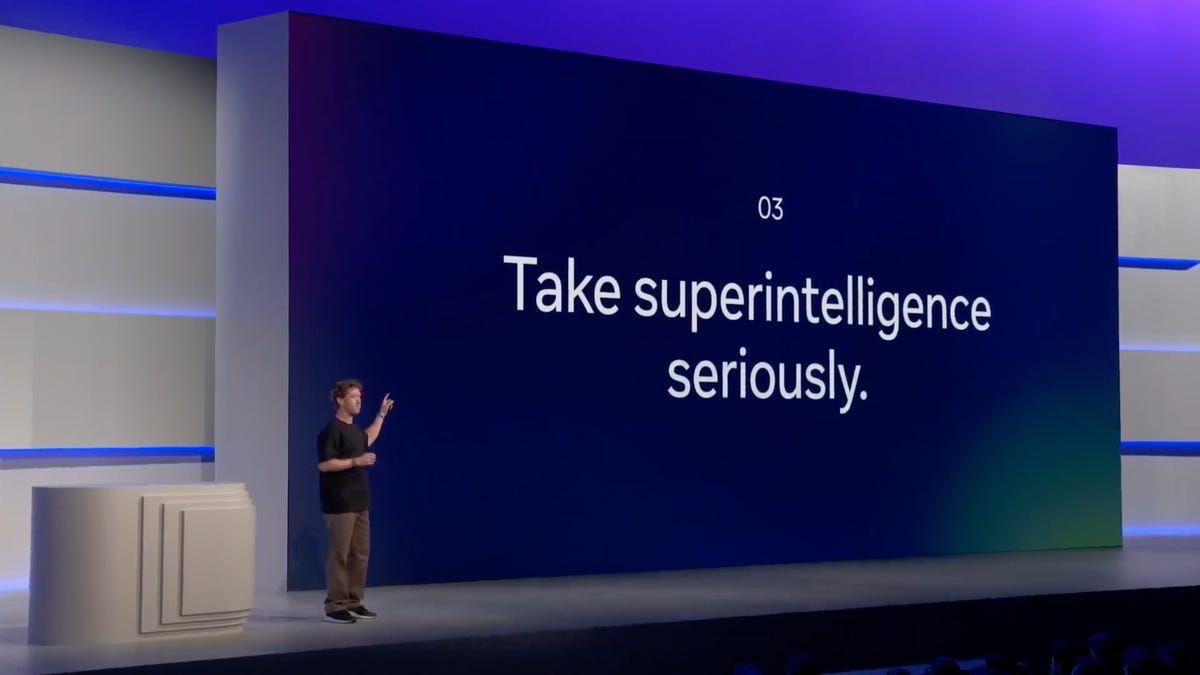
The model was released by Meta Superintelligence Labs, an outfit led by former Scale AI CEO Alexandr Wang, as part of the company's broader mission to deliver "personal superintelligence"
2
5
. This follows Meta's extensive reorganization and the assembly of a superintelligence team last year designed to close the gap with rivals in the heated competition for AI supremacy5
.Zuckerberg noted in his post that there was "more to come soon," implying additional model releases are planned
1
. The launch follows Tuesday's announcement of Muse Image, Meta's first image-generation model from Superintelligence Labs, marking a significant week for AI announcements from the company1
5
. The model is expected to replace existing Llama models powering chatbots on WhatsApp, Instagram, Facebook, and Google Meta's collection of smart glasses5
.References
Summarized by

Navi
Related Stories
Recent Highlights
1
Meta Unveils Muse Wonder Frontier AI Models, Claims Performance Matching OpenAI and Anthropic
Technology

2
IMF Report Warns AI Market Correction Could Spark Global Financial Crisis With $1.4T at Risk
Business and Economy

3
OpenAI Releases 722 AI-Generated Math Solutions, Triggering Existential Crisis in Mathematics
Technology

Recent Highlights
Today's Top Stories









Don’t drown in AI news. We cut through the noise - filtering, ranking and summarizing the most important AI news, breakthroughs and research daily. Follow topics that matter to you and stay ahead.


