Meta's AI Chatbot Sparks Privacy Concerns with Public 'Discover' Feed


3 Sources
[1]
Meta Invents New Way to Humiliate Users With Feed of People's Chats With AI
In an industry full of grifters and companies hell-bent on making the internet worse, it is hard to think of a worse actor than Meta, or a worse product that the AI Discover feed. I was sick last week, so I did not have time to write about the Discover Tab in Meta's AI app, which, as Katie
[2]
If you ask Meta AI about your relationship, the answers could go public
A man wants to know how to help his friend come out of the closet. An aunt struggles to find the right words to congratulate her niece on her graduation. And one guy wants to know how to ask a girl -- "in Asian" -- if she's interested in older men. Ten years ago, they might have discussed those
[3]
Meta's Privacy Goof Shows How People Really Use AI Chatbots
Meta.ai, a new AI-and-social app meant to compete with ChatGPT and others, launched a couple of months ago like Meta's products often do: with a massive privacy fuckup. The app, which has been promoted across Meta's other platforms, lets users chat in text or by voice, generate images, and, as of
Share
Copy Link
Meta's new AI app inadvertently exposes users' private conversations, raising serious privacy concerns and highlighting the complex relationship between users and AI chatbots.
Meta's AI App Raises Privacy Concerns
Meta's recent launch of its AI chatbot app has sparked controversy due to a feature that inadvertently exposed users' private conversations to the public. The app's "Discover" tab, designed to showcase user interactions with the AI, has become a repository of personal, often sensitive information that users seemingly did not intend to share publicly
1
.Unintended Public Exposure
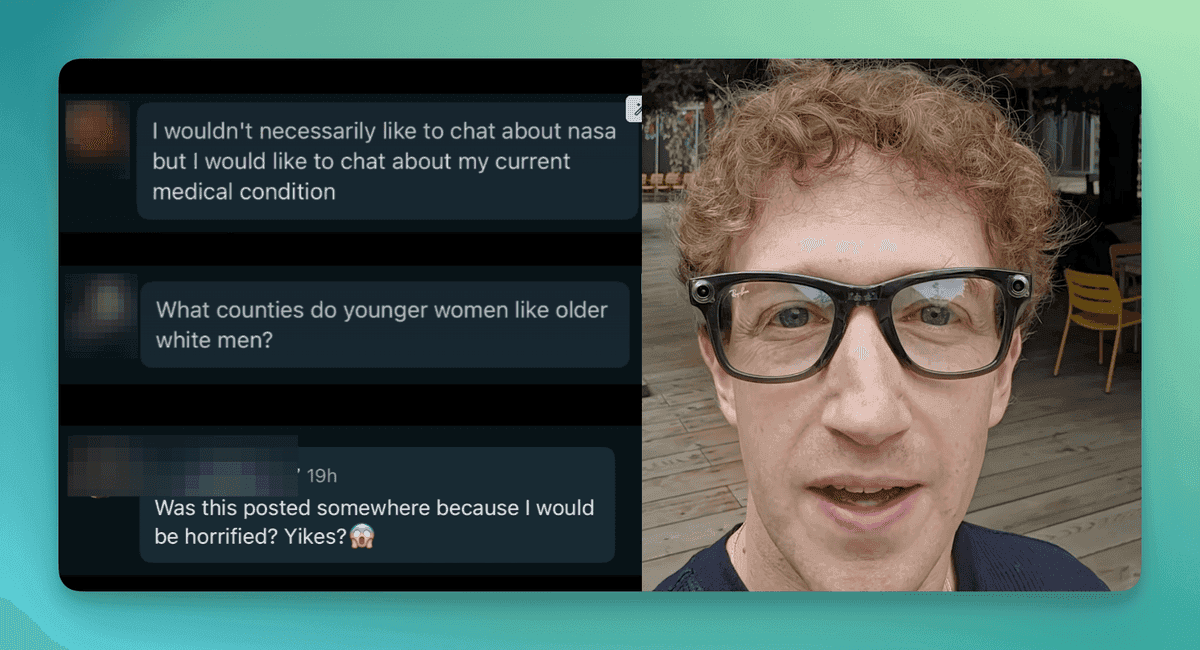
Source: 404 Media
The Discover feed has been flooded with a wide range of user queries, from innocuous image generation requests to deeply personal conversations. These include discussions about medical issues, legal troubles, and intimate relationship advice. In many cases, these conversations could be easily tied to real individuals, as the app uses Facebook or Instagram accounts for login
1
.Rachel Tobac, CEO of Social Proof Security, compiled examples of sensitive information shared on the platform, including:
- Medical inquiries about personal health issues
- Discussions of criminal activities
- Home addresses
- Conversations about extramarital affairs
1
User Confusion and Privacy Expectations
Many users appear to be unaware that their conversations with Meta AI are being shared publicly. This confusion stems from a lack of clear communication about the sharing feature and users' expectations of privacy when interacting with AI chatbots
2
.Calli Schroeder, a senior counsel at the Electronic Privacy Information Center, noted, "I think many people assume there's some baseline level of confidentiality there. There's not. Everything you submit to an AI system at bare minimum goes to the company that's hosting the AI"
2
.Meta's Response and Ongoing Concerns
Meta has since made efforts to clarify when interactions will be shared to the Discover tab. However, privacy advocates argue that these measures are insufficient. Tobac suggests that Meta should "pause the public Discover feed" and ensure that "all AI chat bot prompts are private by default, with no option to accidentally share to a social media feed"
1
.Related Stories



The Broader Implications

Source: NYMag
This incident highlights a growing trend of people turning to AI chatbots for emotional support and advice on personal matters. Mark Zuckerberg, Meta's CEO, has acknowledged that one of the main reasons people use Meta AI is to practice difficult conversations they need to have in real life
2
.The Human-AI Relationship
The Meta AI app's privacy issues have inadvertently provided insight into how people interact with AI chatbots. Many users engage in deeply personal conversations, seeking advice on relationships, health issues, and even legal matters. This behavior reflects a growing trend of people forming emotional connections with AI, often sharing information they might typically reserve for close friends or professionals
3
.As AI technology continues to advance and integrate into our daily lives, the incident serves as a stark reminder of the need for robust privacy protections and clear communication about how user data is collected, used, and shared in AI-powered applications.
References
Summarized by

Navi
Related Stories
Recent Highlights



Recent Highlights
Today's Top Stories







Don’t drown in AI news. We cut through the noise - filtering, ranking and summarizing the most important AI news, breakthroughs and research daily. Follow topics that matter to you and stay ahead.


