5 Sources
[1]
Mark Zuckerberg had a bold plan to replace Meta staff with AI. Here's how it imploded.
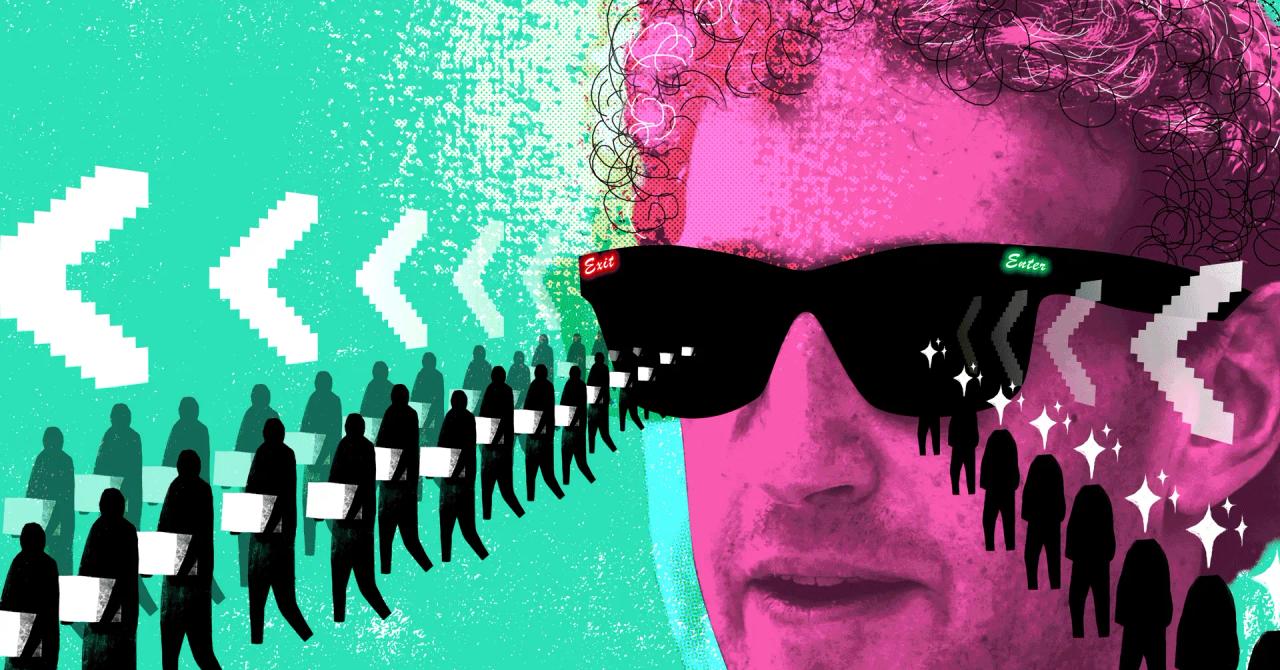
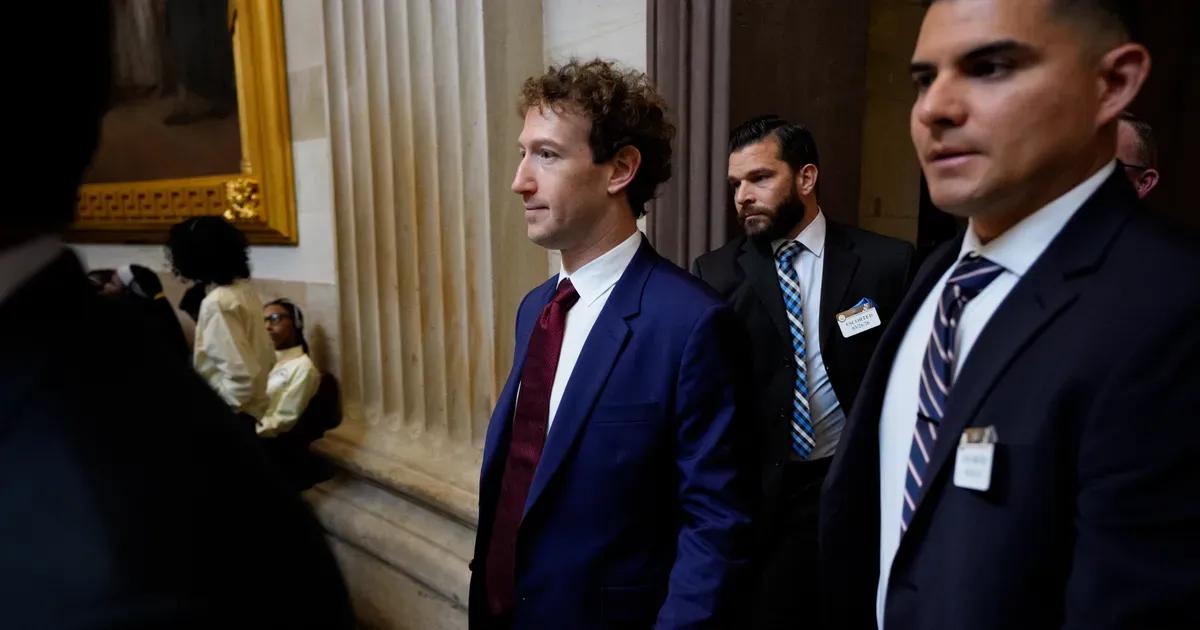
To make its workforce "AI native," Meta explored slashing the size of many teams across the company by as much as 60% in two waves, internal documents show. Staff revolted - and hours before a big layoff in May, the CEO called off planning for further cuts. In January, Meta CEO Mark Zuckerberg and his top lieutenants gathered for their annual leadership retreat at his Hawaii compound. There they hatched a radical plan to reimagine work at the social-media giant in the age of artificial intelligence. Code-named Project OT - short for Organization Transformation - the plan envisioned an "AI native" future for the owner of Facebook and Instagram. AI would take over much of the daily work performed by thousands of human employees. Virtual workers would be overseen inside Meta by smaller, "talent-dense" cadres of human staffers, according to one internal planning document reviewed by Reuters and three people familiar with the project. In scenario-planning exercises, two of these people said, executives explored slashing the size of many teams across Meta by as much as 60%. Some employees would be offered roles in new units, while others would be laid off as part of a culling that one human-resources executive projected would be as big as or bigger than the company's cuts of around 25% three years ago, according to another internal document. The restructuring would be carried out in two "waves," beginning with a first purge in May and followed by another shake-up in November, internal planning documents seen by Reuters showed. Layoffs would be supplemented with the closing of open positions and pushing people out who Meta believed were poor performers. These and other details of the plan, including the scale of the restructuring, haven't been previously reported. But on the night of May 19, just hours before the first layoff wave, Zuckerberg blinked. Meta laid off 10% of its employees the next day, but it called off planning for the November cuts, according to one internal document reviewed by Reuters. By then, Meta employees were in open revolt, convinced that the company's AI transformation initiatives were partly aimed at replacing them. Internal data was also suggesting that autonomous AI "agent" technology at the heart of the strategy was failing to deliver hoped-for productivity gains. Some investors were questioning what Meta had to show for its gargantuan spending on AI. This article reveals for the first time the rapid pace of the cuts Meta was considering, the thinking behind the plans and how they quickly unraveled. Based on scores of internal documents, posts and recordings reviewed by Reuters, as well as conversations with more than 20 people with knowledge of Meta's inner workings, the reporting shows how the social-media giant attempted to position itself at the forefront of an AI-driven workplace overhaul, only to stumble in the execution. In response to this story, Meta confirmed the existence of Project OT, which it described as a year-long project focused on cost cutting, redesigning team structures and shifting staff into new priority areas, such as producing training data for its AI models. The company acknowledged the plan was to be carried out in two waves and that the most drastic scenarios involved reducing the size of some of Meta's teams by up to 60%. But it declined to specify which units were involved and said several major ones weren't part of it. Meta said the scenarios included both layoffs and redeployments, and that the company at no point intended to lay off 60% of its entire workforce. Company leaders canceled plans for the second wave before determining how many people overall would lose their jobs, it said. "As part of our company restructuring earlier this year, we asked some teams to conduct a scenario planning exercise looking at the potential impact of redeployments, open role closures and cuts," Meta said in a statement. "This ultimately resulted in moving thousands of employees to do priority work on several newly-established teams, as has been publicly reported. Ultimately, we didn't move forward with every scenario from the exercise - and it was never assumed we would." Reuters was unable to determine what exactly prompted Zuckerberg to shift course or what the social-media giant's current plans are for continuing to reshape its workforce. Meta declined to make Zuckerberg available for comment. THE 'AI-NATIVE PLAYBOOK' Ever since the release of OpenAI's ChatGPT in late 2022, Silicon Valley leaders have been imagining the revolutionary possibilities that generative AI might unleash for the future of work. They have been especially intrigued by the promise of "agentic" capabilities. Agents, a nascent technology, are being designed to do more than just spit out answers to queries like typical AI chatbots. Instead, they are supposed to take autonomous actions such as shopping, booking travel and creating new apps. At Meta, executives last year threw themselves into AI-inspired management philosophies. They were captivated by ideas emerging out of the startup world about how companies shouldn't just incorporate AI into their existing processes, but instead go fully "AI native." As one Project OT document envisioned it: "AI-ready tools and agents interact, workflows are automated, new builds are AI-first." The strategy also included having Meta sell AI agents, which would perform tasks like scheduling appointments and closing sales, to other companies. Meta executives, including Chief Data Officer Alex Schultz and Head of Product Naomi Gleit, visited Asia last year and admired how startups there had built their organizational charts around AI, according to three people familiar with the trips. Meta executives also commissioned their own research into how AI startups were organized and set up pilot projects to determine what being "AI native" would mean at the company, according to one source familiar with the research and internal documents describing the pilots. Asked in June about the genesis of Meta's AI workforce transformation, Gleit told Reuters she had spent "quite a bit of time" in Meta's Singapore office last year and said the practices there had "inspired some of the teams in California and New York." She said many of the ideas were "bottom-up," reflecting how some Meta employees were already starting to implement changes themselves. Ime Archibong, a long-time vice president of product management, announced one of Meta's earliest pilot projects in July last year. In an internal post, he described how his team was taking its first step to modernize product development, describing the transition in sports terms. "In basketball, embracing the fast break lets you take more shots - and better ones. We expect the same with AI tools: they allow us to explore more ideas with less cost and higher fidelity," Archibong wrote. He predicted that prototypes created quickly with AI would more closely resemble finished products than before. "This isn't just more fun - in an AI-first era, we believe it's the winning strategy." Zuckerberg, too, alluded to the potential for AI to make work "a lot more fun" in an earnings call six months later. In practical terms, Archibong's pilot involved setting up five "small tech pods," each consisting of two to three engineers and a designer, all equipped with AI tools. The groups would dispense with established processes for releasing new products, such as fixed six-month planning cycles. Instead, they would aim to build prototypes in four-week "sprints," he wrote in his post. In October, a member of Archibong's team previewed a broader roll-out of the approach. In an internal post titled "AI-Native Playbook," the person laid out a guide for other teams to "make the leap." Traditional roles for product designers and engineers would vanish, and tech pod members would get a new generic title: "builder." Layers of middle management would be eliminated. Instead, pods would report up to a single, high-level unit head. "Agent-assisted analysis" would help set day-to-day priorities. Meta declined to make Archibong available for comment or to answer questions about its early "AI native" pilots. Early this year, Zuckerberg set Project OT in motion and directed executives to proceed with the changes to management structures. By June, at least 11 units, including engineering and research teams, had implemented small pods, according to internal announcements and five people familiar with the arrangements. Teams & Roles Traditional Product Development 10-20 people Roles are specialized with clear expectations for each role. 7-14 ENG 1 PM 1 DES 1 DS 1 UXR 1 DE Modern (AI-Native) Product Development 3-5 people Roles are fluid and oriented around doing what's needed to build and 1 lead to help provide direction. Specialists are pooled. 3-4 Builders (typ. eng) 1 Direction Lead (can be any XFN) Shared Specialists XFN (DES/UXR/DS/DE/ML) pooled across pods Org Structure Traditional Product Development Hierarchical, multi-layered Organizations have a few large pillars that each have a few large teams, and so on, so forth. Modern (AI-Native) Product Development Flatter, more nimble pods Organizations are managing many small pods that cover similar or more surface area. Description of changes to team structures from an internal Meta post titled "AI-Native Playbook." ENG refers to engineers; PM is product manager; DES means designer; DS is data scientist; UXR is user experience researcher; DE is data engineer; XFN is cross-functional; ML is machine learning. With the changes, Meta introduced a "village approach" to managing people, according to an internal announcement from one unit. Job performance ratings and promotions would be decided by high-level unit heads, or "Org Leads," supported by human-resources personnel and unspecified "AI systems," the post said. Each unit head would oversee between 30 and 50 people, while "Pod Leads" would steer small pods day-to-day, but have no formal management authority, the sources and announcements said. One Meta staffer assigned to manage a pod expressed confusion about the new setup on an internal company message board, according to a copy of the post. "I'm not going through manager training, and I'm not getting access to ratings & manager tools," the person wrote. Meta told Reuters that teams "experimented in different ways with how to be more agile." The company declined to explain the post's reference to "AI systems," but said, "Performance rating and promotion decisions were and are made by people, not AI." Around the same time, Meta also launched a new human resources tool to identify "Irreplaceable Talent," according to an internal document seen by Reuters. The document referred to a hypothetical "10X Performer" - a nod to the decades-old Silicon Valley archetype of an engineer who can do the work of 10 people. The term is back in vogue now, as many AI devotees believe the technology will enable extremely talented individuals to perform the work of entire teams. According to two people familiar with the matter, Meta intended to spend some of its savings from layoffs on giant pay packages to attract and retain such talent, especially AI engineering rock stars. EMPLOYEE REBELLION On March 13, before many leaders at the vice-president level had even been briefed on Project OT, Reuters reported that Meta was planning layoffs that could affect 20% or more of its workforce. It wouldn't have been the first culling on that scale: Between late 2022 and early 2023, Meta slashed around 25% of its staff. Still, the report caused alarm. Many rank-and-file employees were rattled. And they weren't yet supposed to know about the cuts, annoying Zuckerberg and leaving executives unprepared for the backlash, according to a person familiar with the matter. A Meta spokesperson at the time called the story "speculative reporting about theoretical approaches." Internally, high-level executives hunkered down. They opted not to discuss the article with the rank-and-file and quietly dismissed it to senior managers, instructing them to tell their teams they should expect roles to "evolve" as a result of AI, according to a talking-points document seen by Reuters. In April, Reuters published more details: Meta was set to cut about 10% of its workforce in a first wave of layoffs on May 20 and was aiming to shed more staff in the second half of the year. Meta soon confirmed the 10% reduction plan to staff, and Zuckerberg later told employees the cuts were due to heavy capital expenditures. Executives had started moving ahead with other aspects of the plan. Some engineers, for example, were reassigned to a new Applied AI Engineering unit tasked with creating software-engineering puzzles to be used as training data to improve the coding skills of Meta's AI models. Many staffers derided the work as rote and boring in internal posts seen by Reuters. Meta told Reuters that the company is beginning to see progress with its redeployments, noting that data produced by the Applied AI Engineering unit helped train an AI model it released last month. Between the reassignments and the job cuts, headcount in some engineering units dropped as much as 30% by the end of May, according to one document and people familiar with the planning. Reuters also reported in April that Meta had mandated that tracking software be installed on U.S. employees' devices to capture their keystrokes and mouse clicks to teach its AI agents to replicate how humans interact with computers. Believing they might be training their own AI replacements, and irate over the lack of detail about the layoffs, many employees flooded Meta's in-house communications network - called Workplace - with angry screeds and gallows humor. Staffers replied to executives' internal posts with pictures of elephants, symbolizing that layoffs were the elephant in the room, according to examples seen by Reuters. Some employees directly clashed with Andrew Bosworth, Meta's chief technology officer, who oversaw the AI transformation and was defending it in posted comments. One person trolled Zuckerberg, sarcastically likening his internal announcement of an AI initiative for small businesses to Prometheus, the figure from Greek mythology, giving fire to humanity. Meta declined to make Bosworth available for comment. Staff morale sank. Meta's internal measure of employee sentiment dropped from 74% favorable to 55% favorable, according to the company's half-year Pulse survey. Labor organizing efforts gained momentum. Amid the rebellion, other internal data indicated that the tech at the heart of the plan wasn't delivering. Employees' use of AI had resulted in a vast increase in the code they generated, but with questionable impact on productivity, according to internal posts seen by Reuters. For instance, code changes made to the internal software platforms and infrastructure employees use on the job were up 220% year-over-year, according to a post by Bosworth in early June. But changes that led to new or upgraded features reaching Meta users were only up 36%. As early as March, infrastructure teams were also warning of "reliability warning signs" caused by the AI coding surge, according to an internal post. Another post, in April, said that unchecked AI agents were performing "large-scale, disruptive actions that humans are unlikely to execute." The result: Major technical and security incidents, such as service disruptions and possible data leaks, spiked 40% from the previous year, with the time staffers had to spend "firefighting" them up 70%, according to the internal posts. The public saw a glimpse of the problem in early June after hackers exploited Meta's new AI-powered customer support bot to gain access to high-profile Instagram accounts, including one for the dormant Obama White House page. Meta declined to comment on the internal data about the AI disruptions. With pressures piling up, Zuckerberg changed course. Hours before Meta carried out its first wave of Project OT layoffs on May 20, he conferred again with his top lieutenants and called off the second wave of restructuring planned for November. The next morning, Meta went ahead with the 10% cut. But after the notifications went out, Zuckerberg posted a memo on Workplace telling Meta's remaining employees he did "not expect other company-wide layoffs this year" and expressed his desire to give them more "stability." Executives then tried to shore up morale. They encouraged unit heads to acknowledge employees' feelings, paused the mouse-tracking program, let some employees in the new AI engineering unit transfer back to their old teams and dispatched Chief Financial Officer Susan Li to boost perks. In the weeks after the layoffs, a stream of empathetic executive posts arrived on Workplace, along with pledges to improve snack quality in office microkitchens and increase spending on travel and social events. Meta declined to make Li available for comment for this report. In early July, Zuckerberg made a surprise appearance at an internal town hall and conceded miscalculations on the reorganization's timing. AI agent technology, he said, had not "accelerated" as quickly as he had anticipated. He added that he expected the tech to improve and begin showing more benefits in the next three to six months. Excerpts from Mark Zuckerberg's town hall with employees on April 30, 2026, in which he describes his thinking behind the company's reorganization and coming layoffs. 'BETTING ON PEOPLE' As Zuckerberg has dialed back the most disruptive aspects of the internal AI transformation, he has also launched a public-relations blitz positioning Meta as people-centric. The push included a video advertisement proclaiming the company is "betting on people." In the campaign, which also included a recent 6,500-word essay outlining his vision for the future of AI, the CEO has highlighted Meta's plans to make creating AI agents more user friendly while portraying unnamed competitors as the true job killers. In an internal post in June, he told employees, "We are the only major company focusing on empowering people and putting the power of this new technology in billions of people's hands across all our products - rather than primarily focusing on automating work." Excerpt from a Meta video advertisement proclaiming the company is "betting on people." Still, Zuckerberg has stuck to the words "company-wide" and "this year" in discussing layoffs with employees, according to his internal communications. That has prompted some employees to speculate that he'll continue trimming the ranks via team-specific cuts or performance-based dismissals - or delay company-wide headcount reductions until next year. The company is facing a cash squeeze and investor scrutiny due to its dizzying AI spending, heightening the pressure to find savings. Meta plans to invest at least $130 billion in AI chips and other infrastructure this year, which analysts expect will eat up its operating cash for 2026, estimates from LSEG show. In his essay on the future of AI, titled "The Future is for Everyone," Zuckerberg predicts there could be "an abundance of jobs in the future." But some companies might end up with fewer employees. "Company sizes may shrink - just as they did in the transition from industrial giants to tech companies," he writes. "But this doesn't mean fewer jobs overall. It implies a larger number of companies with fewer people each." Katie Paul reported from New York. Additional reporting by Jeff Horwitz in Oakland. Illustration by Catherine Tai. Design by John Emerson. Edited by Steve Stecklow and Kenneth Li. Our Standards: The Thomson Reuters Trust Principles., opens new tab
[2]
Meta reportedly abandoned an AI-focused restructuring plan that would have laid off thousands - Engadget
The problem with the AI restructuring is the AI wasn't good enough. Sometimes, AI-driven restructuring goes about as well as an AI-assisted legal brief. Reuters reports that Meta spent much of this year testing a plan in which AI would take over many of the workforce's daily tasks. Dubbed Project OT, the plan appears to connect two stories from earlier this year: Meta's 10 percent workforce reduction and the company's program that tracked employees' mouse movements and keystrokes. Meta executives were reportedly influenced by startups, including some they observed in Asia, that had structured themselves around AI. At an annual leadership retreat in January at Mark Zuckerberg's Hawaii estate, executives laid out an "AI native" vision for the company. AI agents would be overseen by smaller "pods" of human employees. Engineers, designers, product managers and other specialists would increasingly transition into general-purpose "builder" roles. Middle-management layers would shrink, and "agent-assisted analysis" would help determine day-to-day priorities. Executives considered reducing some teams' headcounts by as much as 60 percent. Layoffs would make up part of the reduction, along with eliminating open positions and pushing out workers the company saw as lower performers. One HR executive projected the reduction to be at least as large as the company's 2023 cuts, which shaved 25 percent off its workforce. In its original form, Project OT (short for "Organization Transformation") reportedly included a second wave of layoffs in November. CEO Mark Zuckerberg ultimately abandoned (or at least paused) that part of the plan, for reasons Reuters didn't uncover. Meta acknowledged that there was initially a second plan, while framing the more aggressive cuts as merely scenarios that were under consideration.
[3]
Meta thought AI could do the job instead of humans -- what happened next should surprise absolutely nobody
A new report claims Meta once planned to replace 60% of its workforce with AI Imagine AI is the sun and businesses are Icarus. By now, most of us are basking in the light of this transformative innovation, which sometimes feels too hot and other times disappears behind clouds so dense we wonder why we ever trusted it in the first place. Some intrepid businesses not only gaze at AI's warm light but openly worship it. They don wings and fly as close as they can to the surface. The goal: scoop a bit of that generative magic off and fly back to earth with agents, which, to carry this insane metaphor further, can be fashioned into people-like workers capable of doing what we do but at scale and with little-to-no monitoring. Of course, the flight to AI's core is dangerous, and so we have episodes like Meta's recent Quixotic adventure where, according to an extensive Reuters report, it tried to transform a vast portion of its workforce (reportedly 60%) into AI agents overseen by a much smaller set of highly skilled workers. That Meta's wings almost immediately started smoking from its proximity to the AI core premise is no surprise, at least not to me. Slow down I talk and write about AI a lot and have, in truth, been covering it for almost 25 years, back when companies like IBM and Microsoft were the AI leaders, and we thought Deep Blue beating Kasparov was the apex of what we could expect from Artificial Intelligence. Modern generative AI burns far brighter and shows in real time such vast potential that enthusiasm is not just rampant; it's out of control. AI agents, which Meta apparently started using at scale, are driving much of its mania. These automated tools offer the promise of handling drudgery tasks in innumerable businesses and could solve not just productivity problems, but be the answer to workforce issues: including hiring problems, underperformers, and burnout. Agentic AI can not just handle repetitive tasks; it can cobble together disparate systems to complete work. From Meta's perspective, especially as a company that is primarily a software business, AI that could work across tools and systems to not only help keep things running but build new work (under the supervision of a smaller set of super-performers) probably seemed like the perfect solution. Conclusions like this are not exclusive to Meta or companies of its size. Conversations about the use of AI in business persist in every industry and at every level. AI has gone to work in healthcare, retail and e-commerce, manufacturing, financial services and banking, entertainment, and media. All with varying degrees of success and implications. It's a stunning fact when you consider we only met OpenAI's ChatGPT in 2022. Never has a technology so quickly infiltrated every facet of life and so consumed daily conversation. AI Time is triple time (3x the speed of any previous innovation), and that includes adoption. There is, at least in business, a shocking level of trust in what is still, in many ways, an untested solution. I'm not saying AI does not work, but there is the assumption right now that it works in every situation. Certainly, if the Reuters report is accurate and Meta essentially verified 90% of it (it claims it was never planning on laying off 60% of its workforce), Meta is guilty of this. Do you smell something burning? With AI, the act of implementation and business transformation tend to happen in parallel, so as Meta was planning and enacting its reorganization and layoffs, it was already employing Agentic AI. "Infrastructure teams were also warning of 'reliability warning signs' caused by the AI coding surge, according to an internal post," wrote Katie Paul for Reuters. There was, the author adds, evidence that these issues (and basically faulty work) were visible in June when hackers used Meta's AI chatbot to hack celebrity Instagram accounts. Between that and what appears to be a company revolt (my favorite part was the bathroom stall notices encouraging people to protest Meta's use of keystroke tracking), it was clear Meta has gone too far, too fast with AI for everyone's tastes. In the end, with its feathers on fire, Meta retreated from the AI sun (or at least its plan) and canceled layoffs and even undid some of the reorg. The lesson here is not that AI is too dangerous to approach closely or that AI and business are a bad match. But, as we are seeing, pronouncements that AI would transform businesses without removing or replacing jobs were misinformed, and allowing AI to produce work without adequate human oversight at every stage of the process is, for the time being, ill-advised. As Mark Zuckerberg tries to rewrite his own script to be more people-first, it might be time for everyone to take a beat and reassess how AI fits into their businesses, workflow, and life. AI might feel like the sun, but it can't be our sole source of light and warmth. It's still just another tool -- sure, a powerful and incredibly fungible one, but still a tool -- and overreliance on it will undoubtedly lead to frustration or worse. Meta learned a hard lesson: your AI plans must be grounded in a human-centric approach; otherwise, the humans will rise up and clip your wings. Follow TechRadar on Google News and add us as a preferred source to get our expert news, reviews, and opinion in your feeds.
[4]
Mark Zuckerberg had a bold plan to replace Meta staff with AI. Here's how it imploded.
Meta considered cutting some teams by as much as 60% under an AI-driven restructuring plan, Reuters reported. The company ultimately cut 10% of staff in May and abandoned a second round as employee opposition grew and internal data showed AI tools were not delivering expected productivity gains. NEW YORK: In January, Meta CEO Mark Zuckerberg and his top lieutenants gathered for their annual leadership retreat at his Hawaii compound. There they hatched a radical plan to reimagine work at the social-media giant in the age of artificial intelligence. Code-named Project OT - short for Organization Transformation - the plan envisioned an "AI native" future for the owner of Facebook and Instagram. AI would take over much of the daily work performed by thousands of human employees. Virtual workers would be overseen inside Meta by smaller, "talent-dense" cadres of human staffers, according to one internal planning document reviewed by Reuters and three people familiar with the project. In scenario-planning exercises, two of these people said, executives explored slashing the size of many teams across Meta by as much as 60%. Some employees would be offered roles in new units, while others would be laid off as part of a culling that one human-resources executive projected would be as big as or bigger than the company's cuts of around 25% three years ago, according to another internal document. The restructuring would be carried out in two "waves," beginning with a first purge in May and followed by another shake-up in November, internal planning documents seen by Reuters showed. Layoffs would be supplemented with the closing of open positions and pushing people out who Meta believed are poor performers. These and other details of the plan, including the scale of the restructuring, haven't been previously reported. But on the night of May 19, just hours before the first layoff wave, Zuckerberg blinked. Meta laid off 10% of its employees the next day, but it called off planning for the November cuts, according to one internal document reviewed by Reuters. By then, Meta employees were in open revolt, convinced that the company's AI transformation initiatives were partly aimed at replacing them. Internal data was also suggesting that autonomous AI "agent" technology at the heart of the strategy was failing to deliver hoped-for productivity gains. Some investors were questioning what Meta had to show for its gargantuan spending on AI. This article reveals for the first time the rapid pace of the cuts Meta was considering, the thinking behind the plans and how they quickly unraveled. Based on scores of internal documents, posts and recordings reviewed by Reuters, as well as conversations with more than 20 people with knowledge of Meta's inner workings, the reporting shows how the social-media giant attempted to position itself at the forefront of an AI-driven workplace overhaul, only to stumble in the execution. In response to this story, Meta confirmed the existence of Project OT, which it described as a year-long project focused on cost cutting, redesigning team structures and shifting staff into new priority areas, such as producing training data for its AI models. The company acknowledged the plan was to be carried out in two waves and that the most drastic scenarios involved reducing the size of some of Meta's teams by up to 60%. But it declined to specify which units were involved and said several major ones weren't part of it. Meta said the scenarios included both layoffs and redeployments, and that the company at no point intended to lay off 60% of its entire workforce. Company leaders canceled plans for the second wave before determining how many people overall would lose their jobs, it said. "As part of our company restructuring earlier this year, we asked some teams to conduct a scenario planning exercise looking at the potential impact of redeployments, open role closures and cuts," Meta said in a statement. "This ultimately resulted in moving thousands of employees to do priority work on several newly-established teams, as has been publicly reported. Ultimately, we didn't move forward with every scenario from the exercise - and it was never assumed we would." Reuters was unable to determine what exactly prompted Zuckerberg to shift course or what the social-media giant's current plans are for continuing to reshape its workforce. Meta declined to make Zuckerberg available for comment. THE 'AI-NATIVE PLAYBOOK'Ever since the release of OpenAI's ChatGPT in late 2022, Silicon Valley leaders have been imagining the revolutionary possibilities that generative AI might unleash for the future of work. They have been especially intrigued by the promise of "agentic" capabilities. Agents, a nascent technology, are being designed to do more than just spit out answers to queries like typical AI chatbots. Instead, they are supposed to take autonomous actions such as shopping, booking travel and creating new apps. At Meta, executives last year threw themselves into AI-inspired management philosophies. They were captivated by ideas emerging out of the startup world about how companies shouldn't just incorporate AI into their existing processes, but instead go fully "AI native." As one Project OT document envisioned it: "AI-ready tools and agents interact, workflows are automated, new builds are AI-first." The strategy also included having Meta sell AI agents, which would perform tasks like scheduling appointments and closing sales, to other companies. Meta executives, including Chief Data Officer Alex Schultz and Head of Product Naomi Gleit, visited Asia last year and admired how startups there had built their organizational charts around AI, according to three people familiar with the trips. Meta executives also commissioned their own research into how AI startups were organized and set up pilot projects to determine what being "AI native" would mean at the company, according to one source familiar with the research and internal documents describing the pilots. Asked in June about the genesis of Meta's AI workforce transformation, Gleit told Reuters she had spent "quite a bit of time" in Meta's Singapore office last year and said the practices there had "inspired some of the teams in California and New York." She said many of the ideas were "bottom-up," reflecting how some Meta employees were already starting to implement changes themselves. Ime Archibong, a long-time vice president of product management, announced one of Meta's earliest pilot projects in July last year. In an internal post, he described how his team was taking its first step to modernize product development, describing the transition in sports terms. "In basketball, embracing the fast break lets you take more shots - and better ones. We expect the same with AI tools: they allow us to explore more ideas with less cost and higher fidelity," Archibong wrote. He predicted that prototypes created quickly with AI would more closely resemble finished products than before. "This isn't just more fun - in an AI-first era, we believe it's the winning strategy." Zuckerberg, too, alluded to the potential for AI to make work "a lot more fun" in an earnings call six months later. In practical terms, Archibong's pilot involved setting up five "small tech pods," each consisting of two to three engineers and a designer, all equipped with AI tools. The groups would dispense with established processes for releasing new products, such as fixed six-month planning cycles. Instead, they would aim to build prototypes in four-week "sprints," he wrote in his post. In October, a member of Archibong's team previewed a broader roll-out of the approach. In an internal post titled "AI-Native Playbook," the person laid out a guide for other teams to "make the leap." Traditional roles for product designers and engineers would vanish, and tech pod members would get a new generic title: "builder." Layers of middle management would be eliminated. Instead, pods would report up to a single, high-level unit head. "Agent-assisted analysis" would help set day-to-day priorities. Meta declined to make Archibong available for comment or to answer questions about its early "AI native" pilots. Early this year, Zuckerberg set Project OT in motion and directed executives to proceed with the changes to management structures. By June, at least 11 units, including engineering and research teams, had implemented small pods, according to internal announcements and five people familiar with the arrangements. With the changes, Meta introduced a "village approach" to managing people, according to an internal announcement from one unit. Job performance ratings and promotions would be decided by high-level unit heads, or "Org Leads," supported by human-resources personnel and unspecified "AI systems," the post said. Each unit head would oversee between 30 and 50 people, while "Pod Leads" would steer small pods day-to-day, but have no formal management authority, the sources and announcements said. One Meta staffer assigned to manage a pod expressed confusion about the new setup on an internal company message board, according to a copy of the post. "I'm not going through manager training, and I'm not getting access to ratings & manager tools," the person wrote. Meta told Reuters that teams "experimented in different ways with how to be more agile." The company declined to explain the post's reference to "AI systems," but said, "Performance rating and promotion decisions were and are made by people, not AI." Around the same time, Meta also launched a new human resources tool to identify "Irreplaceable Talent," according to an internal document seen by Reuters. The document referred to a hypothetical "10X Performer" - a nod to the decades-old Silicon Valley archetype of an engineer who can do the work of 10 people. The term is back in vogue now, as many AI devotees believe the technology will enable extremely talented individuals to perform the work of entire teams. According to two people familiar with the matter, Meta intended to spend some of its savings from layoffs on giant pay packages to attract and retain such talent, especially AI engineering rock stars. EMPLOYEE REBELLIONOn March 13, before many leaders at the vice-president level had even been briefed on Project OT, Reuters reported that Meta was planning layoffs that could affect 20% or more of its workforce. It wouldn't have been the first culling on that scale: Between late 2022 and early 2023, Meta slashed around 25% of its staff. Still, the report caused alarm. Many rank-and-file employees were rattled. And they weren't yet supposed to know about the cuts, annoying Zuckerberg and leaving executives unprepared for the backlash, according to a person familiar with the matter. A Meta spokesperson at the time called the story "speculative reporting about theoretical approaches." Internally, high-level executives hunkered down. They opted not to discuss the article with the rank-and-file and quietly dismissed it to senior managers, instructing them to tell their teams they should expect roles to "evolve" as a result of AI, according to a talking-points document seen by Reuters. In April, Reuters published more details: Meta was set to cut about 10% of its workforce in a first wave of layoffs on May 20 and was aiming to shed more staff in the second half of the year. Meta soon confirmed the 10% reduction plan to staff, and Zuckerberg later told employees the cuts were due to heavy capital expenditures. Executives had started moving ahead with other aspects of the plan. Some engineers, for example, were reassigned to a new Applied AI Engineering unit tasked with creating software-engineering puzzles to be used as training data to improve the coding skills of Meta's AI models. Many staffers derided the work as rote and boring in internal posts seen by Reuters. Meta told Reuters that the company is beginning to see progress with its redeployments, noting that data produced by the Applied AI Engineering unit helped train an AI model it released last month. Between the reassignments and the job cuts, headcount in some engineering units dropped as much as 30% by the end of May, according to one document and people familiar with the planning. Reuters also reported in April that Meta had mandated that tracking software be installed on U.S. employees' devices to capture their keystrokes and mouse clicks to teach its AI agents to replicate how humans interact with computers. Believing they might be training their own AI replacements, and irate over the lack of detail about the layoffs, many employees flooded Meta's in-house communications network - called Workplace - with angry screeds and gallows humor. Staffers replied to executives' internal posts with pictures of elephants, symbolizing that layoffs were the elephant in the room, according to examples seen by Reuters. Some employees directly clashed with Andrew Bosworth, Meta's chief technology officer, who oversaw the AI transformation and was defending it in posted comments. One person trolled Zuckerberg, sarcastically likening his internal announcement of an AI initiative for small businesses to Prometheus, the figure from Greek mythology, giving fire to humanity. Meta declined to make Bosworth available for comment. Staff morale sank. Meta's internal measure of employee sentiment dropped from 74% favorable to 55% favorable, according to the company's half-year Pulse survey. Labor organizing efforts gained momentum. Amid the rebellion, other internal data indicated that the tech at the heart of the plan wasn't delivering. Employees' use of AI had resulted in a vast increase in the code they generated, but with questionable impact on productivity, according to internal posts seen by Reuters. For instance, code changes made to the internal software platforms and infrastructure employees use on the job were up 220% year-over-year, according to a post by Bosworth in early June. But changes that led to new or upgraded features reaching Meta users were only up 36%. As early as March, infrastructure teams were also warning of "reliability warning signs" caused by the AI coding surge, according to an internal post. Another post, in April, said that unchecked AI agents were performing "large-scale, disruptive actions that humans are unlikely to execute." The result: Major technical and security incidents, such as service disruptions and possible data leaks, spiked 40% from the previous year, with the time staffers had to spend "firefighting" them up 70%, according to the internal posts. The public saw a glimpse of the problem in early June after hackers exploited Meta's new AI-powered customer support bot to gain access to high-profile Instagram accounts, including one for the dormant Obama White House page. Meta declined to comment on the internal data about the AI disruptions. With pressures piling up, Zuckerberg changed course. Hours before Meta carried out its first wave of Project OT layoffs on May 20, he conferred again with his top lieutenants and called off the second wave of restructuring planned for November. The next morning, Meta went ahead with the 10% cut. But after the notifications went out, Zuckerberg posted a memo on Workplace telling Meta's remaining employees he did "not expect other company-wide layoffs this year" and expressed his desire to give them more "stability." Executives then tried to shore up morale. They encouraged unit heads to acknowledge employees' feelings, paused the mouse-tracking program, let some employees in the new AI engineering unit transfer back to their old teams and dispatched Chief Financial Officer Susan Li to boost perks. In the weeks after the layoffs, a stream of empathetic executive posts arrived on Workplace, along with pledges to improve snack quality in office microkitchens and increase spending on travel and social events. Meta declined to make Li available for comment for this report. In early July, Zuckerberg made a surprise appearance at an internal town hall and conceded miscalculations on the reorganization's timing. AI agent technology, he said, had not "accelerated" as quickly as he had anticipated. He added that he expected the tech to improve and begin showing more benefits in the next three to six months. As Zuckerberg has dialed back the most disruptive aspects of the internal AI transformation, he has also launched a public-relations blitz positioning Meta as people-centric. The push included a video advertisement proclaiming the company is "betting on people." In the campaign, which also included a recent 6,500-word essay outlining his vision for the future of AI, the CEO has highlighted Meta's plans to make creating AI agents more user friendly while portraying unnamed competitors as the true job killers. In an internal post in June, he told employees, "We are the only major company focusing on empowering people and putting the power of this new technology in billions of people's hands across all our products - rather than primarily focusing on automating work." Still, Zuckerberg has stuck to the words "company-wide" and "this year" in discussing layoffs with employees, according to his internal communications. That has prompted some employees to speculate that he'll continue trimming the ranks via team-specific cuts or performance-based dismissals - or delay company-wide headcount reductions until next year. The company is facing a cash squeeze and investor scrutiny due to its dizzying AI spending, heightening the pressure to find savings. Meta plans to invest at least $130 billion in AI chips and other infrastructure this year, which analysts expect will eat up its operating cash for 2026, estimates from LSEG show. In his essay on the future of AI, titled "The Future is for Everyone," Zuckerberg predicts there could be "an abundance of jobs in the future." But some companies might end up with fewer employees. "Company sizes may shrink - just as they did in the transition from industrial giants to tech companies," he writes. "But this doesn't mean fewer jobs overall. It implies a larger number of companies with fewer people each."
[5]
Mark Zuckerberg had a bold plan to replace Meta staff with AI. Here's how it imploded
In January, Meta CEO Mark Zuckerberg and his top lieutenants gathered for their annual leadership retreat at his Hawaii compound. There they hatched a radical plan to reimagine work at the social-media giant in the age of artificial intelligence. Code-named Project OT - short for Organization Transformation - the plan envisioned an "AI native" future for the owner of Facebook and Instagram. AI would take over much of the daily work performed by thousands of human employees. Virtual workers would be overseen inside Meta by smaller, "talent-dense" cadres of human staffers, according to one internal planning document reviewed by Reuters and three people familiar with the project. In scenario-planning exercises, two of these people said, executives explored slashing the size of many teams across Meta by as much as 60 per cent. Some employees would be offered roles in new units, while others would be laid off as part of a culling that one human-resources executive projected would be as big as or bigger than the company's cuts of around 25 per cent three years ago, according to another internal document. The restructuring would be carried out in two "waves," beginning with a first purge in May and followed by another shake-up in November, internal planning documents seen by Reuters showed. Layoffs would be supplemented with the closing of open positions and pushing people out who Meta believed are poor performers. These and other details of the plan, including the scale of the restructuring, haven't been previously reported. But on the night of May 19, just hours before the first layoff wave, Zuckerberg blinked. Meta laid off 10 per cent of its employees the next day, but it called off planning for the November cuts, according to one internal document reviewed by Reuters. By then, Meta employees were in open revolt, convinced that the company's AI transformation initiatives were partly aimed at replacing them. Internal data was also suggesting that autonomous AI "agent" technology at the heart of the strategy was failing to deliver hoped-for productivity gains. Some investors were questioning what Meta had to show for its gargantuan spending on AI. This article reveals for the first time the rapid pace of the cuts Meta was considering, the thinking behind the plans and how they quickly unraveled. Based on scores of internal documents, posts and recordings reviewed by Reuters, as well as conversations with more than 20 people with knowledge of Meta's inner workings, the reporting shows how the social-media giant attempted to position itself at the forefront of an AI-driven workplace overhaul, only to stumble in the execution. In response to this story, Meta confirmed the existence of Project OT, which it described as a year-long project focused on cost cutting, redesigning team structures and shifting staff into new priority areas, such as producing training data for its AI models. The company acknowledged the plan was to be carried out in two waves and that the most drastic scenarios involved reducing the size of some of Meta's teams by up to 60 per cent. But it declined to specify which units were involved and said several major ones weren't part of it. Meta said the scenarios included both layoffs and redeployments, and that the company at no point intended to lay off 60 per cent of its entire workforce. Company leaders cancelled plans for the second wave before determining how many people overall would lose their jobs, it said. "As part of our company restructuring earlier this year, we asked some teams to conduct a scenario planning exercise looking at the potential impact of redeployments, open role closures and cuts," Meta said in a statement. "This ultimately resulted in moving thousands of employees to do priority work on several newly-established teams, as has been publicly reported. Ultimately, we didn't move forward with every scenario from the exercise - and it was never assumed we would." Reuters was unable to determine what exactly prompted Zuckerberg to shift course or what the social-media giant's current plans are for continuing to reshape its workforce. Meta declined to make Zuckerberg available for comment. The 'AI-native playbook' Ever since the release of OpenAI's ChatGPT in late 2022, Silicon Valley leaders have been imagining the revolutionary possibilities that generative AI might unleash for the future of work. They have been especially intrigued by the promise of "agentic" capabilities. Agents, a nascent technology, are being designed to do more than just spit out answers to queries like typical AI chatbots. Instead, they are supposed to take autonomous actions such as shopping, booking travel and creating new apps. At Meta, executives last year threw themselves into AI-inspired management philosophies. They were captivated by ideas emerging out of the startup world about how companies shouldn't just incorporate AI into their existing processes, but instead go fully "AI native." As one Project OT document envisioned it: "AI-ready tools and agents interact, workflows are automated, new builds are AI-first." The strategy also included having Meta sell AI agents, which would perform tasks like scheduling appointments and closing sales, to other companies. Meta executives, including Chief Data Officer Alex Schultz and Head of Product Naomi Gleit, visited Asia last year and admired how startups there had built their organizational charts around AI, according to three people familiar with the trips. Meta executives also commissioned their own research into how AI startups were organized and set up pilot projects to determine what being "AI native" would mean at the company, according to one source familiar with the research and internal documents describing the pilots. Asked in June about the genesis of Meta's AI workforce transformation, Gleit told Reuters she had spent "quite a bit of time" in Meta's Singapore office last year and said the practices there had "inspired some of the teams in California and New York." She said many of the ideas were "bottom-up," reflecting how some Meta employees were already starting to implement changes themselves. Ime Archibong, a long-time vice president of product management, announced one of Meta's earliest pilot projects in July last year. In an internal post, he described how his team was taking its first step to modernize product development, describing the transition in sports terms. "In basketball, embracing the fast break lets you take more shots - and better ones. We expect the same with AI tools: they allow us to explore more ideas with less cost and higher fidelity," Archibong wrote. He predicted that prototypes created quickly with AI would more closely resemble finished products than before. "This isn't just more fun - in an AI-first era, we believe it's the winning strategy." Zuckerberg, too, alluded to the potential for AI to make work "a lot more fun" in an earnings call six months later. In practical terms, Archibong's pilot involved setting up five "small tech pods," each consisting of two to three engineers and a designer, all equipped with AI tools. The groups would dispense with established processes for releasing new products, such as fixed six-month planning cycles. Instead, they would aim to build prototypes in four-week "sprints," he wrote in his post. In October, a member of Archibong's team previewed a broader roll-out of the approach. In an internal post titled "AI-Native Playbook," the person laid out a guide for other teams to "make the leap." Traditional roles for product designers and engineers would vanish, and tech pod members would get a new generic title: "builder." Layers of middle management would be eliminated. Instead, pods would report up to a single, high-level unit head. "Agent-assisted analysis" would help set day-to-day priorities. Meta declined to make Archibong available for comment or to answer questions about its early "AI native" pilots. Early this year, Zuckerberg set Project OT in motion and directed executives to proceed with the changes to management structures. By June, at least 11 units, including engineering and research teams, had implemented small pods, according to internal announcements and five people familiar with the arrangements. With the changes, Meta introduced a "village approach" to managing people, according to an internal announcement from one unit. Job performance ratings and promotions would be decided by high-level unit heads, or "Org Leads," supported by human-resources personnel and unspecified "AI systems," the post said. Each unit head would oversee between 30 and 50 people, while "Pod Leads" would steer small pods day-to-day, but have no formal management authority, the sources and announcements said. One Meta staffer assigned to manage a pod expressed confusion about the new setup on an internal company message board, according to a copy of the post. "I'm not going through manager training, and I'm not getting access to ratings & manager tools," the person wrote. Meta told Reuters that teams "experimented in different ways with how to be more agile." The company declined to explain the post's reference to "AI systems," but said, "Performance rating and promotion decisions were and are made by people, not AI." Around the same time, Meta also launched a new human resources tool to identify "Irreplaceable Talent," according to an internal document seen by Reuters. The document referred to a hypothetical "10X Performer" - a nod to the decades-old Silicon Valley archetype of an engineer who can do the work of 10 people. The term is back in vogue now, as many AI devotees believe the technology will enable extremely talented individuals to perform the work of entire teams. According to two people familiar with the matter, Meta intended to spend some of its savings from layoffs on giant pay packages to attract and retain such talent, especially AI engineering rock stars. Employee rebellion On March 13, before many leaders at the vice-president level had even been briefed on Project OT, Reuters reported that Meta was planning layoffs that could affect 20 per cent or more of its workforce. It wouldn't have been the first culling on that scale: Between late 2022 and early 2023, Meta slashed around 25 per cent of its staff. Still, the report caused alarm. Many rank-and-file employees were rattled. And they weren't yet supposed to know about the cuts, annoying Zuckerberg and leaving executives unprepared for the backlash, according to a person familiar with the matter. A Meta spokesperson at the time called the story "speculative reporting about theoretical approaches." Internally, high-level executives hunkered down. They opted not to discuss the article with the rank-and-file and quietly dismissed it to senior managers, instructing them to tell their teams they should expect roles to "evolve" as a result of AI, according to a talking-points document seen by Reuters. In April, Reuters published more details: Meta was set to cut about 10 per cent of its workforce in a first wave of layoffs on May 20 and was aiming to shed more staff in the second half of the year. Meta soon confirmed the 10 per cent reduction plan to staff, and Zuckerberg later told employees the cuts were due to heavy capital expenditures. Executives had started moving ahead with other aspects of the plan. Some engineers , for example, were reassigned to a new Applied AI Engineering unit tasked with creating software-engineering puzzles to be used as training data to improve the coding skills of Meta's AI models. Many staffers derided the work as rote and boring in internal posts seen by Reuters. Meta told Reuters that the company is beginning to see progress with its redeployments, noting that data produced by the Applied AI Engineering unit helped train an AI model it released last month. Between the reassignments and the job cuts, headcount in some engineering units dropped as much as 30 per cent by the end of May, according to one document and people familiar with the planning. Reuters also reported in April that Meta had mandated that tracking software be installed on U.S. employees' devices to capture their keystrokes and mouse clicks to teach its AI agents to replicate how humans interact with computers. Believing they might be training their own AI replacements, and irate over the lack of detail about the layoffs, many employees flooded Meta's in-house communications network - called Workplace - with angry screeds and gallows humor. Staffers replied to executives' internal posts with pictures of elephants, symbolizing that layoffs were the elephant in the room, according to examples seen by Reuters. Some employees directly clashed with Andrew Bosworth, Meta's chief technology officer, who oversaw the AI transformation and was defending it in posted comments. One person trolled Zuckerberg, sarcastically likening his internal announcement of an AI initiative for small businesses to Prometheus, the figure from Greek mythology, giving fire to humanity. Meta declined to make Bosworth available for comment. Staff morale sank. Meta's internal measure of employee sentiment dropped from 74 per cent favorable to 55 per cent favourable, according to the company's half-year Pulse survey. Labor organizing efforts gained momentum. Amid the rebellion, other internal data indicated that the tech at the heart of the plan wasn't delivering. Employees' use of AI had resulted in a vast increase in the code they generated, but with questionable impact on productivity, according to internal posts seen by Reuters. For instance, code changes made to the internal software platforms and infrastructure employees use on the job were up 220 per cent year-over-year, according to a post by Bosworth in early June. But changes that led to new or upgraded features reaching Meta users were only up 36 per cent. As early as March, infrastructure teams were also warning of "reliability warning signs" caused by the AI coding surge, according to an internal post. Another post, in April, said that unchecked AI agents were performing "large-scale, disruptive actions that humans are unlikely to execute." The result: Major technical and security incidents, such as service disruptions and possible data leaks, spiked 40 per cent from the previous year, with the time staffers had to spend "firefighting" them up 70 per cent, according to the internal posts. The public saw a glimpse of the problem in early June after hackers exploited Meta's new AI-powered customer support bot to gain access to high-profile Instagram accounts, including one for the dormant Obama White House page. Meta declined to comment on the internal data about the AI disruptions. With pressures piling up, Zuckerberg changed course. Hours before Meta carried out its first wave of Project OT layoffs on May 20, he conferred again with his top lieutenants and called off the second wave of restructuring planned for November. The next morning, Meta went ahead with the 10 per cent cut. But after the notifications went out, Zuckerberg posted a memo on Workplace telling Meta's remaining employees he did "not expect other company-wide layoffs this year" and expressed his desire to give them more "stability." Executives then tried to shore up morale. They encouraged unit heads to acknowledge employees' feelings, paused the mouse-tracking program, let some employees in the new AI engineering unit transfer back to their old teams and dispatched Chief Financial Officer Susan Li to boost perks. In the weeks after the layoffs, a stream of empathetic executive posts arrived on Workplace, along with pledges to improve snack quality in office microkitchens and increase spending on travel and social events. Meta declined to make Li available for comment for this report. In early July, Zuckerberg made a surprise appearance at an internal town hall and conceded miscalculations on the reorganization's timing. AI agent technology, he said, had not "accelerated" as quickly as he had anticipated. He added that he expected the tech to improve and begin showing more benefits in the next three to six months. As Zuckerberg has dialed back the most disruptive aspects of the internal AI transformation, he has also launched a public-relations blitz positioning Meta as people-centric. The push included a video advertisement proclaiming the company is "betting on people." In the campaign, which also included a recent 6,500-word essay outlining his vision for the future of AI, the CEO has highlighted Meta's plans to make creating AI agents more user friendly while portraying unnamed competitors as the true job killers. In an internal post in June, he told employees, "We are the only major company focusing on empowering people and putting the power of this new technology in billions of people's hands across all our products - rather than primarily focusing on automating work." Still, Zuckerberg has stuck to the words "company-wide" and "this year" in discussing layoffs with employees, according to his internal communications. That has prompted some employees to speculate that he'll continue trimming the ranks via team-specific cuts or performance-based dismissals - or delay company-wide headcount reductions until next year. The company is facing a cash squeeze and investor scrutiny due to its dizzying AI spending, heightening the pressure to find savings. Meta plans to invest at least $130 billion in AI chips and other infrastructure this year, which analysts expect will eat up its operating cash for 2026, estimates from LSEG show. In his essay on the future of AI, titled "The Future is for Everyone," Zuckerberg predicts there could be "an abundance of jobs in the future." But some companies might end up with fewer employees. "Company sizes may shrink - just as they did in the transition from industrial giants to tech companies," he writes. "But this doesn't mean fewer jobs overall. It implies a larger number of companies with fewer people each." (Katie Paul reported from New York. Additional reporting by Jeff Horwitz in Oakland. Design by John Emerson. Edited by Steve Stecklow, Kenneth Li and Anna Driver)
Share
Copy Link
Mark Zuckerberg's ambitious Project OT envisioned an AI-native workforce with AI agents handling daily tasks overseen by smaller human teams. Meta explored cutting some teams by up to 60% in two waves but canceled the November layoffs after a 10% May cut. Employee backlash and failing AI productivity gains forced the retreat.
Mark Zuckerberg and Meta executives hatched an audacious plan at their January leadership retreat in Hawaii to transform the social media giant into an AI-native workforce
1
. Code-named Project OT (Organization Transformation), the initiative envisioned AI agents taking over daily work performed by thousands of human employees, overseen by smaller "talent-dense" cadres of human staffers1
. In scenario-planning exercises, executives explored slashing the size of many teams across Meta by as much as 60%1
. One human-resources executive projected the workforce reduction would be as big as or bigger than the company's cuts of around 25% three years ago4
. The AI-driven workforce restructuring was influenced by AI-native startups, particularly those Meta observed in Asia, that had structured themselves around AI agents from inception2
.
Source: Reuters
Project OT outlined an AI-driven workforce restructuring to be executed in two waves, with the first purge scheduled for May and a second shake-up planned for November
1
. Layoffs would be supplemented with closing open positions and pushing out workers Meta considered poor performers5
. Under this cost-cutting vision, engineers, designers, product managers and other specialists would increasingly transition into general-purpose "builder" roles2
. Middle-management layers would shrink, and "agent-assisted analysis" would help determine day-to-day priorities2
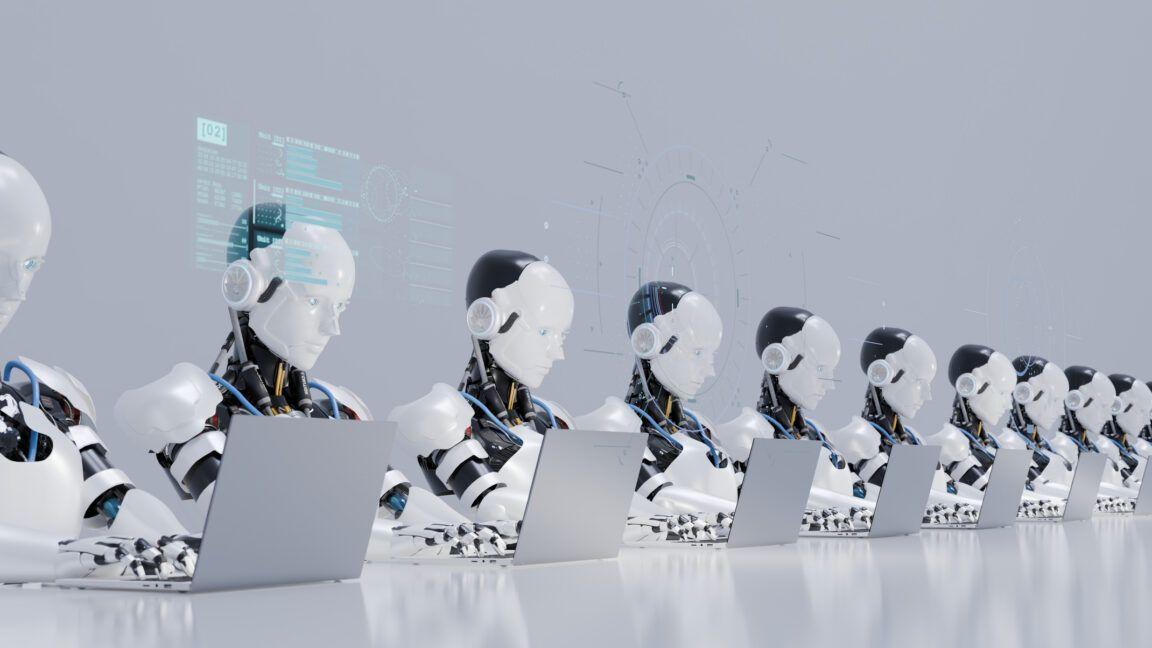
. Meta AI would essentially replace Meta staff with AI across various functions, creating an AI-native workforce structure fundamentally different from traditional organizational models.
Source: TechRadar
On the night of May 19, just hours before the first layoff wave, Mark Zuckerberg made a critical decision to abandon the November cuts
1
. Meta proceeded with laying off 10% of its employees on May 20 but called off planning for the second wave1
. By then, Meta employees were in open revolt, convinced that the company's AI transformation initiatives were aimed at replacing them4
. Employee backlash intensified as workers discovered the company was tracking their mouse movements and keystrokes, with bathroom stall notices encouraging protests against Meta's surveillance practices3
. This workforce reduction plan appeared to connect two earlier 2024 stories: Meta's employee monitoring program and the May layoffs2
.Related Stories
Internal data revealed that autonomous AI agents at the heart of the strategy were failing to deliver hoped-for AI productivity gains
1
. Infrastructure teams warned of "reliability warning signs" caused by the AI coding surge, according to internal posts3
. Evidence of faulty work became visible in June when hackers exploited Meta's AI chatbot to compromise celebrity Instagram accounts3
. The agentic AI technology, designed to take autonomous actions beyond typical chatbot responses, was not performing as expected in real-world applications4
. Some investors were questioning what Meta had to show for its massive spending on generative AI development5
.Meta's stumble reveals critical lessons about implementing AI-driven workforce restructuring at scale. The company confirmed Project OT's existence, describing it as a year-long initiative focused on cost-cutting, redesigning team structures, and shifting staff into new priority areas like producing training data for AI models
4
. Meta acknowledged that scenario planning included reducing some teams by up to 60% through both layoffs and redeployments, though it denied planning to cut 60% of its entire workforce1
. The experience demonstrates that allowing AI agents to produce work without adequate human oversight at every stage remains ill-advised3
. Watch for how other tech companies approach Organization Transformation initiatives, whether they prioritize gradual AI integration over radical restructuring, and how they balance AI productivity promises against the need for human oversight and employee trust.
Source: Engadget
Summarized by
Navi
[2]
[3]
13 Jun 2026•Business and Economy

14 Mar 2026•Business and Economy

25 Mar 2026•Business and Economy

1
Technology

2
Policy and Regulation

3
Technology